

You’re eating Greek yogurt, protein bars, and giant kale salads so why do you feel more bloated than ever? If you’re struggling with brain fog and digestive discomfort despite a “clean” diet, you aren’t alone. In 2025, researchers have identified the “Healthy Gut Paradox,” a phenomenon where a one size fits all approach to wellness triggers gut dysbiosis in sensitive individuals.
For years, the advice was simple: more fiber and more fermented foods. However, breakthroughs in personalized nutrition show that some healthy foods destroying gut health are hiding in plain sight. This guide identifies which “superfoods” disrupt your microbiome diversity and how to use the 2025 Fibermaxxing method to build resilience without the agony of constant bloating.
| # | Section | What You’ll Find |
|---|---|---|
| 1 | The Yogurt Aisle Trap | That “zero sugar” label might be hiding something worse. |
| 2 | Protein Bars in Disguise | Your favorite snack could be talking to your liver. |
| 3 | Whole Grains Reconsidered | What if it was never the gluten at all? |
| 4 | When Fibermaxxing Backfires | The “raw is better” rule has a hidden catch. |
| 5 | Red Meat’s Quiet Signal | One metabolite links your steak to something unexpected. |
| 6 | The Lectin Defense System | Beans are fighting back, and your gut feels it. |
| 7 | Plant Milk’s Hidden Additives | That “natural” carton might not be what it seems. |
The Yogurt Trap: Why Your Probiotic Might Be a Disruptor

The yogurt aisle is a marketing minefield. While traditional fermented dairy is a gut-health cornerstone, modern “zero sugar” versions are often ultra-processed chemical cocktails.
The Problem: Transitioning from natural sweetness to synthetic alternatives like Sucralose.
The Science: A March 2025 study in Frontiers in Microbiology revealed that synthetic sweeteners significantly reduce microbiome diversity. They can even feed harmful Enterobacteriaceae, leading to low grade inflammation.
The 2025 Standard: Look for plain Greek yogurt or traditional kefir where “Live and Active Cultures” are the only major additive.
The Swap: Use raw honey or fresh blueberries for sweetness instead of “sugar-free” flavorings.
The Protein Bar Pitfall: Sugar Alcohols and Metabolic Stress
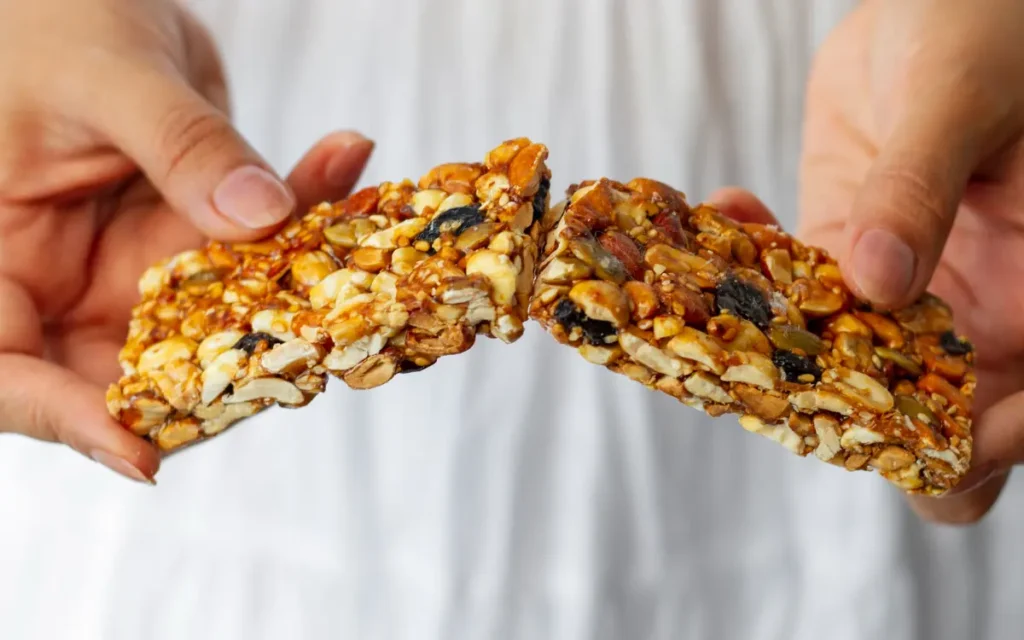
Protein bars are the ultimate “grab and go” health food, but many are essentially candy bars with a protein “halo.” The hidden culprit is the heavy use of sugar alcohols (Polyols) like sorbitol and maltitol.
The Discovery: An October 2025 study in Science Signaling found a “Sorbitol-to-Fructose” pathway. When you overconsume sorbitol from keto-friendly snacks, it doesn’t just cause gas; it can travel to the liver, causing metabolic stress.
Warning Signs: If sorbitol or erythritol are in the top five ingredients, your “healthy” snack may be overwhelming your microbial capacity to clear toxins.
The Swap: Switch to single-ingredient protein sources like hard-boiled eggs, walnuts, or hemp-based powders that skip industrial thickeners.
Whole Grains: Redefining Gluten vs. FODMAP Sensitivity
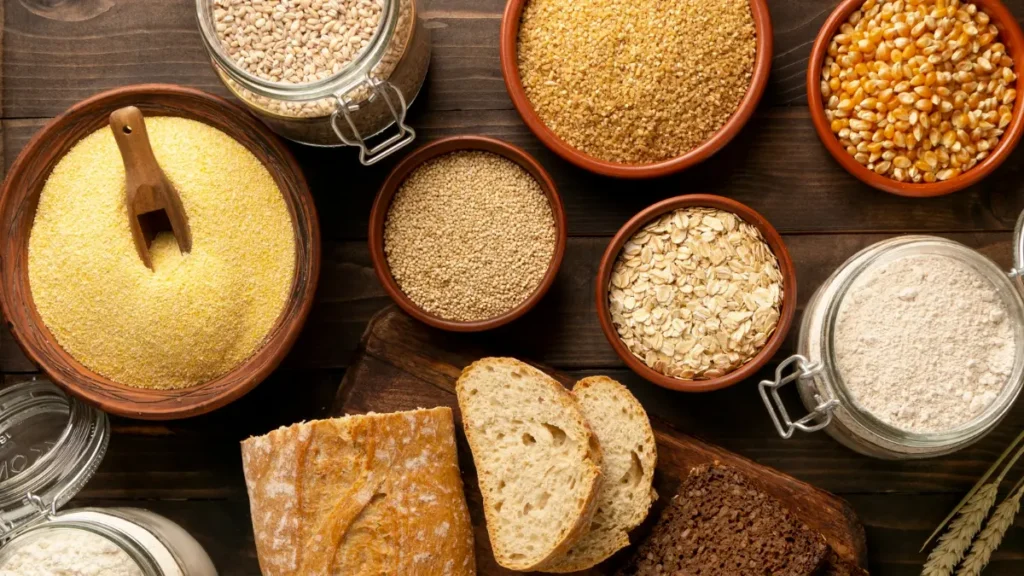
Whole grains are staples of the Mediterranean diet, yet they remain a source of distress for many. In 2025, we are redefining what “sensitivity” actually means.
The Reality: An October 2025 review in The Lancet suggests that most “Non Celiac Gluten Sensitivity” is actually a reaction to FODMAPs (fermentable carbohydrates) or the “nocebo” effect.
The Raw Grain Issue: Raw oats in “overnight oats” recipes contain high levels of phytic acid and lectins that can irritate a sensitive gut lining.
The Actionable Tip: Choose long-fermented sourdough, which “pre-digests” gluten and FODMAPs. If eating oats, soak them in lemon juice or Apple Cider Vinegar (ACV) before cooking to neutralize anti nutrients.
When “Fibermaxxing” Goes Wrong: The Raw Veggie Irritation
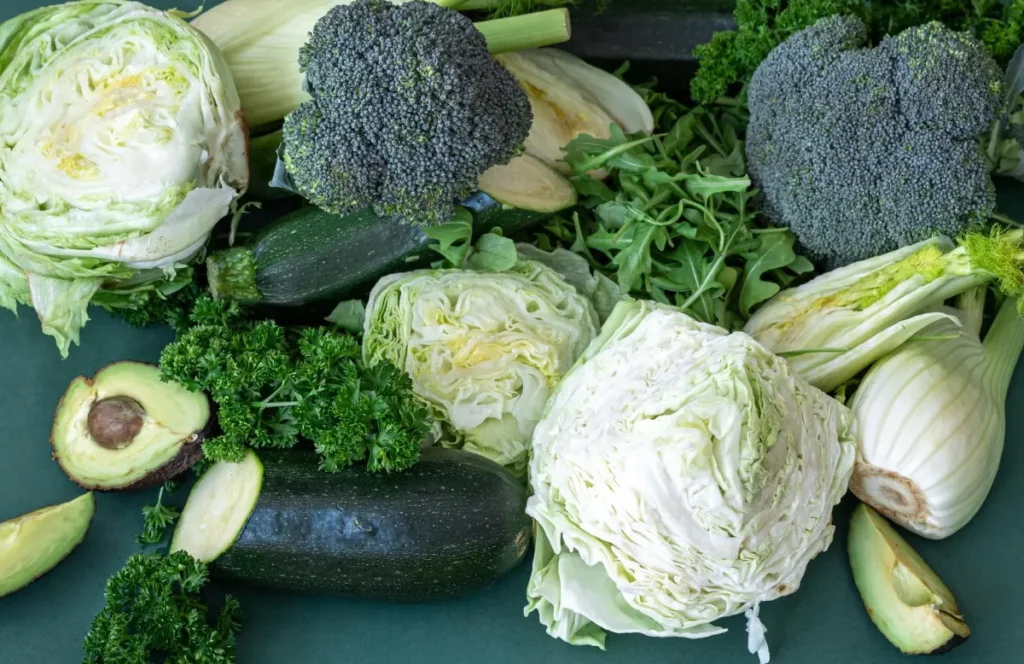
“Fibermaxxing” the 2025 trend of maximizing fiber for longevity is excellent in theory but physically demanding on the gut. Raw cruciferous vegetables (kale, broccoli, cabbage) have a tough cellulose structure that can act like “sandpaper” on a sensitive digestive tract.
The Expert View: July 2025 dietitian-led findings suggest that for those with IBS, the “raw is better” myth is counterproductive.
The Solution: Lightly steaming greens for 3–5 minutes breaks down the cellulose and reduces goitrogens while preserving the “super-nutrients.”
The Smoothy Hack: If you must use raw greens, ensure they are high speed blended to mechanically break down fibers before they reach your stomach.
Red Meat & TMAO: The Invisible Inflammatory Trigger
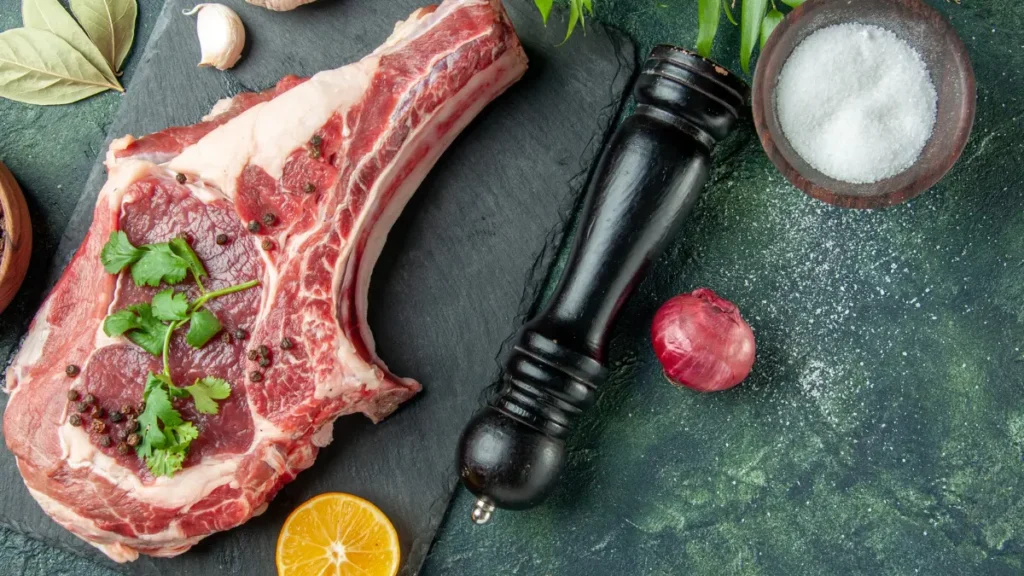
While high quality grass fed beef is a powerhouse of iron and B12, excessive consumption especially when paired with a low-fiber diet can trigger a metabolic byproduct known as TMAO (Trimethylamine N-oxide).
The 2025 Discovery: Research published in Frontiers in Immunology (March 2025) has further linked TMAO not just to heart health, but to persistent gastrointestinal inflammation and the pathogenesis of IBD. This metabolite is produced when specific gut bacteria process the choline and carnitine found in red meat.
The Problem: High TMAO levels are associated with a reduction in microbiome diversity and can lead to “leaky gut” by weakening the intestinal barrier.
The Actionable Shift: You don’t have to go vegan. Recent clinical trials (November 2025) suggest that consuming lean, unprocessed beef within a Mediterranean-style diet (rich in fiber and polyphenols) actually prevents TMAO from spiking, as the fiber “crowds out” the bacteria that produce it.
The Swap: Limit red meat to 2–3 times per week and always pair it with a large serving of fermented vegetables or a high-fiber salad to neutralize the TMAO effect.
Beans & Lentils: Navigating the “Lectin” Defense System
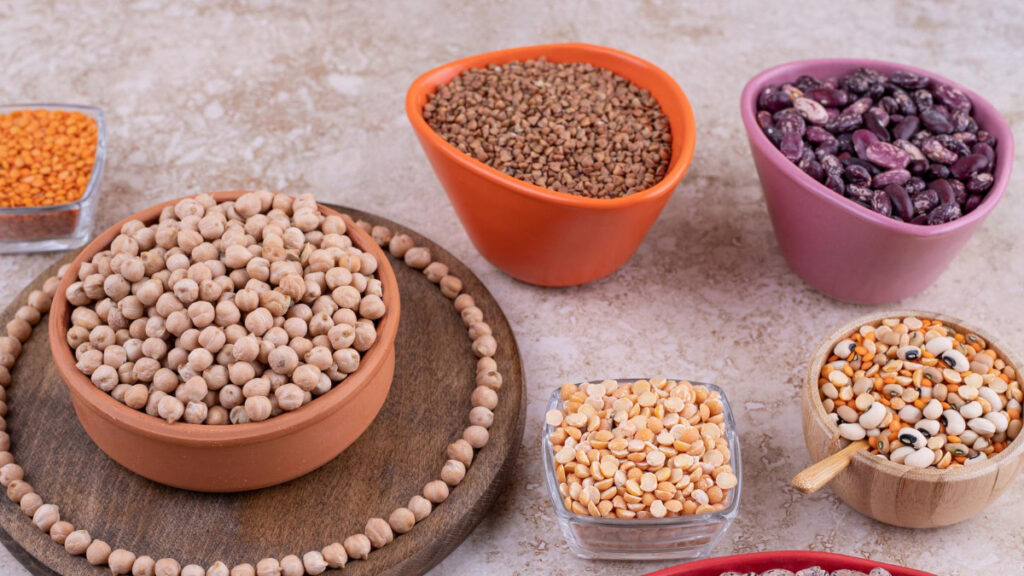
Legumes are the poster child for longevity, but for many, they are the primary source of debilitating gas and “gut scouring” irritation. The culprit is a class of proteins called lectins.
The Science: Lectins are a plant’s natural defense mechanism against being eaten. In the human gut, active lectins can bind to the lining of the small intestine, interfering with nutrient absorption and potentially triggering an autoimmune response.
The 2025 Reality: According to Dr. Mark Hyman (updated 2025 guidelines), while most people can adapt to lectins, those with existing gut sensitivity or autoimmune markers may experience joint pain and “leaky gut” when consuming under prepared beans.
The Actionable Tip: Never eat beans from a “quick-soak” or slow-cooker method. The heat is often insufficient to deactivate the lectins.
The Swap: Use a pressure cooker (Instant Pot), which is the most effective 2025 tool for breaking down lectin proteins. Alternatively, choose canned beans, as the high-heat commercial canning process pre deactivates most irritants.
Plant-Based Milks: The “Gum and Emulsifier” Trap
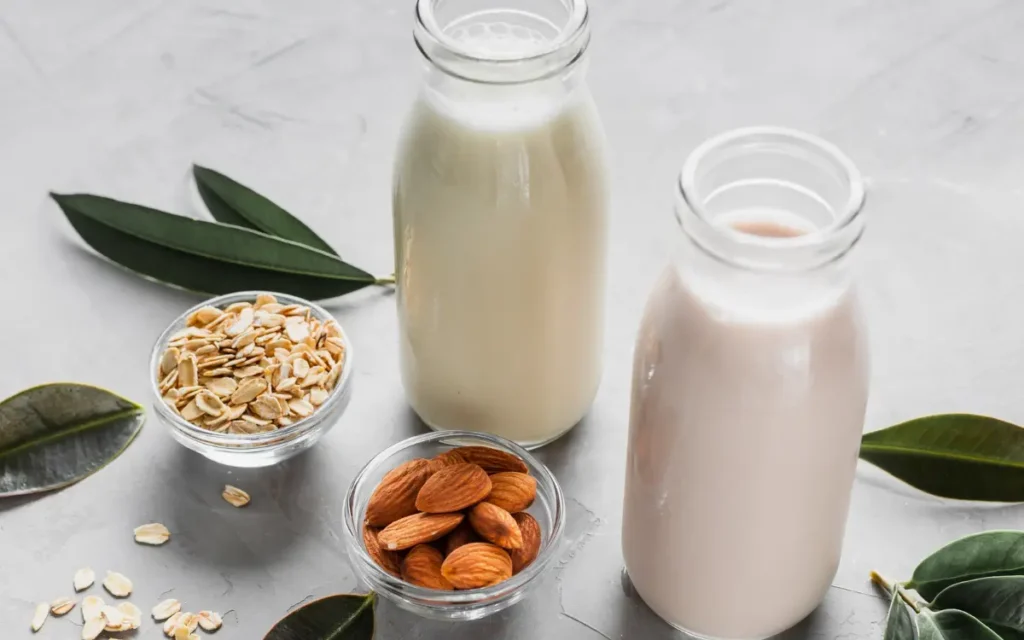
Many people switch to almond, oat, or soy milk to avoid dairy-related bloating, only to find their symptoms worsening. This is often due to hidden emulsifiers and thickeners like carrageenan, guar gum, and xanthan gum.
The Disruptor: Carrageenan, a seaweed derivative found in many “natural” nut milks, has been under fire in 2025 research. Studies in The Nutrition Source (July 2025) indicate it can wear down the protective mucus layer of the gut, leaving the intestinal wall vulnerable to pathogens.
The Symptoms: Even “safe” gums like Guar Gum can undergo rapid fermentation in the colon, leading to the “Oat Milk Bloat” that many experience shortly after their morning latte.
The Actionable Shift: Become a label detective. If your plant milk lists “gums,” “lecithin,” or “carrageenan,” it is likely irritating your gut lining.
The Swap: Look for “Clean Label” brands that use only two ingredients (e.g., Water and Almonds). Brands like Elmhurst have pioneered “milking” techniques that use the whole nut to create creaminess without the need for gut-disrupting additives.
⚠️DISCLAIMER:
This article is for informational purposes only and does not constitute dietary or medical advice. The content addresses common “healthy” foods that may disrupt gut health and is meant for general educational purposes only. Nutritional needs differ based on age, health status, and individual circumstances, consult a registered dietitian or your healthcare provider before making significant changes to your diet.