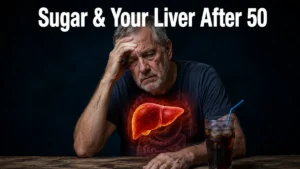

You woke up one day, and suddenly, the bounce back was gone. In your 20s, a late night or a heavy meal was a minor speed bump; now, it’s a multi day recovery project. This is the 35 year old wall, a physiological threshold where coffee no longer masks deep fatigue, and your favorite cheat meal seems to stick to your midsection for weeks.
Getting older is a specific biological transition that most doctors don’t discuss until you’re much older. Cellular decline, the reality of midlife hormone shifts, and the 2025 protocols for upgrading to System 2.0. Understanding why your body feels different after 35 is the first step toward reclaiming your metabolic health and accelerating your recovery.
The Invisible Shift: Hormones & Metabolism
Hormonal changes, as something for the 50s, the National Institutes of Health NIH confirms that the groundwork is laid much earlier. For men, testosterone levels begin a steady decline of about 1% per year starting at age 30. For women, early perimenopause symptoms can manifest as early as 35, characterized by fluctuations in progesterone that lead to anxiety, disrupted sleep, and brain fog long before a missed period.

Beyond just mood, these shifts cripple your metabolic flexibility, your body’s ability to switch between burning carbs and burning fat. According to research from the Mayo Clinic, as estrogen and testosterone dip, the body becomes more prone to insulin resistance. This means those healthy carbs you used to fuel your day are now being shuttled into visceral fat belly fat rather than being used as energy. You aren’t necessarily eating more; your body is simply losing its ability to process fuel efficiently.
The Sarcopenia Secret: Why You’re Softening
Softer even though the number on the scale hasn’t changed, you are likely experiencing age-related muscle loss, scientifically known as sarcopenia. Starting in your, the body begins losing 3% to 8% of its muscle mass per decade. Because muscle is the primary driver of your Basal Metabolic Rate.

BMR, every pound of muscle lost means your body burns fewer calories while you sleep. Cardio only routines often fail people after 35. Relying solely on running or cycling without strength training can actually accelerate muscle loss, leaving you with less metabolic power and weaker bone density.
Experts like Dr. Gabrielle Lyon emphasize that muscle is the organ of longevity. Without intentional resistance training, your body essentially begins to downsize its structural integrity, leading to that feeling of physical fragility.
The Recovery Gap: Why Everything Aches
In your 20s, your body was a collagen producing machine. After 35, collagen synthesis drops, and the lubrication in your joints begins to thin. Creaky knees and a significant increase in Delayed Onset Muscle Soreness DOMS. What used to be a one day recovery from a hike now takes three.

This recovery after 35 lag is compounded by a decline in sleep studies, that the deep sleep phase, where the body physically repairs itself, becomes shorter and more easily disrupted. Furthermore, the body begins to enter a state of inflammaging, low grade, chronic inflammation.
This isn’t the acute swelling of a sprained ankle, but a systemic background noise that makes your joints feel stiff, and your energy feel capped. Proper joint health and sleep hygiene are no longer optional wellness tips; they are the fundamental requirements for a body that functions without pain.
2026 Action Plan: Your Bio Hack Toolkit
To thrive in this new phase, you must move away from weight loss thinking and toward functional optimization. The 2025 standards for actionable health habits emphasize three core pillars. The 1.2g Protein Rule to combat sarcopenia aims for 1.2g to 1.5g of protein per kilogram of body weight. This provides the amino acids necessary to signal muscle protein synthesis, which becomes harder to trigger as we age.
The Movement Protocol performs two days of heavy resistance training to protect bone and muscle, and two days of Zone 2 cardio steady state walking or light cycling to maintain mitochondrial health. The Three Essential Markers request a blood panel that specifically checks A1C for insulin sensitivity, Vitamin D for bone and immune health, and a full hormone panel to establish your baseline.
Conclusion
It is important to remember that why your body feels different after 35 is a matter of biology, not a failure of will. Your System 1.0 was designed for growth and reproduction. System 2.0 requires more deliberate maintenance, higher quality fuel, and smarter movement.
While the bounce back of your youth may be gone, it can be replaced by a version of yourself that is stronger, more resilient, and more metabolically sound than ever before.
⚠️MEDICAL DISCLAIMER
This article is for informational purposes only. It does not replace medical advice, diagnosis, or treatment. The information covers hormonal changes, testosterone decline, perimenopause, metabolic flexibility, insulin resistance, visceral fat, sarcopenia, muscle loss, basal metabolic rate, strength training, collagen synthesis, joint health, delayed onset muscle soreness, recovery, sleep, inflammaging, protein intake, resistance training, Zone 2 cardio, blood markers (A1C, Vitamin D, hormone panel).
Individual results vary based on age, health status, and fitness level. Before changing your exercise routine, diet, or supplement use, talk to your doctor or a qualified health professional first. If you experience chest pain, dizziness, severe joint pain, or any sudden symptom during or after exercise, stop immediately and seek medical care.