
The restaurant lighting is atmospheric, which really just means it’s dark. Suddenly, the font on the menu looks like ancient hieroglyphics. You try moving the paper further away, then closer. Finally, you squint. Your vision clicks into place for a second, but then your forehead starts to ache.
This is what people call Focus Lock. It feels like a quick fix for near vision, but it is actually a sign of eye strain. In this guide, you will learn why your eyes are struggling. We will look at the physics of how your eyelids act like a camera lens and how to stop the cycle of pain.
Why Does Squinting Help? The Pinhole Effect
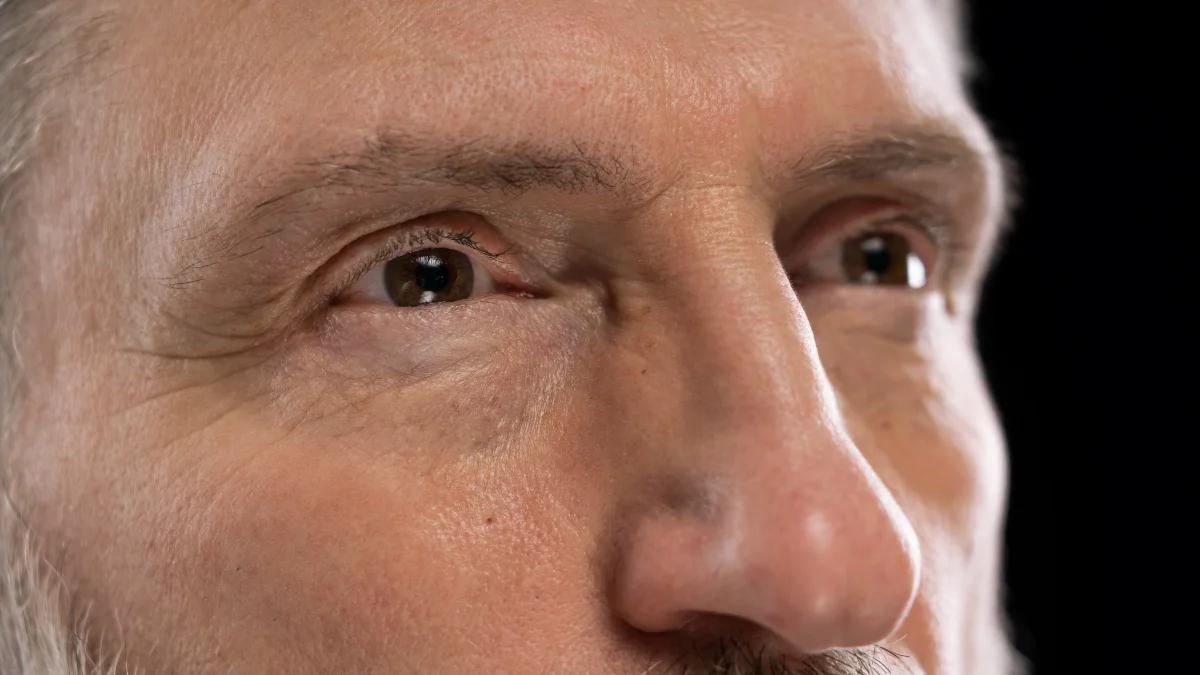
Squinting isn’t just a facial expression. It is a physical hack. When you narrow your eyes, you are using the pinhole effect. By making the opening smaller, you block out scattered light that usually blurs your vision. This forces light rays to land directly on the retina, specifically a sharp shooting spot called the fovea.
Squinting can increase your depth of field by up to 30%. It makes the blurry menu look sharp almost instantly. But there is a catch. Your eyes aren’t meant to hold this lock for long. It is like trying to lift a heavy weight with your eyelids. It works for a moment, but it creates massive tension in the muscles around your eyes.
Why is 2026 Making Our Eyes So Tired?
Our eyes are more exhausted now than ever before. We spent years moving from Zoom calls to the living room, and our eyes are paying the price. In 2026, most of us use mobile displays that reach 2,000 nits of brightness. These screens are incredibly clear and bright.
The problem happens when you look away from the screen. A typical restaurant menu only has about 50 lux of light hitting it. This massive jump from a bright screen to a dim room causes light shock. Your eyes have been conditioned to expect high-contrast, glowing text. When they don’t get it, they trigger Focus Lock to compensate.
The 2026 Light Shock Gap
Why modern displays are outpacing our biological recovery
High-Contrast Digital Emission
Average Ambient Reflection
The 40x brightness differential forces the ciliary muscles to over-contract. In 2026, the average eye takes 34% longer to reset focus compared to 2020 levels.
The Biological Update You Didn’t Want: Presbyopia

If you are over 40, you are likely dealing with Presbyopia. This is a natural part of aging where the crystalline lens inside your eye gets stiff. Think of it like a camera lens that is getting stuck. It can’t zoom in on small text as easily as it used to. By 2026, over 2.1 billion people across the globe will be living with these symptoms.
When you squint to read, you are trying to force that stiff lens to bend. It is the first major warning sign of age related vision changes. Instead of fighting it with Focus Lock, it is better to accept that your internal hardware needs a little help.
The Hidden Cost: Why Your Head Hurts

Squinting causes more than just crow’s feet wrinkles. It leads to eye strain and headaches that usually hit the brow and temples. Have you ever felt a 3 PM crash? Many people think they need more caffeine or sugar. In reality, it is often ocular exhaustion. When you use Focus Lock vision all day, your facial muscles stay tight.
You might also notice a focus lag. This is when you look up from a menu to talk to your dinner date, and they look blurry for a few seconds. That lag is a sign that your eye muscles are stuck in a cramp. Long term, this leads to permanent facial tension and chronic fatigue.
Modern Solutions: Better Than Cheater Glasses

You don’t have to settle for cheap cheaters from the drugstore anymore. In 2026, vision correction has moved forward. You can now get progressive lenses with specific digital zones. These help your eyes switch between your phone and the real world without the strain.
There are also new options like:
- Smart-sensor glasses: These frames automatically tint or shift focus based on where you are looking.
- Pharmacological drops: Some modern drops can temporarily help the eye lens flex better for a few hours.
- The 20-20-20-20 Rule: Every 20 minutes, look 20 feet away, for 20 seconds, and blink 20 times. The extra blink helps reset your tear film.
3 Simple Tricks to Read Better in Low Light

Here are 3 simple tricks you can use tonight to read better in low light without straining your eyes.
The Look Away Blink: Every time you finish reading a section of the menu, look at the furthest object in the room for five seconds. This resets your eye muscles. If you keep your eyes locked on the paper for too long, your muscles can cramp up. A quick distance check keeps your vision flexible and helps prevent eye strain headaches before your food even arrives.
The “Arm’s Length” Reset: When text gets blurry, your first instinct is to pull the menu closer. This is a mistake. It forces your eye muscles to work harder to cross and focus. Instead, move the menu about six inches further away. This gives your aging lens more breathing room to find a sharp focus point without triggering a painful Focus Lock.
The Digital Magnifier: Don’t just use your phone’s flashlight; it creates a harsh glare that can actually make reading harder. Instead, open the Magnifier tool in your phone’s settings. By looking at the menu on your screen, you can zoom in and increase the contrast. The high resolution display does the focusing work for you, which prevents eye strain.
Why Dark Mode is Making Your Squint Worse?

Many people use Dark Mode on their phones to save their eyes. While it feels better in a pitch black room, it can actually make near vision harder for people with even slight astigmatism. When you look at white text on a black background, the white letters tend to bleed into the black. This is called halation.
If you find yourself squinting at your phone screen, try switching back to Light Mode but turn the overall brightness down. Black text on a light gray background is often the easiest for the human eye to process without triggering a muscular lock. In 2026, many apps now offer a High Contrast or Paper mode.
Can Eye Exercises Break the Focus Lock?

You can’t work out your way out of aging, but you can train your eyes to relax. One of the best ways to stop a Focus Lock is a move called Pencil Push Ups. Hold a pen at arm’s length and focus on a single letter on the side. Slowly bring it toward your nose while keeping it sharp. As soon as it blurs, stop and look at something 20 feet away.
This simple move helps the tiny ciliary muscles in your eye stay flexible. It’s like stretching your hamstrings before a run. If you do this for two minutes a day, you might find that your eyes don’t freeze up as fast when you’re staring at a menu or a spreadsheet. It’s a free way to get some digital eye strain relief without needing a new prescription right away.
Conclusion
Squinting at menus is a clever biological trick, but it’s really an SOS from your body. Using Focus Lock might help you order your dinner, but it will also leave you with a headache before the food arrives.
Don’t let the strain become your new normal. The best move is to book a comprehensive eye exam that includes digital strain mapping. Your eyes work hard for you; it’s time to return the favor.