
You tracked your food for three weeks, stayed consistent, and lost two pounds. Then gained one back without changing anything.
For women and men working on weight loss after 40, that experience is more common than most doctors mention. Research shows women gain about 1.5 pounds per year during midlife, largely driven by age-related muscle loss and lifestyle shifts rather than eating more alone.¹
Three specific nutrients determine whether your body cooperates with weight loss after 40 or works against it. Most people adjusting for midlife aren’t adjusting the right things.
Why Read This
- Discover why the standard explanation for midlife weight gain is partially wrong, and what the overlooked mechanism actually is.
- Find out why cutting calories without tracking one specific variable can make the next pound harder to lose, not easier.
- Learn about the connection between body fat percentage and a nutrient deficiency most adults over 40 have never been tested for.
- See why fiber’s most significant weight-related effect has nothing to do with digestion.
Why Weight Loss Gets Harder After 40
Your routine didn’t stop working because you got lazy. It stopped working because your body changed.
After 40, muscle mass declines in both sexes, with losses accelerating after 50; men lose approximately 3 to 5 percent of muscle per decade after 30.² Muscle burns more calories at rest than fat.³ Less muscle means a lower baseline calorie burn, even when nothing else changes.
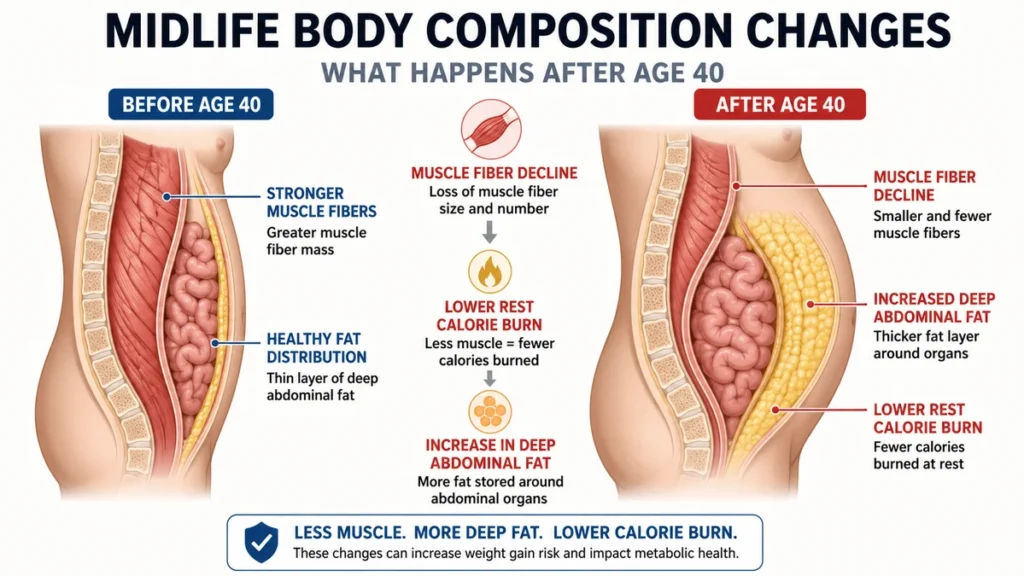
A 2021 study of more than 6,400 people across the life course found that metabolic rate stays relatively stable between ages 20 and 60.⁴ The issue isn’t a slowing metabolism. Muscle loss came first, and the calorie math followed.
Hormonal shifts compound this. Declining estrogen affects how the body processes insulin and where it tends to store fat, particularly around the abdomen.⁵ Growth hormone and testosterone also decrease with age in both sexes, which affects muscle maintenance and fat use.²⁴
No single study has directly tested protein, fiber, and vitamin D together as a combined weight loss approach after 40; the evidence for each nutrient runs separately.
The result is a body that burns fewer calories on the inside while holding fat more readily and rebuilding muscle more slowly. What you eat after 40 needs to account for what’s changing inside.
The First Missing Nutrient: Protein for Muscle Preservation
Cutting calories feels like the logical move. After 40, it’s only half the answer.
Protein targets fall short. The recommended daily allowance of 0.8 grams per kilogram of body weight was established for general maintenance, not for midlife weight loss.⁶
Research indicates that adults trying to lose weight in midlife and beyond need at least 1.3 grams per kilogram daily to protect muscle mass.²⁵ For a 150-pound woman, that’s 80 to 160 grams per day, versus the 55 grams the standard RDA suggests.
Eating less without enough protein doesn’t shrink fat. It shrinks muscle.
Twenty-five percent.
Studies suggest that up to 25 percent of weight lost can come from muscle during a calorie deficit, especially without adequate protein or strength training.⁷ Less muscle means a lower resting calorie burn, which makes the next pound harder to lose. Losing muscle is not the same as losing weight.
Protein also has the highest thermic effect [the calorie cost the body pays to digest and metabolize a macronutrient] of all three macronutrients.⁸ It also increases feelings of fullness between meals, even without relying on willpower.²¹
25 to 30 grams per meal. A systematic review of adults with overweight or obesity found that protein intake above 1.3 grams per kilogram daily helped preserve muscle mass during weight loss, though it didn’t significantly protect strength or physical function on its own.²⁵
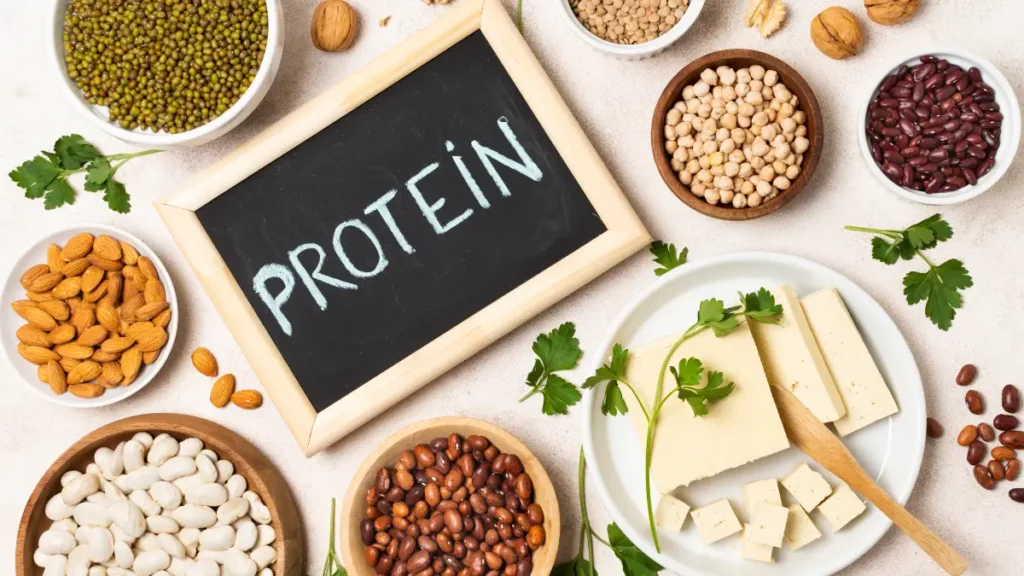
Prioritize complete protein sources: lean meats, fish, eggs, dairy, or plant-based options like quinoa and soy. Spreading intake evenly across meals supports muscle protein synthesis more effectively than concentrating it in one sitting.⁹
Protecting muscle is necessary, but if appetite is still working against you, weight loss still stalls.
The Second Missing Nutrient: Fiber for Appetite Control
Most people tracking weight loss watch calories and protein. Fiber rarely makes the list, and that gap has a direct cost.
The average American eats about 16 grams of fiber per day, well short of the recommended 25 grams for women and 38 grams for men.¹⁰ After 40, this shortfall hits harder because fiber directly counters the hormonal changes that promote weight gain.
When fiber moves through your digestive system, it triggers the release of glucagon-like peptide-1 [a gut hormone that signals fullness to the brain and slows digestion] and peptide YY [a gut hormone that suppresses appetite between meals].²⁷
These are the same hormones targeted by prescription weight loss medications. Fiber activates them through food.
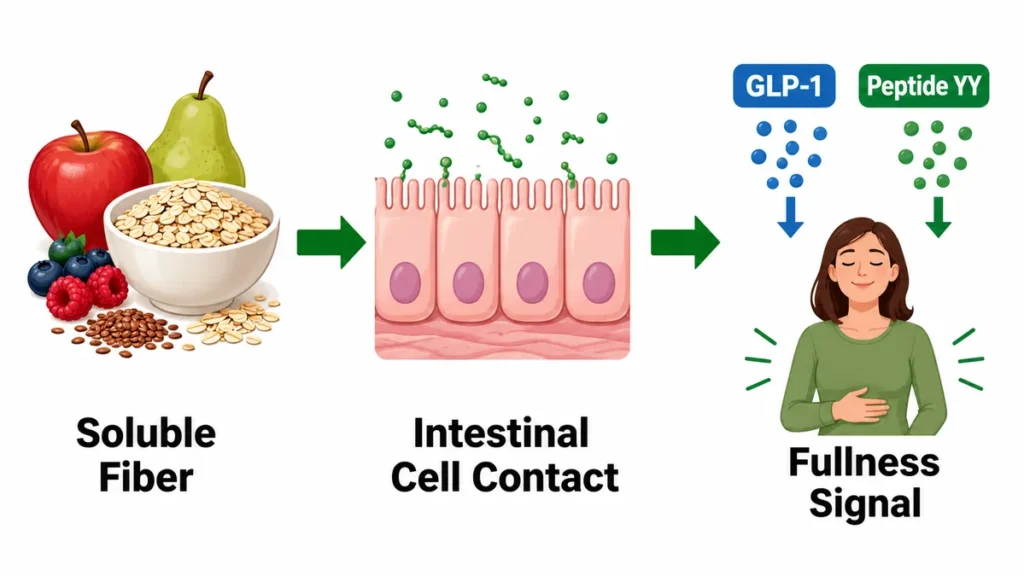
A review of controlled trials found that each additional 10 grams of soluble fiber daily was associated with a reduction in calorie intake and modest, sustained weight loss over several months.¹² That reduction compounds over weeks without calorie counting.
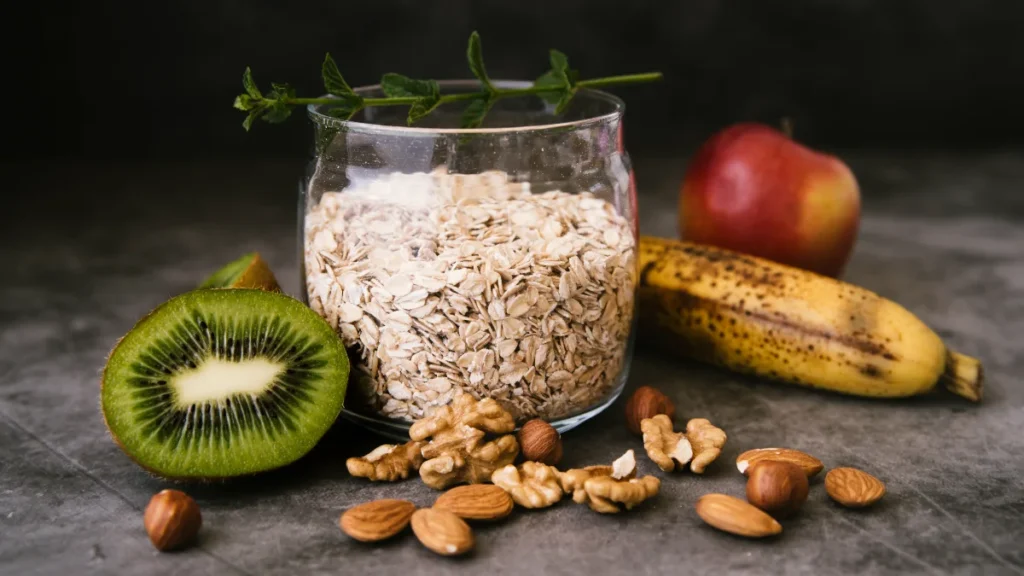
Soluble fiber extends fullness. Found in oats, beans, apples, and Brussels sprouts, it forms a gel in the stomach that slows digestion.
β-glucan [a soluble fiber concentrated in oats and barley] at 3 or more grams daily has been associated with improvements in cholesterol and insulin sensitivity in adults with metabolic syndrome in randomized trials.¹³ Fermentation of fiber in the colon also produces short-chain fatty acids [compounds made by gut bacteria that improve insulin sensitivity and reduce inflammation].¹⁴
Ileal brake activation [a feedback signal from the end of the small intestine that slows digestion when it detects unabsorbed nutrients] adds another layer of fullness.
Most direct evidence for this mechanism comes from studies infusing fat or other macronutrients into the ileum, with undigested fiber thought to engage a similar pathway.¹¹
Start at 25 grams daily and add 5 grams every few days. Increase water intake at the same pace to prevent digestive discomfort.
Fiber reliably activates the same hormones as prescription weight loss medications, and it does it with food.
The Third Missing Nutrient: Vitamin D for Metabolism
You can stay consistent with protein and fiber and still hit a wall. For many adults over 40, vitamin D is the gap nobody checked.
Vitamin D functions more like a hormone than a vitamin, regulating more than 1,000 genes involved in metabolism, muscle function, and fat storage.¹⁵,²² After 40, deficiency becomes common: limited sun exposure, sunscreen use, and the body’s reduced synthesis capacity all lower levels as you age.¹⁶
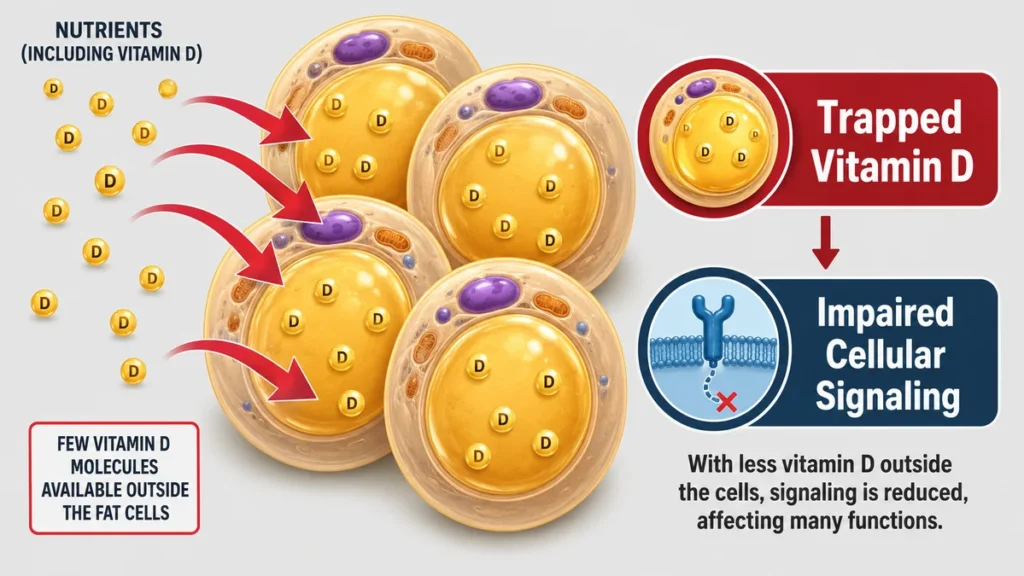
Excess fat tissue sequesters vitamin D, pulling it away from metabolic processes.¹⁷ As body fat increases, available vitamin D drops. When vitamin D availability falls, muscle function and the hormonal signaling that supports fat use begin to decline. One problem feeds the next.
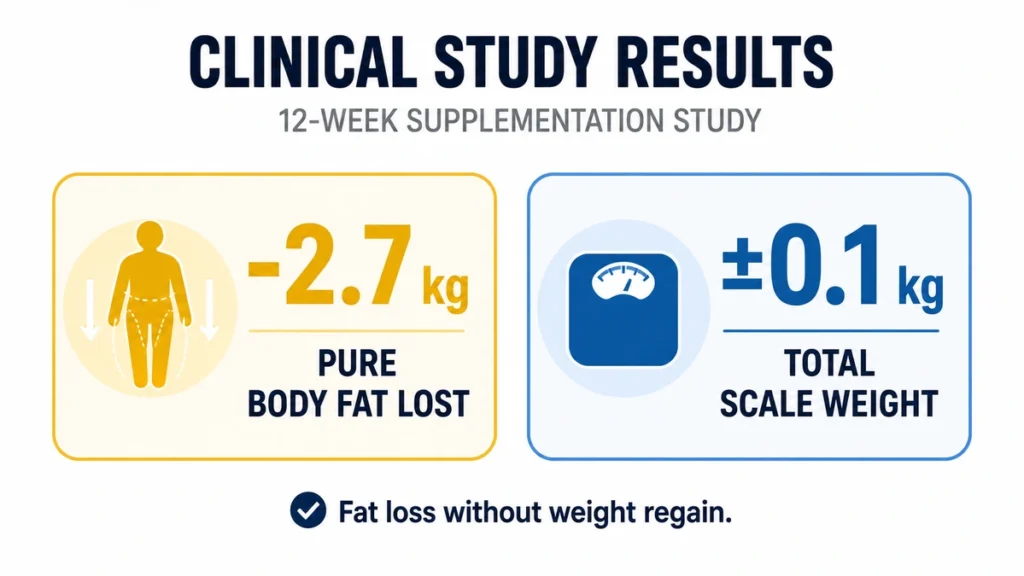
A randomized controlled trial in healthy overweight and obese women aged 18 to 50 found that 12 weeks of vitamin D3 supplementation significantly reduced body fat mass compared to placebo, even though body weight and waist circumference did not change significantly in either group.¹⁸
A second randomized trial in postmenopausal overweight women aged 50 to 75 showed reductions in weight, BMI, and waist and hip measurements after six weeks of supplementation.¹⁹
A 12-week randomized trial in overweight and obese women aged 18 to 50 found that vitamin D3 supplementation reduced body fat mass by 2.7 kg, but weight, BMI, waist, and hip measurements did not change significantly.¹⁸
Vitamin D supports calcium homeostasis [the body’s regulation of calcium levels, which directly affects insulin sensitivity and metabolic function].²⁰ When calcium regulation is disrupted, insulin sensitivity suffers, affecting how efficiently the body stores and uses energy.
People with vitamin D levels below 20 ng/mL tend to see the most significant response to supplementation.²³ Most standard guidelines set sufficiency at 20 ng/mL, though some research associates levels above 30 ng/mL with better metabolic outcomes.¹⁶
For most adults over 40, no one has ever ordered the test.
Three Nutrients, One Starting Point
The three nutrients covered here work together. Begin with the one you can verify or measure first.
Talk to your doctor before changing your supplement routine or significantly altering your diet if you’re pregnant, on medication, or managing a chronic condition.
Start with testing. Get your 25(OH)D checked this week. Results give you a baseline before you invest in any supplement. While you wait, track your daily protein intake for seven days. Most people eating a standard diet fall significantly short of the 1.3 grams per kilogram needed to protect muscle during weight loss after 40.²⁵

Time protein around exercise. If you do any strength training, having protein within a few hours of the session is useful, but the strict idea of a narrow post-workout “window” has been overstated.
Total daily protein intake matters more than precise timing.²⁶ Pair it with fiber-rich carbohydrates to replenish energy without spiking blood sugar.¹²
Build fiber gradually. Start at 25 grams daily. Add 5 grams every three to four days. Raise water intake at the same pace. Most people reach their fiber target within three to four weeks without digestive discomfort when the increase is gradual.¹²
These three don’t compete. They compound.
Start With One Test This Week
Weight loss resistance after 40 isn’t a willpower problem. Your body’s nutritional needs changed, and the standard diet didn’t follow.
Get your vitamin D tested this week. While you wait for results, track your protein intake for seven days to find where you’re falling short. Add 5 grams of fiber to your next meal and build from there.
Protein, fiber, and vitamin D target the root causes of weight loss resistance after 40, not just the calorie math. Start with the one you can measure today.
⚠️DISCLAIMER:
This article is for informational purposes only and does not constitute dietary or medical advice. The content addresses protein, fiber, and vitamin D for weight loss after 40 and is meant for general educational purposes only. Nutritional needs differ based on age, health status, and individual circumstances, consult a registered dietitian or your healthcare provider before making significant changes to your diet.
References
- Faubion SS, Kuhle CL, Shuster LT, Rocca WA. Weight gain in women at midlife: a concise review of the pathophysiology and strategies for management. Mayo Clinic Proceedings. 2017;92(11):1552-1558. https://www.mayoclinicproceedings.org/article/S0025-6196(17)30602-X/fulltext
- Mitchell WK et al. Sarcopenia, Dynapenia, and the Impact of Advancing Age on Human Skeletal Muscle Size and Strength. Frontiers in Physiology. 2012;3:260. https://pmc.ncbi.nlm.nih.gov/articles/PMC3429036/
- Wolfe RR. The underappreciated role of muscle in health and disease. American Journal of Clinical Nutrition. 2006;84(3):475-482. https://doi.org/10.1093/ajcn/84.3.475
- Pontzer H, Yamada Y, Sagayama H, et al. Daily energy expenditure through the human life course. Science. 2021;373(6556):808-812. https://doi.org/10.1126/science.abe5017
- Lizcano F, Guzmán G. Estrogen Deficiency and the Origin of Obesity during Menopause. BioMed Research International. 2014;2014:757461. https://pmc.ncbi.nlm.nih.gov/articles/PMC3964739/
- Bauer J, Biolo G, Cederholm T, et al. Evidence-based recommendations for optimal dietary protein intake in older people: a position paper from the PROT-AGE Study Group. Journal of the American Medical Directors Association. 2013;14(8):542-559. https://doi.org/10.1016/j.jamda.2013.05.021
- Weinheimer EM, Sands LP, Campbell WW. A systematic review of the separate and combined effects of energy restriction and exercise on fat-free mass in middle-aged and older adults: implications for sarcopenic obesity. Nutrition Reviews. 2010;68(7):375-386. https://pubmed.ncbi.nlm.nih.gov/20591106/
- Westerterp KR. Diet induced thermogenesis. Nutrition and Metabolism. 2004;1(1):5. https://doi.org/10.1186/1743-7075-1-5
- Mamerow MM, Mettler JA, English KL, et al. Dietary protein distribution positively influences 24-h muscle protein synthesis in healthy adults. Journal of Nutrition. 2014;144(6):876-880. https://doi.org/10.3945/jn.113.185280
- Quagliani D, Felt-Gunderson P. Closing America’s fiber intake gap: communication strategies from a Food and Fiber Summit. Nutr Today. 2018;53(5):216-225. https://pmc.ncbi.nlm.nih.gov/articles/PMC6124841/
- Maljaars PWJ, Peters HPF, Mela DJ, Masclee AAM. Ileal brake: a sensible food target for appetite control. A review. Physiology & Behavior. 2008;95(3):271-281. https://doi.org/10.1016/j.physbeh.2008.07.018
- Howarth NC, Saltzman E, Roberts SB. Dietary fiber and weight regulation. Nutrition Reviews. 2001;59(5):129-139. https://doi.org/10.1111/j.1753-4887.2001.tb07001.x
- El Khoury D, Cuda C, Luhovyy BL, Anderson GH. Beta Glucan: Health Benefits in Obesity and Metabolic Syndrome. Journal of Nutrition and Metabolism. 2012;2012:851362. https://pmc.ncbi.nlm.nih.gov/articles/PMC3236515/
- Anderson JW, Baird P, Davis RH Jr, et al. Health benefits of dietary fiber. Nutrition Reviews. 2009;67(4):188-205. https://doi.org/10.1111/j.1753-4887.2009.00189.x
- Młynarska, E.; Lisińska, W.; Hossa, K.; Krupińska, N.; Jakubowska, P.; Rysz, J.; Franczyk, B. Vitamin D and Chronic Disorders: A Review of Metabolic and Cardiovascular Diseases. Pharmaceuticals 2025, *18*, 1467. https://doi.org/10.3390/ph18101467
- National Institutes of Health Office of Dietary Supplements. Vitamin D Fact Sheet for Health Professionals. Updated 2023. https://ods.od.nih.gov/factsheets/VitaminD-HealthProfessional/
- Earthman CP, Beckman LM, Masodkar K, Sibley SD. The link between obesity and low circulating 25-hydroxyvitamin D concentrations: considerations and implications. International Journal of Obesity. 2012;36(3):387-396. https://doi.org/10.1038/ijo.2011.119
- Salehpour A, Hosseinpanah F, Shidfar F, et al. A 12-week double-blind randomized clinical trial of vitamin D3 supplementation on body fat mass in healthy overweight and obese women. Nutrition Journal. 2012;11:78. https://doi.org/10.1186/1475-2891-11-78
- Hendryx, M., Manson, J. E., Ostfeld, R. J., et al. (2025). Intentional weight loss, waist circumference reduction, and mortality risk among postmenopausal women. JAMA Network Open, *8*(3), e250609. https://jamanetwork.com/journals/jamanetworkopen/fullarticle/2831077
- Pittas AG, Lau J, Hu FB, Dawson-Hughes B. The role of vitamin D and calcium in type 2 diabetes: a systematic review and meta-analysis. Journal of Clinical Endocrinology and Metabolism. 2007;92(6):2017-2029. https://doi.org/10.1210/jc.2007-0298
- Weigle DS, Breen PA, Matthys CC, et al. A high-protein diet induces sustained reductions in appetite, ad libitum caloric intake, and body weight despite compensatory changes in diurnal plasma leptin and ghrelin concentrations. American Journal of Clinical Nutrition. 2005;82(1):41-48. https://doi.org/10.1093/ajcn/82.1.41
- Hossein-nezhad A, Spira A, Holick MF. Influence of vitamin D status and vitamin D3 supplementation on genome wide expression of white blood cells: a randomized double-blind clinical trial. PLoS ONE. 2013;8(3):e58725. https://doi.org/10.1371/journal.pone.0058725
- Mazahery H, von Hurst PR. Factors Affecting 25-Hydroxyvitamin D Concentration in Response to Vitamin D Supplementation. Nutrients. 2015;7(7):5111-5142. https://doi.org/10.3390/nu7075111
- Fredrick JR, Blackman MR, Corpas E, Merriam GR, Kargi AY, Garcia JM. Growth Hormone and Aging. In: Feingold KR, Anawalt B, et al., editors. Endotext. South Dartmouth (MA): MDText.com, Inc.; 2000.(“Last Update: March 10, 2026) https://www.ncbi.nlm.nih.gov/books/NBK279163/
- Kokura Y, Ueshima J, Saino Y, Maeda K. Enhanced protein intake on maintaining muscle mass, strength, and physical function in adults with overweight/obesity: A systematic review and meta-analysis. Clinical Nutrition ESPEN. 2024;63:417-426. https://doi.org/10.1016/j.clnesp.2024.06.030
- Schoenfeld BJ, Aragon AA, Krieger JW. The effect of protein timing on muscle strength and hypertrophy: a meta-analysis. Journal of the International Society of Sports Nutrition. 2013;10:53. https://doi.org/10.1186/1550-2783-10-53
- Facchin S, Bertin L, Bonazzi E, et al. Short-Chain Fatty Acids and Human Health: From Metabolic Pathways to Current Therapeutic Implications. Life. 2024;14(5):559. https://doi.org/10.3390/life14050559