

You’re told to take a deep breath to relax. But when you try it, your chest feels tight. Your shoulders rise to your ears. Instead of feeling calm, you feel more anxious. This happens because belly breathing doesn’t work if your ribs are stuck. Most people force their stomach out while their rib cage stays locked in a stress response. This is a common mistake that keeps you feeling tense.
If your lower ribs stick out, you likely have flared ribs. This is a silent signal that your diaphragm isn’t working right. You aren’t actually getting a full breath. You are just moving your belly while your lungs stay squeezed. To fix this, you need 360 degree breathing. This means your ribs move out to the sides and back, not just the front.
The Flared Rib Trap: 3 Reasons Your Belly Isn’t the Problem
If you look in the mirror and see your bottom ribs poking out like wings, you have flared ribs. This physical setup makes deep breathing almost impossible. Here is why focusing only on your belly won’t fix the tension. When your ribs are flared, your diaphragm is pulled into a flat, strained position where it cannot move efficiently.
Think of your diaphragm like a parachute; for it to work, it needs to be able to dome upward and then drop down. Flared ribs keep that parachute stretched tight and flat. If you try to practice belly breathing in this state, you are simply pushing your abdominal wall out without actually moving your diaphragm through its full range of motion.
Mechanical Efficiency
- Diaphragm: Flat & Strained
- Rib State: Permanent Inhale
- Result: “Belly Only” movement
- System: Sympathetic (Stress)
- Diaphragm: High-Domed
- Rib State: Full Exhale Reset
- Result: Expansion in all planes
- System: Parasympathetic (Calm)
1. You are stuck in a Permanent Inhale
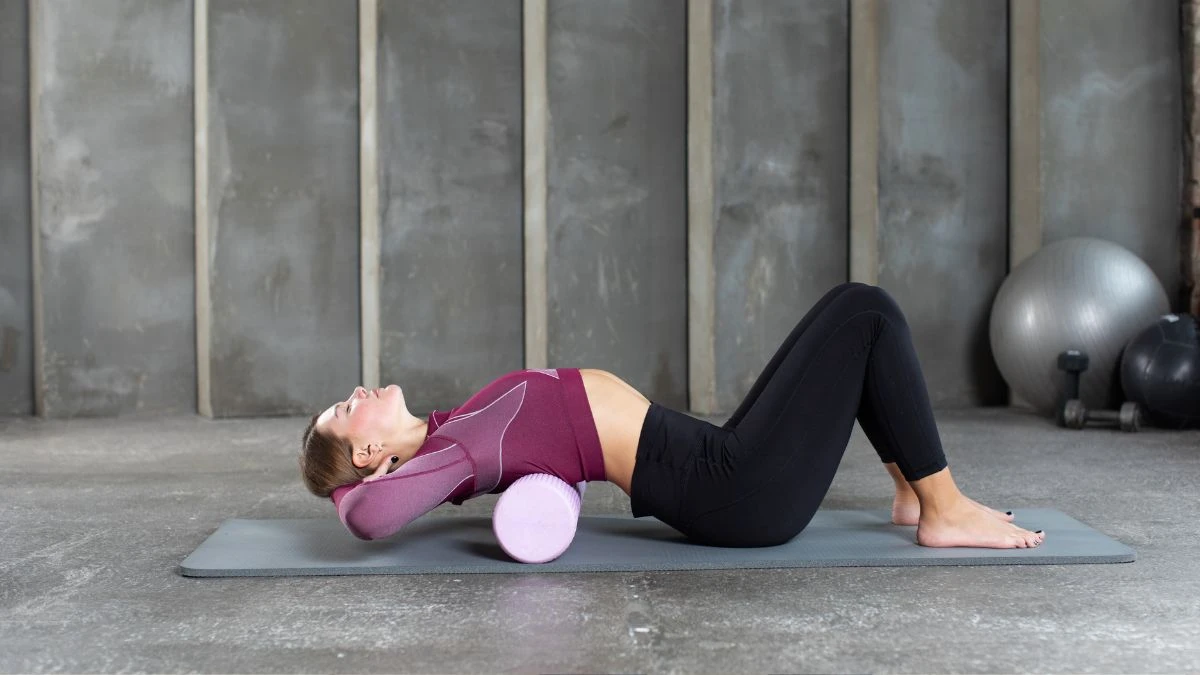
When your ribs flare, they stay tilted up and out. This means your body is physically stuck in the middle of a breath. Because you never fully exhale, you can’t take a new, deep breath. It is like trying to pour water into a glass that is already full. You need your ribs to move down and in to make room for fresh air.
2. Your body thinks it is in danger

Flared ribs send a signal to your sympathetic nervous system. This is your fight or flight mode. When your ribs stay elevated, your brain thinks you are under stress, even if you are just sitting at your desk. Pushing your belly out doesn’t change this signal. Only moving your ribs back into the right spot tells your brain it is safe to relax.
3. You are creating a Balloon in a Cage pressure

If your rib cage is rigid and flared, it acts like a metal cage. When you force your belly out during belly breathing, you are just pushing your organs around. This creates internal pressure that has nowhere to go. Instead of relaxing you, this pressure often travels up, making your neck and back feel even tighter than before.
Why Stretching Your Back Won’t Fix Your Breath?

Many people try to fix chest tightness by stretching their back or cracking their spine. While this might feel good for a minute, it doesn’t solve the core issue of rib cage tension. If your ribs are flared, stretching your back can actually make the arch in your spine worse, locking your ribs even further into an inhale position.
The real fix is a front to back approach. You have to learn to move your ribs downward through a strong exhale. Once the ribs move into the right spot, your back muscles will naturally relax because they no longer have to fight to keep you upright.
How to Use 360-Degree Breathing for Better Health?
Think of your rib cage as a cylinder, not a balloon. A balloon just gets bigger in the front. A cylinder expands in all directions. To fix your breath, you need 360 degree breathing. This means your ribs move sideways and even into your back. The most important part of this is the exhale. Most people focus on the air coming in.
But you cannot take a full breath if your lungs are still full of stale air. You have to empty the tank first. When you breathe out fully, your ribs drop down. This resets your diaphragm. It gives your lungs the room they need for a real expansion. Try to breathe into your back. Imagine your breath opening up the space between your shoulder blades.
This is called posterior expansion. It tells your brain that you are safe. When the back of your lungs fill with air, your heart rate slows down. This is the mechanical secret to calming your nerves. It isn’t magic; it is just how your body is built to work.
Why Do You Wake Up Feeling Stiff?

If your ribs are locked during the day, they don’t magically relax when you sleep. Your body keeps fighting for air all night. This is why you might wake up with a sore back or a tight neck. Your heart has to work harder because your lungs aren’t expanding fully. This keeps your body in a low level of stress while you rest.
By practicing rib releases before bed, you help your nervous system switch off. You get more oxygen while you sleep. This means you wake up with more energy and less physical pain. This morning stiffness often comes from your accessory muscles working overtime while you dream.
Because your ribs won’t move, your neck and upper back muscles have to pull your chest up just so you can get enough oxygen to stay alive. If you don’t unlock your ribs, you start every morning in a physical deficit, feeling like you need a massage before you’ve even had your first cup of coffee.
Why Does My Neck Hurt When I Breathe?

If your ribs are locked, your body still needs to find a way to pull in air. It starts using accessory muscles in your neck and shoulders to do the work. Instead of your diaphragm moving down, your neck muscles pull your entire chest upward. This is why many people who struggle with rib cage tension also have chronic neck pain or tension headaches.
You are literally using your neck to breathe thousands of times a day. By teaching your ribs to move sideways, you give your neck muscles a much needed break. Think of your neck muscles like a backup generator. They are meant to help you breathe only when you are running a race or in a state of high alarm.
But when your ribs are stiff, this backup generator stays on 24/7. This constant pulling creates trigger points or knots in your upper traps and scalenes. It can even lead to a tingling feeling in your arms because those tight neck muscles are pressing on nerves. When you learn to breathe into your lower ribs instead of pulling with your neck, the tension starts to melt away.
Why Do Your Lungs Feel Tight Even When You Aren’t Sick?

Many people visit a doctor because they feel like they can’t get a full breath, but their lung tests come back normal. This is often because the problem isn’t inside the lungs; it’s the box the lungs sit in. If your ribs are locked tight, your lungs physically cannot expand to their full size.
It feels like someone is wrapping a tight rubber band around your chest. This sensation, often called air hunger, is a direct result of rib cage tension. When you release the muscles between your ribs, that band loosens, and you can finally feel the air reaching the very bottom of your lungs.
Stop Hourglass Syndrome Before It Ruins Your Breath

Many of us have a habit of sucking in our stomachs to look thinner or flatter. Experts call this Hourglass Syndrome. When you constantly grip your upper abs, you create a wall of tension. This force pushes your breath upward into your chest and keeps your rib cage tension high. It might feel good for your ego, but it is bad for your nervous system.
To fix this, you must practice letting your belly be soft. You don’t need to push it out, but you must stop pulling it in. When you let go of that grip, your ribs finally have the freedom to expand in a 360 degree breathing pattern. This constant gripping does more than just ruin your breath; it actually changes how your core muscles work together.
This forces your internal organs to compress, which can lead to digestive issues like acid reflux or bloating. It’s a physical paradox: by trying to look fit or thin through bracing, you are actually preventing your core from functioning as a stable, supportive system.
Conclusion
Breathing is more than just moving your belly. It is a mechanical movement of your entire skeleton. If your ribs are stuck, belly breathing will only make you feel more stressed. You have to break the flared rib habit to find real calm. Remember, your ribs should move like an umbrella opening in 3D.
When you focus on 360 degree breathing, you stop fighting your own body. You give your heart and lungs the space they need to function. Try the Rib Descent move for 5 minutes before bed tonight. You might find that your neck tension and air hunger vanish by morning.