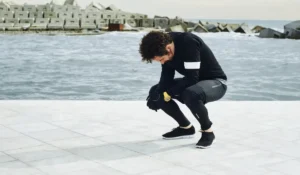
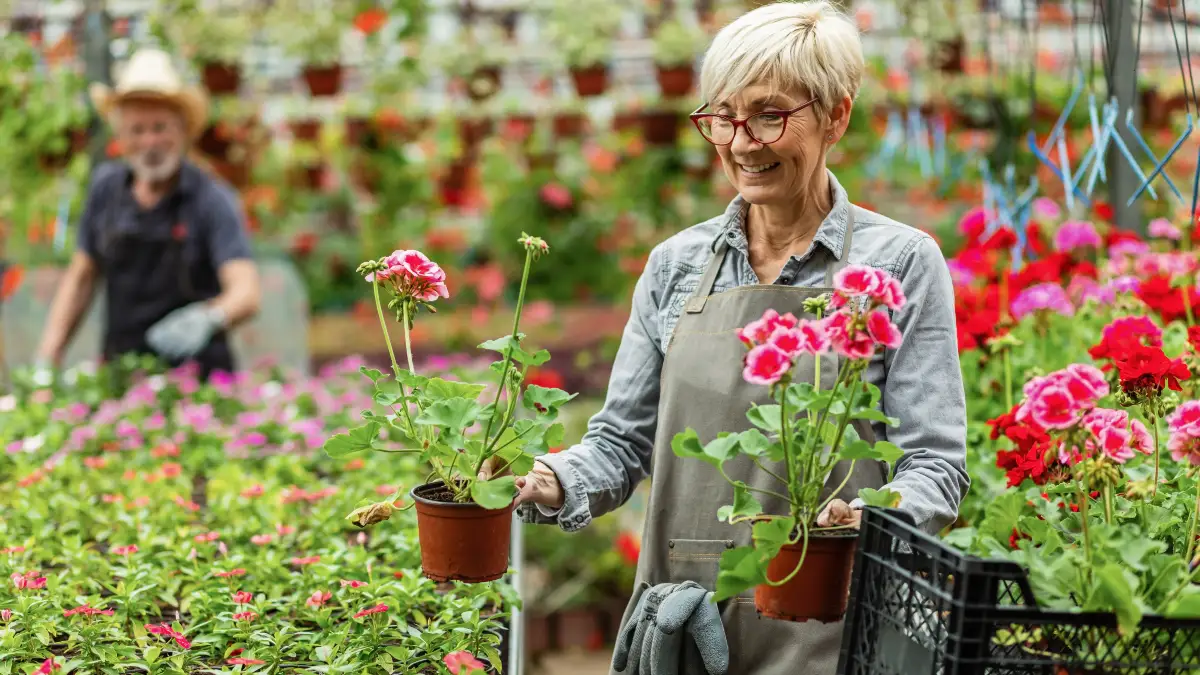
That sharp twinge you feel when standing up after weeding isn’t just a sign of a hard day’s work. It is your body’s alarm system. When you kneel, you put roughly seven times your body weight in pressure directly on your kneecaps. For many of us, this constant stress leads to Gardner’s Knee or makes existing arthritis feel much worse.
You don’t have to quit the hobby you love because of joint pain. Instead, you need to change how you work. You will learn how to shift to a vertical mindset that keeps you off the ground. We will look at the best garden adaptations for 2026, including high tech tools and smarter layouts.
Most importantly, you’ll learn which biological signals mean it’s time to stop before you do real damage. No kneel gardening isn’t just a trend; it’s how you keep your hobby sustainable for the next thirty years.
The Hidden Signal: Why Your Knees Are Rebellious?
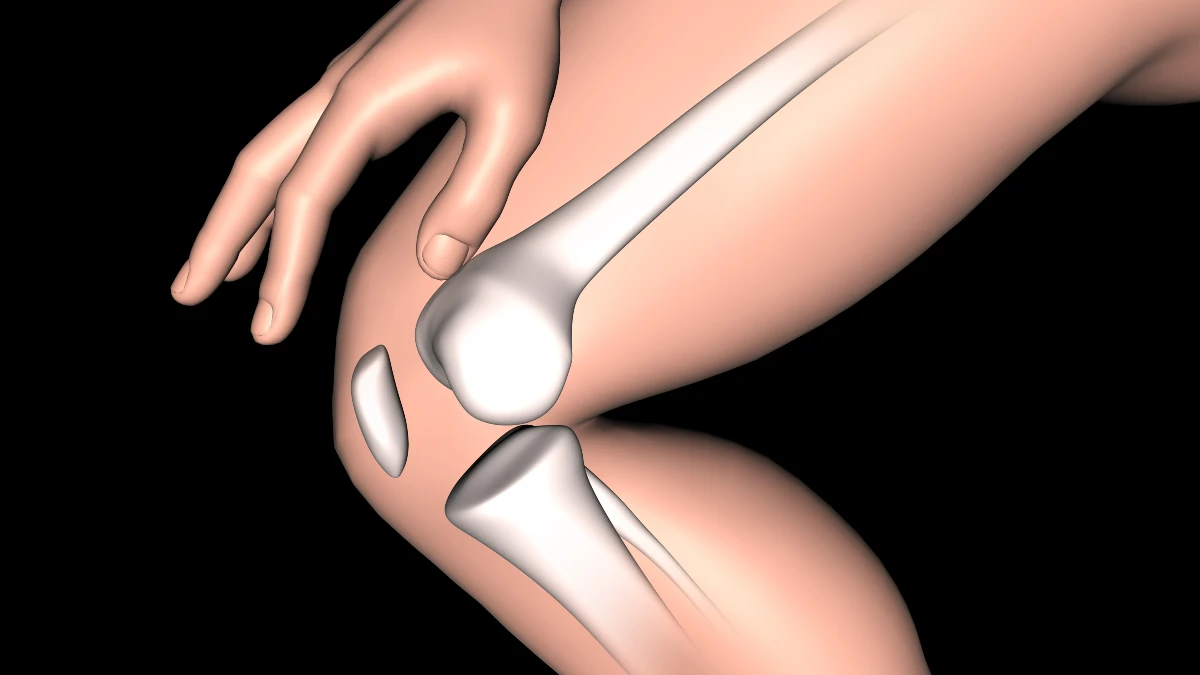
Your knees aren’t just tired; they might be inflamed. Constant kneeling can cause prepatellar bursitis. This is when the fluid filled sac in front of your kneecap gets irritated and swells up. Doctors often call this Gardener’s Knee. And here is why that matters: your joints have a limited amount of tread on them, much like car tires.
Pushing through the pain causes permanent cartilage loss. Once that cushion is gone, it doesn’t grow back. According to the CDC, 1 in 4 adults already deals with some form of arthritis. Repetitive kneeling is a primary trigger for these painful flare ups. Listen to your knee health.
If you see redness, feel heat, or notice a squishy swelling on the bone, your body is telling you to stop. Ignoring joint inflammation now could mean surgery later. You can still have a beautiful yard without punishing your lower body. You just need to change the height of the game.
Bring the Garden Up: Design Adaptations for Joint Pain
If the ground is the enemy, move the dirt higher. Raised beds are the gold standard for saving your joints. In 2026, the trend has shifted toward Table Gardening. These are elevated wooden or galvanized steel beds that sit about 30 inches high. At this height, you can pull up a chair or stand comfortably while you work.
Container gardening is another quick win. Using large pots on casters allows you to move your plants to a patio table where you can reach them easily. If you have limited space, look into Wall Gardens or vertical planters. These systems use gravity to help with watering and keep every plant at eye level.
Good ergonomic garden design focuses on your reach. Build your beds narrow enough so you never have to lean forward more than a few inches. This protects your lower back while saving your knees. Using 30 inch high galvanized steel beds is perfect because they are durable and high enough for wheelchair or stool access. Bringing the soil to you changes everything.
The No-Kneel Toolbox: 2026 Essential Gear
You don’t need to get on all fours to pull a weed. No kneel gardening tools have improved significantly this year. The most important tool you can own is a stand up weeder. Brands like Fiskars or the classic Grampa’s Weeder use a claw and a foot lever. You simply poke it into the ground, step on the lever, and the weed pops out while you stay upright.
For surface weeds, use long handled hoes. The Action Hoe, also called a stirrup hoe, is a top choice. It has a looping blade that oscillates back and forth. You can clear a large area just by pushing and pulling the handle. It slices weeds at the root without requiring any bending.
For harder soil, look at lightweight, battery powered cultivators. These mini tillers do the heavy lifting for you. They are small enough to fit between rows but strong enough to break up crusty dirt. Using these long handled hoes and power tools reduces the grip strength needed and keeps your spine neutral. Leverage is your best friend when your joints are acting up.
Lifestyle & Habit Shifts: Weeding Smarter, Not Harder
Changing your tools is only half the battle. You also need to change your habits. Start using the 20 Minute Rotation rule. Never stay in one position for more than 20 minutes. If you are standing and weeding, switch to a seated task like pruning after a short time. This prevents one specific joint from taking all the heat.
Mulching is your best defense. If you cover your soil with a thick layer of organic mulch or use Sheet Mulching layering cardboard and compost, weeds can’t grow. If they don’t grow, you don’t have to pull them. This is the ultimate work smarter move for garden ergonomics.
Finally, invest in mobility aids like a SitterKneeler hybrid stool. These are sturdy metal frames with a foam pad. You can use it as a bench to sit on, or flip it over to use the legs as handles to help yourself stand up. It provides a physical boost that makes getting around the yard much safer.
Why Your Shoes Are Part of Your Garden Gear?
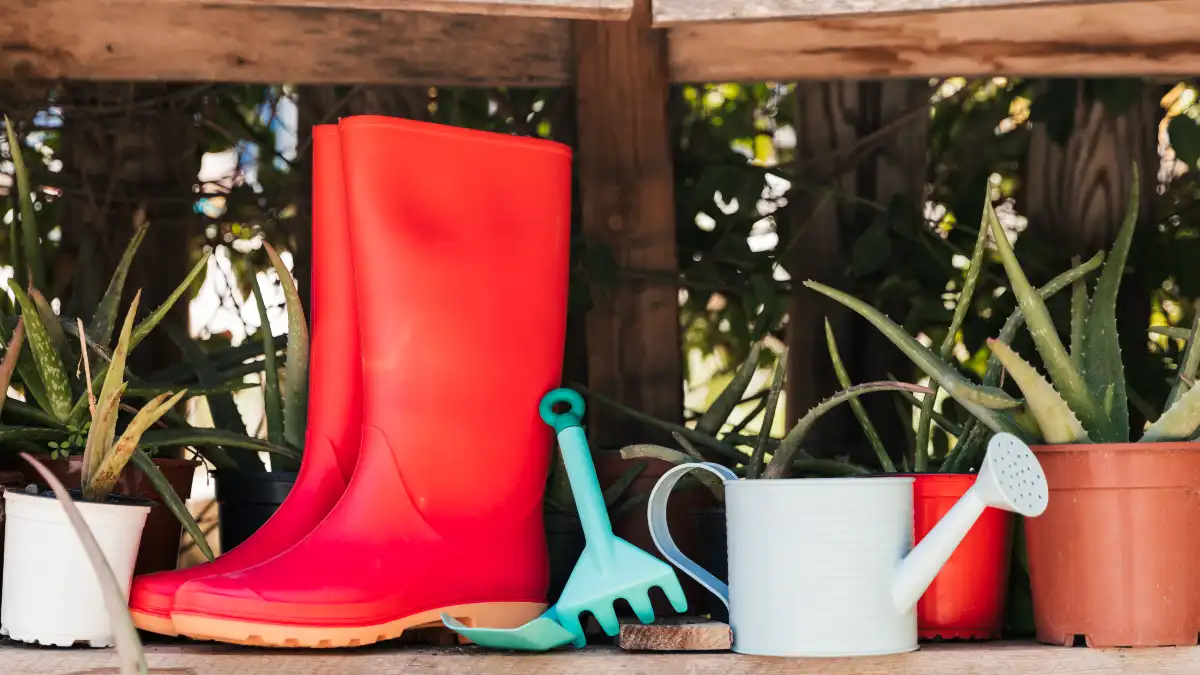
You might not think about your feet when your knees hurt, but everything is connected. If your shoes don’t have good arch support, your ankles roll inward. This puts extra torque or twisting force on your knee joints every time you take a step on uneven soil. Wearing flimsy flip flops or old sneakers while gardening is a recipe for a flare up.
Instead, look for waterproof gardening boots with a thick, non slip sole. A solid base keeps your legs aligned and prevents those micro twists that irritate joint inflammation. And here’s why that matters: when your foundation is stable, your muscles don’t have to work twice as hard to keep you balanced. Proper joint support starts from the ground up.
The 2026 Way: Let a Robot Pull the Weeds
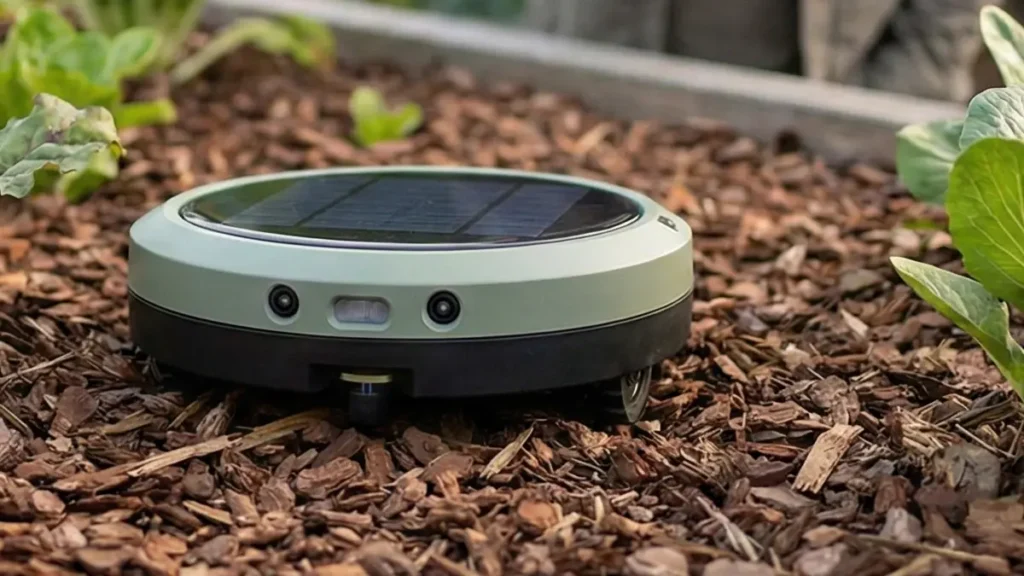
If your joints are truly struggling, it might be time to hire some help that doesn’t need a paycheck. Solar powered robotic weeders have become much more affordable this year. These little machines live in your garden beds and graze on weeds as soon as they sprout.
They use sensors to tell the difference between a flower and a weed, so they can keep the soil clear without you ever having to bend over. Using a robot reduces the need for manual no kneel gardening tools entirely. While they aren’t perfect for every garden, they work wonders in open, mulched areas.
Letting a machine handle the daily maintenance means you only have to step in for the fun parts, like harvesting and planting. This is a massive win for low effort maintenance and long-term joint health.
Conclusion
Gardening should be a source of peace, not a source of chronic pain. Your joints are giving you signals for a reason. By lifting your garden with raised beds and using high leverage tools, you can keep your green thumb active for decades.
These adaptations for gardening with joint pain allow you to focus on the joy of growing rather than the cost of standing up. You don’t have to win a fight against gravity to have a great harvest.