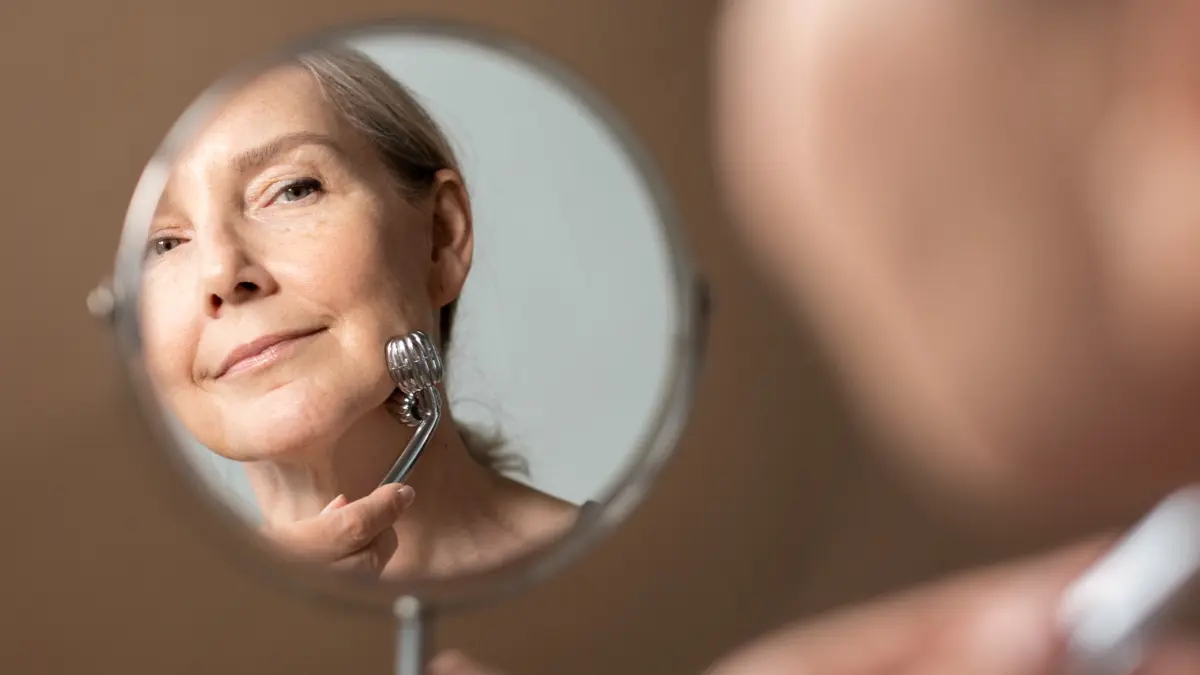
You wake up and your ankles feel like they need oiling. You look in the mirror and notice your skin doesn’t have its usual “snap.” It feels a bit thinner, maybe a bit more yellow than it used to be.
Most people tell you this is just “getting older.” They say you should get used to the morning creaks and the new wrinkles. But 2026 research shows something else is happening. It is a process called glycation. [Read the 2026 study on how sugar damage affects your health here].
Think of it as biological “caramelization.” Just like sugar turns brown and sticky when you heat it on a stove, sugar in your blood can stick to the proteins in your body. When this happens, your flexible tissues turn stiff. Your skin loses its bounce. Your joints feel like they are filled with glue.
For years, doctors thought this damage was a permanent death sentence for your collagen. But new protocols are changing that story. We now know the difference between “early” sticky sugar and “stubborn” damage.
In this guide, we will look at how to un-stick your cells. You will learn why you feel stiff at 7:00 AM and how 2026 science helps you fight back.
The Science of “Sticky” Cells: What is Glycation?
To understand glycation, think of a piece of toast. When you put bread in the toaster, the heat causes the sugars and proteins in the bread to bond. This makes the bread brown, crispy, and stiff. Scientists call this the Maillard reaction.
Inside your body, a similar thing happens even without the toaster. When you have extra sugar (glucose or fructose) floating in your blood, it looks for a “partner.” It usually grabs onto proteins like collagen and elastin.
Collagen is what keeps your skin firm and your joints moving smoothly. Elastin lets your tissues stretch and snap back. When sugar “hijacks” these proteins, they become distorted and brittle.
The Rise of AGEs
These sugar-protein bonds eventually turn into “Advanced Glycation End Products,” or AGEs. The name is perfect because they literally make you age faster.
By 2025, dermatology updates confirmed that we can now detect over 20 different types of AGEs in human skin. These aren’t just “waste products.” They act like tiny pieces of grit in a machine, causing inflammation and breaking down your body’s structural matrix.
Is Glycation Reversible? (The 2026 Reality)
The short answer is: It depends on the stage. Until recently, scientists thought that once sugar bonded to a protein, the damage was done forever. But 2026 protocols focus on “precursor clearing.” This means stopping the “sticky” molecules before they become permanent “glue.”
Here is how the stages of glycation work:
The Three Stages of Sugar Damage
| Stage | Scientific Name | Reversibility | What You Can Do |
|---|---|---|---|
| Stage 1 | Schiff Bases | Highly Reversible | Manage blood sugar and stay hydrated. |
| Stage 2 | Amadori Products | Partially Reversible | Use targeted nutrients like Alpha-Lipoic Acid. |
| Stage 3 | Advanced Glycation End Products (AGEs) | Stubborn / Persistent | Focus on clearing MGO and preventing new glycation links. |
The 2026 Breakthrough: MGO Clearing
The real enemy isn’t just “sugar” it is a compound called Methylglyoxal (MGO). This is a highly reactive “pre-AGE” molecule.
A landmark 2025 study published in the journal Aging showed that we can lower MGO levels using “Gly-Low” compounds. In human cell cultures, a mix of Alpha-Lipoic Acid (ALA) and Nicotinamide helped reduce tissue stiffness.
While we still can’t “undo” every single permanent cross-link in your collagen, we can clear the “pre-glue” (MGO) before it sets. This stops the damage from getting worse and helps your body repair what it can.
Why Your Mornings Feel “Creaky” (The Joint Connection)
Have you ever wondered why your joints feel stiff after you’ve been still for eight hours, but feel better after a hot shower and a walk?
This is often due to the “Gel Phenomenon.” Your joints are cushioned by synovial fluid. Healthy fluid is like a thin oil. But when you have high levels of AGEs, that fluid becomes thick, like cold honey. Even worse, glycation creates “cross-links” in your tendons and ligaments.
The Rubber Band vs. Brittle Plastic
Think of a healthy tendon like a new, stretchy rubber band. It can pull, snap back, and absorb shock.
A glycated tendon is like a piece of plastic that has been sitting in the sun. It is dry and brittle. If you pull it too hard, it doesn’t stretch it cracks. This is why “morning mobility issues” are one of the first advanced glycation end products symptoms. Your connective tissue has literally lost its ability to slide and glide.
The “Sugar Sag”: How Glycation Changes Your Skin
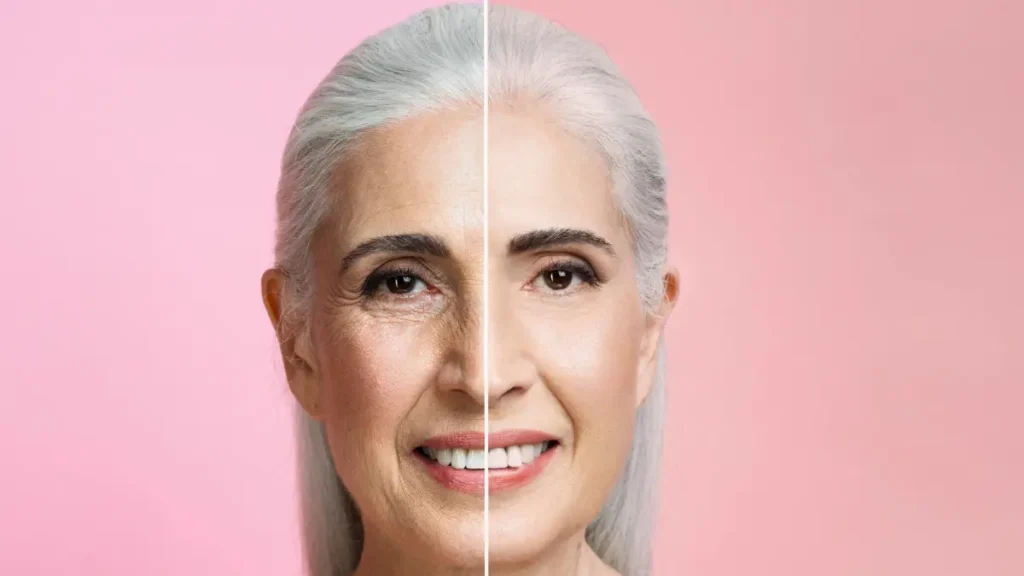
In the mirror, glycation shows up as the “Sugar Sag.” Your skin collagen is shaped like a triple helix three strands twisted together for strength. Sugar molecules break this structure. Instead of a strong rope, your collagen becomes a tangled mess.

Visible signs of glycation include:
- Criss-cross wrinkles: Fine lines that look like a cross-hatch pattern, often on the cheeks.
- The “Thumb-print” test: If you press your thumb into your cheek and the skin takes a few seconds to bounce back, your elastin is likely glycated.
- Yellowing/Browning: Skin loses its “pink” glow and takes on a sallow, dull, or yellowish tone (the actual browning of the Maillard reaction).
Anti-glycation skincare in 2026 has moved beyond simple moisturizers. New creams use ingredients like Aminoguanidine or Carnosine to act as “sugar decoys.” They give the sugar something else to stick to so it leaves your collagen alone.
2026 Anti-Glycation Protocol: Actionable Steps
You don’t have to wait for your cells to get stickier. Here is the 2026 roadmap to halt the damage.
1. The “Moist Heat” Rule for Cooking
How you cook your food matters as much as what you eat. High, dry heat (grilling, frying, roasting) creates AGEs right on your plate. You then eat those “sticky” molecules, and they enter your bloodstream.

- Do This: Poach, steam, or stew your proteins. Use a slow cooker.
- Not That: Avoid charred meats or deep-fried foods.
- The Pro Tip: Add lemon juice or vinegar to your meat before cooking. The acid can cut the formation of AGEs by up to 50%.
2. High-Impact Supplements
Recent trials at the Buck Institute for Research on Aging have highlighted three specific nutrients that fight glycation:

- Benfotiamine (B1): A fat-soluble version of Vitamin B1. It helps your body block the pathways that turn sugar into AGEs.
- Alpha-Lipoic Acid (ALA): This is the “master antioxidant” for blood sugar. It helps clear MGO precursors.
- Carnosine: This molecule acts as a “sacrificial lamb.” It lets sugar stick to it so the sugar doesn’t stick to your skin or joints.
3. The “Morning Micro-Stretch”
To fix “creaky” joints, you need to break the “gel” every morning. Before you even get out of bed, do two minutes of gentle circular movements.

- Ankle circles: 10 times each way.
- Wrist rolls: 10 times each way.
- Knee-to-chest tucks: Hold for 5 seconds.
This movement warms up the synovial fluid, making it more liquid and less “sticky.”
4. Skin Autofluorescence (The AGE Reader)
If you are serious about your biological age, look for a longevity clinic that uses an AGE Reader. This tool uses a special light to measure the “glow” of AGEs in your skin. In 2026, this has become the gold standard for tracking if your anti-glycation diet is actually working.

Conclusion
Is glycation reversible? While you might not be able to “undo” years of deep collagen cross-linking overnight, the 2026 reality is hopeful. You can stop new damage. You can clear the “sticky” MGO precursors that make your joints feel stiff today. And you can protect the collagen you still have.
By changing how you cook, using the right “sugar-blocking” supplements, and moving your joints every morning, you can turn your body from “brittle plastic” back into “stretchy rubber.”
Start today with the “Acid Rule.” Next time you cook chicken or fish, squeeze a fresh lemon over it. It is a simple, five-second habit that cuts your sugar damage in half.