

That sudden, searing pain in your calf at 3 AM isn’t just a side effect of getting older. In your 50s, nocturnal leg cramps are often a direct signal from your nervous system that your electrolyte levels are out of balance.
Why 50+ Muscles Signal Through Night Cramps
Nocturnal leg cramps in your 50s are often a warning sign of an electrolyte imbalance, specifically involving magnesium, potassium, and sodium.
As you age, your kidneys lose a substantial portion of their ability to retain these essential minerals. This deficiency causes your nerves to misfire, leading to involuntary muscle contractions during rest that plain water alone cannot fix.
Many people assume they are simply “dehydrated” and reach for more plain water. But if you are already low on minerals, drinking more water can actually dilute your remaining electrolytes.
This creates a paradox where you feel thirsty despite drinking a gallon a day. Your muscles are starving for minerals, not just moisture.
Think of your electrolytes as the electrical grid for your legs. If the voltage drops because your kidneys are flushing out too much salt or magnesium, the “lights” start to flicker.
Those flickers are the small twitches you feel right before the full cramp hits. By the time you reach your 50s, your body requires more intentional mineral management to keep that grid stable.
But the real trouble starts at the cellular level, where two specific minerals act as a biological “on-off” switch for your muscles.
Can drinking too much water cause leg cramps at night? Yes. Over-hydration dilutes your blood sodium levels (hyponatremia), which disrupts the electrical signals needed for muscle relaxation. This is why you can drink a gallon of water and still wake up with cramps.
The Calcium-Magnesium Gate: A Bio-Electrical Mismatch
Your muscles rely on a precise “on-off” switch to function. This switch is controlled by two minerals: calcium and magnesium. When your nerve sends an action potential [the electrical ‘go’ signal for a cell], calcium floods into the muscle fiber to trigger a contraction.
Think of calcium as the finger that pulls the trigger. Under normal conditions, magnesium immediately follows to kick the calcium out, allowing the muscle to relax. In your 50s, if your magnesium levels are low, that “relaxation” signal never arrives.
The result is a biological “stuck” button. The muscle stays in a state of high-tension contraction because the gate that lets magnesium in to reset the system is empty.
You feel this as a rock-hard calf muscle that refuses to let go. This isn’t a cramp caused by “tightness” in the traditional sense; it is a chemical signaling failure where the “off” switch has been physically unplugged.
This electrical misfire is why simple stretching often feels like a temporary fix. You are physically pulling the muscle apart, but the underlying chemical signal is still screaming for the muscle to contract. This calcium-magnesium imbalance is the primary driver behind nocturnal leg cramps in your 50s.
But magnesium isn’t the only player on the field, other deficiencies can mimic these symptoms while hiding in plain sight.
Beyond Potassium: The Magnesium Deficiency Symptoms
While most people reach for a banana at the first sign of a cramp, potassium is rarely the sole culprit. In your 50s, magnesium deficiency symptoms often fly under the radar because they mimic general “aging” issues like fatigue or restless sleep.
Magnesium is responsible for over 300 biochemical reactions, including the one that tells your muscles to unclench. If you’re low, your body “steals” magnesium from your muscles to prioritize your heart and brain.
The magnesium theft leaves your leg muscles in a state of hyper-irritability. You might notice small twitches in your eyelids or a general sense of “tight” calves even when you haven’t exercised.
A major sign of this deficiency is “thirst paradox”, drinking plenty of water but still feeling a dry mouth or having dark urine. This happens because magnesium helps your cells actually absorb the water you drink.

Without it, the water just stays in your bloodstream, gets filtered by your kidneys, and leaves your body. You end up dehydrated at a cellular level despite a full bladder.
This mineral drain is further complicated by how your nervous system changes as the decades pass, specifically in how it senses muscle length.
Age-Related Muscle Spindles and Nerve Misfiring
As you cross into your 50s, the hardware of your nervous system undergoes a subtle recalibration. Your muscles contain tiny sensors called muscle spindles [specialized fibers that monitor muscle stretch and speed]. These sensors act like a thermostat for your limbs, telling the brain exactly how much tension a muscle should hold.
With age, these spindles can become hypersensitive. When you lie still at night, a slight movement, like pointing your toes under a heavy blanket, can trick a spindle into thinking the muscle is being overstretched.
In a split second, the spindle sends an emergency signal to your spine. Your nervous system responds by slamming the muscle into a protective contraction. This is why many nocturnal cramps feel like they “explode” out of nowhere during a simple transition in sleep.
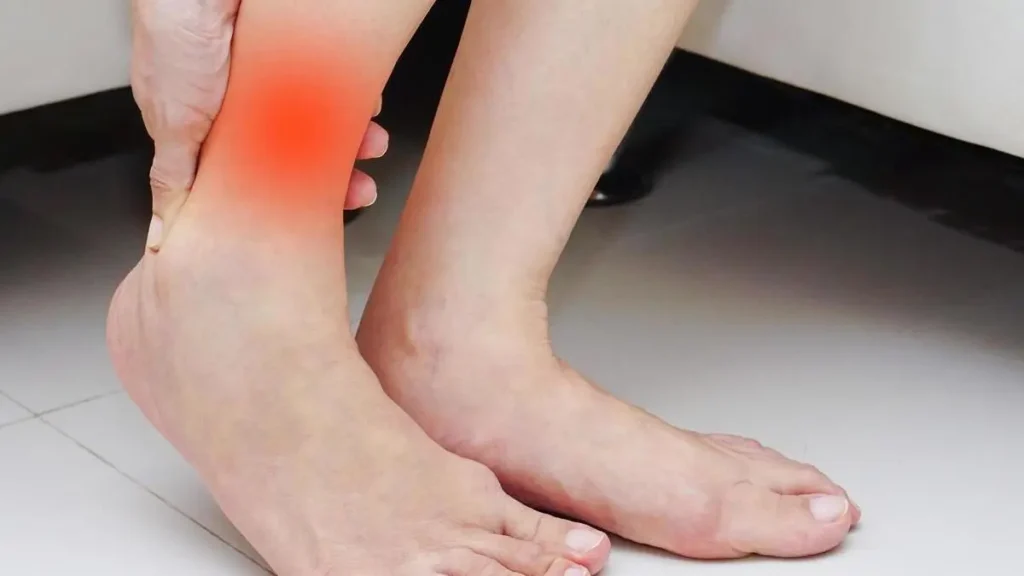
This heightened sensitivity is often worse if your lower back has any minor nerve compression, which is common after age 50. The nerves in your lumbar spine [lower back] provide the electrical current for your legs. If that current is “noisy” due to age-related wear, your muscle spindles are even more likely to trip the alarm.
Good news: you can manually override this hypersensitivity by changing how you hydrate and move during the daylight hours.
The 24-Hour Protocol to Quiet Your Nerves
Stopping the 3 AM wake-up call requires a shift from “reactive stretching” to “proactive loading.” The goal is to flood your system with the minerals your kidneys are struggling to hold onto before you hit the pillow.
Your first step is the late-afternoon mineral load. Instead of plain water, add a pinch of high-quality sea salt and a squeeze of lemon to your glass. This provides the sodium and potassium needed to pull moisture into your cells rather than letting it pass straight to your bladder.
For your evening meal, prioritize magnesium-rich foods like cooked spinach, pumpkin seeds, or halibut. Magnesium is bulky and absorbed slowly, so eating it 3-4 hours before bed gives your blood levels time to peak right as you fall asleep.

If food isn’t enough, many people find success with a transdermal [through the skin] approach. Applying a magnesium oil spray or taking a 20-minute Epsom salt soak before bed bypasses the digestive tract entirely. This delivers the mineral directly to the tired tissues of your calves and feet.
| Nutrient | Daily Goal for 50+ | Best Source |
| Magnesium | 400–420 mg | Magnesium Glycinate or Spinach |
| Potassium | 3,500–4,700 mg | Avocado, Coconut Water, Potatoes |
| Sodium | 1,500–2,300 mg | Sea salt (if not on BP meds) |
Magnesium carries the highest daily target and is hardest to absorb, making it the priority mineral. This protocol stabilizes the electrical charge of your muscle cells.
When Cramps Signal Vascular Concerns
While most nighttime spasms are electrical, some are mechanical. If your “cramps” only happen when you walk and stop when you rest, or if they feel more like a heavy ache than a sharp “knot,” the issue may be your circulation.
Peripheral Artery Disease [narrowing of the arteries in the legs] can mimic a cramp by starving the muscle of oxygen-rich blood. After 50, the risk for this “plumbing” issue increases, especially if you have a history of high blood pressure or smoking.
A key differentiator is the skin. If your leg is cool to the touch, has a pale or bluish tint, or if you notice a loss of hair on your lower shins, it is time to look beyond electrolytes. These are signals that the “pipes” are restricted, not just the “wires” misfiring.
True electrolyte cramps usually respond to the 24-hour protocol within a few days. If they don’t, your body might be signaling a deeper issue with how it moves blood to your extremities.
Your Questions Answered
What deficiency causes leg cramps at night?
The “triad” of magnesium, potassium, and sodium is the most common cause. Magnesium is the primary relaxation mineral, while potassium and sodium manage the electrical signals that tell a muscle when to stop contracting.
Why do I get leg cramps at night in my 50s?
Your kidneys lose a significant portion of their ability to hold onto minerals as you age, leading to chronic low-level depletion. Additionally, age-related nerve sensitivity makes your muscles more likely to “overreact” to small movements during sleep.
How can I stop leg cramps immediately?
Flex your foot upward toward your shin to manually stretch the calf, then apply heat or a magnesium-based spray to the area. Drinking 4-6 ounces of tonic water (which contains quinine) or a shot of pickle juice can also trigger a neural reflex that stops the cramp.
What is the best drink for leg cramps at night?
Coconut water or a homemade electrolyte mix (water, a pinch of sea salt, and a splash of orange juice) is most effective. These provide a balanced ratio of minerals that plain water lacks, helping to hydrate your cells rather than just diluting your blood.
Conclusion
Leg cramps in your 50s are a sophisticated form of biological feedback, not an inevitable “age tax.” By understanding that your kidneys and nervous system have shifted their requirements, you can stop the 3 AM wake-up calls by focusing on mineral density rather than just “drinking more water.”
When you balance your nocturnal leg cramps 50s protocol with consistent magnesium loading and proper electrolyte ratios, you move from reactive pain management to proactive sleep recovery. Start tonight by adding a pinch of sea salt to your afternoon water and prioritizing a high-magnesium snack like pumpkin seeds before bed.
Your Leg Cramp Protocol:
- Afternoon: Add sea salt and lemon to 16oz of water.
- Evening: Eat one serving of magnesium-rich greens or seeds.
- Pre-Sleep: Apply magnesium oil or soak in Epsom salts for 20 minutes.
⚠️MEDICAL DISCLAIMER
This content is for informational and educational purposes only and does not constitute medical advice, diagnosis, or treatment. Before making changes to your diet, exercise routine, or supplement regimen, consult a qualified healthcare provider. If you experience sudden leg swelling, skin color changes, or chest pain, seek emergency medical care immediately.