

The steam from your morning coffee carries that familiar, slightly metallic aftertaste of a “yellow packet” sweetener. You glance at your reflection in the microwave door. You’re doing the work — the walking, the protein, the early mornings. The scale still feels stuck. Your energy dips by noon. You wonder if the very thing you’re using to save calories is actually signaling your body to store them.
Research from a large prospective cohort of over 103,000 adults links higher artificial sweetener consumption to a 17% increased cardiovascular disease risk. If you think all sugar substitutes are eventually proven to be bad for you, you aren’t wrong to be skeptical. It is not your fault that the “diet” industry has made healthy choices feel like a moving target. You deserve a sweetness that doesn’t come with a metabolic tax.
The hidden culprit is often how these compounds talk to your insulin receptors. While your tongue tastes “sweet,” your pancreas might be bracing for a sugar hit that never arrives. This confusion can stall weight loss and keep you in a cycle of hunger.
Stevia and monk fruit offer a way out, but they work through entirely different biological pathways. Fiona recently noticed this herself. She sat at her kitchen table, staring at a coffee that just didn’t taste right. She felt frustrated that her “healthy” choice left her feeling jittery and unsatisfied.
Stevia vs Monk Fruit After 50: The Stevia Case
Stevia comes from the Stevia rebaudiana plant, a shrub native to South America. People have used these leaves for centuries to sweeten teas. The sweetness comes from steviol glycosides which are hundreds of times sweeter than table sugar.
Your body processes stevia differently than white sugar. Steviol glycosides pass through your upper gastrointestinal tract mostly intact. They eventually reach the colon, where your gut bacteria break them down. This prevents the rapid glucose spike associated with traditional desserts.
Stevia isn’t just a sweetener; it’s a vasodilator that can slightly impact blood pressure. This makes it a fascinating option for those monitoring cardiovascular health alongside their weight.
The plant interacts with your Sweet Taste Receptors (T1R). These are the sensors on your tongue and in your gut that detect energy. When these receptors are triggered without actual glucose, it can sometimes cause a “cephalic phase insulin response.” This is like a doorbell being rung by a prankster when no guest is at the door.
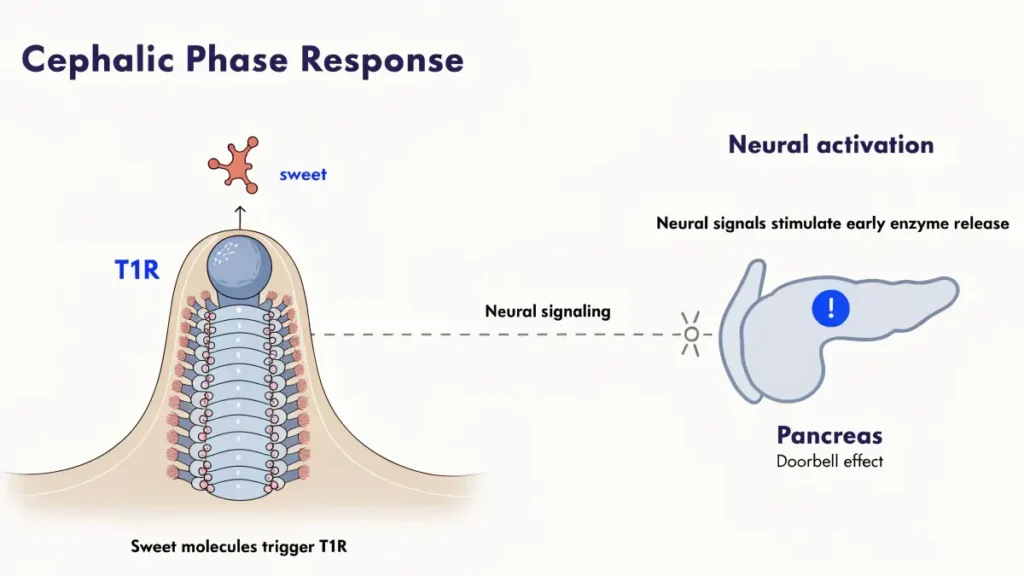
Your pancreas may release a tiny amount of insulin just in case sugar is coming. For most people, this is negligible. If you are struggling with stubborn weight, even small hormonal signals matter. Fiona decided to experiment with a high-quality liquid stevia extract instead of the powdered versions. She found that the concentrated drops eliminated the “dusty” aftertaste she hated.
Note on Stevia vs Monk Fruit After 50: Your biology is your own. Use this as a guide, not a guarantee.
Stevia vs Monk Fruit After 50: The Monk Fruit Case
Monk fruit, or Siraitia grosvenorii, is a small round melon grown in Southeast Asia. Historically harvested by Buddhist monks, it has been used for centuries in traditional medicine. Unlike most fruits that derive sweetness from fructose, monk fruit’s power comes from unique antioxidants called mogrosides.
These mogrosides are not absorbed in the upper gastrointestinal tract. Instead, they are metabolized by your gut microbes. This means the sweetness doesn’t provide calories or immediate fuel for your bloodstream. This makes it a favorite for those managing metabolic health.
Monk fruit mogrosides (antioxidant compounds unique to the fruit) act as chemical scavengers that hunt free radicals while they sweeten your tea. That dual role sets them apart from every other natural sweetener available.
Fiona tested monk fruit during her Sunday baking session, swapping it into her morning muffins. She noticed the texture was remarkably similar to sugar. She felt no heavy “slump” after her mid-morning treat. Her husband didn’t even notice the switch.
You must be a detective when reading labels. Many bags labeled “monk fruit” are actually 99% erythritol with just a dusting of the actual fruit extract. These “fillers” are like the styrofoam peanuts of the supplement world. They take up space but provide no nutritional value.

Note on Stevia vs Monk Fruit After 50: Results vary from person to person. This is a starting point, not a prescription.
Head-to-Head: Blood Sugar, Insulin, and Gut Health
Stevia vs Monk Fruit After 50 comes down to one core difference: stevia ferments in your gut and may trigger a small insulin response, while monk fruit bypasses both pathways entirely and acts as an antioxidant. For most people over 50 managing weight or blood sugar, monk fruit is the more metabolically neutral choice. Stevia interacts heavily with your gut bacteria, specifically Bacteroides, which ferment the steviol glycosides in your colon.
This fermentation process is generally healthy. For some, it can cause mild bloating if the gut is sensitive. Marcus, an avid runner, found this out when he tried new powders. He used liquid stevia to avoid the GI distress caused by sugar alcohols, but he had to find the right balance for his digestive system.
How to Choose the Right Match
- Choose Stevia if: You are monitoring blood pressure and prefer a leaf-based, minimally processed option.
- Choose Monk Fruit if: You have a sensitive stomach or dislike the “licorice” aftertaste of other plants.
- Avoid both if: They contain “maltodextrin” or “dextrose” on the ingredient list.
The “bitter” aftertaste of stevia is actually your tongue’s way of identifying a structural similarity to medicine. Evidence suggests stevia can actually lower blood sugar in some individuals. This is called a “hypoglycemic effect.” While it sounds like a benefit, if your blood sugar drops too low, your body might trigger a hunger signal.
Monk fruit tends to be more metabolically neutral. It doesn’t ring the “insulin doorbell” quite as loudly as stevia might. This makes it a top-tier choice for those strictly focused on maintaining a fasted state.
Note on Marcus’s Journey: His experience is one data point. Yours may look completely different.
The After-50 Factor: Hormones and Taste Bud Changes

As you move past 50, your relationship with sweetness undergoes a biological shift. Your number of taste buds naturally declines. Those that remain often become less sensitive. This is why that coffee Fiona used to love suddenly tastes “flat.”
Hormonal changes also play a massive role. This is the part most guides skip. Shifts in estrogen and testosterone can alter insulin sensitivity. This makes your body more reactive to anything that tastes like sugar. Your brain still expects a calorie reward when it tastes “sweet.” When it doesn’t get it, the resulting “hunger noise” can be louder than it was a decade ago.
Monk fruit often wins the “palate test” in this age group. Its sweetness profile is “cleaner” and matches the rounded flavor of cane sugar more closely. It doesn’t trigger that medicinal alarm bell on the back of the tongue. This allows you to use less overall, helping to reset your “sweetness threshold.”
Marcus found that his “sweet tooth” was actually a cry for metabolic stability. He switched to a cleaner monk fruit extract. He noticed his cravings gradually diminished. He wasn’t just swapping one chemical for another; he was quieting the hormonal signals that kept him searching for a quick energy fix.
How to Choose Based on Your Symptoms
- If your main complaint is afternoon energy crashes, start with monk fruit. Its metabolically neutral profile avoids the cephalic phase response that can deepen afternoon fatigue.
- If you’re on blood pressure medication or managing hypertension, discuss stevia’s mild vasodilatory effect with your doctor before switching.
- If you notice bloating or GI discomfort within an hour of your morning drink, move to monk fruit liquid. Stevia’s fermentation in the colon is the likely cause.
- If you can’t tolerate any aftertaste, monk fruit wins. Its sweetness profile most closely matches cane sugar for post-50 palates.
- If neither feels right after seven days, stop blaming the sweetener. The filler ingredients are the problem. Check for maltodextrin and erythritol first.
Action Plan: Your 7-Day Sweetener Swap
You are the primary investigator of your own body. The goal of this transition isn’t just to replace one packet with another. It’s to retrain your metabolic signaling.
Tier 0 : Start Here, No Cost Required
How to Start the Swap
Check your current pantry before buying anything. Look for “dextrose” or “maltodextrin” on every sweetener label you own. These are hidden sugars that quietly undercut your progress. Cinnamon (½ tsp stirred into coffee) blunts sweetness cravings at zero extra cost. Frozen berries in morning yogurt deliver natural sweetness with fiber intact. Frozen is nutritionally equivalent to fresh.
Buy a 100% pure liquid extract to replace what you discard. Liquid forms carry no bulking agents that disrupt gut health. Start with 2 drops. These are highly concentrated.
For movement, a 10-minute walk after your morning drink is your single best free tool. It directly buffers the cephalic phase insulin response. A second option: 5 minutes of light stretching before your first sip lowers cortisol, which reduces sugar cravings at the source.

Days 1–3: The Palate Reset
Cut your current sweetener serving in half. If you usually use two packets, use one. Your taste buds are highly adaptive. Reducing the sweet intensity begins lowering your sweetness threshold from day one.
Days 4–5: The Pure Swap
Replace your remaining sweetener with two drops of pure monk fruit or stevia liquid. A bitter aftertaste with stevia means switch to monk fruit immediately. Fiona eventually found that monk fruit let her taste the actual flavor of the coffee beans for the first time.
Days 6–7: The Metabolic Check-in
Track two things in a basic notes app: energy level at the 2-hour mark and craving intensity before lunch. Two data points. More telling than any lab test at this stage. Marcus no longer reached for a mid-morning snack. He kept a small travel vial of drops in his bag so the office coffee station lost its hold on him.
Every situation responds differently. Use this as a starting point, not a prescription.
Tier 1 : If You Have Basic Healthcare Access
Ask your doctor for a fasting insulin test at your next annual physical. This one number tells you whether the cephalic phase response is a real concern for your metabolic profile. A standard HbA1c test provides a 90-day average of blood sugar behavior. That context matters when comparing how your body responds to each sweetener over weeks.
Tier 2 : Optional Enhanced Monitoring
A continuous glucose monitor worn for two weeks gives you real-time data on how each sweetener affects your individual glucose curve. This is optimal, not required. Most people get everything they need from the Tier 0 tracking approach first.
Your Question Answered
Is monk fruit better than stevia for diabetics?
For most people managing blood sugar, monk fruit is the more metabolically neutral choice. It bypasses gut fermentation and the cephalic phase pathway entirely. Stevia may offer mild blood pressure benefits for those with hypertension but carries a slightly higher chance of triggering an insulin signal.
Does monk fruit raise blood sugar?
Pure monk fruit extract does not raise blood sugar. Mogrosides are not absorbed in the upper gastrointestinal tract and provide no calories to the bloodstream. Always check the label. Many products labeled monk fruit are mostly erythritol or maltodextrin, which can affect blood sugar differently.
Which one is better for baking?
Monk fruit is generally superior for baking. It lacks the bitter aftertaste that heat can amplify in stevia. Look for brands specifically formulated for a 1:1 sugar replacement ratio.
What is the safest sugar substitute for diabetics?
Pure liquid extracts of monk fruit or stevia with no added maltodextrin, dextrose, or erythritol are among the most studied options for people managing blood sugar. Always confirm with your doctor before switching if you are currently on diabetes medication.
Can I use these while intermittent fasting?
Pure extracts without fillers are generally considered fast-safe. For a total gut rest, black coffee or plain tea remains the gold standard.
Conclusion
Navigating the world of Stevia vs Monk Fruit After 50 is about more than just cutting calories. It is about reclaiming your metabolic health. You have already taken the most important step by looking deeper into how these plants interact with your unique biology.
Fiona finally cleared her morning brain fog. Her energy held steady well into the afternoon. She felt a sense of control she hadn’t had in years.
For most people over 50, monk fruit is the cleaner starting point. Metabolically neutral, easier on the palate, and less likely to trigger that cephalic phase insulin response. If you’re actively monitoring blood pressure and prefer a centuries-old leaf-based option, stevia earns its place. But if you’re choosing one to start tomorrow, make it monk fruit.
Your 3-Step Success Protocol:
- Discard any sweetener containing maltodextrin.
- Use a 100% pure monk fruit or stevia liquid
- Perform the 7-day taper to reset your sweetness threshold.
⚠️MEDICAL DISCLAIMER :
This content is for informational and educational purposes only and does not constitute medical advice, diagnosis, or treatment. Before making changes to your diet, exercise routine, or supplement regimen, consult a qualified healthcare provider. This is especially important if you are on blood pressure or diabetes medication.