

Your body begins sending subtle warning signals years before serious health problems emerge. Most people in their 40s dismiss these early signs as “normal aging,” missing critical windows for prevention that could dramatically change their health trajectory after 50. Research shows that about 1 out of every 6 cardiovascular deaths occurs in adults younger than 65 CDC, yet many of these could be prevented with early detection and intervention.
These seven warning signs represent opportunities not inevitabilities. When you recognize and address them before age 50, you can prevent, delay, or even reverse age-related decline. Here’s what your body is trying to tell you.
1: Gradual Muscle Loss and Decreased Strength

You notice it first in small moments. Opening a jar takes more effort. Carrying groceries feels heavier. You’re winded climbing stairs that never bothered you before. Dr. Susan Ratay from University Hospitals explains that sarcopenia typically begins around age 50 and accelerates from there University Hospitals, but the process actually starts much earlier.
Recent research reveals that muscle mass decreases approximately 3-8% per decade after age 30, with strength declining even faster at 1.5-5% annually after 50 PubMed CentralPubMed Central. More concerning, about 25% of individuals experience accelerated muscle aging Aging-US that can be detected years before symptoms appear.
What’s Really Happening
Your muscles aren’t just shrinking they’re changing at the cellular level. Type II fast-twitch muscle fibers, responsible for power and quick movements, decline first PubMed Central. This explains why sudden movements feel harder in midlife. Additionally, muscles become less responsive to dietary protein and exercise PubMed Central as you age.
Early warning signs include:
- Difficulty rising from chairs without using your arms
- Reduced grip strength when shaking hands
- Fatigue after minimal physical exertion
- Taking longer to recover from workouts
The Prevention Strategy
The Cleveland Clinic emphasizes that you can reverse the effects of sarcopenia with lifestyle changes Cleveland Clinic. Research shows resistance training adds 1-1.5 kg of lean mass and up to 25% strength in just 12 weeks Healthline in people over 65.
Your action plan:
- Resistance training twice weekly: Focus on compound movements like squats and deadlifts
- Protein target: Aim for 1.2-1.5 grams per kilogram of body weight daily
- Track strength markers: Monitor grip strength and chair-stand test performance
2: Subtle Bone Density Changes and Joint Stiffness

Height loss isn’t just about posture it’s often your first clue about bone health. WebMD reports that about 40 million people in the U.S. have osteopenia WebMD, the precursor to osteoporosis that typically develops after age 50.
But bone loss begins much earlier. From about age 25 to 50, bone density tends to stay stable, but after 50, bone breakdown outpaces formation Johns Hopkins Medicine. Johns Hopkins research indicates that around 1 in 3 adults over 50 who don’t have osteoporosis have osteopenia Cleveland Clinic.
Early warning signs include:
- Gradual height loss (more than 1 inch over time)
- Back pain that worsens when standing
- Stooped posture development
- Brittle fingernails that break easily
- Loose teeth (indicating jawbone loss)
Your action plan:
- Weight-bearing exercise: Walking, stairs, resistance training 3-4 times weekly
- Calcium intake: 1,000-1,200mg daily from food sources
- Vitamin D optimization: Maintain blood levels above 30 ng/mL
- Bone density testing: Baseline scan if you’re over 40 with risk factors
3: Metabolic Slowdown and Insulin Resistance

That stubborn belly fat isn’t just cosmetic. Research indicates that insulin resistance affects up to 51% of the general population PubMed Central, often developing silently for years. The condition causes drowsiness, increased appetite, concentration difficulties, and abdominal weight gain PubMed Central.
Metabolic syndrome, affecting over one-third of U.S. adults NCBI, requires three of these criteria: waist circumference over 40 inches (men) or 35 inches (women), triglycerides ≥150 mg/dL, HDL cholesterol below 40 mg/dL (men) or 50 mg/dL (women), blood pressure ≥130/85, or fasting glucose ≥100 mg/dL.
Early warning signs include:
- Increased cravings for sugary foods
- Energy crashes after meals
- Dark skin patches (acanthosis nigricans) on neck or armpits
- Difficulty losing weight despite diet efforts
- Afternoon fatigue requiring coffee or naps
Your action plan:
- Intermittent fasting: 12-16 hour eating windows to improve insulin sensitivity
- Strength training: Builds insulin-sensitive muscle tissue
- Fiber focus: 25-35 grams daily to slow glucose absorption
- Lab monitoring: Track fasting glucose, HbA1c, and triglyceride-to-HDL ratio
4: Hormonal Fluctuations and Energy Changes

You’re tired despite adequate sleep. Your libido has vanished. Mood swings appear without obvious triggers. These aren’t character flaws they’re hormonal warning signs that typically emerge in the 40s.
For men, testosterone decreases at about 1% per year after age 30 London Andrology, with low testosterone becoming more prevalent around age 40 EVEXIAS. Women experience wide fluctuations in hormone levels in their late 30s-40s, primarily estrogen changes years before perimenopause officially occurs EVEXIAS.
Early warning signs include:
- Decreased motivation and drive
- Sleep disruption despite good sleep hygiene
- Reduced muscle mass despite exercise
- Mood instability and increased irritability
- Brain fog and memory issues
- Changes in body composition
Your action plan:
- Comprehensive hormone testing: Include free testosterone, estradiol, thyroid panel, cortisol
- Sleep optimization: 7-9 hours with consistent wake/sleep times
- Stress management: Chronic stress elevates cortisol, suppressing sex hormones
- Strength training: Naturally boosts testosterone and growth hormone
- Professional evaluation: Consider hormone replacement therapy if clinically indicated
5: Cardiovascular Risk Factor Accumulation

You feel fine, but silent changes are occurring in your arteries. Research reveals that nearly half of adults over 40 may have ‘hidden’ heart disease Healthline without knowing it. The cardiovascular system begins deteriorating years before symptoms appear.
Every year, about 805,000 people in the United States have a heart attack CDC, with the average age being 65.5 years for males and 72 years for females Medical News Today. However, risk factors accumulate much earlier.
Early warning signs include:
- Blood pressure creeping above 120/80
- LDL cholesterol rising above 100 mg/dL
- Increasing resting heart rate
- Shortness of breath during routine activities
- Chest tightness during stress or exertion
- Cold hands and feet indicating poor circulation
Your action plan:
- Blood pressure monitoring: Home checks weekly, target below 120/80
- Lipid optimization: Annual testing, focus on particle size and inflammatory markers
- Aerobic fitness: 150 minutes moderate exercise weekly
- Inflammatory foods reduction: Limit processed foods, increase omega-3s
- Stress reduction: Chronic stress directly damages arteries
6: Cognitive Processing Speed Decline

You’re searching for words more often. Multitasking feels overwhelming. Decision-making takes longer. These aren’t signs of impending dementia they’re normal cognitive changes that typically begin around age 30 and subtly decline with age, affecting processing speed and attention UCSF Memory and Aging Center.
However, the University of California research shows that memory and working memory decline become more noticeable in the 40s and 50s Very Big Brain. More concerning, poor health and stress in the 20s directly affects cognition in the 40s UCSF.
Early warning signs include:
- Taking longer to make decisions
- Difficulty concentrating in noisy environments
- Increased effort required for complex mental tasks
- Occasional word-finding difficulties
- Reduced ability to multitask effectively
Your action plan:
- Sleep prioritization: 7-9 hours nightly for memory consolidation
- Cardiovascular exercise: Increases brain-derived neurotrophic factor
- Cognitive challenges: Learn new skills, practice complex mental tasks
- Social engagement: Regular interaction stimulates cognitive processes
- Stress management: Chronic stress accelerates cognitive aging
7: Skin Changes and Cellular Aging
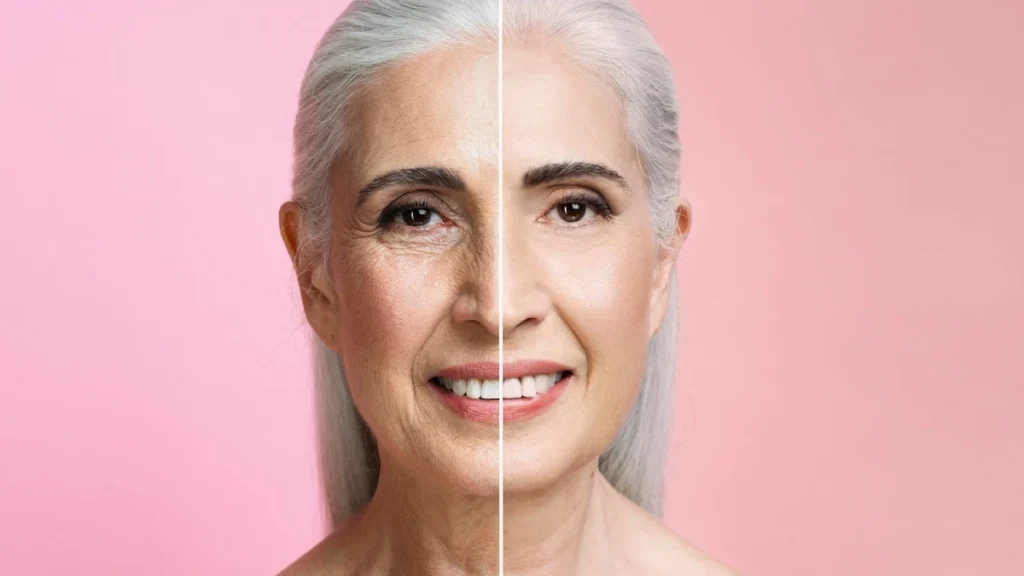
Your skin is your body’s largest organ and often the first to show aging signs. Research indicates that skin aging typically starts around age 25, with collagen production slowing MedicineNet. The visible changes in your 40s reflect deeper cellular processes affecting your entire body.
Dermatologist Dr. Melanie Palm explains that 90% of visible skin changes are caused by photoaging from UV exposure Skin Cancer Foundation, while we lose 1% of collagen in skin each year after our mid-20s Cadogan Clinic.
Early warning signs include:
- Fine lines appearing around eyes and mouth
- Decreased skin elasticity when pinched
- Slower wound healing than in younger years
- Increased bruising from minor bumps
- Dry skin despite adequate hydration
- Changes in skin texture and thickness
Your action plan:
- Daily SPF protection: Minimum SPF 30, reapply every 2 hours
- Antioxidant support: Vitamin C, E, and polyphenol-rich foods
- Retinoid use: Promotes collagen production and cell turnover
- Hydration optimization: Both internal (water intake) and external (moisturizing)
- Sleep quality: During sleep, cellular repair processes accelerate
Conclusion
Research shows the decade before 50 is your critical window for intervention.
MODIFIABLE TRAJECTORY:
These seven warning signs aren’t inevitable markers of aging they’re your body’s early alert system. The difference between thriving after 50 and struggling with chronic health issues often comes down to what you do in your 40s when these subtle changes first appear.
Research consistently shows that the decade before 50 is a critical window. After 50, the average person loses up to one-third of their peak muscle by age 80 Eureka Health, but early intervention can prevent most of this decline. Similarly, some people can reverse osteopenia and regain typical bone density Cleveland Clinic when they act quickly.
The good news? Every single warning sign is modifiable. It’s muscle loss through resistance training, bone density through weight-bearing exercise, metabolic dysfunction through diet changes, hormonal imbalances through optimization, cardiovascular risks through lifestyle modifications, cognitive decline through brain training, or skin aging through protection strategies you have the power to change your trajectory.