

You don’t notice the damage when you’re mowing the lawn at 35. But you feel it at 65 when you can’t hear your grandkids. It is a slow, quiet change that happens over decades. Statistics show that 50% of adults over age 75 have significant hearing loss. The sad part? Most people wait seven to ten years before they finally ask for help.
By then, the brain has forgotten how to process certain sounds. Doctors call this hearing loss in old age by a medical name: presbycusis. While aging is a factor, there is a secret culprit. It is the #1 factor people miss after they turn 50. It is called cumulative noise damage.
This means every loud sound you heard 20 years ago is catching up to you today. If you want to maintain your hearing health after 50, you need to know why this happens and how to stop it.
Why Your Hearing Fades: The Science of Presbycusis
To understand why you lose your hearing, you have to look inside your ear. Deep inside, you have tiny hair cells called cilia. These cells pick up sound waves. They turn those waves into electric signals for your brain. As part of the aging process, these inner ear hair cells naturally wear out. They do not grow back.
When they die, you lose the ability to hear high pitched sounds. This is called sensorineural hearing loss. This is why you might struggle to hear a woman’s voice or a bird chirping, even if the room is quiet. Johns Hopkins Medicine reports that 1 in 3 adults aged 65 to 74 is already affected.
It isn’t just about the ears, though. Your brain also plays a role. As you get older, the brain’s processing speed slows down. Even if your ears pick up the sound, your brain takes longer to tell you what the words mean.
This makes conversations feel exhausting. You aren’t just losing your hearing; you are losing your energy. And here’s why that matters: if you don’t address it, you might start avoiding people because talking is too much work.
The Secret Reason You Can’t Hear: How Old Noise Causes New Problems?
Most people think you only get noise induced hearing loss if you work in a factory or play in a rock band. This is the Rock Band Myth. The truth is much more common. Think about your life over the last 40 years. Have you used a leaf blower? Have you used a hair dryer every morning?
Have you driven in loud traffic with the windows down? These sounds don’t feel painful, so we think they are safe. But they cause cumulative damage. Think of your hearing like a pencil eraser. If you rub it hard once, it stays mostly the same. But if you rub it gently every day for 30 years, eventually the eraser is gone. That is what everyday noise does to your ears.
For example, a 30 minute session mowing the lawn without ear protection is dangerous. Lawnmowers usually run at $85$ to $90$ dB. For comparison, a loud rock concert is about $105$ to $110$ dB. While the concert is louder, 30 minutes at $90$ dB is enough to start killing those tiny hair cells.
Over decades, these small moments add up. By the time you hit 50, the eraser is almost gone. This is why you suddenly notice hearing issues in your 50s and 60s. It wasn’t one loud event. It was a thousand quiet ones.
Why Your Brain Needs Your Ears to Stay Sharp?

ShutterstockYour ears and your brain work together as a team. When your ears stop sending clear signals, your brain has to work twice as hard to fill in the gaps. This is called listening fatigue. It is why you might feel exhausted after a simple lunch with friends. Over time, the parts of the brain that handle sound can actually shrink because they aren’t being used.
Doctors have found a strong link between untreated hearing loss and memory problems like dementia. If you don’t use your hearing muscles, your brain loses power. Staying social and hearing well is one of the best ways to keep your mind sharp as you age.
The 2026 Guide to Better Hearing Tech
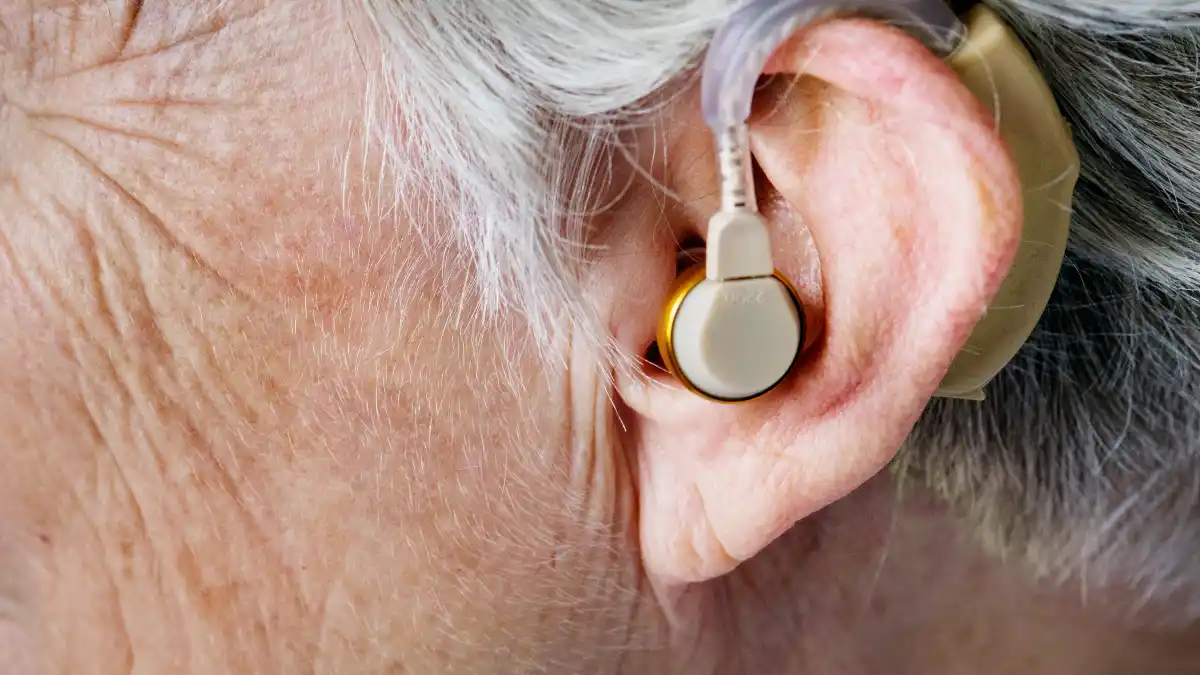
Forget the big, clunky hearing aids your grandparents used. In 2026, hearing technology is sleek and almost invisible. Many new devices look just like high end earbuds. You can even buy Over The Counter hearing aids at the pharmacy without a doctor’s note if your hearing loss is mild. These new tools use artificial intelligence to pick out voices in a crowd.
This means you can hear your friend at a loud party without the background music drowning them out. Most of these devices connect right to your smartphone. You can take phone calls or listen to music directly through your hearing aids.
How Your Diet Can Save Your Hearing?

What you put on your plate affects how well you hear. Your inner ear needs specific minerals to stay healthy and process sound. Potassium is very important because it helps regulate the fluid in your inner ear. You can find it in common foods like bananas, potatoes, and spinach.
Magnesium is another big helper. It acts like a shield that protects your ear cells from noise damage. Some studies show that people who eat plenty of leafy greens have a much lower risk of hearing loss. It is a simple way to protect your ears while you eat your daily meals.
Who Should You See? Picking the Right Ear Doctor
If you notice your hearing is fading, you might wonder who to call. There are two main types of experts: Audiologists and ENTs, Ear, Nose, and Throat doctors. An ENT is a medical doctor who treats physical problems. You should see them if your ears hurt, if you have a sudden loss of hearing, or if you feel dizzy.
They can check for infections or physical damage that might need medicine or surgery. An Audiologist is a specialist who focuses on how you hear and how to fix it. They are the experts in hearing tests and hearing aids. If your hearing is just fading because of age or noise, an Audiologist is usually the best place to start.

They can help you pick the right technology to fit your life. Many people see both to get a full picture of their ear health. Knowing who to call first saves you time and gets you the right help faster.
Conclusion
Your hearing is a mix of your biology and your biography, the history of every loud sound you ever heard. You can’t change your age. You can’t change the loud concerts of your youth. But you can change what you do today. Don’t wait for the world to go silent. Hearing loss in old age happens slowly, but you can manage it if you act fast.
Take one small step today. You might feel like the damage is already done, but protecting the hearing you have left is a big win. It is the difference between feeling left out and staying in the loop. When you hear better, you live better. Don’t let pride or fear keep you in a quiet world. Make that appointment, buy those earplugs, and stay part of the conversation.