

You run your thumb over the “Normal” range on your lab report, yet your throat still feels like it’s lined with sandpaper. It’s the second time this winter a simple cold has pinned you to the couch. You’re doing everything “right,” so why does your immune system feel like a fading signal? Immune resilience after 50 changes in ways most standard tests aren’t designed to catch. It is not your fault that your body’s internal “map” changes as you age.
Oregon State University research found that up to 40% of older adults do not consume enough zinc, and standard multivitamins rarely close that gap.
It is frustrating to feel like you are failing a health test you didn’t know you were taking. You might be told your blood work is fine while your body tells a different story through lingering fatigue. The primary cause is often a “hidden” deficiency where zinc stays in your liquid blood but never reaches your immune tissues. Patrice noticed her bruises took a long time to fade this year. This was a subtle sign that her internal repair crew was understaffed.
The “Invisible” Barrier: How Zinc Dictates Immune Resilience After 50
Zinc acts as the “on-switch” for the T-cell training academy. Patrice remembers feeling much more resilient in her 30s. Back then, her T-cells matured quickly. Now, that same process feels slow because her “training academy” lacks the necessary fuel. This process relies on a hormone called thymulin. Without enough zinc, your body produces fewer immune soldiers. The ones it does send out are often confused.
Watch these key moments that relate to zinc’s role in immune defense:
- 00:20 – Skin and microbiome as defense
- Visualizes how physical barriers stop pathogens (supports “zinc strengthens cell walls”).
- 04:19 – Phagocytosis of bacteria
- Shows immune cells engulfing invaders (“cellular work inside the body”).
- 04:55 – Macrophages presenting antigens
- How immune cells detect pathogens and alert T-cells (zinc supports this signaling).
- 06:03 – T-cell formation (thymopoiesis)
- Thymus “training academy” where T-cells mature — directly illustrates zinc’s role in T-cell activation.
Your immune system also uses zinc for membrane integrity. This is the physical barrier that prevents viruses from breaking into your cells. Think of zinc as the rebar inside the concrete of your cell walls. When zinc is low, the “concrete” cracks. This allows pathogens to slip inside easily. This explains why a scratchy throat turns into a week-long cold. Your physical barriers are simply less “sticky.”
Why ‘Normal’ Labs Miss the Real Threat to Immune Resilience After 50
Checking your plasma zinc levels is like checking the water pressure in the street to see if your kitchen sink is leaking. Most standard lab panels measure “plasma zinc.” This represents less than 1% of the total zinc in your body. The remaining 99% is tucked away inside your cells. That is where the real immune work happens.
Your body works tirelessly to keep that 1% in the blood constant. This is a process called homeostatic regulation. Your labs can look perfect while your “cellular pantry” is empty. This is why you might feel depleted despite a “normal” result on your chart. To get the full story, you need to look at RBC Zinc (Erythrocyte) levels. This test measures the mineral content specifically within your red blood cells.
| Test Type | What it Measures | Accuracy for Deficiency |
| Plasma/Serum Zinc | Zinc circulating in liquid blood | Low (Only shows 1% of body zinc) |
| RBC Zinc | Zinc inside the red blood cells | High (Reflects long-term cellular status) |
| Zinc Tally | Taste response to liquid zinc | Clinical (Instant bedside indicator) |
Standard tests are often misleading because plasma levels fluctuate based on your last meal or stress levels. Cellular levels are much more stable. Asking for an RBC Zinc test is the first step toward clarity. It moves the conversation from “Am I okay?” to “Are my cells actually fueled?”
Thymic Involution: The Hidden Reason Your Zinc Needs Change
Derek is a marathon runner who can’t figure out why he’s suddenly “catching everything.” Training used to feel like a shield. Now his recovery stalls after the same effort. The culprit is likely a process called thymic involution. This is the natural shrinking of the thymus gland as you age.
Every situation responds differently. Use this as a starting point, not a prescription.
The thymus is a small gland where your T-cells go to “graduate.” By age 50, this gland has often shrunk significantly. This shrinkage makes your body less efficient at producing new defenders. Zinc keeps the remaining tissue running.
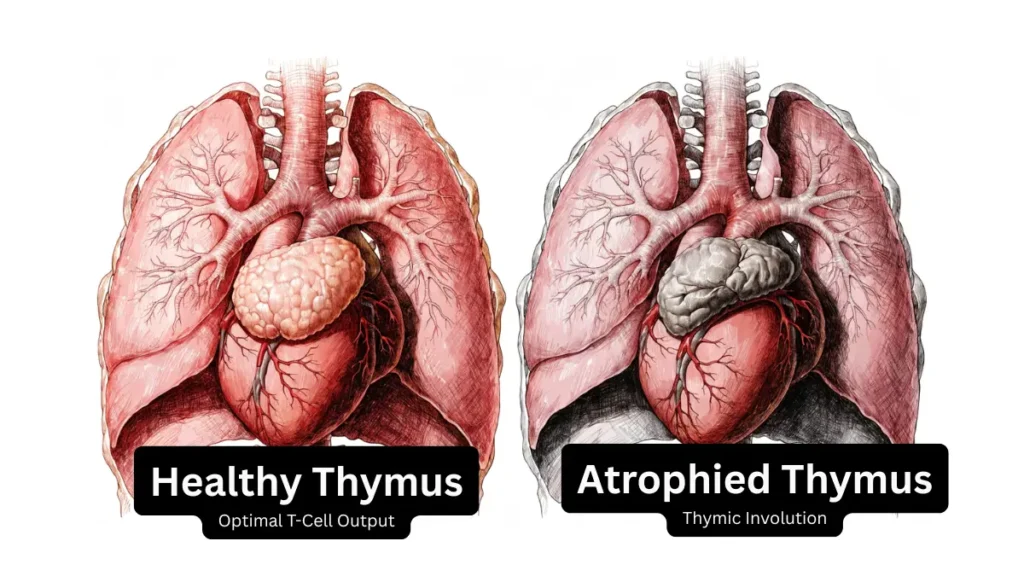
Without sufficient zinc, the microscopic pumps that move minerals in and out of cells become sluggish. In an aging body, these pumps don’t work as hard. You need more “pressure” to get the same amount of zinc into the cell. For someone like Derek, the stress of high-intensity exercise creates a higher demand. Restoring zinc levels helps the remaining thymic tissue maximize its output. More demand. Less supply.
How to Support Your Thymus After 50
- Eat one zinc-rich food daily. Pumpkin seeds or lentils at any meal counts.
- Walk for 20 minutes each morning before checking your phone. Movement primes mineral uptake early in the day.
- Sleep seven hours minimum. Thymic tissue repairs during deep sleep, not during rest.
- Request an RBC Zinc test at your next physical. Tell your doctor your recovery time has slowed.
- Note one physical change each week. Energy during morning tasks, sleep quality, how quickly small cuts close.
The Copper-Zinc Balance: Why “More” Isn’t Always Better
Taking a “high-dose” supplement can actually depress immunity by depleting copper. This is the “Copper Trap” of the wellness world. Your body uses a shared transport system for both minerals. When you flood the system with one, it crowds out the other.
Derek learned this the hard way. More zinc did not mean more protection. It meant something else was running low.

Copper is essential for the production of white blood cells. If you take a massive dose of zinc to “boost” your immunity, you may cause a copper deficiency. This irony leads to a weakened immune response. The goal is balance. Think of it like a seesaw. If one side is too heavy, the system stops functioning.
It sounds counterintuitive, but the body thrives on ratios. A common sign of this imbalance is a sudden drop in energy or a persistent “heavy” feeling in your limbs. Instead of chasing the highest milligram count, focus on steady, absorbable amounts. This is the part most guides skip: high doses should be short-term and supervised.
How to Keep Your Zinc-Copper Ratio in Check
- Check your multivitamin label today. Look for both zinc and copper listed together.
- If zinc appears without copper, flag it for your next doctor visit.
- Space zinc-rich foods and any iron supplement at least two hours apart.
- Ask your doctor for a Serum Copper test alongside your RBC Zinc panel.
- Prioritize food sources over supplements. Your body regulates ratios better from whole foods than pills.
You have more data than any lab result. You see how your body responds every single day.
How to Restore Your Cellular Shield: The Resilience Protocol
Derek switched from high-dose pills to adding hemp seeds to his morning oats. He chose a “food-first” approach. Restoring your zinc levels starts with a tiered strategy that prioritizes how your body naturally processes nutrients.
Tier 0: The Dietary Foundation
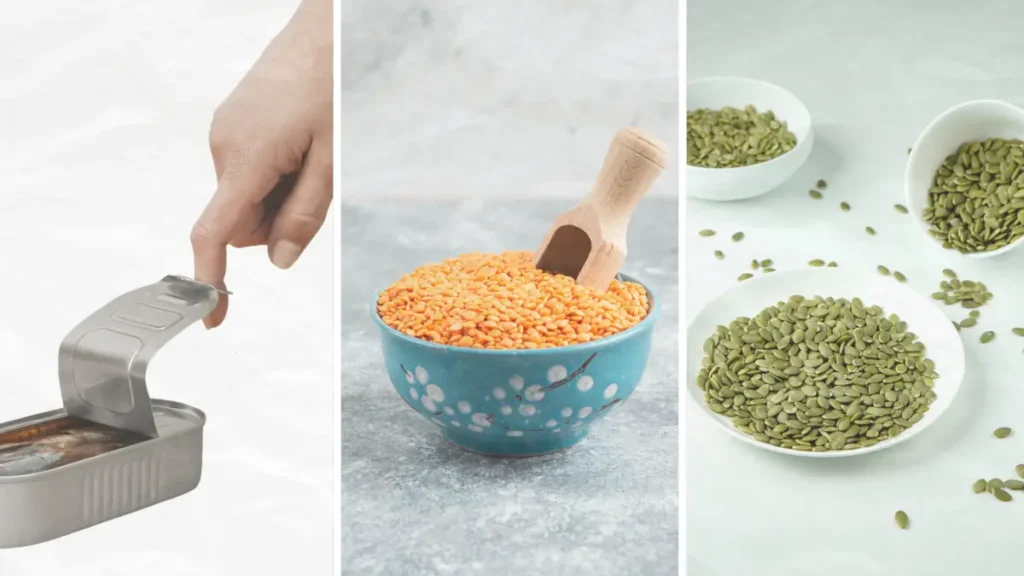
Oysters are the gold standard for dietary zinc. Two canned oysters per week provide a significant boost. Canned works just as well as fresh and is a budget-friendly option at any grocery store.
Raw pumpkin seeds are a dense source of zinc and healthy fats. Eat 30g as a daily snack. Bulk bags cost far less than pre-packaged versions and keep for weeks in an airtight jar.
Soak 80g of dried lentils or chickpeas overnight before cooking. This reduces the phytates that actively block zinc from reaching your cells. Bulk dried legumes keep for months.
Stand upright and walk at a comfortable, low-intensity pace for 20 minutes each day. You should feel mild warmth in your legs but never breathless. Avoid pushing the pace. Ten minutes works fine as a starting point.
Stand with feet shoulder-width apart and lower slowly into a squat before your largest meal of the day. Your thighs should feel mild tension at the bottom. Knees drifting inward means stop and reset. Hold a chair for support if needed.
Track your wound and bruise recovery over the coming weeks. Note how long a small cut takes to visibly improve. It costs nothing to monitor.
Hold a small amount of liquid zinc sulfate, an affordable option at most health stores, in your mouth for ten seconds. Plain water taste means your body is drawing it in. A metallic taste suggests your levels are adequate.
Tier 1: The Annual Check-In
Request a standard Plasma Zinc test during your annual physical. While limited, it serves as a baseline. If your plasma levels are at the bottom of the “Normal” range, your cells are likely depleted.
Tier 2: Advanced Verification
Move to the RBC Zinc test for a three-month look-back at your cellular health.
Advanced Diagnostics: What to Ask Your Physician
Patrice feels more confident bringing a specific “RBC” request to her Tuesday appointment. She has the vocabulary to ask for a deeper look. When you sit down with your doctor, your goal is to move beyond the “Normal” checkmark.
Ask for an RBC Zinc (Erythrocyte Zinc) test. Explain that you want to see your cellular levels because your recovery time has slowed. You should also request a Serum Copper test. This allows your doctor to calculate your Zinc-to-Copper ratio. Ideally, this ratio should sit near 1:1. If your zinc is high but your copper is low, you have identified why your immune system feels “spent.”
Your Questions Answered
Can CBC detect zinc deficiency?
No. A Complete Blood Count (CBC) looks at cell counts, not mineral content. You must request a separate RBC panel.
What are the 10 signs of low zinc?
Common indicators include frequent colds, slow wound healing, thinning hair, loss of taste, white spots on nails, brain fog, skin rashes, reduced appetite, diarrhea, and poor night vision.
What vitamins cannot be mixed with zinc?
High-dose Vitamin A and folate supplements can compete with zinc absorption. Iron supplements also interfere, space all three at least two hours apart from zinc
Can too much zinc weaken your immune system?
Yes. Excessive zinc intake over a long period can deplete copper, which is necessary for white blood cell production.
What food is highest in zinc?
Oysters are the most concentrated source. Beef, pumpkin seeds, and lentils are also excellent choices.
Conclusion
Your immune system is a dynamic defense force. Rebuilding immune resilience after 50 requires specific raw materials, and the right questions to ask your doctor. If your “normal” lab results don’t match your physical reality, look deeper than the plasma. Focus on cellular absorption and maintain the copper balance. Your internal shield rebuilds from there. This is an investigation, and you are the primary investigator of your own body.
Your Immune Resilience Checklist:
- Add one “Tier 0” food (like pumpkin seeds) to your diet this week.
- Schedule a conversation with your doctor about RBC Zinc testing.
- Check your multivitamin for zinc-to-copper ratios.
Patrice now walks into her clinic with a clear plan. You now know something most people with ‘normal’ labs for years still don’t: the test they were never offered. You can take that same first step today.
⚠️MEDICAL DISCLAIMER :
This content is for informational and educational purposes only and does not constitute medical advice, diagnosis, or treatment. Zinc levels and immune function are highly individualized. Before making changes to your diet or supplement regimen, consult a qualified healthcare provider. If you experience difficulty breathing or high fever, seek emergency medical care immediately.