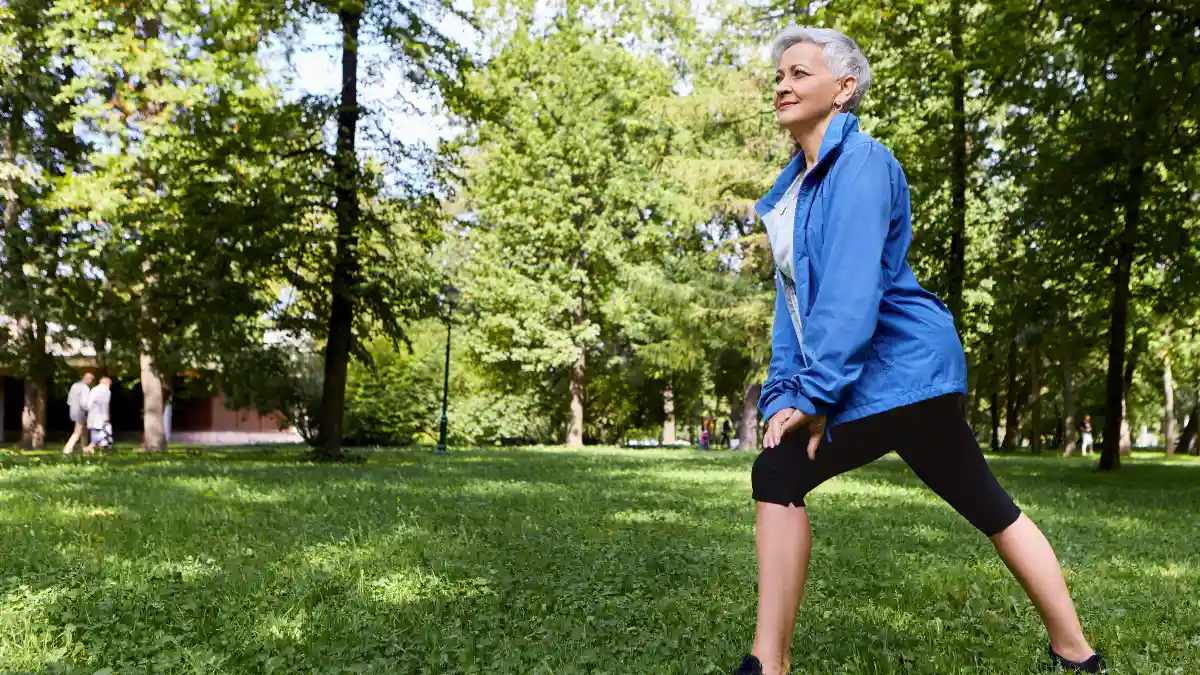
You wake up, swing your legs off the bed, and your hips feel like an old door that hasn’t been opened in years. You didn’t do anything dramatic. You just slept. This is one of the most common complaints from people over 50. And most of them think it’s just aging. It’s not that simple.
Your hips get tight for specific, fixable reasons. Sitting too long, losing muscle, hormonal changes, and worn tendons all play a role. The good news is that tight hips are not permanent. You don’t need fancy equipment or hours at the gym.
Why it happens and how to give you a clear, step by step fix. Every tip here is backed by real research. Nothing is made up. Nothing is filler. Just honest, useful information you can start using today.
What’s Actually Happening Inside Your Hips After 50?
Your hip is a ball and socket joint. It’s one of the biggest joints in your body. It depends on muscles, tendons, and cartilage, all working together at the same time. After 50, three things start changing fast.
First: You lose muscle. Muscle mass drops about 15% every decade after 50, and the decline speeds up as you get older. The muscles that hold your hip steady get weaker. When they’re weak, the joint stiffens up.
Second: Your tendons dry out. Your body produces less collagen, the protein that keeps tendons flexible and strong. Less collagen means tendons become thinner and more rigid.
Third: Your joints lose lubrication. Synovial fluid keeps the joint moving smoothly. When you move less, you produce less of it. Less fluid means more friction and more stiffness.
These three things happen slowly. You don’t notice them for years. Then one day you stand up from the couch and your hip locks for a second. That’s your body telling you something has been building up for a while.
Your Chair Is Probably the Biggest Problem
Here’s something most people don’t expect. Sitting is one of the biggest hidden drivers of stiffness, even for people who exercise regularly. Many adults now sit for 8–10 hours a day, between work, driving, and screen time.
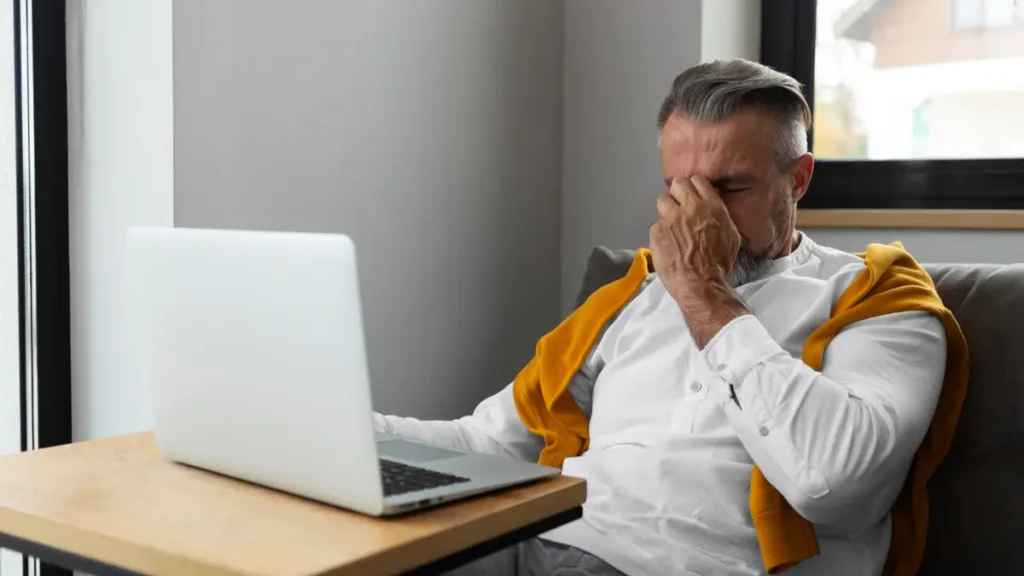
When you sit, your hips stay bent at around 90 degrees for long periods. Over time, the muscles at the front of your hips remain in a shortened position. The body adapts to this pattern, which can lead to tightness and reduced mobility.
Research also shows that longer sitting time is linked to faster biological aging. People who sit for extended hours tend to show higher levels of age-related decline, even after accounting for other factors. In simple terms, long sitting hours don’t just affect your posture, they affect how your body ages.
Even if you exercise daily, long periods of sitting can still have negative effects. That’s why movement throughout the day matters just as much as your workout.
5 Specific Reasons Your Hips Are Tight
Not all tight hips are the same. Knowing your reason changes how you fix it.
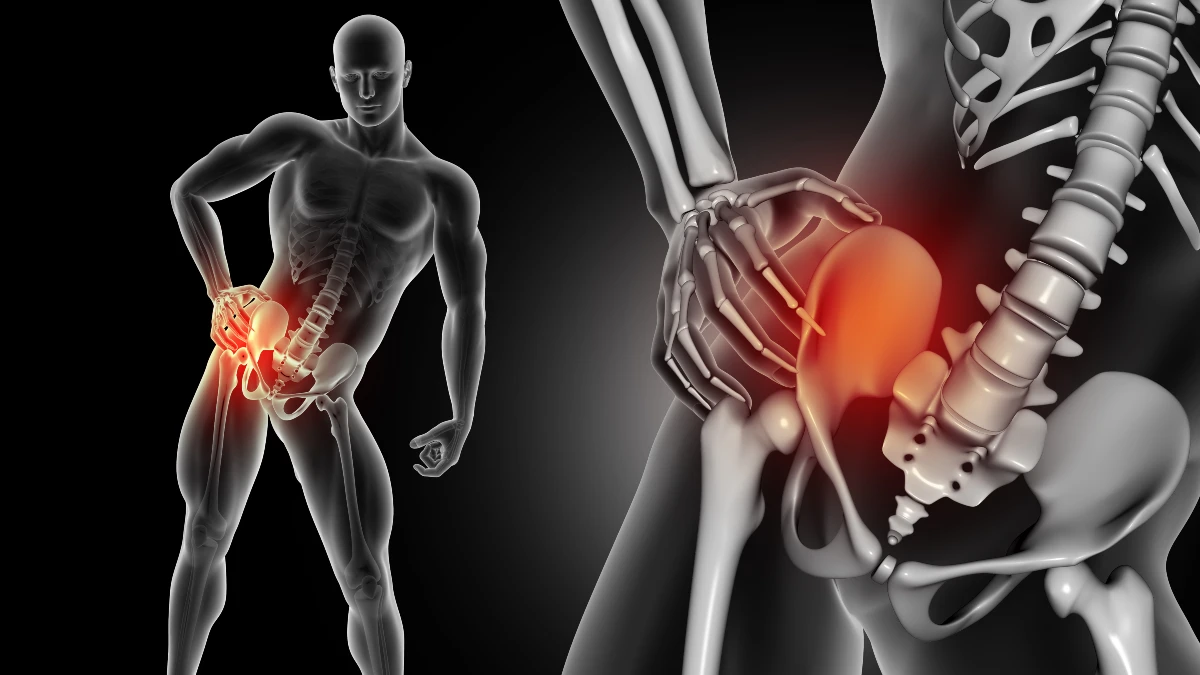
1. Short hip flexors. These muscles run from your spine to your thigh. Years of sitting shrink them. When you stand, they pull your pelvis forward, and everything locks up.
2. Weak glutes. When your glutes stop working because you sit on them all day, other muscles pick up the slack. Those muscles overwork and tighten.
3. Gluteal tendinopathy. This is a damaged tendon at the side of your hip. 1 in 4 women over 50 has it. It causes deep aching, especially at night or after sitting.
4. Early osteoarthritis. Wear and tear on the joint cartilage can begin in your 50s. It causes grinding stiffness that feels different from muscle tightness.
5. Tight piriformis. This small muscle runs across the back of your hip. When it tightens, it can press on your sciatic nerve. You’ll feel it when sitting cross-legged or getting in and out of a car.
If you’re not sure which one you have, a physical therapist can tell you in one visit.
Mistakes That Make Your Hips Worse
You’ve probably been told to stretch more. That’s not completely wrong. But stretching alone is one of the most common mistakes people make. Dr. Ellen Casey, a sports medicine physician at the Hospital for Special Surgery in New York, says this clearly.
If you’re only going to do one thing, pick strengthening over stretching. Stretching feels good. But if your tendons are irritated, aggressive stretching can make things worse, not better.
Here are four other mistakes to stop:
- Sitting with your legs crossed. This puts uneven pressure on your hip tendons.
- Standing with one hip jutting out. It feels natural, but slowly overloads one side.
- Sleep on your side without a pillow between your knees. It stretches and compresses hip tendons all night.
- Resting completely. No movement makes stiffness worse, not better. The joint needs a gentle load to stay healthy.
Stop these habits first. Then add the fixes below.
The Fix: A 3-Tier Plan That Actually Works
This plan is built on the 2025 APTA Hip Osteoarthritis Clinical Practice Guideline, the most current physical therapy evidence available.
Tier 1 — Start Today (5 minutes)
Break up sitting every 45 minutes. Stand up, take 10 steps, and do 5 slow hip circles in each direction. That’s it. This one habit alone reduces adaptive shortening over time. Fix your standing posture too feet shoulder width apart, weight even on both feet. Stop leaning on one hip.
Tier 2 — Do This 3–4 Times a Week (15–20 minutes)
These are the exercises physical therapists use most:
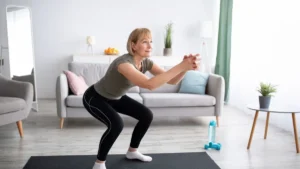
- Glute Bridges: Lie on your back with knees bent and feet flat. Push your hips up toward the ceiling. This strengthens the glutes and stretches the hip flexors. Do 2 sets of 10.
- Clamshells: Lie on your side with a resistance band above your knees. Open your top knee like a shell while keeping your feet together. This targets the Gluteus Medius, a side-hip muscle. Do 2 sets of 12 per side.
- Knee to Chest Stretch: Lie on your back. Pull one knee toward your chest while keeping the other leg flat. This decompresses the lower back. Hold for 30 seconds. Repeat 3 times per side.
- Figure Four Stretch: Cross one ankle over the opposite knee. Pull the supporting leg toward your chest. This targets the piriformis, a small muscle deep in the buttocks. Hold for 30 seconds per side.
- Sit to Stand: Sit on a sturdy chair with feet shoulderwidth apart. Stand up without using your hands for support. This builds functional power for daily activities. Do 2 sets of 10.
- Step Ups: Stand in front of a bottom stair. Step up with one foot and follow with the other, then step down slowly. This improves proprioception, your sense of balance. Do 10 reps per leg.
- Hip Circles: Stand with your hands on your hips. Make slow and large circles with your pelvis to lubricate the joint. Do 30 seconds in each direction.
Tier 3 — See a Professional If:
Pain is sharp or constant. Pain stops you from walking or sleeping. You’ve done Tier 1 and 2 consistently for 3 weeks, and nothing has changed. A physical therapist can pinpoint the exact cause and design a program tailored to your specific hips.
If You’re a Woman Over 50, Read This Section

Hormonal changes at menopause directly affect your hip tissue. It’s not in your head. When estrogen drops, your body produces less collagen. That makes tendons weaker and thinner. 1 in 4 women over 50 develop gluteal tendinopathy, a painful tendon condition at the side of the hip. Many women are told it’s bursitis or arthritis and treated incorrectly.
Sarcopenia, the loss of muscle mass, is also more common in women after menopause. This means the muscles that support your hip joint weaken faster than in men of the same age. Strength training is the most important thing a woman over 50 can do for her hips. Not just for mobility, but for bone density too.
Start with glute bridges and clamshells. Add resistance bands when those feel easy. If you’re considering hormone replacement therapy for joint pain, talk to your doctor. The evidence is mixed, but it helps some women. Get a proper diagnosis before assuming what’s wrong. It changes everything about the treatment.
Conclusion
Tight hips after 50 happen for real, fixable reasons. Sitting too long, losing muscle, and hormonal changes are the main drivers. Stop the habits that make it worse. Start the 3-tier plan. Be consistent. Most people feel real change within 3 to 6 weeks. Take it one day at a time. Your hips did not get tight overnight.
But you can feel better starting today. Every stretch you do is a win. Move more, sit less, and walk pain-free. You have the tools you need now. Stay patient and keep moving forward. The freedom of motion is waiting for you. You can do this every day.
⚠️Medical Disclaimer
This article is for information only. It is not medical advice. Always talk to your doctor or a physical therapist before starting any new exercise program, especially if you have existing hip pain, joint conditions, or recent surgery. If your pain is sharp, constant, or getting worse, stop exercising and see a professional.