Your biological age doesn’t have to match your birth certificate, but if you’re over 50, the “clock” is ticking faster on your muscle mass than before. This isn’t just a matter of looking softer in the mirror; it is a physiological shift that dictates your future independence. Recent 2025 data from Stanford Medicine shows that after the age of 50, muscle mass can decline by as much as 1% to 2% every single year.
This rapid physical decline is known as sarcopenia, and it is the primary driver of metabolic disease, brittle bones, and the eventual loss of mobility. However, your body is remarkably responsive to the right signals. By mastering the “Big 5” functional movement patterns, you can trigger hormonal and structural “youth” signals that protect your system. These specific exercises for longevity after 50 are designed to mimic the demands of daily life, ensuring that you remain as capable at 70 as you were at 40.
The Science of Decline: Why 50 is the “Pivot Point”
The 50+ Strength Challenge
Understanding Muscle Decline & Building Resilience After 50
The “Gerozyme” Effect
After age 50, enzymes called “gerozymes” slow muscle regeneration, particularly affecting Type II (fast-twitch) fibers. These are the muscles responsible for explosive power, balance recovery, and preventing falls.
“Muscle strength isn’t just about lifting weights—it’s a vital sign. Low grip strength and leg power are now recognized as predictors of longevity and heart health.”
The Metabolic Connection
Muscle acts as a “metabolic sink,” absorbing glucose and improving insulin sensitivity. Loss of muscle mass increases diabetes risk by up to 30% in adults over 50 according to longitudinal studies.
The Body Is Waiting For The Right Stimulus
Your body isn’t “broken” after 50—it’s adaptable. Research shows even starting strength training in your 60s and 70s can rebuild muscle, improve metabolic health, and reduce fall risk by up to 50%.
Crossing the threshold of 50 often triggers a “biological cliff” if your lifestyle remains sedentary. The primary culprit is the selective loss of Type II (fast-twitch) muscle fibers the ones responsible for power, speed, and catching yourself during a slip. According to research cited by the Cleveland Clinic, we lose roughly 10% of our muscle strength each decade after 50, a process driven by “gerozymes” that slow down muscle regeneration.
The stakes are higher than most realize. Low leg power and weak grip strength are now recognized by the Journal of Preventive Cardiology as powerful predictors of all-cause mortality. Essentially, your muscles act as a “metabolic sink,” and losing them increases your risk of insulin resistance and heart disease.
The good news? A 2025 meta-analysis published in ResearchGate shows that consistent resistance training can improve strength in older adults by 30% to 40% in just a few months. Your body isn’t “broken” after 50; it is simply waiting for the right stimulus to rebuild.
1: The Hip Hinge (The Deadlift Pattern)
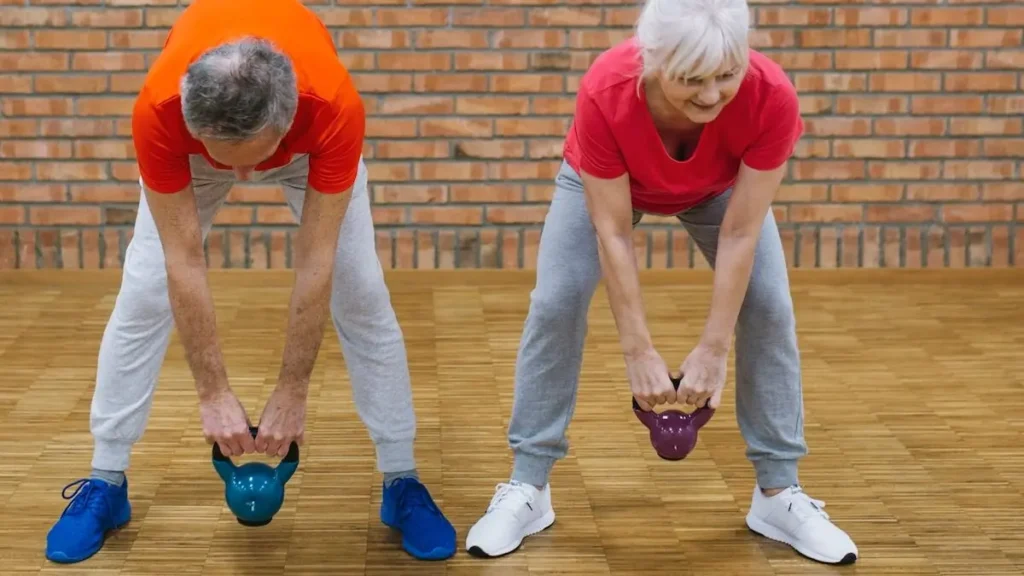
The hip hinge is the most important movement for protecting your lower back. Unlike a squat, where the knees do the work, the hinge focuses on pushing the hips back exactly how you should pick up a grandchild or a heavy box of groceries. This strengthens the posterior chain (glutes, hamstrings, and lower back), which often withers from too much sitting.
Try the Kettlebell Deadlift. Stand with your feet hip-width apart, kettlebell between your arches. Push your butt back as if trying to close a car door with it, keep your spine “long” like a rod, and grip the weight. Stand up by squeezing your glutes. If weights feel intimidating, perform Glute Bridges on the floor to wake up those muscles safely. Three sets of 10 controlled repetitions.
2: The Deep Squat (The Sit-to-Stand Pattern)
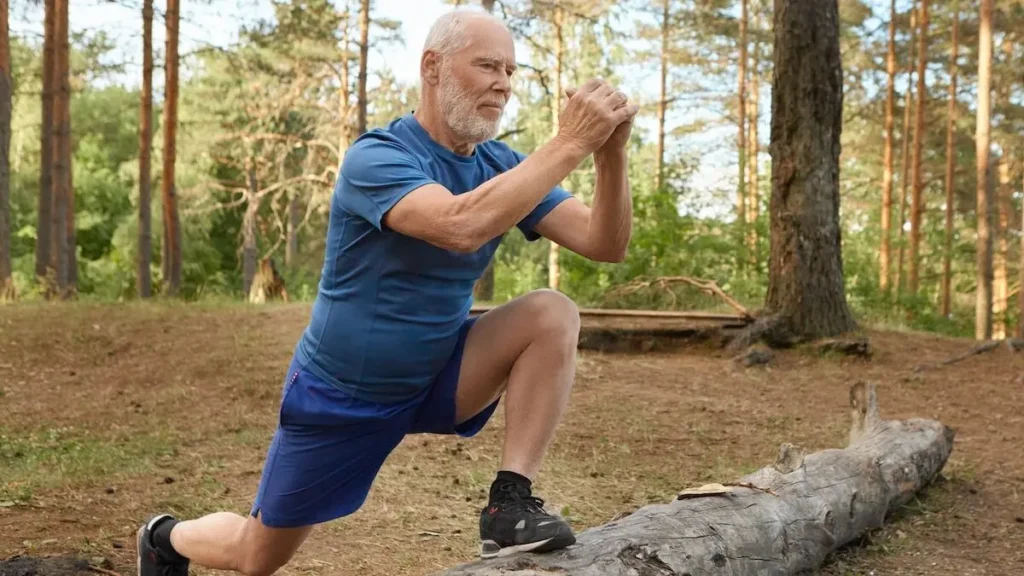
In the world of longevity, the squat is the ultimate predictor of independence. If you can’t get out of a chair without using your hands, your risk of a nursing home placement increases exponentially. The AARP and the European Journal of Preventive Cardiology highlight the Sit-Rising Test as a benchmark: those who can transition from floor to standing with minimal support have significantly lower cardiovascular death rates.
Practice the Goblet Squat. Hold a light weight (or even a heavy book) against your chest. This acts as a counterbalance, allowing you to sit deeper while keeping your chest up. Use the Chair Squat. Slowly lower yourself until your tailbone brushes a chair, then stand back up explosively. Aim for 15 unbroken chair squats without using your hands for support.
3: The Loaded Carry (The Farmer’s Walk)
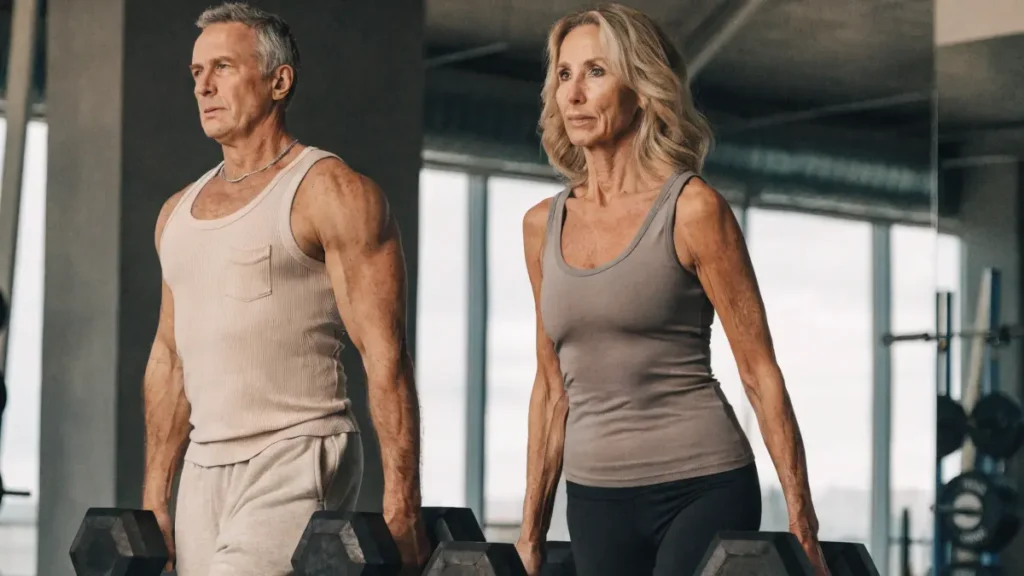
Grip strength is no longer just about hand health; it is a “biomarker of aging.” Longevity experts like Dr. Peter Attia swear by the Farmer’s Carry because it tests your “postural integrity” under stress. It forces your core, heart, and forearms to work as one unit, stabilizing your spine while your legs move.
Grab two dumbbells (or two heavy grocery bags). Stand tall, pull your shoulders back and down, and walk for 30 to 60 seconds. Try the “Suitcase Carry” hold weight in only one hand. This forces your obliques to work overtime to keep you from leaning, which is elite-level core training for those over 50.
4: Unilateral Balance (The Single-Leg Stand)
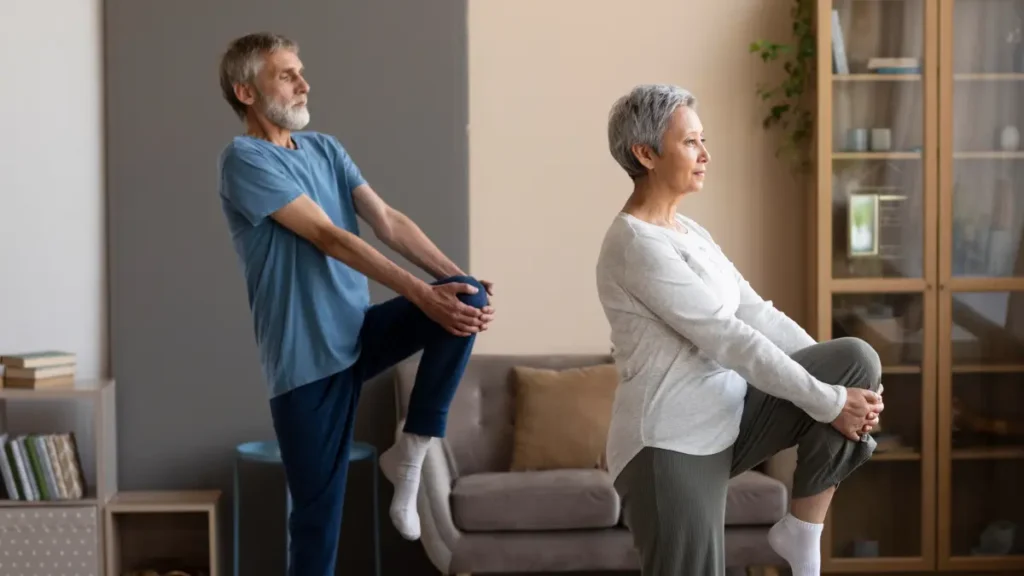
Balance isn’t a static skill; it’s a “use it or lose it” neurological function. Data from MovementX and UCLA Health shows that balance begins a steep decline at age 50, often dropping by 25% per decade. Improving this single skill can prevent up to 90% of the hip fractures that often lead to permanent disability in seniors.
The Single-Leg Balance. Stand near a wall for safety. Lift one foot and hold for as long as possible. If you are under 60, aim for 45 seconds. If you are over 70, aim for 20 seconds. Do this while brushing your teeth to turn a chore into a longevity habit.
5: The Vertical Pull (The Row/Pull Pattern)
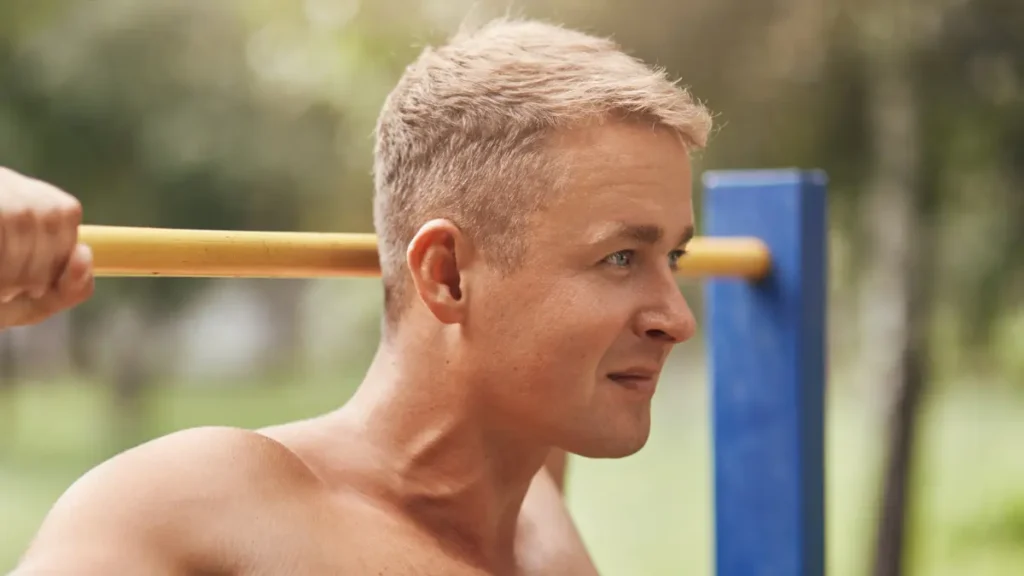
Modern life forces us into a “C-shape” (shoulders rolled forward, head down). This leads to kyphosis (rounded back) and “tech-neck,” which restricts breathing and increases fall risk by shifting your center of gravity. Pulling movements retract the shoulder blades and strengthen the muscles that keep you standing tall.
Use Resistance Band Rows. Wrap a band around a sturdy post, sit or stand, and pull the handles toward your ribs, focusing on squeezing your “wings” (shoulder blades) together. Improved posture opens up the chest cavity, allowing for better oxygen intake and a more confident, youthful gait.
Conclusion
Age-Proof Your Body
The 2025 Perspective: Why Physical Decline Is Optional
According to a 2024 longitudinal study in the Journal of Aging Research, only about 20% of physical decline is genetically determined—the rest responds to lifestyle interventions.
Biological Benefits
- Preserves fast-twitch muscle fibers for balance and reaction time
- Maintains bone density, reducing fracture risk by up to 45%
- Boosts metabolic rate, countering age-related weight gain
- Enhances insulin sensitivity, reducing diabetes risk
Longevity Impacts
- Strength training adds “healthspan”—quality years to life
- Reduces all-cause mortality by 21% according to BMJ research
- Delays cognitive decline by maintaining brain health
- Improves cardiovascular function independent of aerobic exercise
“The most dangerous myth about aging is that decline is inevitable. Our research shows the human body maintains remarkable plasticity well into later decades when given proper stimulus.”
Your 2-Step Start Today Plan
Choose just two foundational movements to begin age-proofing your body this week.
Select two of the five foundational movements that fit your current ability level
Integrate them into your morning routine 3 times this week (just 10-15 minutes)
Track your consistency for 4 weeks to build the exercise habit before adding more
Remember: Consistency beats intensity when building lasting habits.
Physical decline is often treated as an inevitable part of aging, but the science of 2025 proves it is largely optional. By mastering these five movements, you aren’t just “working out” you are age-proofing your skeletal system and maintaining the “biological currency” of muscle mass. Start today by choosing just two of these moves to integrate into your morning routine. Strength training for adults over 50 is the most powerful tool we have to ensure our “golden years” are spent in motion, not in a chair.