

You expected more time together. What you did not expect was the low-grade friction that shows up around 10:00 in the morning when you are both making coffee and somehow getting in each other’s way.
Couples over 50 who are both retired or approaching retirement often find that a marriage that worked well for decades starts generating new tension. Not because something has gone wrong between you, but because the house itself became a shared workspace with no rules.
This article names those specific frictions and shows you how to address them before they become patterns.
Why the house itself becomes the problem
You spent thirty or forty years leaving the house every morning and coming back in the evening. That rhythm created invisible structure: separate zones, separate schedules, a natural reset between you.
When both of you retire and both stay home all day, that structure disappears overnight. The house has not changed to accommodate two full-time residents.
Research using the Cornell Retirement and Well-Being Study found that recently retired men and women report more marital conflict than those who have been retired longer, and that women still in their career jobs report more conflict specifically when their husbands are no longer working.¹
The tension did not come from spending more time together in general. It came from spending more time together inside a home that only one person had been running.
One study of women in Turkey found that spousal intrusion [one partner’s sense that their spouse is encroaching on routines and space they’d managed alone for years] was associated with lower marital satisfaction when present, though the effect faded once researchers accounted for how well-adjusted the couple already was.²
The direct challenge here is this: the problem is not that you are home too much. The problem is that two people are sharing a space with no agreed map for how that works. Solving it starts with seeing it that way: as a logistics gap, not a compatibility problem.
What happens to the chore map when no one leaves
You probably never had a formal agreement about who does what around the house, because you never needed one. The old arrangement worked because each of you had a predictable schedule and the house was rarely occupied by both of you at the same time.
Retirement changes that math. A 2026 study in Social Indicators Research examined older adults’ household labor patterns and found that women were still doing the majority of routine housework after both partners retired, and that women who carried most of that load reported lower satisfaction with the division.³
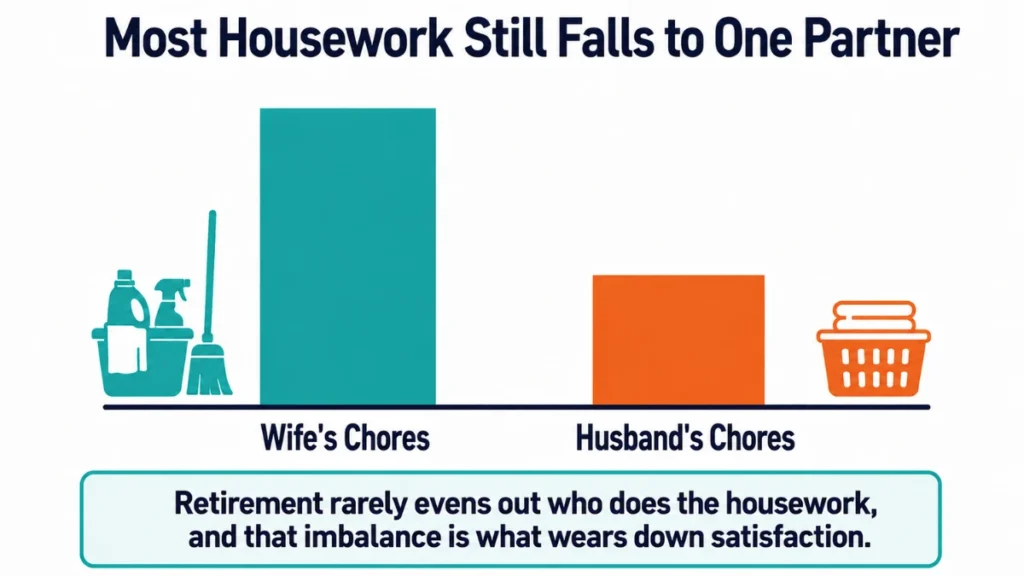
Any increase in men’s contribution after retirement appears limited, since the gender gap in who does the housework persists.
The irritation that builds when a retired spouse reorganizes the kitchen is not a personality problem. It is a territory problem created by a new schedule, and it goes away when the schedule is renegotiated.
This is the insight most retirement advice skips: the conflict is not about chores. It is about unspoken ownership [the assumption that certain spaces and tasks belong to whoever has been managing them].
When one partner spent thirty years running the household while the other worked, those routines calcified into ownership.
A spouse who moves in full-time and starts rearranging things is not being difficult. They are colliding with a system they were never part of.
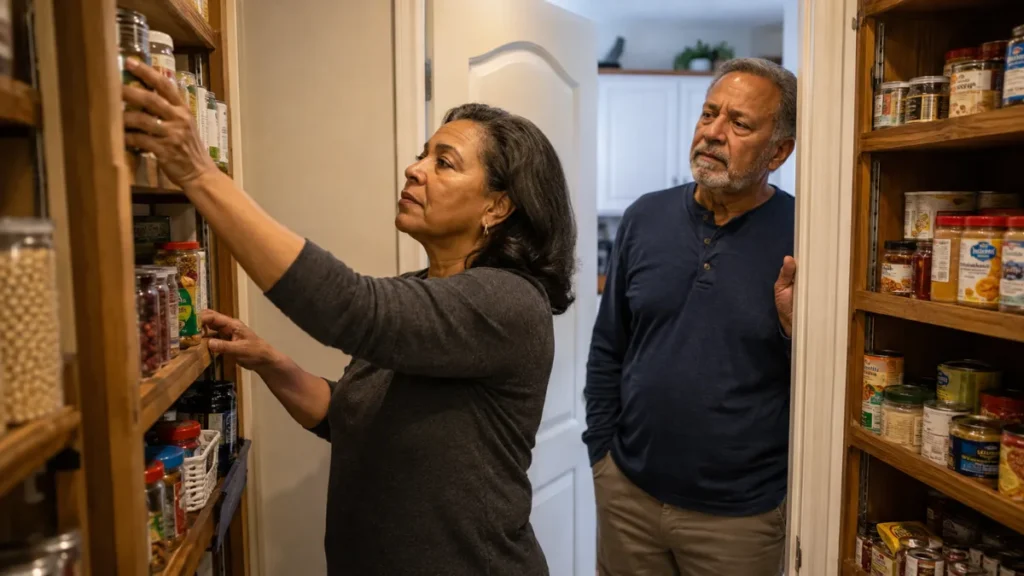
You may already feel this without naming it: the flicker of irritation when your partner loads the dishwasher the wrong way, or the resentment when someone helps with something you did not ask for help with.
That feeling is real and worth taking seriously. It does not go away on its own.
Why needing time to yourself is not a sign something is wrong
Wanting space from your partner after you both retire can feel like a confession. If you loved each other, wouldn’t you want to spend all this free time together?
Feeling that something is wrong with you, or with the relationship, for wanting a few hours alone is one of the most common and least-discussed parts of this adjustment.
The research points in the opposite direction. A 2024 daily diary study of older couples found that when one partner chose voluntary time alone, the other partner reported less negative emotion that same day.⁴
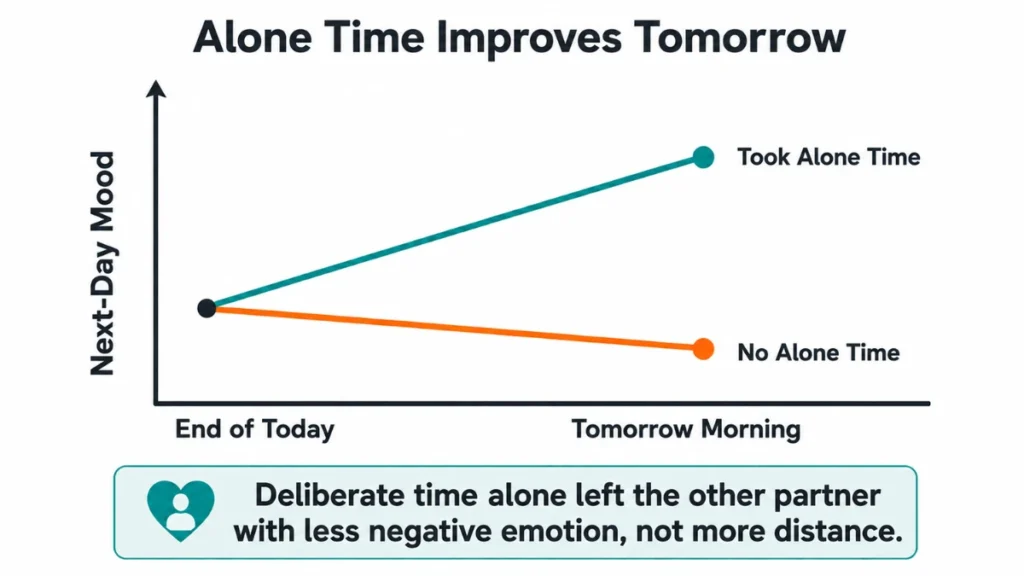
Asking for separate time does not pull you apart. It appears to protect the relationship.
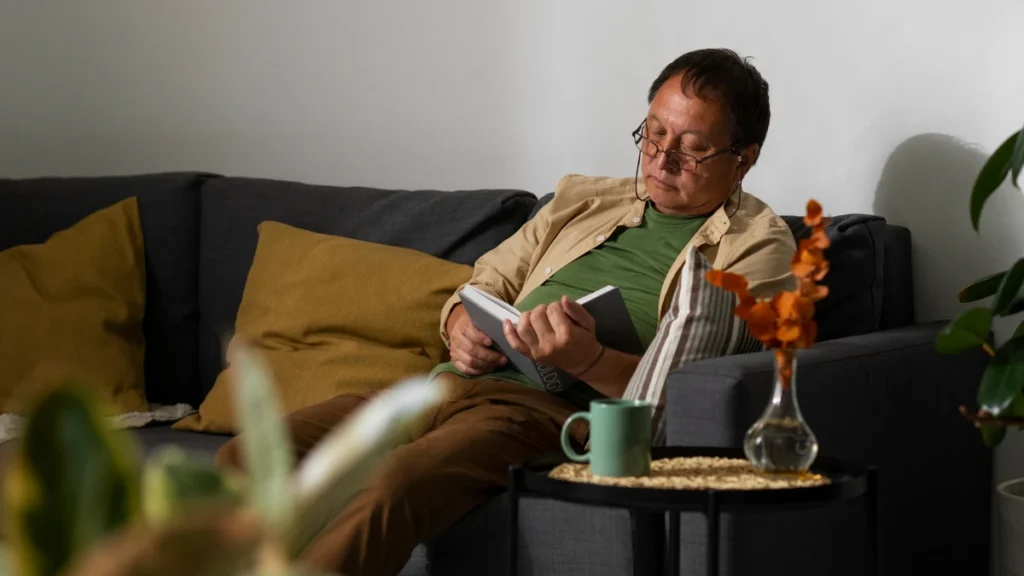
Enough space to recharge.
That finding matters because most couples treat time apart as a last resort, something you do when togetherness has already failed.
What the evidence suggests is that building it in from the start: a few hours each day when each person is somewhere else in the house or outside it, may reduce the friction that accumulates from constant proximity.
The evidence here is drawn from diary data during a specific period and does not tell us the exact amount of solitude that helps versus the amount that signals withdrawal. What it confirms is the direction: some deliberate time apart, chosen freely, appears to benefit both partners.
No single study directly tests the full chain from retirement to co-habitation friction to relationship outcomes. The picture in this article is assembled from several studies, each examining a different piece.
This applies differently depending on how you and your partner are built. An introvert and an extrovert sharing retirement will negotiate this differently than two extroverts who both want company.
There is no single right amount of separate time, but there is almost certainly a wrong amount, and that amount is zero.
The identity gap nobody plans for
Work gave each of you something the house cannot replace: a place to be someone. A role. A set of problems that were yours to solve, a context in which you were competent and known.
Retirement removes that without offering a substitute. When two people are both experiencing that loss at the same time, inside the same four walls, the gap can quietly reshape how they relate to each other.
Research using data from the Health and Retirement Study found that retirees tend to show a gradual decline in sense of purpose over time, with health status, education, and marital status predicting how steep that decline is.⁵
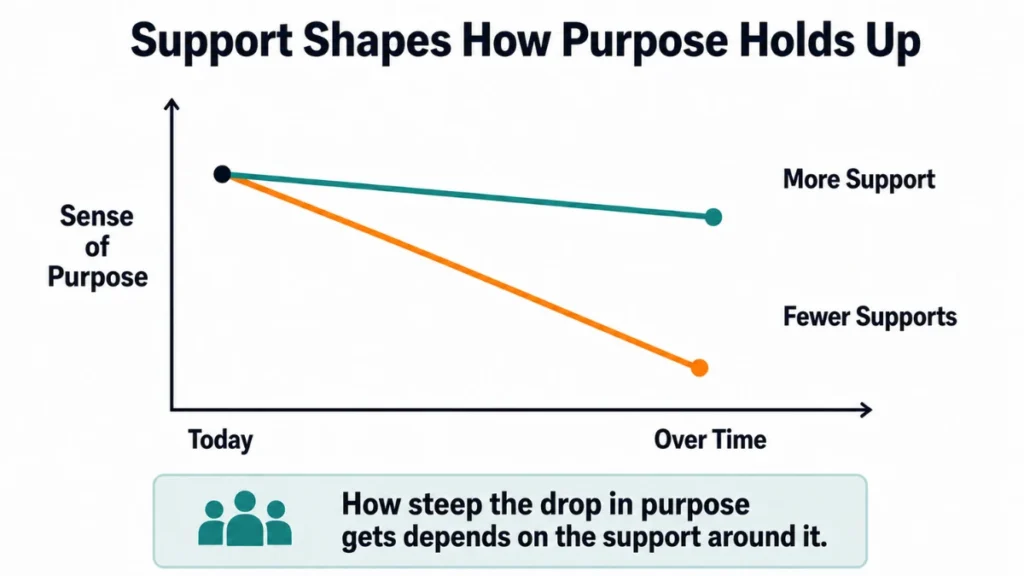
Retirement does not just change location. It removes the frame that defined who a person was.
A person without a clear sense of purpose may become harder to live with: irritable in ways they can’t quite name, restless, or withdrawn. Their partner experiences this but often does not know what it is.
Work loss creates a purpose gap. That gap is what the relationship gets filled with.
When a retired couple spends all their time together without outside anchors, the marriage can end up carrying weight it was never meant to hold. One partner becomes the audience for the other’s frustration.
One person’s purposelessness becomes a mood that saturates the whole house. The retired couple who fights about nothing in particular is usually not fighting about nothing at all.
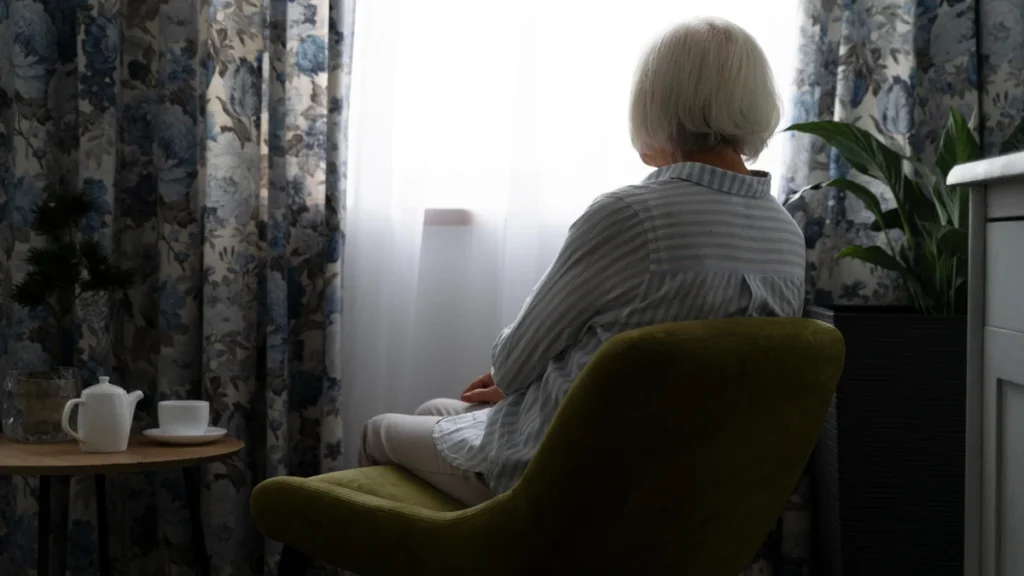
Finding purpose after retirement does not happen automatically and does not require a second career. Volunteering with a local organization, committing to a weekly class, or building a skill are ways some people rebuild that sense of competence outside the home.
This need differs by person: some people rebuild purpose quickly and some need longer, and a partner’s timeline is not a measure of the relationship’s health.
The one schedule most retired couples never build
Most couples enter retirement with a vague plan to enjoy themselves and figure out the rest as they go. That works for vacations. It does not work when two people are sharing a home with no agreed structure for 40-plus hours a week.
The couples who navigate this transition without accumulating resentment tend to have one thing in common: they talk early and explicitly about how each person wants to use their time, not in general terms but in practical ones.
Who needs quiet time and when. Who wants company and when. Which hours are for solo projects and which are for shared ones.
A 2020 diary study of 756 midlife adults in 378 same-sex and different-sex marriages found that on days when marital strain was higher, women married to men reported poorer sleep quality and shorter sleep duration, an effect that did not show up for men or for partners in same-sex marriages.⁶
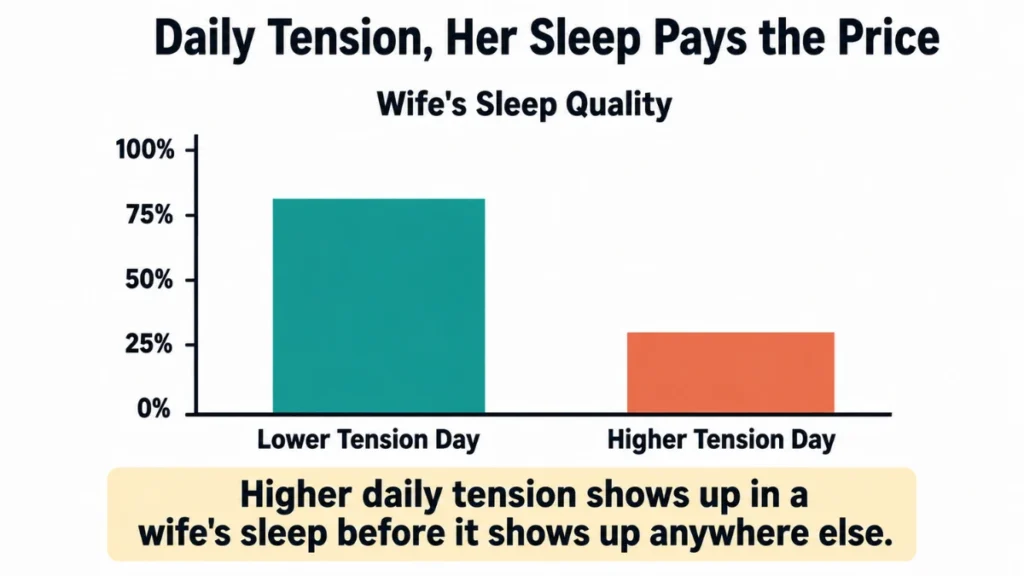
Small frictions like this compound for the people they affect. A schedule does not eliminate them, but it gives both people a shared map so frictions can be named and adjusted rather than silently absorbed.
Build your shared daily map
Each partner answers these questions separately, then compare:
- What time of day do I need to be alone?
- Which shared activities do I want to protect each week?
- What does a good day feel like by 5:00 pm?
- Which tasks do I want to own, and which am I happy to share?
Compare answers side by side. Where they conflict, negotiate one change at a time. Revisit every few months; what works in month three rarely works in month twelve.

How long has it been since you and your partner talked about what each of you actually needs during the day?
One question that resets the whole dynamic
Most of the friction described in this article comes from assumptions that went unspoken because there was never a reason to speak them. Work made those assumptions invisible. Retirement makes them impossible to ignore.
Among adults over 50, the divorce rate has grown to roughly two-and-a-half times what it was in 1990, a trend that affects a significant number of long-term marriages in the exact years when both partners are adjusting to being home together full-time.⁷
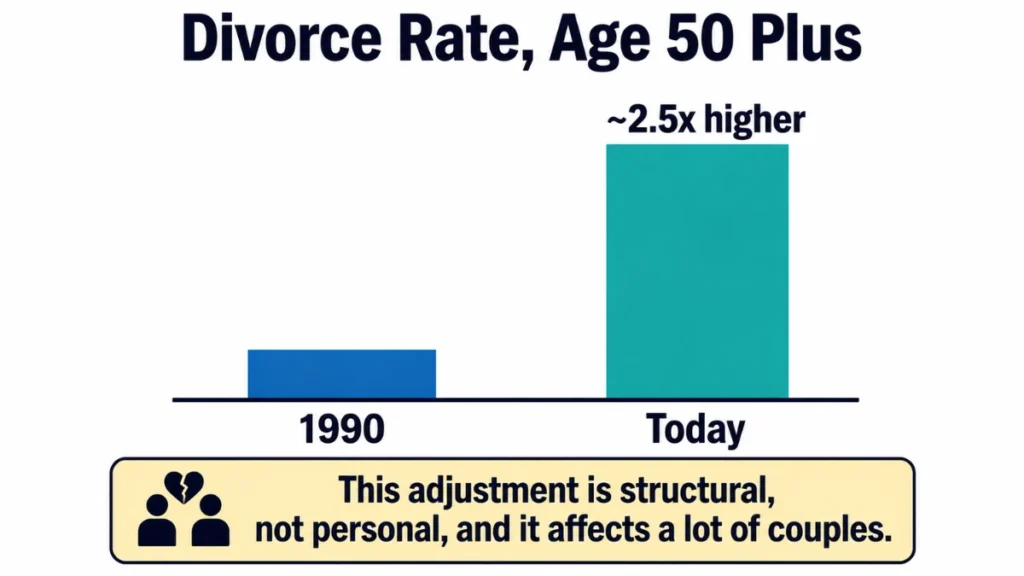
That number is not here to alarm you. It is here to make the point that this adjustment is real, it affects a lot of couples, and it is not handled automatically by loving each other.
Evidence in this article is assembled from several studies, each examining a different piece of this problem: marital quality during retirement transitions, household labor division, voluntary solitude and relationship support, purpose loss after retirement, and daily marital strain.
No single study directly tests all of these together. What they point to, individually and as a group, is consistent: the friction that builds in retirement is mostly structural, and treating it as structural gives you something to actually fix.
Couples who treat this as a relationship problem look for something wrong with each other. Couples who treat it as a design problem ask different questions.

Ask this first: what does each of us need during the day to feel like ourselves? Not what activities. Not what routines.
What each person needs in order to feel like a functioning, purposeful adult by the end of the day. When both partners can answer that, and can hear the other’s answer without treating it as a criticism, the rest of the negotiation becomes practical rather than personal.
You already know your marriage. You do not yet know your retirement.
Start with one conversation
The friction is not about who you are. It is about the fact that two full-time residents moved into a home built around a different schedule. That is solvable, and most of it gets solved through small, practical conversations.
Pick one conversation to have this week: what does each of us need during the day to feel like ourselves?
The marriage adjustment that retirement brings takes longer than most couples expect. The couples who come through it well stay curious about each other’s needs rather than keeping score.
⚠️DISCLAIMER
This article is for general informational purposes only and reflects a synthesis of published research, not personalized advice. It is not a substitute for guidance from a licensed marriage or family therapist, and it should not be used to diagnose relationship problems. If you and your partner are experiencing significant or ongoing conflict, consider speaking with a qualified relationship counselor.
References
- Moen P, Kim JE, Hofmeister H. Couples’ work/retirement transitions, gender, and marital quality. Social Psychology Quarterly. 2001;64(1):55-71. https://www.asanet.org/wp-content/uploads/savvy/images/members/docs/pdf/featured/moen.pdf
- Bozoglan B. Spousal intrusion as a predictor of wives’ marital satisfaction in their spouses’ retirement. Psychological Reports. 2015;116(2). [Citing Bushfield S, Fitzpatrick TR, Vinick BH. Perceptions of impingement and marital satisfaction in wives of retired husbands. Journal of Women & Aging. 2008;20(3-4):199-213.] https://journals.sagepub.com/doi/10.2466/21.PR0.116k28w1
- Moraes B, Kolpashnikova K. Routine housework division and satisfaction: association with gender and retirement status among older adults. Social Indicators Research. 2026;182:21 https://link.springer.com/article/10.1007/s11205-026-03822-y
- Zambrano Garza E, Pauly T, Choi Y, et al. Daily solitude and well-being associations in older dyads: Evidence from daily life assessments. Applied Psychology: Health and Well-Being. 2024;16(1). https://pubmed.ncbi.nlm.nih.gov/37740540/
- Hill PL, Weston SJ. Evaluating eight-year trajectories for sense of purpose in the Health and Retirement Study. Aging & Mental Health. 2019;23(2):233-237. https://doi.org/10.1080/13607863.2017.1399344
- Garcia M. Daily marital strain and sleep in same-sex and different-sex couples. Journals of Gerontology. 2020. https://www.ncbi.nlm.nih.gov/pmc/articles/PMC7743155/
- Pew Research Center. 8 facts about divorce in the United States. Pew Research Center. 2025. https://www.pewresearch.org/short-reads/2025/10/16/8-facts-about-divorce-in-the-united-states/