

It starts with a set of keys. You’re walking to the front door, your mind is on dinner, and suddenly—clatter. Your keys are on the pavement. You didn’t feel them slip. You just looked down and they were gone.
Maybe it was a ceramic mug next. Or your phone sliding right out of your hand while you were reading a text.
If this is happening to you, you aren’t “just getting clumsy.” And no, it isn’t necessarily a “senior moment.” For many adults over 50, these small, frustrating accidents are a biological signal.
The good news? This isn’t an inevitable part of getting older that you have to just accept. Recent 2026 research shows that while we naturally lose about 1% to 2% of our grip strength every year after midlife, we can actually “turn the lights back on” in our hands.
Here is why your hands are acting up and a simple, 5-minute way to fix it at home.
Why You’re Dropping Things: The Science of the “Misfire”
Most people think dropping a glass happens because their muscles got small or weak. That is only half the story. To hold onto something, your brain and your hands have to talk to each other perfectly.
As we age, a few specific things happen to that “conversation”:
1. Power vs. Muscle
There is a difference between having big muscles and having “power.” In the medical world, losing muscle is called Sarcopenia, but losing the strength and speed of that muscle is called Dynapenia. You might still have the muscle, but the “battery” driving it isn’t pushing as hard as it used to.
2. Sensory Thinning
Your fingertips are covered in tiny nerve endings. They tell your brain how hard to squeeze a paper cup versus a heavy glass jar. By age 50, these nerves start to thin out. Your brain doesn’t always “feel” that a phone is slipping until it’s already halfway to the floor.
3. The Vital Sign You Can Feel
Doctors in 2026 now view grip strength as a “biomarker.” This means your squeeze is a window into your overall health. Strong hands usually mean a strong heart and a longer life. Checking your grip is now considered as important as checking your blood pressure.
| Feature | Normal Aging | Potential Warning Sign |
| Opening Jars | Needs a bit more effort than before. | Cannot open a jar even with a grip pad. |
| Holding Phones | Occasional slip if hands are wet. | Phone falls multiple times a week. |
| Muscle Feel | Hands feel slightly thinner. | Visible “hollowing” between thumb and index finger. |
| Reaction Time | Can catch a falling object. | Object hits the floor before you react. |
The 5-Minute “Sticky Grip” Routine
You don’t need a gym membership or heavy weights to fix this. You can do these exercises while watching the news or waiting for coffee. These moves focus on neuromuscular coordination—teaching your nerves and muscles to work together again.
1. The Soft Squeeze (1 Minute)
Find a soft foam ball or even a rolled-up pair of socks.
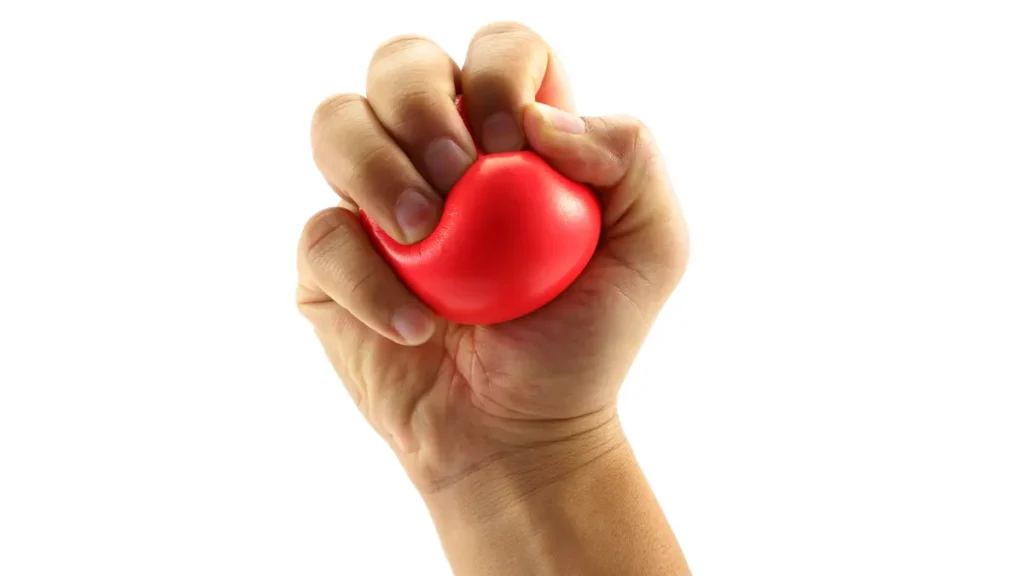
- Hold the ball in your palm.
- Squeeze as hard as you can for 3 seconds.
- Relax for 3 seconds.
- Repeat 10 times for each hand.
- Why: This re-engages the deep flexor muscles that provide your “base” strength.
2. Finger opposition/taps (1 minute)
Maintain a relaxed posture.
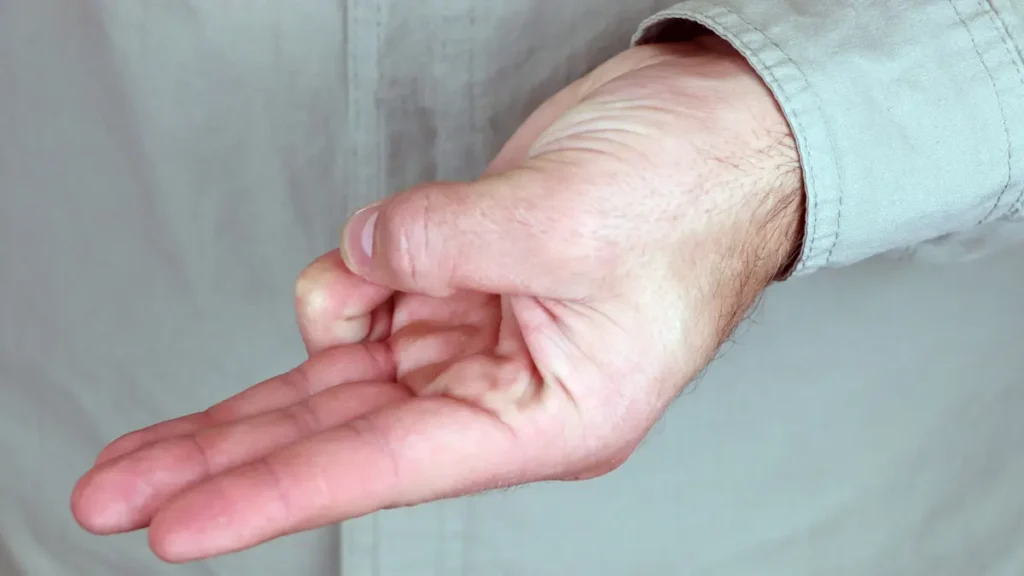
- Connect the tip of your thumb firmly to the tip of your pinky finger.
- Maintain the pressure while creating a clear circle and keeping other fingers straight.
- Hold this connection for 5 seconds and release.
- Repeat 5 times per hand.
- Why: This precise thumb-to-pinky connection is a strong neural coordination task. Most pinch-drop accidents (like dropping a phone) happen because the brain loses its exact map of where the thumb and pinky are in space.
3. The Functional Towel Wring (2 Minutes)
Grab a hand towel or a kitchen rag.
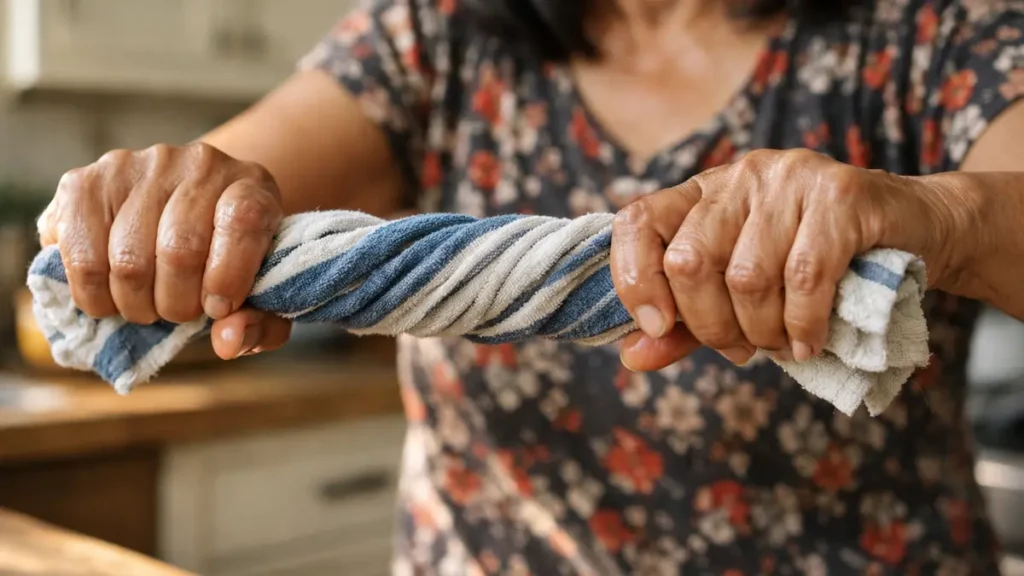
- Hold the towel in front of you with both hands.
- Twist it as if you are wringing out water.
- Hold the tightest twist for 5 seconds.
- Reverse the direction.
- Repeat 10 times.
- Why: This mimics daily chores like opening jars or turning heavy doorknobs.
4. Thumb-to-Pinky Taps (1 Minute)
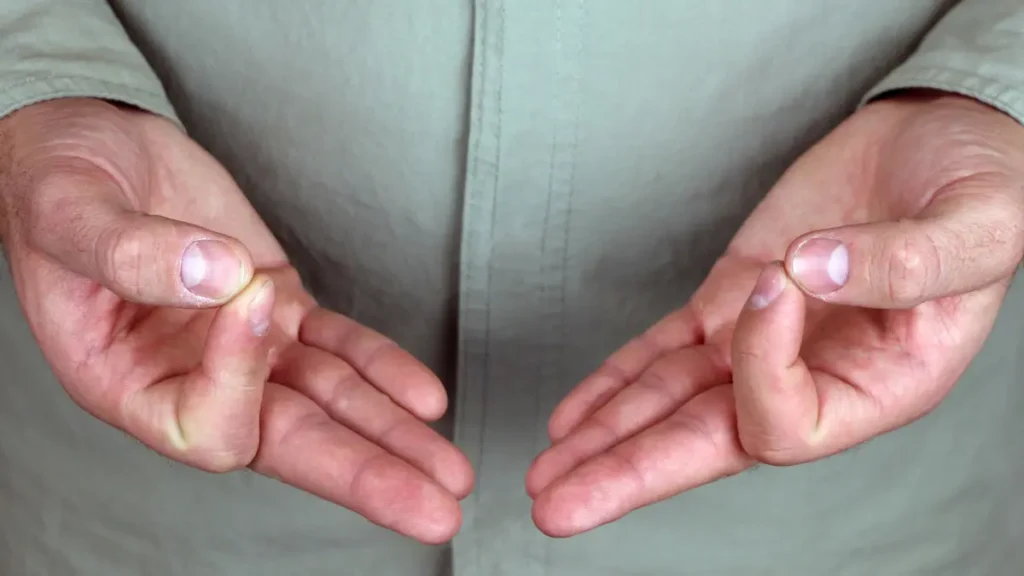
- Touch the tip of your thumb to the tip of your index finger.
- Move to your middle, ring, and pinky fingers, tapping each one.
- Speed up as you get more comfortable.
- Repeat 20 times per hand.
- Why: Most “pinch-drop” accidents happen because the thumb loses its coordination with the other fingers.
2026 Tech to Help You Track Progress
If you like to see data, there are new tools that make this easier.
- Digital Dynamometers: These are small handheld devices that show your squeeze strength in pounds or kilograms on a screen. Seeing your number go from 40 to 50 pounds is a great way to stay motivated.
- Smart Putty: You can now buy therapy putty that changes color when it gets warm. This tells you that you’ve used it long enough to increase blood flow to your joints.
- Timer Apps: Use a simple kitchen timer or a phone app. Setting a “5-minute hand window” every morning makes it a habit rather than a chore.
Your Questions Answered
Does Your Grip Weaken With Age?
Yes, and it starts earlier than most people expect. Grip strength begins declining around age 40 and picks up speed after 50. Most adults lose roughly 1 to 2% per year. The good news is that your hands respond to training at any age. Consistent daily exercise can slow the decline significantly.
What Are Signs of a Weak Grip?
The most common signs are dropping things like your phone or keys without feeling them slip. You might struggle to open jars or turn stiff doorknobs. Your hands may feel tired after tasks that never used to bother you. Some people also notice their handshake feels weaker than it used to.
What Vitamin Deficiency Causes Hand Weakness?
Vitamin D and Vitamin B12 are the two most commonly linked to hand weakness in people over 50. Vitamin D helps your muscles work properly. B12 keeps your nerves healthy. Your grip depends on both working together. If your weakness came on suddenly, it is worth asking your doctor to check both levels.
Is It Okay To Use a Grip Strengthener Every Day?
Yes, for most healthy adults it is fine. Hand muscles recover faster than larger muscle groups in your body. Daily light grip work is actually more effective than training every few days. Just listen to your body. If you feel joint pain or sharp discomfort at any point, ease off and check with your doctor.
How Long Does It Take To Improve Grip Strength?
Most people notice their hands feeling steadier within two to three weeks of daily practice. Measurable strength gains usually show up within four to eight weeks. Everyone responds a little differently depending on age, consistency and overall health. Short daily sessions will always get you further than longer sessions done once in a while.
Regain Your Confidence
Dropping things isn’t a life sentence. It’s a physical skill, just like balance or flexibility. If you haven’t been “practicing” using your hands for anything more than typing or holding a remote, the muscles and nerves simply got bored.
Start the Towel Wring and Finger Walking tonight. Some people notice a difference in how “steady” their hands feel in just two weeks. Others may take a month. The key is to do it every day.
You don’t have to wait for a broken plate to take action. Start today, and keep your favorite mug safe.
⚠️MEDICAL DISCLAIMER
This article is for educational purposes only and does not replace professional medical advice or a formal diagnosis. If you notice sudden weakness, persistent numbness, sharp pain or visible changes in your hands, please speak with your doctor or a certified hand therapist. These symptoms can sometimes point to underlying conditions that need proper attention. Always stop any exercise that causes pain or discomfort. Your doctor knows your full health picture and is always the right first call when something feels off.