

The winter holiday period is often framed as a metabolic disaster zone, yet current research from late 2024 and 2025 suggests that the true challenge is not the magnitude of immediate weight gain, but its long-term persistence. While popular media often cites a 10-pound average gain, clinical data reveal that Americans typically gain between 0.37 kg and 0.9 kg (approximately 0.8 to 2 lbs) during the six-week festive window.
The significance of this gain lies in its “stickiness”; approximately 50% of holiday weight is retained well into the following year, contributing to “creeping obesity” where festive indulgences account for over half of an adult’s total annual weight accumulation.
1. The Biological Battlefield: Understanding Holiday “Food Noise”

In 2025, nutritional science has pivoted toward managing “food noise” the persistent, intrusive thoughts about highly palatable foods that occur even in the absence of physical hunger. During the holidays, this noise is amplified by a physiological “perfect storm” of stress and sleep deprivation.
The Cortisol and Ghrelin Connection
Holiday stress triggers the release of cortisol, a hormone that disrupts blood sugar stability and increases the “motivation” to seek out energy-dense, hyper-palatable foods (those high in fat, sugar, and salt). This is further exacerbated by the “Sleep-Metabolism Gap.” Research from Columbia University in 2023 and updated data indicate that even a modest sleep deficit common during festive travel can lead to a 15% increase in insulin resistance the following day.
Physiologically, sleep deprivation causes a 15% surge in ghrelin (the hunger hormone) and a concomitant drop in leptin (the satiety hormone), effectively reducing your willpower by decreasing activity in the prefrontal cortex while stimulating the amygdala’s reward-seeking behavior. Prioritizing 7–9 hours of sleep is therefore not a luxury, but a metabolic requirement for managing holiday cravings.
2. The 2026 Plate Method: Strategic Sequencing
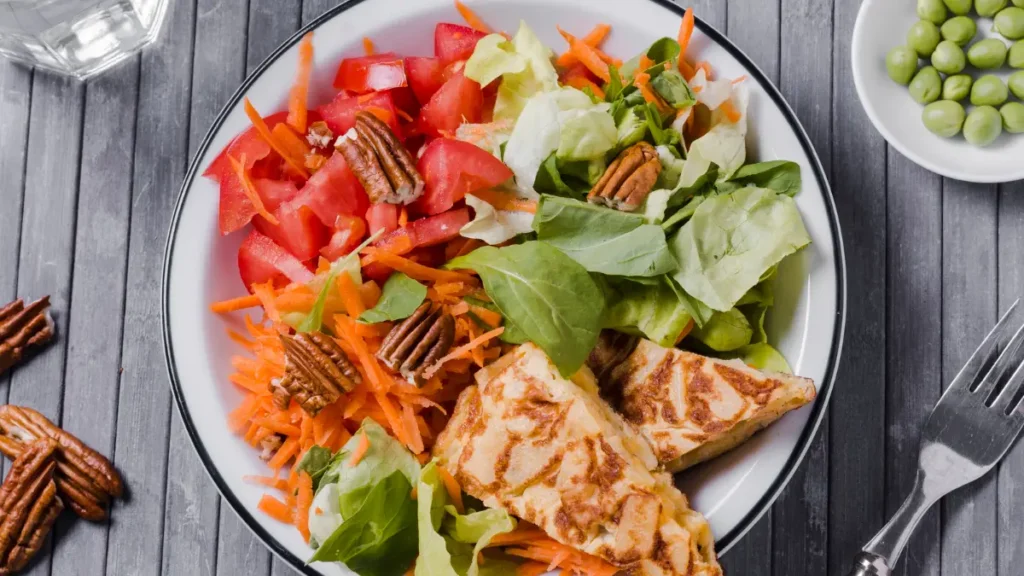
Managing your glycemic response does not require total avoidance of festive favorites; rather, it requires “Bio-Individual Sequencing.” Instead of the traditional plate dominated by starches, the 2026 optimized plate focuses on a specific order of operations to create a “fiber buffer”.
| Food Group | Traditional Proportion | 2025 Optimized Proportion |
| Produce (Leafy greens, cruciferous veggies) | 10-15% | 50% (Half the plate) |
| Lean Protein (Turkey, chicken, white fish) | 25% | 25% (Palm-sized) |
| Starches (Potatoes, stuffing, rolls) | 40-50% | 25% (Fist-sized) |
The Science of Sequencing: By consuming high-fiber vegetables first, followed by protein, and ending with carbohydrates, you slow the rate of gastric emptying. This blunts the postprandial glucose spike, preventing the sharp insulin surge that typically leads to the “sugar crash” and subsequent evening bingeing.
3. The 2025 Culinary Swap-Shop
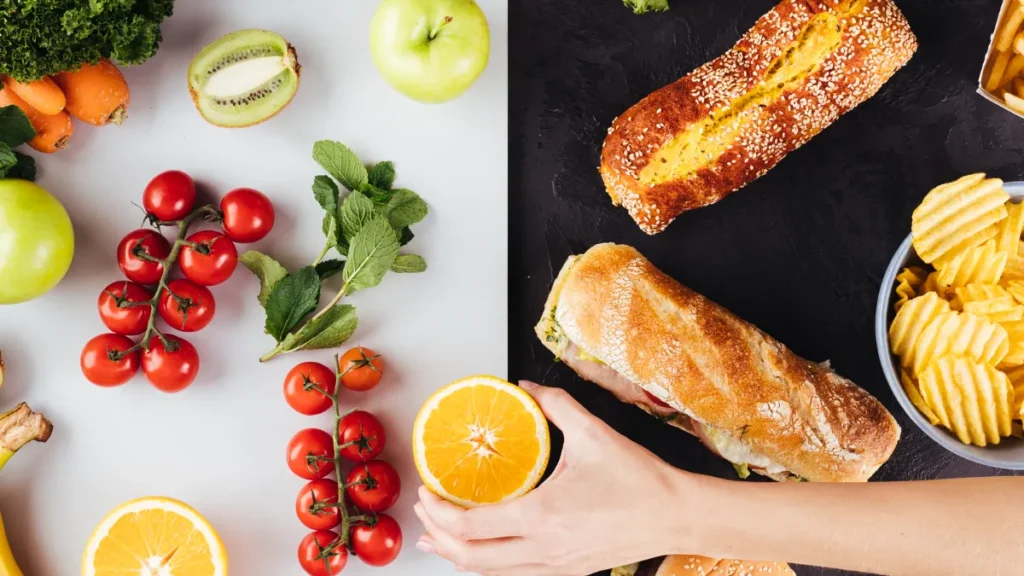
Modern culinary techniques, particularly the maturation of air-frying technology, allow for the “Maillard reaction” the chemical process that creates browning and flavor with significantly lower caloric density.
The Potato Reset: Traditional “lard roasties” can be replaced with air-fried “smashed” potatoes. This method utilizes approximately 70-80% less oil than deep frying while reducing the formation of acrylamide (a potential carcinogen found in scorched starchy foods) by up to 90%.
Protein Optimization: Prioritize roast turkey or chicken over honey-baked ham to reduce saturated fat and nitrate intake . For those looking to “functionalize” their sides, incorporating Greek yogurt into cauliflower mash provides a high-protein, low-glycemic alternative to butter-heavy mashed potatoes.
The “Pita Pocket” Strategy: For casual holiday gatherings, using half a whole-wheat pita as a “vessel” for lean protein and hummus provides a controlled portion of complex carbohydrates and 3g+ of fiber, aiding in long-term satiety .
4. The Drink Cabinet: Functional Beverages vs. Liquid Calories

Alcohol presents a “triple threat” to holiday health by adding empty calories, lowering dietary inhibitions, and disrupting sleep architecture. The 2026 trend toward “Functional Beverages” offers a sophisticated alternative.
The Rise of Nootropic Mocktails
Lion’s Mane: Infusing festive drinks with Lion’s Mane mushroom has been shown to support cognitive clarity and mood balance without the “jitters” or crashes associated with caffeine or alcohol.
Ashwagandha and Magnesium: These adaptogens are increasingly found in “chill-out” drinks to lower cortisol and promote relaxation without drowsiness. Magnesium specifically supports melatonin production, helping to stabilize the circadian rhythm during busy social weeks.
Clinical Note: For individuals with diabetes, it is critical to remember that alcohol can mask symptoms of hypoglycemia; monitoring blood glucose levels more frequently is essential if consuming festive spirits.
5. Technology as a Mindful Ally
AI-Driven Health Tracking
From Calorie Counting to Satiety Science
In 2026, health tracking has moved away from punitive calorie counting toward AI-driven “Satiety Science.”
AteMate: This visual food diary explores the motivations and mindfulness behind your eating choices, not just the foods themselves. It promotes gentle, shame-free reflection on whether meals aligned with your intentions, helping you move beyond the typical cycle of holiday food guilt.
Hava: Utilizing a “Satiety-per-Calorie” (SPC) algorithm, Hava helps users identify foods that naturally quench appetite. High-SPC foods (like lean meats and fibrous vegetables) allow individuals to feel full while consuming significantly fewer calories.
MacroFactor: For those focused on performance, Macro Factor’s “Expenditure V3” algorithm is now more resilient to the “missing data” common during holidays, requiring only three days of consistent tracking to recalibrate your metabolic rate.
6. Movement and Stress: The “Hygge” Approach

Rather than viewing exercise as a way to “burn off” a meal a mindset that often leads to over-restriction and binging 2026 health strategies emphasize movement for glycemic management. Engaging in “Post-Prandial” (after-meal) activity, such as a 10-minute walk, helps your muscles clear glucose from the bloodstream independently of insulin.
Furthermore, embracing the Danish concept of “Hygge” (coziness and presence) can lower cortisol levels. By creating “peace-protecting” boundaries and utilizing “Sensehacking” manipulating your environment with calming scents or morning natural light you can protect your nervous system from the sensory overstimulation of the holidays.
The goal for 2026 is not a “perfect” December, but a consistent one. By adding high-volume, nutrient-dense foods and leveraging smart technology, you can enjoy the traditions of the season without compromising your metabolic future.
Conclusion
Successfully navigating the 2026 festive season is not about achieving perfection, but rather the consistent application of science-backed metabolic strategies. By filling half your plate with fibrous produce and sequencing your meals starting with fiber to blunt insulin spikes, you create a biological barrier against subsequent overindulgence.
Leveraging modern “satiety science” through platforms like Hava or photo-based journals such as Ate Mate allows for mindful reflection without the punitive nature of traditional calorie counting. You can swap lard-heavy potatoes for air-fried alternatives that trigger the Maillard reaction with 70–80% less oil or choose functional mocktails infused with ashwagandha to lower cortisol these small shifts preserve your hard-won progress.
Ultimately, you can enjoy Christmas without ruining your healthy diet by focusing on addition rather than subtraction, ensuring you enter 2026 with your energy and vitality fully intact.