
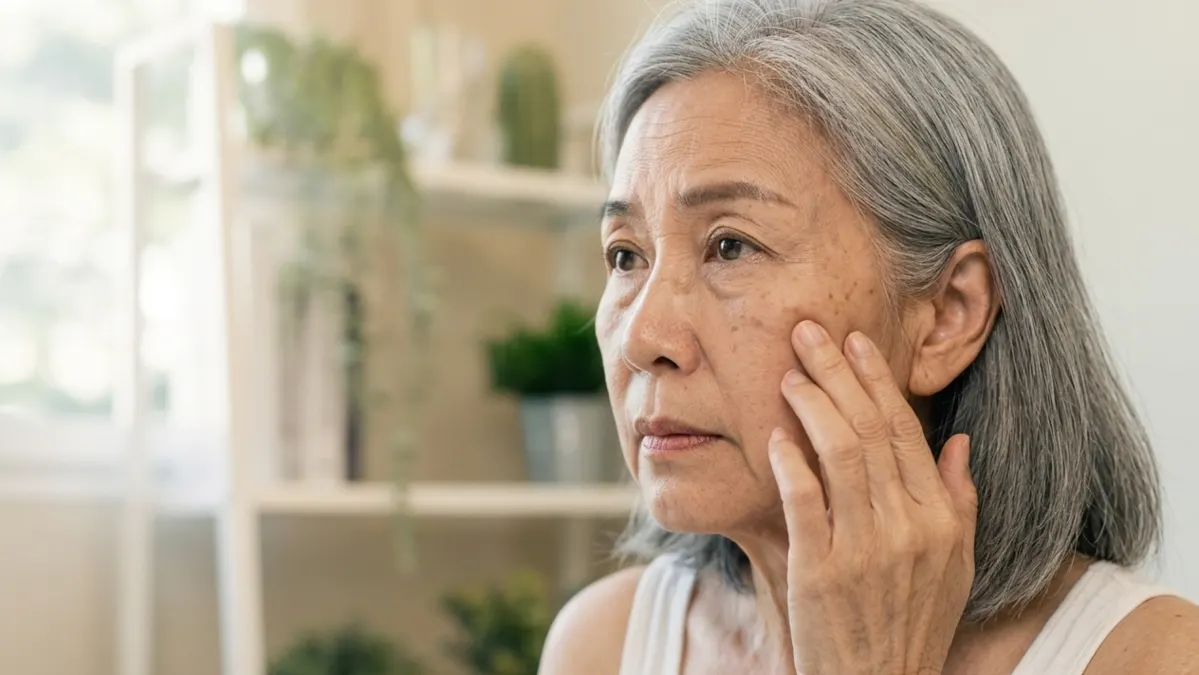
You’re doing everything right. You sleep. You moisturize. You’ve spent real money on serums. And your skin is still changing in ways that no product seems to fix.
Women over 50 who care about their skin are watching it age faster than expected, and sugar and skin aging after 50 are connected in a way most skincare advice ignores: the reason is not what they’re putting on their face but what they’re eating every day.
This article explains the exact process behind that change, names the foods making it worse, and tells you what the evidence actually supports for slowing it down. By the end, you’ll know why no cream has fixed this and what can.
| # | Section | What You’ll Find |
|---|---|---|
| 1 | Why your skin looks different now | The change most women blame on age alone |
| 2 | What’s happening below the surface | A process your creams can’t reach |
| 3 | Why 50 changes everything | The shift that makes sugar damage harder to undo |
| 4 | The foods most women don’t suspect | Clean eating may not be as clean as you think |
| 5 | What the evidence actually supports | What works, what doesn’t, and what’s overstated |
| 6 | The one change worth making first | Where real skin protection starts |
The Skin Changes You’re Seeing Are Not Just Normal Aging
You look in the mirror and something feels off. Not dramatically different. Just a dullness, a slight yellow cast, a flatness where there used to be bounce. You press your cheek and the skin settles back a beat too slowly. You’ve tried new products, but the texture doesn’t change.

For women over 50 who care about their skin, these specific changes are not simply the passage of time. They match closely with what researchers have documented in skin tissue when a protein-damaging process called glycation has been accumulating in the dermis for years.
These changes track with what researchers have found in measured skin tissue.
A study measuring AGEs [advanced glycation end products, compounds that form when sugar molecules bind to proteins and damage them over time] in the skin of healthy adults found that levels increased steadily with age, with the strongest rise in people between 61 and 80 years old.¹ The study found that sugar and skin aging are directly connected through this accumulation.
The frustrating part is that these changes are below the surface. A yellow cast to the skin, loss of firmness, and deeper-than-expected lines are among the visible signs researchers have linked to AGE accumulation in female skin samples.² This isn’t sun damage. It isn’t dehydration. It’s something happening inside the collagen itself.
What’s driving it, and why your skincare routine isn’t fixing it, comes down to chemistry that starts three millimeters beneath any product you apply.
What Glycation Actually Does to Collagen Below the Surface
You’ve probably never heard this explained clearly. Most skin content talks about collagen loss, but this is different. This is collagen that’s still there, but has been changed at the molecular level.
Glycation [a chemical reaction in which sugar molecules in the bloodstream attach to proteins like collagen, forming a new compound that the body cannot easily undo] happens continuously, every day, in proportion to how much glucose is circulating in your blood after you eat.
Every cream you have ever bought for your skin stops at the surface, but glycation is destroying your collagen three millimeters below where any of it can reach.
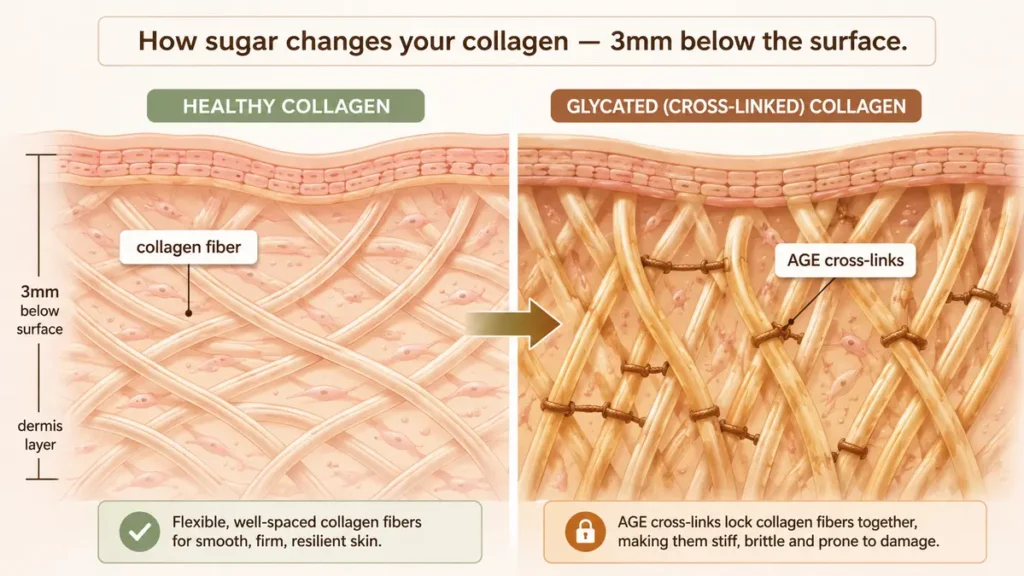
Here is what makes this process so damaging. Skin collagen has a half-life of approximately 15 years, which means a single collagen fiber in your dermis right now may have been sitting there since your late 30s, collecting glycation damage the entire time.³ No other protein in your body stays in place that long.
What this means for your skin is that collagen fibers are being locked together by cross-links [chemical bonds that form when sugar attaches to collagen, making fibers rigid and unable to move or renew properly]. Cross-linked collagen does not flex. It does not bounce back. And it cannot be replaced by new collagen the way healthy fibers can, because the cross-links are associated with disrupted collagen remodeling.⁴
The yellowing many women notice is linked to this chemistry. As AGEs accumulate on collagen fibers, the fibers have been associated with browning, and that yellowing tone in the skin has been linked to AGE accumulation in research.⁵
Research on female skin samples found AGE levels were significantly higher in people with dull and yellow skin compared to those with normal skin tone.²

No serum, cream, or topical treatment penetrates to the dermis where this is happening. The dermis sits below the epidermis. Topical products act on the epidermis. What you haven’t heard yet is why this damage accelerates after 50 specifically.
Why Sugar Damage After 50 Is Harder to Reverse Than It Was at 30
You may have been eating the same way for decades. So why is it showing up on your face now?
Two things happen at once after menopause, and together they make sugar’s effect on the skin far more visible than it was when you were younger.
First, estrogen declines sharply. Estrogen is linked to collagen production. Research on postmenopausal women found that skin collagen content decreases after menopause in step with estrogen levels, and that estrogen replacement is associated with restored collagen levels in women who have already experienced loss.⁶
That’s a dramatic reduction in the body’s ability to produce new collagen fibers to replace old ones.
Second, and this is the part most women don’t hear: when collagen turnover slows, glycated fibers stay in place longer. New collagen that would have pushed out damaged fibers isn’t arriving fast enough. The damaged, cross-linked collagen from years of sugar exposure accumulates rather than clearing.

You’re not suddenly more vulnerable because your habits changed. You’re more vulnerable because the body’s repair capacity dropped while the damage kept building.
This is not a disease. It’s a normal biological shift. But it means the diet habits that were invisible at 35 are no longer invisible at 52. What you need now is the specific list of foods making this worse, including several that health-conscious women eat every week without suspecting them.
The Foods Driving Glycation That Most Women Over 50 Don’t Suspect
If you’re on medication, pregnant, or managing a chronic health condition, talk to your doctor before making significant changes to your diet.
You already know that soda and desserts spike blood sugar. That’s not the whole picture.
Cooking method matters as much as ingredient. When animal proteins are cooked using dry heat at high temperatures, including grilling, roasting, broiling, and frying, they generate large amounts of pre-formed dietary AGEs that are absorbed after eating.
Research in community-dwelling older adults found that animal-derived foods prepared with high-heat, dry cooking methods contain significantly more dietary AGEs than the same foods prepared with moisture-based methods like poaching or boiling.⁷
The practical meaning: grilled chicken breast has far more dietary AGEs than poached chicken breast. Scrambled eggs cooked in a dry pan have more than soft-boiled eggs. Crispy fried tofu has more than steamed tofu.
The other category most women miss is refined carbohydrates. White bread, white rice, crackers, flavored yogurt, and packaged snack foods don’t taste sweet, but they convert to glucose rapidly in the bloodstream and spike blood sugar in the same way sugar does. Repeated blood sugar spikes are associated with increased internal glycation over time.⁸
Here is a practical way to think about your plate:
Foods and habits that raise your glycation load:
- Grilled, fried, or broiled animal proteins (meat, poultry, eggs)
- Processed cheeses and packaged snacks
- Sugary drinks, flavored yogurt, cereals with added sugar
- White bread, white rice, and other refined carbohydrates consumed in large portions
- High-fructose corn syrup in packaged foods

Foods and habits that lower it:
- Water-based cooking: poaching, boiling, steaming, slow-cooking
- Whole grains, legumes, and fiber-rich vegetables
- Berries, dark leafy greens, and other polyphenol-rich plant foods
- Eating protein before refined carbohydrates in a meal (associated with lower post-meal glucose spikes in human studies)¹²
This list is not about perfection. What the research actually supports for slowing this down from the inside is not what most skin articles tell you.
What the Evidence Actually Says About Slowing Glycation from the Inside
You want to know what actually works. Here’s an honest answer.
Topical products cannot reverse existing glycation damage. The cross-links in your dermis are considered largely irreversible once formed.⁴ What research may suggest is slowing the rate of new damage, which over months means less glycation built into the collagen forming right now.
Blood glucose control is the most direct lever. In a study of human volunteers, improved glycemic control over a four-month period was associated with approximately a 25 percent reduction in new glycated collagen formation.⁹
Lowering the amount of glucose circulating in your blood after meals is associated with a reduced rate of new AGE formation on your collagen.
Some foods you’re probably already eating may help interrupt glycation. Dietary polyphenols have shown anti-glycation properties in research.
A meta-analysis of 61 human dietary intervention studies found that polyphenol intake was significantly associated with reduced wrinkles and improved skin barrier function.¹⁰
Foods with the strongest anti-glycation activity in laboratory studies include cinnamon, rosemary, cloves, green tea, berries, and garlic.⁹ These aren’t magic. They work by interrupting the chemical steps that lead to AGE formation.

Vitamin C is worth noting with one caveat about scope. In a randomized controlled trial involving people with type 2 diabetes, eight weeks of daily vitamin C supplementation was associated with a significant reduction in serum AGE levels.¹¹
Whether this translates directly to people without diabetes is not yet confirmed, but vitamin C’s role in collagen synthesis and antioxidant activity makes it well-supported for skin health broadly.
What does not work: expensive topical “anti-glycation” serums that claim to reverse AGE damage in the dermis. No topical product can reach that layer at therapeutic concentrations.¹³
The one change most worth making, and why it has to happen consistently over months rather than days, is what the final section covers.
The One Change That Gives Your Skin the Best Chance of Looking Different in Six Months
Here is the honest version of what this means in practice.
The collagen that’s already cross-linked won’t un-cross-link. The yellowing that’s accumulated won’t reverse from a diet change. What can change is the collagen your body builds from today forward. Every piece of new collagen formed over the next six months is either forming in a lower-sugar environment or a higher-sugar one. That difference is visible over time.

The single most useful change is not a supplement, a superfood, or a new skincare routine. It’s reducing the frequency and size of blood glucose spikes throughout the day. That means:
- Replacing refined carbohydrates with fiber-rich alternatives at most meals
- Switching at least some grilling and frying to poaching, steaming, or slow-cooking
- Cutting the most obvious sources of added sugar: sweetened drinks, flavored yogurt, packaged snacks
This isn’t about eating perfectly. It’s about creating a lower-glycation environment consistently, over months, so the skin forming during that period benefits.
Conclusion
Start today by cutting one source of added sugar from your daily routine, because that single change is where real skin protection begins. The skin you’re building right now is the skin you’ll be wearing in six months.
For women over 50, reducing sugar and its effects on skin aging starts with one meal, not a new product.
⚠️DISCLAIMER:
This article is for informational purposes only and does not constitute dietary or medical advice. The content addresses how dietary sugar accelerates skin aging in women over 50 and is meant for general educational purposes only. Nutritional needs differ based on age, health status, and individual circumstances, consult a registered dietitian or your healthcare provider before making significant changes to your diet.
References
- Correlation analysis between advanced glycation end products detected noninvasively and skin aging factors. Journal of Cosmetic Dermatology. 2021;20:243-248. https://pubmed.ncbi.nlm.nih.gov/32333482/
- The association between levels of advanced glycation end products and skin aging parameters in women. Referenced in: Advanced glycation end products in the skin: Molecular mechanisms, methods of measurement, and inhibitory pathways. Frontiers in Endocrinology. 2022. https://pmc.ncbi.nlm.nih.gov/articles/PMC9131003/
- Effect of collagen turnover on the accumulation of advanced glycation end products. Journal of Biological Chemistry. 2000;275(50):39027-39031. https://pubmed.ncbi.nlm.nih.gov/10976109/
- Collagen glycation detected by its intrinsic fluorescence. Journal of Physical Chemistry B. 2021. https://www.ncbi.nlm.nih.gov/pmc/articles/PMC8793138/
- Advanced glycation end products: Key players in skin aging? Dermato-Endocrinology. 2012;4(3):259-270. https://pmc.ncbi.nlm.nih.gov/articles/PMC3583887/
- A study of the decrease of skin collagen content, skin thickness, and bone mass in the postmenopausal woman. Obstetrics and Gynecology. 1987;70:840-845. https://pubmed.ncbi.nlm.nih.gov/3601260/
- Higher dietary intake of advanced glycation end products is associated with faster cognitive decline in community-dwelling older adults. Nutrients. 2022. https://www.ncbi.nlm.nih.gov/pmc/articles/PMC9003315/
- The impact of excessive sugar consumption on skin health: analysis of biological mechanisms and dermatological effects. Journal of Education, Health and Sport. 2024;76:56626. https://apcz.umk.pl/JEHS/article/download/56626/40734/168063
- Sugar sag: glycation and the role of diet in aging skin. Skin Therapy Letter. 2019. https://www.skintherapyletter.com/aging-skin/glycation/
- Dietary interventions in skin ageing: a systematic review and meta-analysis. PMC. 2025. https://www.ncbi.nlm.nih.gov/pmc/articles/PMC12577306/
- Vitamin C supplementation lowers advanced glycation end products (AGEs) and malondialdehyde (MDA) in patients with type 2 diabetes: a randomized, double-blind, placebo-controlled clinical trial. Food Science & Nutrition. 2023;11:5967-5977. https://pmc.ncbi.nlm.nih.gov/articles/PMC10563761/
- The impact of food order on postprandial glycemic excursions in prediabetes. Diabetes & Metabolic Syndrome: Clinical Research & Reviews. 2019. https://pmc.ncbi.nlm.nih.gov/articles/PMC7398578/
- Cracking the skin barrier: models and methods driving dermal drug delivery. Pharmaceutics. 2025;17(12):1586. https://www.mdpi.com/1999-4923/17/12/1586