
The fear of a fracture shouldn’t keep you in your favorite chair; it should be the reason you get out of it. Many of us fall for the fragility myth. We think that if we stop moving, we stay safe. But your bones are living tissue. They need a little stress to stay strong. Without gravity and weight bearing movements, your skeleton slowly weakens.
This is why active aging is so important. You do not need a gym to fix this. You can use a method called Osteogenic Loading. These are simple at home bone strengthening exercises for seniors that help your body keep your bones dense. By doing specific moves, you signal your system to build more bone armor.
Why Bone Loading Matters in 2026?

In the past, people thought a daily walk was enough. While walking is great for your heart, your bones need more. Science calls this Wolff’s Law. It sounds fancy, but it just means your bones get stronger when you put a load on them. Think of it like a muscle. If you don’t use it, you lose it.
Standard cardio is smooth and steady. Bone loading is different. It requires a bit of impact or resistance. And here is why that matters: statistics show that hip fractures are a major risk as we age. In fact, about 20% to 30% of seniors who break a hip do not survive the following year. This is a scary number. But it is also a wake up call.+1
Prevention is your best medicine. By 2026, we have better data than ever showing that even small jolts to the bone can change your density. You are never too old to start building a stronger frame. These moves don’t take hours. They take a few minutes of your day.
Move 1: The Sit-to-Stand (The 10-Second Hip Builder)
Your hips are often the most vulnerable part of your skeleton. To protect them, you need strong legs. That leg power is the top predictor of whether you can live on your own as you get older. This move uses weight bearing movements to build hip bone density right in your living room.
Find a sturdy chair. Sit near the edge of the seat. Put your feet flat on the floor, about hip width apart. Lean forward slightly. Now, try to stand up slowly without using your hands. If you need balance, keep one hand near a table or counter. Sit back down with control. Do not just plop into the chair.
Repeat this 8 to 12 times. This move mimics your daily life. Every time you stand up, you are loading your hip joints and lower spine. This tells your body to keep those areas solid and sturdy.
Move 2: Wall Push-Ups (Protect Your Wrists and Spine)
When people fall, they usually reach out to catch themselves. This often leads to wrist fractures. To prevent this, you need to strengthen your upper body. A floor push up is hard. It can also be risky for your joints. But a wall push up is safe and offers high rewards.
Stand an arm’s length away from a wall. Place your palms flat against the wall at shoulder height. Keep your back straight. Bend your elbows to bring your chest toward the wall. Then, slowly push back to the start. This move targets your wrists, arms, and upper spine.
These are common spots for breaks. By using the wall, you control the weight. It puts enough pressure on the bone to make it grow stronger without hurting your shoulders. Try for 10 reps. It’s like building invisible armor for your upper body.
Move 3: The Stomp Walk (The 2-Minute Bone Signal)
Walking is a great habit. However, your bones eventually get used to a smooth pace. To trigger bone growth, you need a jolt. In 2026, health experts are leaning into Low Impact High Load training. This just means adding a little force to your steps.
While you are walking around your house or yard, stop every ten steps. Lift one foot and stomp it firmly on the ground. Imagine you are trying to crush an aluminum can. Do this two or three times for each foot, then keep walking. This vibration sends a signal through your heel and up into your hip.
It’s a wake up call for your skeleton. You do not need to jump or run to see results. These small, intentional impacts are enough to tell your bones to stay dense. Add this to your walks three times a week for the best results.
Watch physiotherapist Will Harlow demonstrate this simple bone-strengthening exercise for seniors.
How to Keep Your Balance While You Build?
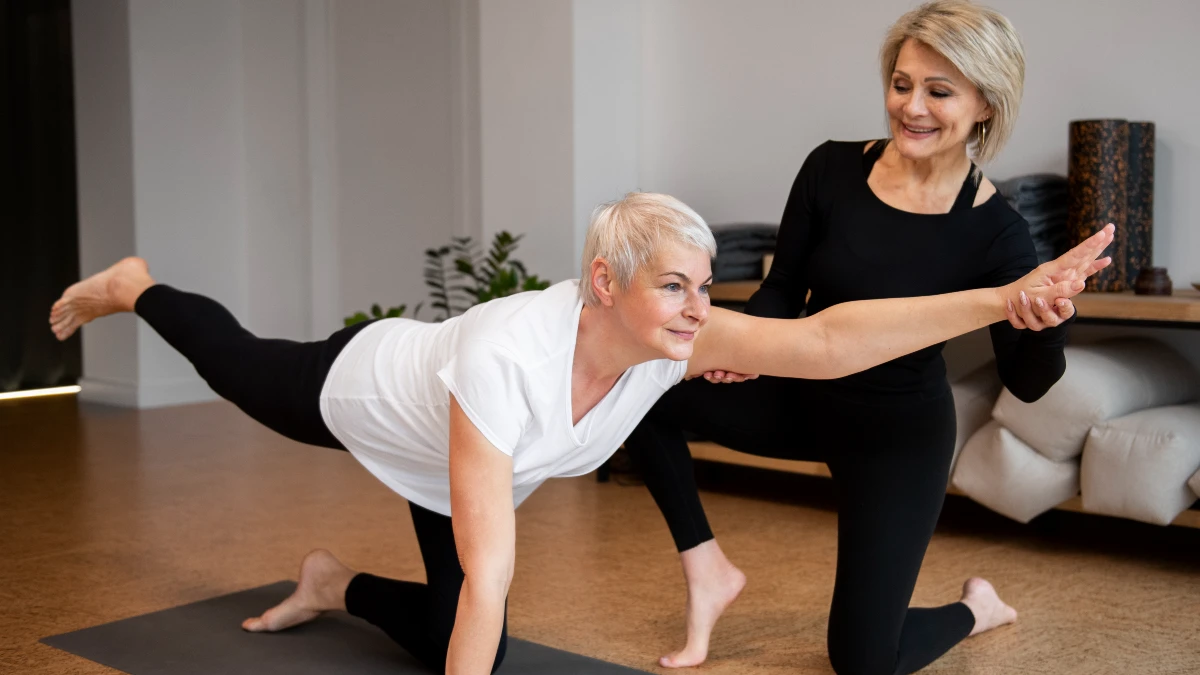
Safety is the most important part of any exercise plan. You want to challenge your bones without risking a fall. Always perform these moves near a sturdy piece of furniture, like a heavy dining table or a kitchen counter. If you feel dizzy or experience sharp pain, stop immediately. It is also smart to talk to your doctor before you start a new routine.
They can tell you if your bone density is ready for these specific moves. Working with a physical therapist is another great way to make sure your form is perfect. Beyond your immediate physical environment, your internal focus plays a critical role in maintaining stability.
As you perform these movements, keep your gaze fixed on a stationary object at eye level rather than looking down at your feet; this helps your brain process spatial orientation more effectively. Engage your core muscles by gently pulling your belly button toward your spine, which creates a solid anchor for your limbs to move against.
If you find a particular move too challenging, start with a two hand touch on your support surface, gradually progressing to a single hand, then just a fingertip, and finally no support at all as your proprioception improves.
The Fuel Your Bones Need to Grow
Exercise is the signal, but food is the building material. Your body needs specific nutrients to make your bones denser. Calcium is the most famous one. You can get it from dairy, leafy greens, or fortified foods. But calcium cannot do the job alone. You also need Vitamin D to help your body soak up that calcium. Many seniors are low on Vitamin D, especially in the winter.
In 2026, we know that protein is just as important for bone health as it is for muscles. Try to have a little protein with every meal to give your skeleton the resources it needs. In addition to the big three of calcium, Vitamin D, and protein, micronutrients like magnesium and Vitamin K2 act as the specialized crew that directs traffic within your skeletal system.
Magnesium helps convert Vitamin D into its active form, while Vitamin K2 ensures that the calcium you consume actually lands in your bones rather than settling in your arteries. You can find these supporting players in nuts, seeds, and fermented foods like sauerkraut or specific cheeses.
Since bone remodeling is a slow and steady process, consistency is more important than intensity; providing your body with a steady stream of these nutrients throughout the day, rather than in one large dose, ensures your building site never runs out of raw materials.
How to Level Up Your Strength?
Once these moves feel easy, you should make them a little harder. This is called progressive loading. If the Sit to Stand feels like a breeze, try doing it slower. Count to five as you sit down and five as you stand up. This makes your muscles and bones work harder against gravity.
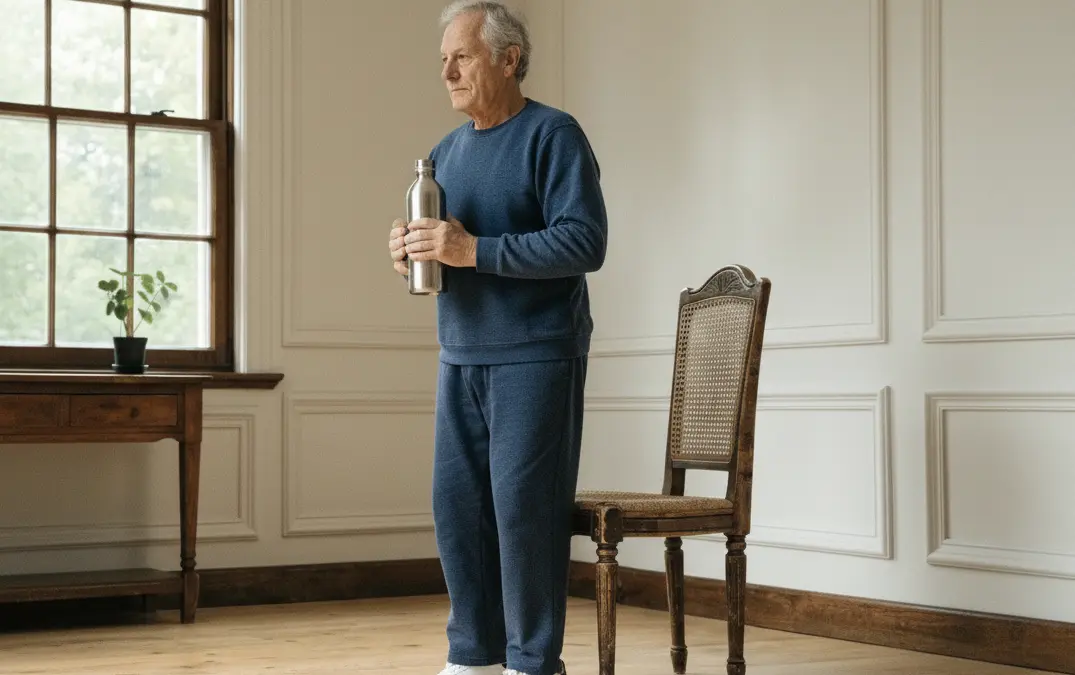
You can also hold a small weight, like a full water bottle, against your chest. For the wall push-ups, move your feet further away from the wall. Small changes like these keep your body guessing. When your body is challenged, it continues to build more bone.
Conclusion
Your bones are not just dry sticks. They are living tissue that listens to how you move. If you treat them like they are fragile, they will become fragile. But if you challenge them safely, they will respond. These bone strength exercises for seniors are your first step toward a more confident life.
Pick one move today. Set a timer for just five minutes and try it out. You do not have to be perfect. You just have to start. Your future self will thank you for the foundation you’re building today.