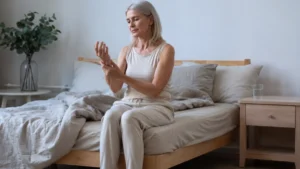
If your shoes feel tighter at 6 PM than they did at 8 AM, you’re not imagining it. You’re not alone. Nearly 1 in 5 U.S. adults over age 51 deal with persistent ankle swelling, according to the Health and Retirement Study. That’s millions of people. Most of them don’t know there’s a free, 10-minute habit that gives real relief every day.
Why your ankles swell by the end of the day, what the Legs Up the Wall pose does inside your body, how to do it safely as a senior, and what warning signs mean you need a doctor first. No equipment needed. No yoga experience required. Just a wall and 10 minutes.
Why Do Senior Ankles Swell by the End of the Day?
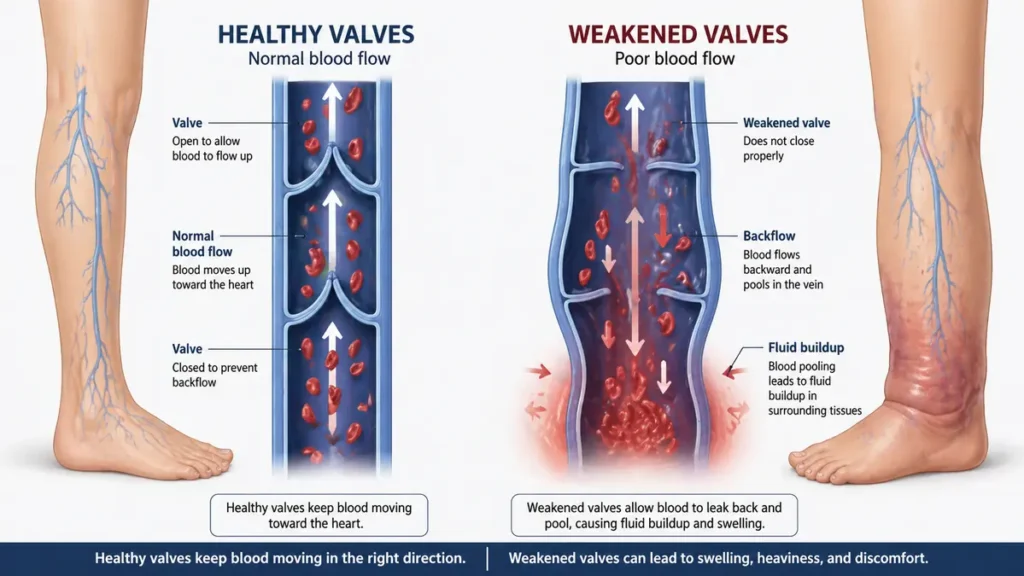
Think of your leg veins like a one-way escalator. In younger bodies, the escalator runs smoothly. With age, the motor weakens. Your veins have tiny valves inside them. These valves keep blood moving in one direction: up, toward the heart. Over time, those valves lose strength. Blood pools in the lower legs. Fluid leaks into the surrounding tissue.
This is called chronic venous insufficiency, weak vein valves, and it causes about 70% of leg swelling in older adults. It builds slowly. At 10 AM, your legs feel fine. By 2 PM, there’s a faint heaviness. By 5 PM, your socks leave deep rings, and your shoes feel like they shrank.
Several things make it worse:
- Age: vein valves naturally weaken over time
- Inactivity: sitting or standing still for long periods
- Medications: blood pressure drugs, steroids, some diabetes medications
- Conditions: diabetes, obesity, and hypertension all raise the risk
One warning: if swelling only appears on one side of your body, call your doctor immediately. It could be a blood clot. That needs medical care, not home remedies.
What Is Legs Up the Wall, and What Does It Do to Your Body?
Your ankles have been working against gravity all day. Every hour you sit or stand, fluid sinks lower. Now it’s evening and your ankles hurt. Here is what fixes it.
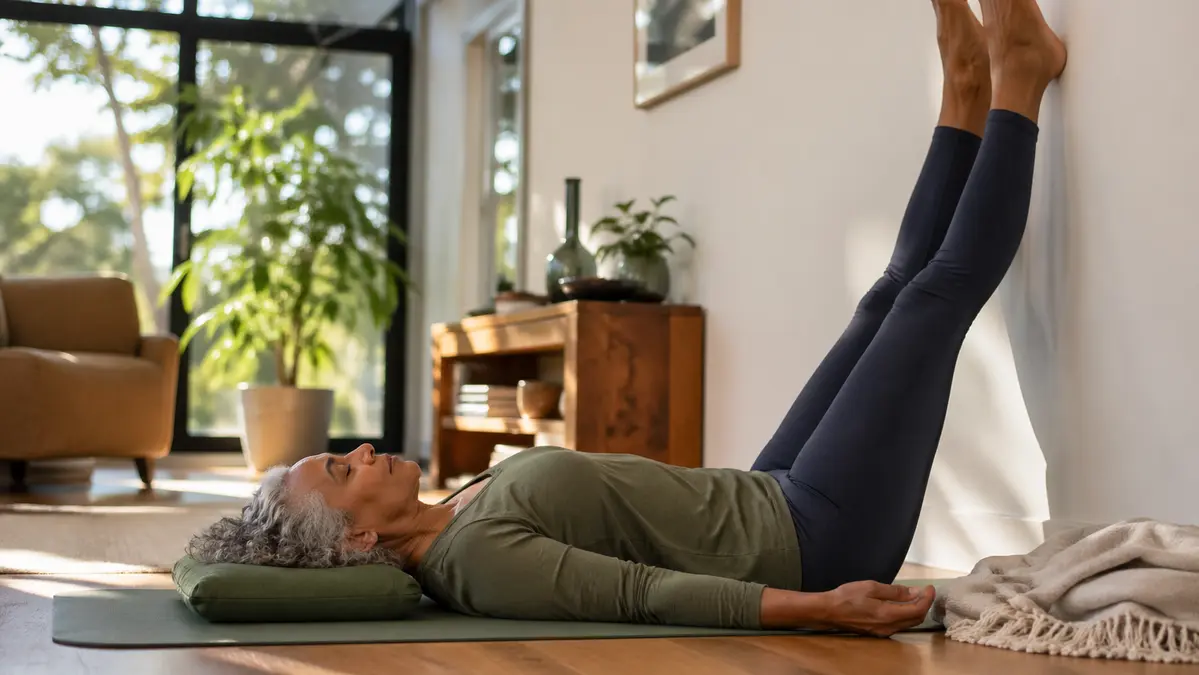
Legs Up the Wall, called Viparita Karani in yoga, reverses that effect. You lie on your back and put your legs straight up against the wall. Gravity, which spent all day pulling fluid down, now pulls it back toward your heart.
In one short session, this pose can:
- Drain fluid from swollen ankles and lower legs
- Ease pressure inside tired, overworked veins
- Support your lymphatic system (your body’s waste-filter network) to clear fluid from tissues
- Calm your nervous system and lower stress hormones
- Help your body shift into rest-and-recovery mode before bed
Dr. Robert Saper, MD, Chair of Wellness and Preventive Medicine at Cleveland Clinic, explains it simply: The main benefit is that it puts back into circulation the bodily fluids stored in your legs. It allows the return of blood flow and the reduction of lower-leg swelling.
What Happens to Your Lymph System?
Your lymphatic system is a network of fluid and vessels that filter waste from your body. But unlike your blood, lymph has no pump. No heart pushing it around. It depends entirely on gravity and movement to do its job. When you raise your legs, you help lymphatic fluid drain from the ankles and calves toward the filtering nodes higher in the body.
The groin, stomach, armpits, and neck. This supports your immune system and reduces the fluid buildup that causes swollen ankles in elderly adults.
The Stress-Relief Bonus
Here’s something most people don’t expect. This pose doesn’t just help your legs. It calms your entire nervous system. Lying with your legs up triggers what’s called the parasympathetic state, your body’s rest and digest mode. Stress hormones drop. Your heart rate slows. Tension drains from your muscles. Many people describe it as a reset button after a long day.
Legs Up the Wall pose may be a safe option for people with high blood pressure, because it improves circulation and promotes lymphatic drainage. Twenty minutes in this pose, according to yoga therapist Gail Boorstein Grossman, can provide the same restorative benefit as a short nap. But it gives you a sense of how deeply this pose works on the nervous system.
How to Do Legs Up the Wall: Step-by-Step for Seniors?
In 10 minutes from now, your ankles can feel lighter. Here is exactly how to do it.
| Time | Milestone | Why it’s important for seniors |
| 01:15 | The Setup | Shows how to place a pillow or blanket for lower back support. |
| 01:31 | The Entry | Crucial: Demonstrates the sideways “butt-to-wall” sit before rotating. |
| 01:41 | The Swing-Up | Visualizes the hardest part: how to pivot the legs up while lying back. |
| 02:30 | Knee Modification | Shows that keeping knees bent is okay if hamstrings are tight. |
| 05:15 | Safe Exit | Demonstrates how to safely roll to the side to get back up. |
What you need:
- A wall or closed door
- A yoga mat, folded blanket, or carpet
- Optional: a small folded towel for under your lower back
Steps:
1. Sit sideways on the floor with one hip touching the wall, knees bent.
2. Slowly lower your back to the floor as you swing your legs up the wall.
3. Scoot your tailbone a few inches away from the wall. This wider angle lets blood flow back toward your heart more easily.
4. Arms at your sides, palms facing up. Shoulders relaxed.
5. Close your eyes. Breathe slowly, in through the nose, out through the mouth.
6. Stay here for 5 to 20 minutes.
How Long Should You Hold It?
Start with 5 minutes. Even two minutes creates a shift. Work up to 10,15 minutes over a few weeks. Most people find 5,20 minutes to be the sweet spot where the nervous and lymphatic systems really respond. Once or twice a day is safe, according to the Cleveland Clinic.
The best time for most seniors is early evening, 5 to 7 PM, right when end-of-day ankle swelling is at its worst. You’ve spent all day loading fluid into your lower legs. This is the moment to unload it. Make it a habit: shoes off, feet up, 10 minutes before dinner.
Pro Tip: Slide a folded towel under your lower back if the floor feels hard.
Who Should NOT Do This Pose
This pose is safe for most seniors. But most is not all. Talk to your doctor before trying Legs Up the Wall if you have any of the following:

- Glaucoma or increased eye pressure: inversion can raise pressure further
- Uncontrolled high blood pressure: a 2024 review found the pose may be safe for controlled hypertension, but ask your doctor first
- Recent surgery: hip, spine, knee, or abdominal surgery needs medical clearance
- Active blood clots or DVT: do not elevate the leg if a clot is suspected
- Heart conditions: This pose increases pressure around the heart, so get approval first
- Herniated discs or severe sciatica: lying flat may aggravate these
What to Combine It With for Even Better Results
Legs Up the Wall works on its own. But a few simple daily habits make it work even better. You don’t need to do all of these at once. Pick two and start there.
1. Wear Compression Socks During the Day
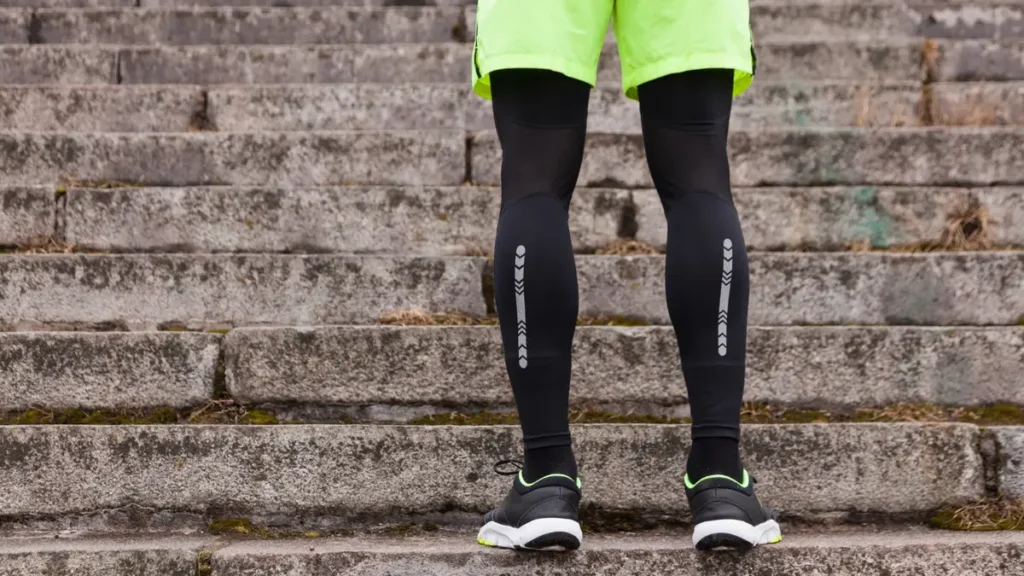
Compression socks apply gentle pressure to the lower leg, which helps veins push blood upward. Medical guidance recommends them specifically for people with chronic venous insufficiency, the same condition behind most senior ankle swelling. Wear them during the day, then do your Legs Up the Wall pose in the evening. They work together.
2. Drink More Water (Yes, Really)

This surprises most people. If you’re dehydrated, your body holds onto fluid more tightly. It’s a survival response. Drinking enough water, usually 6,8 glasses a day for most seniors, tells your body it’s safe to release retained fluid. Talk to your doctor about the right amount for your health conditions.
3. Adjust What You Eat

Salt pulls water into your tissues and makes swelling worse. Processed foods, canned soups, and restaurant meals are high in hidden sodium. At the same time, eating more magnesium-rich foods like nuts, seeds, legumes, leafy greens, and whole grains can help your body manage fluid balance more effectively.
4. Move Your Ankles During the Day: Before the Damage is Done
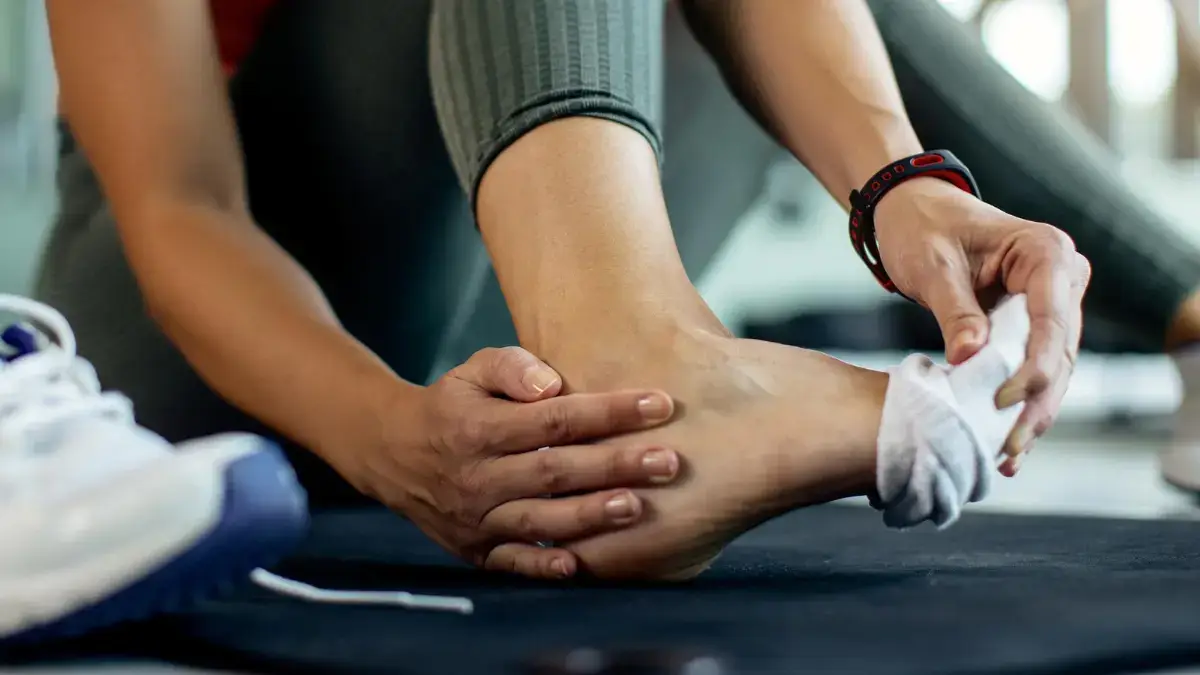
By 4 PM, most of the end-of-day fluid buildup has already happened. The best time to slow it down is earlier. While sitting in your chair, flex and point your feet 10 times every hour. Draw circles with your ankles. These tiny movements pump the calf muscles and push fluid upward before it has a chance to pool.
Think of your calf as a second heart. It helps blood move back up the leg when it contracts. A few minutes of ankle movement at 2 PM means less work for the wall pose at 6 PM.
5. Buy Shoes at the End of the Day
Your foot is smallest in the morning and largest in the evening. If you buy shoes in the morning, they may feel tight by afternoon. And tight shoes make swelling worse. Shop for footwear in the late afternoon or evening, when your feet are at their largest size. Start small. Add one habit this week. Add another next week. Small, consistent changes add up to real results.
Conclusion
Here’s what you now know. Swollen ankles in elderly adults happen mainly because aging veins struggle to push blood back up against gravity all day. Fluid pools. Pressure builds. Your ankles swell. Legs Up the Wall reverses that process in minutes. It uses gravity to drain fluid back toward the heart, supports lymphatic circulation, and calms your nervous system, all at the same time.
It costs nothing. It takes 5 to 20 minutes. You can do it from your bedroom floor tonight. Legs up the wall benefits for seniors go beyond just ankle comfort. It’s a simple evening ritual that supports circulation, calms the nervous system, and can meaningfully improve quality of life. Tonight, before dinner, roll out a blanket and try for 10 minutes.
⚠️MEDICAL DISCLAIMER
This article is for informational purposes only. It does not replace medical advice, diagnosis, or treatment. The information covers ankle swelling, chronic venous insufficiency, leg elevation, Legs Up the Wall pose, circulation, lymphatic drainage, nervous system response, compression socks, hydration, sodium and diet, magnesium intake, ankle mobility exercises, blood pressure, blood clots and DVT, glaucoma, heart conditions, herniated discs, sciatica, post-surgical recovery, dizziness, tingling, and pins and needles sensations. Individual results vary based on age, health status, and fitness level.
Before changing your exercise routine, diet, or supplement use, talk to your doctor or a qualified health professional first. If you experience chest pain, dizziness, severe joint pain, or any sudden symptom during or after exercise, stop immediately and seek medical care.