
You might notice it takes longer to bounce back from a common cold than it did a decade ago. Maybe a scratchy throat turns into a two-week ordeal, or you feel “run down” more often. It isn’t just in your head.
After 50, your body’s natural defense system starts to slow down. Scientists call this immunosenescence. Think of it like a home security system where the sensors are getting a bit dusty. The cameras are still there, but they aren’t as quick to spot “intruders” like viruses or bacteria.
But here is the good news: you have a powerful tool to fix this. It doesn’t come in a pill bottle or a fancy juice cleanse. It is your sleep. By fixing how you rest, you can literally “recode” your cells to stay resilient.
Understanding the “Aging” Immune System
To fix a problem, we first have to understand why it’s happening. Why is 50 such a turning point?
The Shrinking Training Camp
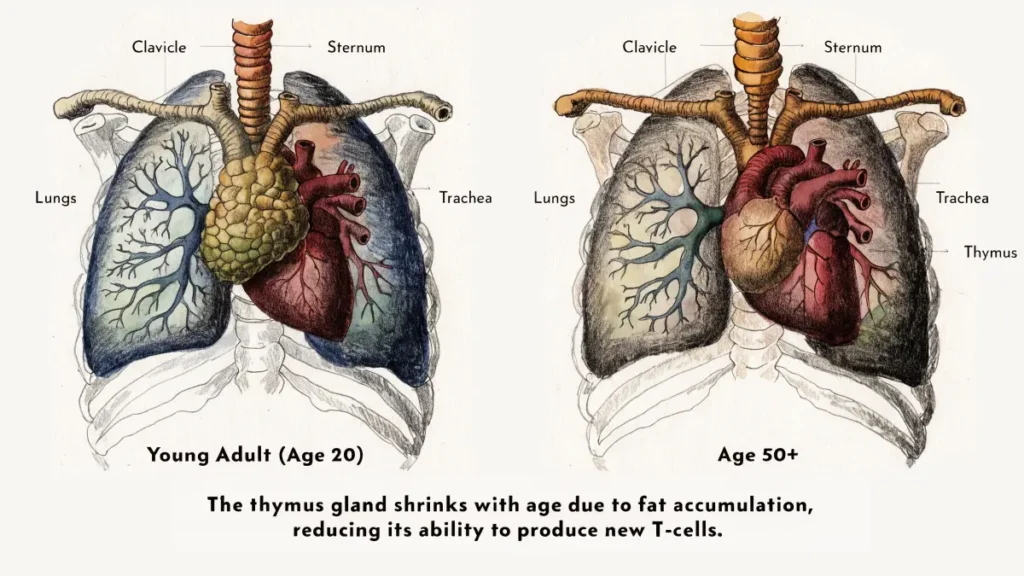
Inside your chest, right behind your breastbone, sits a small organ called the thymus gland. This is the “training camp” for your T-cells. T-cells are the elite soldiers of your immune system. They travel through your blood, find cells that have been taken over by a virus, and destroy them before the virus can spread.
When you are a teenager, your thymus is huge and active. But as you age, it starts to shrink. By the time you are 50, it has mostly turned into fat. It produces far fewer new soldiers. This means the “army” you have left is made of older cells that have seen a lot of battles. They get tired. They get slower.
The Problem of “Inflammaging”
As we get older, our bodies also deal with something called inflammaging. This is a combination of the words “inflammation” and “aging.”
Imagine a smoke alarm that never quite turns off. It isn’t a full-blown fire, but the “chirp” is always there in the background. This is what chronic low-grade inflammation feels like to your cells. Dr. Rhonda Patrick, a leading health researcher, explains that when your body is always “on guard” against this fake smoke, it gets exhausted. When a real “fire” (like the flu) actually starts, your immune system is too tired to respond quickly.
How Sleep Acts as a Repair Shop
Many people think sleep is a passive state—like turning off a computer. In reality, sleep is the most active time for your immune system. It is a nightly construction site.
The Brain’s Secret Plumbing System
Until recently, we didn’t know how the brain cleaned itself. In the last few years, researchers found the glymphatic system. Think of this as the “plumbing” for your brain.
During the day, your brain cells are busy. They create “trash” (metabolic waste). During Deep Sleep (Stage 3), your brain cells actually shrink a little bit. This creates space for fluid to rush in and wash away the trash.
For people over 50, this plumbing often gets clogged. If you don’t get enough deep sleep, that “brain trash” stays put. This triggers the “inflammaging” we talked about earlier. Your body thinks the trash is an invader, so it stays in an inflamed state 24/7.
T-Cells and the “Sticky” Factor
During deep sleep, your body does something amazing with your T-cells. It makes them “stickier.”
To kill a virus, a T-cell has to grab onto it. Scientists have found that when you are sleep-deprived, your T-cells lose their ability to “stick” to their targets. You could have a million T-cells in your blood, but if they can’t grab the virus, they can’t do their job. Sleep is what gives them their “grip.”
The Connection Between Vaccines and Rest
If you want proof of how much sleep matters, look at vaccines. A vaccine is like a “practice round” for your immune system. It teaches your body what a specific virus looks like so you can fight it later.
Studies show that if you get a vaccine while you are sleep-deprived, your body might only produce half the antibodies it should. Your immune “memory” isn’t saved correctly. It’s like typing a long document but forgetting to hit the “save” button before the computer dies. Sleep is the “save” button for your health.
The 2026 Sleep Protocol for Immune Longevity
Now that we know why we need sleep, how do we actually get the right kind? Most adults over 50 struggle with “fragmented sleep”—waking up multiple times a night.
Here is exactly how to execute a plan to fix your rest tonight.
1. Master the 10-3-2-1-0 Rule
This rule helps align your circadian rhythm. This is your body’s internal 24-hour clock. When this clock is off, your immune system doesn’t know when to “repair” and when to “defend.”
The Wind-Down Clock: What to Stop & When
No More Caffeine
As you age, your liver processes caffeine more slowly. That cup of coffee at 2:00 PM is still in your blood at midnight. It blocks the “sleepiness” chemicals in your brain.
No More Food
Digestion requires energy and heat. To fall into a deep sleep, your body temperature needs to drop. If your stomach is working, your core stays warm, and you stay in “Light Sleep” all night.
No More Work
Your brain needs a “buffer zone.” If you are checking emails or solving problems right until bed, your brain stays in a high-frequency state.
No More Blue Light
This is the big one. Phones and tablets emit blue light that mimics the sun. It tells your brain to stop making melatonin. Melatonin is the hormone that signals “nighttime” to your cells.
Snooze Button Presses
The number of times you hit the snooze button. Waking up at the same time every day is the best way to “set” your internal clock.
2. The Temperature Hack
Your body needs to drop its temperature by about 2°F (or 1°C) to trigger deep sleep.
- Set the room to 65°F (18°C). This might feel cold, but your body thrives in it.
- Take a warm bath. This sounds backward, right? But a warm bath pulls the heat from your core to the surface of your skin. When you get out, that heat evaporates, and your core temperature plunges. This “temp drop” tells your brain it’s time for Stage 3 sleep.
3. Use Better “Tools” (Not Drugs)
Many people over 50 take sleeping pills. The problem? Most pills don’t give you “natural” sleep; they just knock you out. You often miss the “Deep Sleep” phase entirely.
- Magnesium Bisglycinate: This is a mineral most people are low on. It helps relax the nervous system and muscles. Unlike melatonin supplements, it doesn’t mess with your hormones.
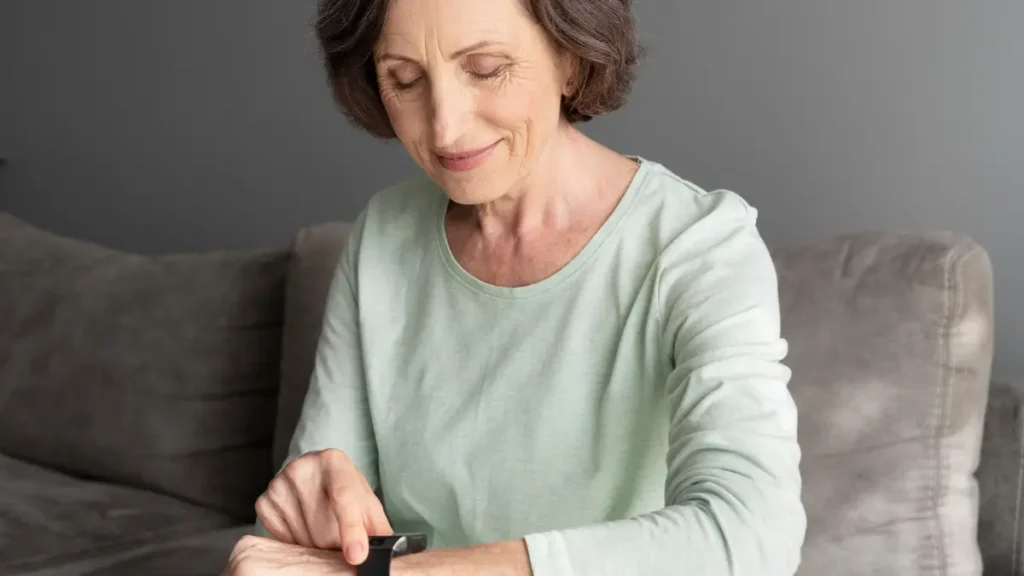
- Wearable Tech: Use an Oura Ring, Whoop, or even an Apple Watch. Don’t just look at how long you slept. Look at your “Deep Sleep” and “REM Sleep” ratios. If your Deep Sleep is less than 15% of your total night, you need to adjust your temperature or your caffeine intake.
Why Consistency Is Your Best Defense
Aging is inevitable, but feeling “old” and “sick” is manageable. You cannot stop the clock, but you can give your immune system the environment it needs to succeed.
When you prioritize your circadian rhythm alignment, you aren’t just “resting.” You are allowing your body to perform a deep-clean of your brain and a “training session” for your white blood cells.
Your 3-Day “Darkness Audit”
Ready to start? Don’t try to change everything at once. For the next three nights, just do a “Darkness Audit.”

- Turn off all overhead LED lights after 7:30 PM.
- Use small lamps with warm (orange/yellow) bulbs.
- Put your phone in another room 30 minutes before bed.
Notice how much heavier your eyelids feel. That is your immune system getting ready to go to work.
Your Questions Answered
How does lack of sleep affect your immune system?
Your T-cells are the ones that track down and kill viruses. When you skip sleep, they lose their ability to grab onto those viruses. You could have millions of them in your blood and they still won’t do anything. That’s how much one bad night actually matters.
How does sleep improve your immune system?
Sleep is when your body repairs itself. Your brain flushes out waste, your immune cells recharge, and special proteins get released to help fight future infections. Every night you sleep well, your body gets a little better at protecting you.
Can lack of sleep cause flu-like symptoms?
Yes. Poor sleep keeps your body in a constant state of low inflammation. That means body aches, exhaustion, and feeling off even without an actual infection. Most people assume they’re getting sick when really their body just needs rest.
Can lack of sleep cause fever and chills?
Not directly. But it weakens your defenses so much that infections your body would normally handle easily start winning. And when you do get sick, recovery takes far longer than it should.
Can you get sick from lack of sleep and stress?
Both stress and poor sleep push your immune system into overdrive until it burns out. When that happens, even a minor cold can turn into a two week ordeal. Together they are genuinely one of the fastest ways to run your body down.
What are the symptoms of lack of sleep?
Brain fog, low energy, getting sick often, slow recovery, and random body aches. Most people over 50 blame age for all of this. Sleep quality is usually the real problem.
Summary of the Science
Immunosenescence is the natural process of your immune system weakening as the years go by. This change is the primary reason why staying healthy feels more difficult as you age, as it makes your body more likely to get sick from common germs. A major part of this involves the Thymus Gland, which acts as a training camp for your T-cells. Because this gland shrinks as you get older, your body is left with fewer new “soldiers” to fight off infections.
To combat this, your body relies on the Glymphatic System, which serves as the brain’s nightly waste disposal unit. This system only works effectively during deep sleep to clear out “trash” and prevent the chronic inflammation that wears you down. Finally, sleep is the specific time when your body produces Cytokines. These are essential immune messenger proteins that tell your cells how and when to attack a virus, ensuring your body stays prepared for any threat.