

The screen glows a little too bright. Text on your monitor starts to swim. You just ate an hour ago, but that meal feels like a lead weight in your chest. It pulls your eyelids down with a force no amount of coffee can fight. Sitting at your desk at 2:15 PM, you feel a physical heaviness behind your eyes. You feel guilty. You think you should just “power through” it.
This isn’t your fault.
Research suggests that for adults over 50, post-meal glucose variability—the “spike and crash”—is more likely to impair focus than your morning blood sugar levels. If you think this sluggishness is an inevitable part of getting older, you are fighting the wrong battle. This isn’t a lack of willpower. It is a signaling failure in your biology. Your brain fog isn’t a lack of calories; it’s a traffic jam of fuel that can’t get into the engine.
Patrice knows this feeling well. She often pushes away her salad because she is too tired to finish chewing. She wonders why her healthy choices leave her depleted.
Why Your 50s Changed the Rules of Lunch: Avoiding the Energy Crash After Eating
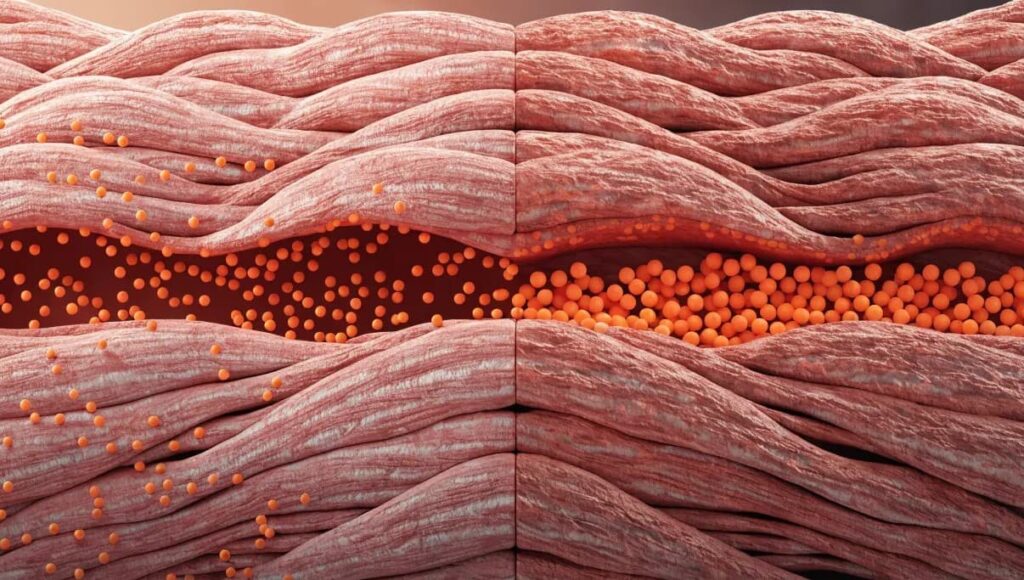
Your body no longer processes a sandwich the same way it did in your thirties. As we age, we naturally lose muscle mass. This is called sarcopenia. Muscle acts as your body’s primary “glucose sink.” It soaks up sugar from your blood to use as immediate fuel.
When that sink shrinks, the sugar from your lunch has nowhere to go. It lingers in your bloodstream. This triggers a massive insulin response. That hormonal panic is why you feel a sudden, heavy drop in energy.
Patrice used to “save calories” for dinner. She ate a light, carb-heavy lunch like a small bowl of pasta or a fruit smoothie. She thought she was being disciplined. She was actually setting a trap for her nervous system. Without enough muscle or protein to buffer the intake, her blood sugar spiked and then plummeted. The “aging” you feel is often just cells becoming less efficient at moving energy.
Your body’s response to food is uniquely yours. Treat this as a starting point, not a rulebook.
The “Sticky Cell” Mechanism: How Spikes Become an Energy Crash After Eating
When you eat a high-carb lunch, your body breaks starches down into glucose. In a healthy system, insulin acts like a key. It unlocks your cells so the sugar can move out of your blood. As we age, those “locks” can become “sticky.” This is the beginning of insulin resistance.
Your brain fog is a fuel traffic jam. Because the sugar is “stuck” in the hallway of your bloodstream, your pancreas panics. It pumps out extra insulin to force the locks open. Think of a rusted door that needs a shoulder-shove instead of a gentle turn of the key. Eventually, the door flies open. All that sugar rushes out of your blood at once.
This “overshoot” causes your blood sugar to drop faster and lower than it should. Your brain is left starved for fuel. This biological pile-up is why your limbs feel heavy. Your focus evaporates.
Reactive Hypoglycemia vs. Insulin Resistance
Many people confuse a standard “food coma” with a clinical energy crash. Distinguishing the two requires looking at timing. Insulin resistance is a slow-burn issue. Your body stays in a high-sugar, high-insulin state for too long.
In contrast, reactive hypoglycemia is a “crash landing.” Your body overreacts to a sugar spike. It clears too much sugar from your blood. This leaves you shaky and irritable. Leon often felt a “vibration” in his chest before the heavy fatigue set in. His doctor said his blood work was “fine,” but Leon was struggling to stay awake in meetings.

This is the part most guides skip: high insulin levels block your ability to burn body fat for fuel. You become “metabolically inflexible.” Your brain can only run on the sugar you just ate. Once that sugar is gone, the lights go out.
Every situation responds differently. Use this as a starting point, not a prescription.
The Caffeine Trap: Why Your “Pick-Me-Up” is Letting You Down
When the fog rolls in, you reach for coffee. This creates a trap. Caffeine blocks adenosine, the chemical that makes you feel sleepy. It does nothing to fix the fuel jam in your blood.

Excessive caffeine can make an energy crash after eating worse. It triggers adrenaline and cortisol. These hormones tell your liver to dump even more sugar into your blood. High cortisol after meals can make the crash significantly worse. Learn how stress hormones affect your metabolism. If you are already struggling with an insulin spike, this extra sugar surge forces your pancreas to work even harder.
You end up “wired but tired.” You have nervous energy, but your brain is starving. Your 3:00 PM espresso might be the very thing making your 5:00 PM collapse inevitable. Leon found that swapping his third coffee for hydration made his afternoon “emergency” naps less frequent.
How to Stop an Energy Crash After Eating: The Afternoon Protocol
To stop the cycle, you need a specific order of operations. This changes the chemistry of your digestion before the first bite of a carbohydrate hits your tongue.
- Tier 0: The Vinegar Primer Mix one tablespoon of apple cider vinegar into a large glass of water. Drink it 10 minutes before lunch. The acetic acid slows down the enzymes that break down starches. This results in a flatter glucose curve. Do not drink it straight; it can damage tooth enamel.
- Tier 1: The Protein-First Rule Eat your protein and fiber-rich vegetables before you touch any starches. Aim for 30g of protein at lunch. This provides steady satiety signals to the brain. If you have a chicken wrap, eat the chicken and greens first. Finish with the tortilla.
- Tier 2: The 10-Minute “Glute Pump” Move immediately after finishing your meal. A brisk walk or “air squats” signals your muscles to open their “glucose gates” without needing extra insulin. Leon implemented a “clothes-on” movement rule. He walked for a short period in his work attire after lunch and felt his focus return. Learn how blood sugar responds to exercise — American Diabetes Association.
Crash-Proof Lunch Combinations:
Every body responds to movement differently. Use this as a direction, not a prescription.
Beyond the Plate: Movement as Medicine
Moving before you feel tired does more for your blood sugar than recovering after you crash. Movement acts as a “back door” for sugar to enter your cells. When you contract your large lower-body muscles, they activate a transport protein called GLUT4.
These proteins pull sugar out of your blood without requiring more insulin. You don’t need a gym. If you are stuck at a desk, try “soleus pushes.” Lift your heels while your toes stay on the floor. The goal is to avoid being static during the peak absorption window.

Keeping the “traffic” moving, you prevent the metabolic pile-up. You are the primary investigator of your own body. You have the tools to change how you feel.
Your Questions Answered
Can a blood sugar crash happen if you are not diabetic?
Yes. Non-diabetic reactive hypoglycemia is common, especially after 50. Shrinking muscle mass reduces your body’s ability to buffer glucose, making crashes more likely even with normal blood sugar readings.
What are the symptoms of a sugar crash?
Heavy eyelids, difficulty concentrating, irritability, and a “vibration” feeling in the chest are common signs. Some people also notice sudden hunger despite having just eaten.
Why does blood sugar drop after eating protein?
Protein triggers a small insulin response on its own. Without enough fiber or fat in the meal, this can cause a mild dip. Hidden sugars in sauces or dressings often make it worse.
Can a sugar crash affect your sleep?
Yes. A crash in the late afternoon elevates cortisol as your body tries to raise blood sugar. That cortisol spike can delay sleep onset and reduce deep sleep quality.
Conclusion: Reclaiming Your Afternoon
Reclaiming your energy after 50 isn’t about eating less. It is about respecting your biology. Your afternoon fatigue is a traffic jam, not a lack of fuel.
Patrice now finishes her workdays without a desperate need for a nap. She closed her laptop at 5:00 PM yesterday with energy left for a walk. She simply changed her food order and added a ten-minute “Glute Pump.” You can do the same.
Your “Crash-Proof” Protocol:
- Vinegar: 1 tbsp in water before eating.
- Order: Fiber first, protein second, starches last.
- Move: 10 minutes of movement immediately after the final bite.
Tomorrow at lunch, eat the chicken first. Leave the bread for last. That single change is where your afternoon starts to turn around
⚠️MEDICAL DISCLAIMER :
This content is for informational and educational purposes only and does not constitute medical advice, diagnosis, or treatment. Before making changes to your diet, exercise routine, or supplement regimen, consult a qualified healthcare provider. If you experience sudden confusion, extreme shakiness, or fainting after meals, seek emergency medical care immediately.