

The bathroom light is unforgiving, catching a deep, diagonal groove you’ve never noticed before. You tilt your head, running a thumb over the skin, expecting a temporary sleep line, but the indentation stays. It’s a small, silent landmark on your earlobe that feels strangely permanent against the softness of the tissue.
The earlobe crease high blood pressure connection is one of the most underrecognized silent signals after 50. These are two of the most common silent drivers of cardiovascular events after 50. People with diagonal earlobe crease show significantly higher rates of elevated blood pressure and reduced arterial elasticity Search
You might think a line on your ear is just a sign of a side-sleeper or a natural part of getting older. But this isn’t a typical wrinkle. While skin loses its bounce over time, the specific geometry of this mark suggests something happening deeper within your vascular system.
If you’ve noticed this line, you aren’t alone. It is a common discovery during morning routines that often leads to a quick search for answers. This earlobe crease high blood pressure connection acts as a visible signal for a hidden process: the way your tiny blood vessels support the structures of your body
Understanding this connection is the first step toward managing your heart health with confidence. Vera noticed the crease while putting on her favorite silver earrings. She worries that ignoring the mark means she might not be active enough to keep up with her new grandson’s first steps.
Frank’s Sign: Why This Crease Appears + How to Identify It
Frank’s Sign is a diagonal crease running from your ear canal to the edge of your earlobe at roughly 45 degrees. To identify it, look for a deep indentation that divides the earlobe tissue while standing in natural light. Unlike faint surface lines, this is a distinct “shelf” in the skin. The unforgiving bathroom light catching a deep groove is often what reveals it first.
This is not a cluster of small wrinkles. It is a single, dominant mark. It can appear on just one ear or both. Either way, the presence of the fold is worth noting as a biological marker. It represents a structural change rather than a temporary skin impression.
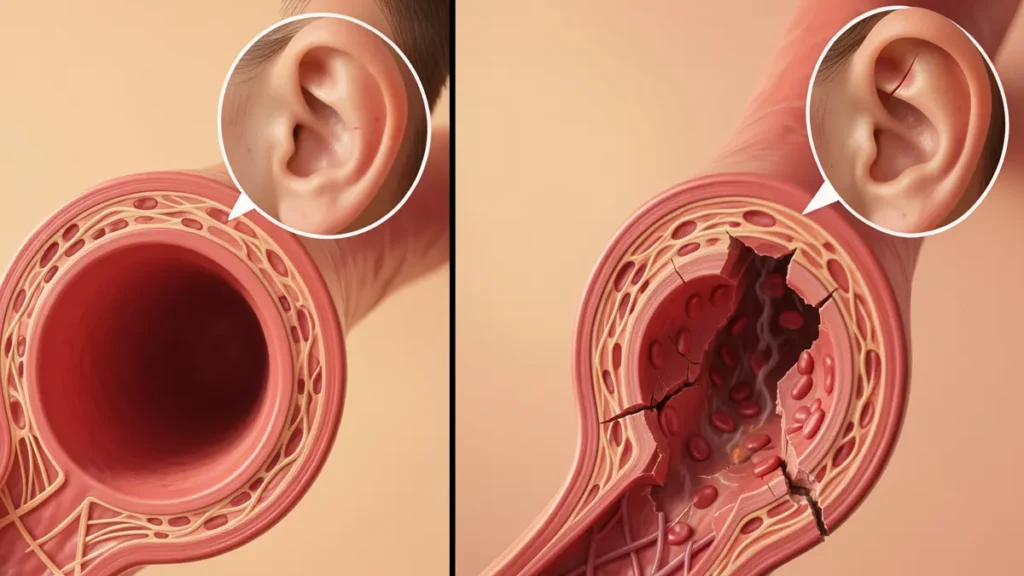
The crease appears because the tiniest blood vessels in your earlobe stop functioning properly, a condition called microvascular endothelial dysfunction. This is the way tiny blood vessels lose their ability to dilate and support the surrounding tissue. Think of your earlobe like a foam mattress that has lost its memory and can no longer bounce back. When vessels weaken, the collagen begins to collapse.
The earlobe crease high blood pressure link is not a skin problem; it is a structural collapse of micro-vessels. This collapse reflects a loss of elasticity in larger, more critical vessels throughout your body. That permanent line you noticed while getting ready is directly tied to the way your heart pumps blood. But how exactly does a line on your ear connect to the pressure in your chest?
The Vascular Connection: From Ears to Blood Pressure
First, breathe. This crease is not a diagnosis, it’s a conversation starter. Its presence doesn’t mean you are in immediate danger. It means your body is using a visible surface to tell a story about your hidden network of arteries.
The earlobe crease high blood pressure link comes down to one shared supply line between your ear tissue and your cardiovascular system. The same tiny vessels that keep your earlobe firm run through your heart and arteries too. Your ear and your heart share the same walls
When blood pressure remains high, it puts constant stress on these vessels. Over time, this pressure erodes the structural integrity of the tissue.
Think of it like a garden hose left under high pressure. Eventually, the material weakens and loses its shape. In your ear, this translates to a loss of the “scaffolding” that keeps the lobe plump.
Vera felt a slight dizziness when standing during her morning walk. She immediately connected the sensation back to that bathroom mirror moment. She wondered if the light-headedness and the crease were two different ways her body was trying to get her attention.
When your blood vessels lose their ability to flex, a condition known as arterial stiffness, your heart works harder. This increased workload is what elevates your blood pressure. The crease is a physical record of that internal struggle. It suggests the vascular system elsewhere might be facing similar pressure.
Every person’s body responds differently. Use this information as a starting point. This internal tension is why you might feel unsteady when moving quickly. But before you call a specialist, you need to be sure what you are seeing is actually a health marker.
Frank’s Sign vs. Sleep Creases: How to Tell the Difference
Distinguishing between a cardiovascular marker and a normal skin fold is essential for peace of mind. Not every line on the ear indicates a heart concern. The most common mistake is confusing a temporary sleep crease with a permanent fold.
A sleep crease is usually shallow and vertical. These lines appear after a night of pressing your ear against a firm pillow. If the line is gone shortly after waking up, it is simply a temporary impression. Frank’s Sign is a deep, diagonal groove that remains visible all day.
Piercing lines are another source of confusion. These typically follow the direct track of the earring hole. They do not follow the specific 45-degree diagonal path from the ear canal to the outer edge.
Normal aging skin folds are generally softer and more numerous. While Frank’s Sign is usually a single groove, aging skin often presents as several smaller, cross-hatched wrinkles. Understanding these visual differences allows you to identify if the mark is a structural change or just a product of rest. One groove means something. Several small ones probably don’t.
Knowing the difference helps you decide if it is time to take action. But many people still wonder if this is just an “old age” trait they should ignore.
Composite Disclaimer: Vera and Marcus are composite characters used to illustrate common experiences. Their stories are educational, not medical case studies.
How to Check Your Own Earlobe in 60 Seconds
- Stand in natural light, not bathroom overhead lighting, near a window in the morning.
- Gently pull your earlobe taut between two fingers and look for a single diagonal line running at roughly 45 degrees from the ear canal toward the outer edge.
- Compare both ears. Frank’s Sign can appear on one side only.
- Press lightly on the crease. A sleep line will shift or partially flatten. A structural fold stays fixed.
- If the line is visible in natural light and remains unchanged after 30 minutes of being awake, note it and bring it to your next appointment.
Age 50+ Realities: Common Misconceptions
Marcus fears a sudden health event could leave his small business in chaos, so he dismissed his own crease as tough skin from years of wearing heavy work headsets, telling himself it was just a dent from a long career.
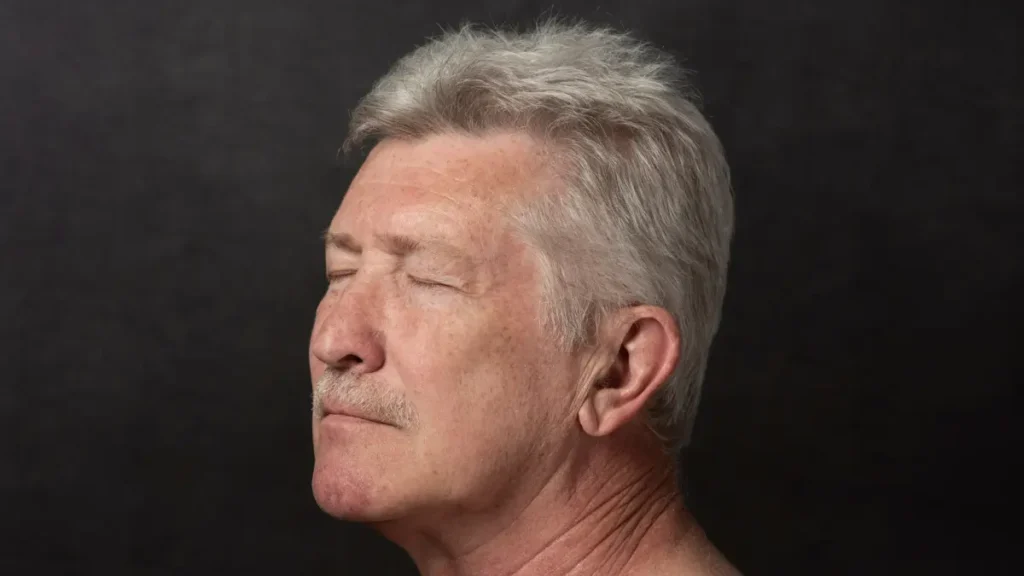
One of the biggest misconceptions is that the crease is just a wrinkle. It is not. Checking your ear is more than vanity; it’s a canary in the coal mine for your carotid artery. Think of it like a check engine light. It means look, not panic. A light on your dashboard doesn’t mean the engine has failed, but it does mean it is time for an inspection.
Many people believe that if they feel fine, the crease must be a fluke. This is not always true. High blood pressure is often called a silent killer because it lacks obvious symptoms. The fold suggests your collagen is reacting to vascular stress even if you feel healthy.
A crease is not a sign of aging. It is a sign of how your body is handling the pressure of time. Because the earlobe is like a foam mattress that has lost its memory, the crease itself likely won’t disappear. You can’t erase the line, but you can address the pressure that caused it.
How to Reframe What You’re Seeing
- Replace “this is just aging” with a specific question: “Is this diagonal or random?” Diagonal at 45 degrees is the marker. Random wrinkles are not.
- Write down when you first noticed it and whether it appears on one ear or both. This detail is useful at a doctor’s appointment.
- Avoid the urge to photograph it under bad lighting. Natural morning light gives the most accurate read.
- If you are unsure, ask a trusted person to look. A fresh set of eyes often confirms or rules it out immediately.
How to Start Your 48-Hour Heart Action Plan
Your earlobe gave you the first signal. Now you convert that signal into numbers your doctor can actually use. This plan helps you move from “noticing” to “knowing” without the stress of guesswork.
Tier 0: Immediate Support
Eat Potassium-Rich Foods: Add one cup of cooked spinach, one medium banana, or a baked potato to your daily meals to help manage sodium. Frozen spinach works just as well as fresh. The nutritional profile is nearly identical and it costs less. Canned white beans are another affordable potassium source that requires no preparation.
The Quiet Sit Protocol: Find a chair in a silent room. Sit with your back supported and feet flat. Breathe deeply for five minutes. This is your baseline reset. It costs nothing and can be done immediately.
The 10-Minute Morning Walk: Step outside within 30 minutes of waking. Keep pace conversational. You should be able to speak a full sentence without gasping. Do this five days a week. It costs nothing, requires no equipment, and is one of the most well-supported free interventions for blood pressure management in adults over 50.
DIY Rhythm Check: While sitting quietly, place two fingers on your wrist. Note if the beat feels steady or if it jumps. This takes under a minute and gives you a daily data point worth tracking.
Tier 1: Know Your Numbers
If you haven’t had your blood pressure checked in six months, this is your nudge. Go to a local pharmacy or use a home monitor.
| Range | Status | Action |
| Below 120/80 | Optimal | Maintain current habits |
| 120-129 / 80-89 | Elevated | Review salt intake |
| 130 or higher | High | Consult your doctor |
When you speak to a professional, use this script: Point to your ear and say, “I noticed this diagonal crease, should we check my arterial health or inflammation markers?”
Tier 2: Other Signals to Watch
The earlobe crease high blood pressure connection is just one signal. Pay attention to your body as a primary investigator of your own health. Watch for:
- Morning headaches that fade by noon.
- Feeling dizzy when standing quickly.
- Cold feet or hands even in warm rooms.
- Shortness of breath when climbing stairs.
- Ankle swelling at the end of the day.
Marcus sets a recurring calendar alert to track his salt intake and morning readings. He feels more in control of his business now that he has a plan. A data point only matters if someone acts on it. The question most people still have is whether any of this is reversible.
When Frank’s Sign Needs Immediate Attention
Frank’s Sign alone is not an emergency. Paired with certain symptoms, the timeline changes.
If you notice the crease alongside morning headaches that persist past noon, call your doctor this week rather than waiting for your next scheduled visit. Headaches that localize behind the eyes or at the base of the skull are a known accompaniment to unmanaged blood pressure.
Shortness of breath climbing one flight of stairs is another signal worth accelerating. So is ankle swelling that appears consistently by late afternoon, not just after long travel days.

Cold hands and feet in warm environments suggest your peripheral circulation is already compensating. This is your body rerouting resources. It deserves attention faster than a routine checkup timeline allows.
The crease is the opening chapter. These symptoms are the next paragraph. If two or more are present at the same time, don’t wait for a convenient appointment slot.
How to Escalate Appropriately
- One symptom alongside the crease: mention at next scheduled visit.
- Two symptoms: call your doctor’s office this week and request a blood pressure check.
- Three or more: treat it as same-week urgent, not routine.
- Chest tightness, vision changes, or sudden severe headache alongside any of the above: go to urgent care the same day.
Your Questions Answered
Can the earlobe crease appear on only one ear?
Yes. Frank’s Sign can appear on a single earlobe and still be a significant marker for vascular health.
Does a crease always mean I have high blood pressure?
No. It is a statistical marker, not a guaranteed diagnosis. Many factors, including genetics, play a role.
Is it possible to reverse the crease?
The line usually stays even after blood pressure improves. The crease is a record of what happened, not a live reading of where you are now. Managing the pressure is still worth it
That crease in the mirror? It is not something to lose sleep over. It is something to act on. Mention it at your next appointment, track your numbers, and remember: You are the primary investigator of your own health. You are the one person with daily, unfiltered access to your own signals. No one else sees what you see in that mirror each morning
Your Cardiovascular Protocol:
- Perform a visual earlobe check in natural light.
- Add one potassium-rich food (spinach or banana) to your lunch today.
- Visit a pharmacy-aisle blood pressure station this week.
- Set a reminder to discuss the “earlobe crease high blood pressure” link at your next checkup.
Vera feels a sense of relief after her first pharmacy-aisle blood pressure check. She finally has a baseline and knows exactly what to mention at her next appointment. She is ready to keep up with those first steps.
⚠️MEDICAL DISCLAIMER
This content is for informational and educational purposes only and does not constitute medical advice, diagnosis, or treatment.
Before making changes to your diet, exercise routine, or supplement regimen, consult a qualified healthcare provider who can evaluate your individual health status, medications, and risk factors.
If you experience chest pain, sudden shortness of breath, or severe headaches, seek emergency medical care immediately.