

You reach for the eye drops, then reach for the antacids, and neither one fixes anything. For anyone over 50 managing ongoing gut issues, treating two separate problems with no relief from either is familiar and exhausting.
What most doctors never connect, and what Margaret only discovered after months of separate appointments, is that your gut and your eyes are not isolated systems. Digestion problems can cause eye problems through systemic inflammation and nutrient loss, and the same failing gut is driving both.
By the end of this article, you will know exactly which mechanism is at work and what to bring to your next doctor’s visit.
| # | Section | What You’ll Find |
|---|---|---|
| 1 | The Gut-Eye Axis | The biological link most doctors never connect |
| 2 | The Organ Inflammation Targets | The hidden fire your eye drops can’t reach |
| 3 | The Conditions No One Connects | Which gut diagnosis puts your eyes most at risk |
| 4 | The Nutrients Eyes Depend On | The gap your gut quietly opens after 50 |
| 5 | The Appointment Most Skip | The question that changes what your doctor looks for |
Yes, Digestion Problems Can Affect Eye Health
Yes, digestion problems can affect eye health through systemic inflammation and nutrient malabsorption. When your gut is out of balance, it triggers inflammatory responses that travel through the bloodstream to ocular tissues. Additionally, if your digestive system cannot properly break down food, your eyes may miss out on essential vitamins like A, C, and E.
The gut-retina axis is a biological pathway where the microbiome [the community of microorganisms in your gut] influences ocular health through immune signaling. A 2023 NIH/PMC study confirms that changes in gut microbiota directly influence ocular health and may act as an inciting factor to various eye pathologies.
Key Highlights for Your Recovery:
- 04:42 — Leaky Gut Syndrome: Effects on Eye Health
- 06:31 — Dry Eye Syndrome and Digestive Health
- 08:24 — Gut Health’s Impact on Age-Related Macular Degeneration
- 10:09 — Top Tips for Maintaining Gut and Eye Health
When digestion problems can cause eye problems, it usually involves systemic inflammation [a continuous immune response throughout the body] or the inability to absorb protective vitamins.
This connection allows trillions of bacteria to dictate how clearly you see. While it might seem like these two systems are miles apart, they are linked by your immune system and your blood flow.
But inflammation is only one of the two ways your gut attacks your vision, and most people never hear about the second.
How Gut Inflammation Spreads to Your Eyes
Your gut lining, when irritated or leaky, triggers systemic inflammation throughout the body. In a healthy gut, the lining acts as a strict filter, and when that filter fails, proteins and bacteria slip into the bloodstream.
Your immune system goes on high alert. That response doesn’t stay in your stomach. It settles in the delicate tissues of your eyes, leading to redness, swelling, and chronic dryness.
Older bodies sit at a higher inflammation baseline, which is why the effect compounds with age. Margaret found that on days when her digestion was most reactive, her eye redness was noticeably worse. This wasn’t a separate flare-up. Her experience is one example, but the principle applies to anyone with chronic digestive distress.
This “whole-body” fire is the hidden culprit behind eyes that feel tired regardless of how much you sleep. Yet, inflammation is only half of the story.
Specific Gut Conditions Linked to Vision Changes
Digestive disorders have direct, documented links to specific eye conditions. A diagnosis of inflammatory bowel disease significantly raises your risk for several eye symptoms.
- IBS and IBD: Conditions like Crohn’s disease or ulcerative colitis are frequently linked to uveitis [inflammation of the middle layer of the eye]. Johns Hopkins Medicine estimates that 10–43% of people with IBD develop eye complications, making ophthalmology referrals a standard part of IBD care. This often feels like deep aching or sensitivity to light.
- Celiac Disease: People with gluten sensitivities report higher rates of dry eye syndrome. Without proper gut healing, the eyes cannot maintain a healthy tear film. A 2025 review in Nutrients (PMC) found that deficiencies in vitamins A, D, and B12, common in celiac malabsorption are consistently linked to structural and functional damage to the eyes.
- Leaky Gut: Increased intestinal permeability [a condition where the gut wall allows undigested particles into the bloodstream] can lead to ocular rosacea [chronic redness and swelling of the eyelids]. Tiny blood vessels become visible along the lid margins.

Each of these conditions shares a root in the immune system. When the gut is in a state of constant war, the eyes become the unintended battlefield. Understanding which condition you have helps your eye doctor narrow down the cause.
Yet the conditions most likely to cause eye damage are also the ones doctors manage without ever mentioning vision
Nutrient Deficiencies That Harm Your Eyesight After 50
Your eyes are some of the most nutrient-hungry organs in your body. They rely on a steady supply of specific vitamins to maintain the retina and keep the surface lubricated.
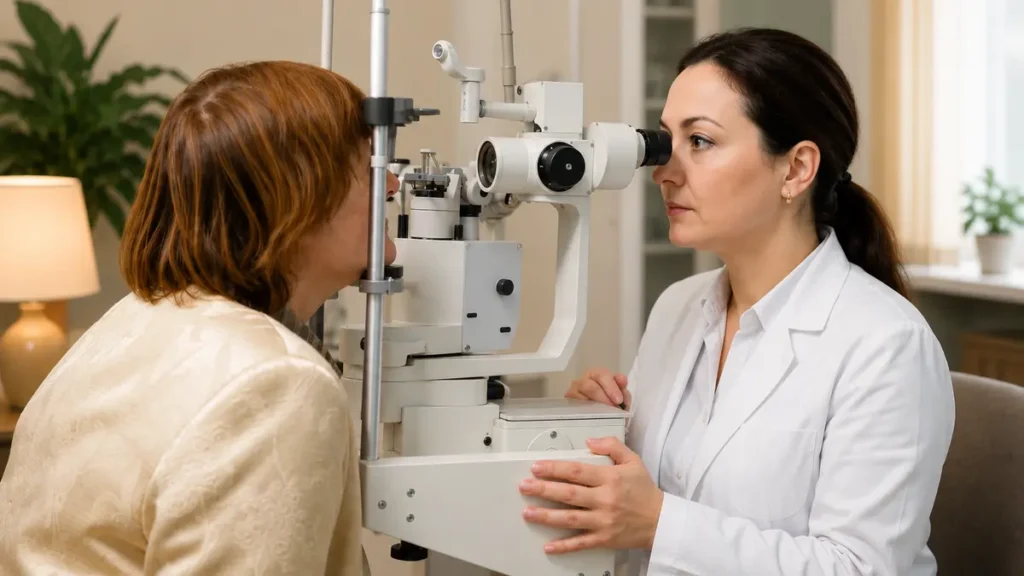
For Margaret, identifying these gaps was the turning point in her recovery. What worked in her case won’t be identical to yours, but the underlying pattern of nutrient loss remains the same.
If your gut isn’t absorbing these correctly, your vision pays the price. Evidence suggests that after 50, the gut becomes slightly less efficient at absorbing fats, limiting intake of Vitamin A and Omega-3s.
The Vitamins Your Eyes Depend On
Vitamin A protects the cornea. Zinc carries that Vitamin A from the liver to the retina. If your night vision is fading or your eyes feel persistently dry, your gut may be starving your eyes of both.
This creates a dangerous cycle where the eyes age faster than they should.
What to Tell Your Doctor About Gut and Eye Health
Most specialists only look at their own territory. You must be the bridge between your gut doctor and your eye doctor.
Start by tracking symptoms in a simple log for two weeks. Note whether your eye irritation peaks after eating certain foods or during a digestive flare.

When you visit your doctor, say this clearly: “I’ve noticed my eye symptoms flare up at the same time as my digestive issues.” Ask for a blood panel checking Vitamin A and D specifically.
Seek an eye specialist immediately if you experience sharp pain, sudden floaters, or loss of peripheral sight. These are signs of acute inflammation requiring fast intervention.
That shift in framing changes what your doctor looks for, and what finally gets treated.
Your Questions Answered
Can IBS affect your eyes?
Yes, IBS is frequently associated with inflammatory eye conditions like episcleritis [inflammation of the white outer layer of the eye] and uveitis. The same immune triggers that irritate the bowel can cause inflammation in the eye’s outer or middle layer.
What digestive issues are linked to dry eyes?
Dry eyes are commonly linked to Celiac disease, SIBO [small intestinal bacterial overgrowth], and general malabsorption. When the gut cannot absorb healthy fats, the eye loses its ability to produce high-quality tears.
Can leaky gut cause eye inflammation?
Leaky gut allows toxins into the bloodstream, triggering systemic inflammation [a continuous immune response throughout the body] that can reach the eyes. This often manifests as ocular rosacea or chronic redness in the eyelids and conjunctiva [the thin membrane covering the white of the eye].
What nutrients does your gut absorb that affect eyesight?
The gut must absorb Vitamin A, Zinc, Vitamin C, and Omega-3 fatty acids to maintain vision. A failure to absorb these specifically impacts the health of the retina and the clarity of the lens.
Conclusion
Your gut and your eyes are connected through immune signals and nutrient pathways. When one system struggles, the other sends out a distress signal that shows up as redness, grit, or blurred focus. Digestion problems can cause eye problems, but the source is treatable.
Start with what you can do today. Keep a two-week food and symptom diary, prioritize anti-inflammatory foods like fatty fish and leafy greens, and schedule a consultation that puts your gut symptoms and eye symptoms in the same room.
Your Gut-Eye Health Protocol: 1) Keep a 14-day food and symptom diary. 2) Prioritize anti-inflammatory foods like fatty fish and leafy greens. 3) Schedule a dual consultation with a gastroenterologist and an optometrist.
You aren’t imagining this link. Addressing it is where the real relief begins.
⚠️MEDICAL DISCLAIMER
This content is for informational and educational purposes only and does not constitute medical advice, diagnosis, or treatment. Before making changes to your diet, exercise routine, or supplement regimen, consult a qualified healthcare provider. If you experience severe abdominal pain, sudden vision loss, or blood in your stool, seek emergency medical care immediately.