
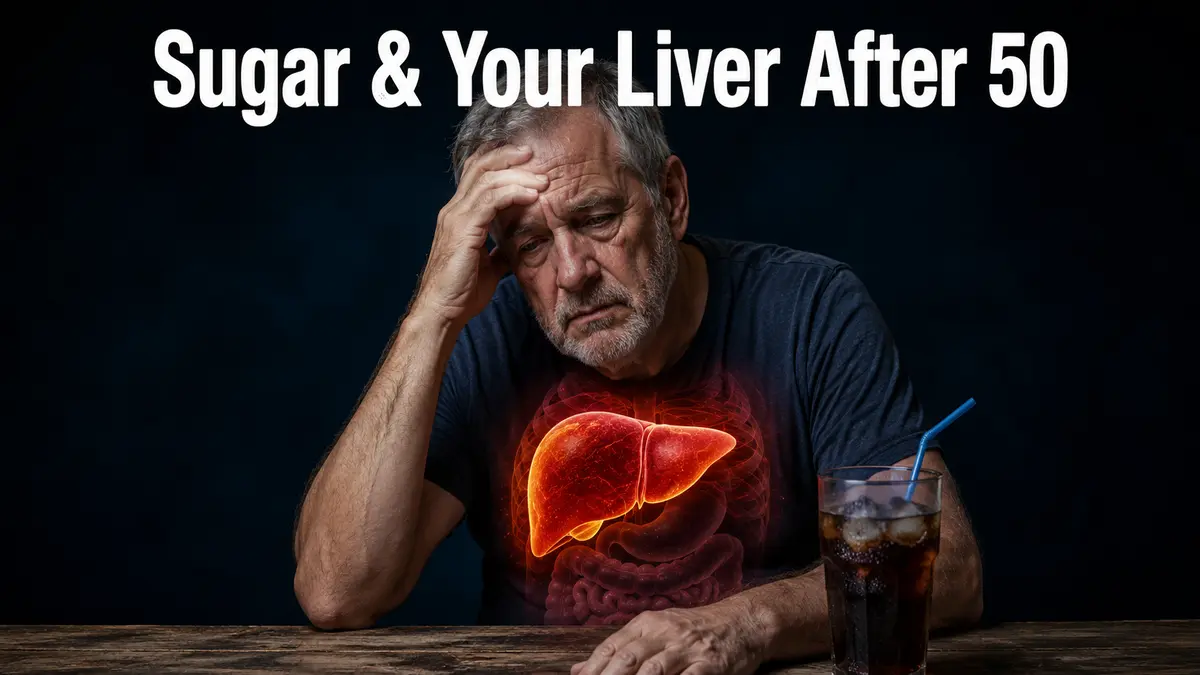
By age 50, your liver has processed about 1.5 tons of sugar. But in 2026, the rules for your body have changed. After 50, your metabolism slows down. Your hormones shift, too. What used to be energy is now stored directly as liver fat. Doctors now call this MASLD. It stands for Metabolically Dysregulated Associated Steatotic Liver Disease.
You might feel fine, but your liver could be struggling beneath the surface. Why does this happen to your metabolic health as you age? You will learn the subtle signs, like 2 PM brain fog, that most people ignore. Most importantly, you will see how to fix sugar liver damage after 50 with simple, daily changes.
Why Your Liver Can No Longer Buffer Sugar After 50?
For years, doctors talked about fatty liver. Now, they use the term MASLD. They changed this name in late 2024 to focus on metabolic health. This isn’t just a label change. It reflects how sugar liver damage after 50 actually works. Your liver has a process called De Novo Lipogenesis DNL. This is a way your liver turns sugar into fat.
When you are 20, your body burns this sugar for fuel. After 50, your body gets much more aggressive at turning fructose into fat instead. Fructose is the sugar found in corn syrup and table sugar. It goes straight to your liver. It does not go to your muscles or brain first. At the same time, your hormones are dropping.
Lower estrogen or testosterone makes it easier for your body to store fat around your organs. This is called visceral fat. It is the most dangerous kind of fat because it causes inflammation. It makes your liver stiff and scarred.
Right now, 1 in 3 adults has MASLD. If you are over 50 and carry extra weight, those odds go up. More than 50% of people in that group have this condition. Your liver can no longer buffer the sugar you eat. It just turns it into fat.
Why Diet Soda Is a Trap for Your Liver?
Many people over 50 switch to diet soda to save their liver. A study from UEG Week found that artificial sweeteners are linked to a 60% higher risk of MASLD. That is even higher than regular sugar in some cases. Why does this happen? Zero Sugar labels can trick your brain.
Your tongue tastes sweetness, so your liver gets ready for a hit of energy. When the energy never arrives, it creates metabolic confusion. This leads to more fat storage and more hunger later on. Avoiding this trap is a key part of protecting your metabolic health. Water or plain tea is a much better choice for your liver.

How Can You Reverse Liver Damage Naturally?
Can you fix the damage? Yes. You can start reversing fatty liver after 50 with a few simple steps.
- Use the “Rule of 5”: Try to keep free sugars under 5% of your daily calories. For most people, that is about 25 grams. That is roughly one small soda or a sweetened yogurt.
- Start Lifting Weights: Muscle is your liver’s best friend. Muscles act like a sponge for sugar. The more muscle you have, the less sugar goes to your liver to be turned into fat. Even 20 minutes of resistance training twice a week helps.
- Eat More Fiber: Think of fiber as a shield. It slows down how fast sugar enters your blood. This gives your liver more time to process things.
Focus on a liver health diet full of greens, beans, and whole grains. These steps work fast. You can see improvements in your liver enzymes in just a few weeks.
Stop Getting Fooled by Healthy Sugar
Many people think honey or maple syrup is better for them. In 2026, we know the liver treats these the same as white sugar. Fruit juice is another big trap. When you eat a whole apple, the fiber slows the release of sugar. When you drink the juice, the sugar hits your liver all at once. This causes a massive spike in fat production.
Always check labels for concentrated fruit juice or agave nectar. These are just fancy names for fructose. To protect your metabolic health, stick to whole fruits rather than juices. You may think that swapping white sugar for agave or coconut sugar is a win. But it is not that simple. Agave nectar is actually very high in fructose.

In fact, it can have more fructose than high fructose corn syrup. This goes straight to your liver and turns into fat. Coconut sugar also has a lot of sucrose. Your body breaks down sucrose into even more fructose. These natural syrups still cause the same metabolic stress as regular sugar.
If you are over 50, your liver cannot tell the difference between fancy sugar and the cheap stuff. To protect your liver, you must treat all syrups the same way. Limit them just like you would white sugar.
Why Better Sleep Means a Healthier Liver?
If you do not sleep well, your liver pays the price. Poor sleep makes your body less sensitive to insulin. This means your liver has to work harder to manage your blood sugar. When you are tired, your body also makes more ghrelin. That is the hormone that makes you crave sweets. This creates a cycle where you eat more sugar because you are tired.

That sugar then damages your liver and keeps you awake at night. Aim for seven hours of rest to give your liver time to clean itself out. Your liver also has its own internal clock. This is part of your body’s natural circadian rhythm. It does its heaviest cleaning and repair work while you are in deep sleep.
During these quiet hours, your liver focuses on breaking down fat and clearing out waste. If you stay up too late, you interrupt this vital process. Eating a sugary snack right before bed makes things even harder.
Instead of cleaning, your liver has to stop and process that new sugar. This often leads to more fat being stored while you sleep. By prioritizing a full night of rest, you give your liver the time it needs to refresh and stay healthy.
How Long Does it Take to Fix Your Liver?
The good news is that your liver is great at healing. If you stop eating excess sugar today, your liver starts to change fast. Within 30 days, most people see a big drop in liver inflammation. You might notice you have more energy in the afternoon. Your brain fog might start to lift, too. It takes time to fully reverse years of damage, but the first steps happen quickly.

Staying consistent is the best way to keep your liver healthy in the long run. It takes time to reach a full recovery. If your liver is already stiff or scarred, this is called fibrosis. Reversing this stage takes longer than just losing fat. It usually takes months of healthy eating and exercise to see big changes in the tissue.
But your blood tests will show the truth much sooner. Most people see their liver enzyme levels drop to normal ranges in three to six months. This shows that the inflammation is finally going down. Keep going even if you do not see big changes on the scale right away. Your liver is healing from the inside out, and that is the most important part of your metabolic health.
When Should You Ask for a Liver Test?

If you are over 50 and have high blood pressure, you should talk to your doctor. You should also check your liver if you have Type 2 diabetes. Most basic blood tests look for enzymes called ALT and AST. If these numbers are high, it means your liver cells might be leaking or stressed. You can also ask for a FibroScan. It is a fast, painless test that measures how much fat is in your liver.
Think of it like an ultrasound for your metabolic health. In 2026, these tests are the best way to catch MASLD early. Knowing your numbers makes it much easier to track your progress as you cut out sugar. You should also ask about your FIB 4 score. This is a simple way for doctors to check for liver scarring. It uses your age and your blood test results in a quick math formula.
In 2026, this is a standard way to find MASLD early without needing surgery. You should also watch how your numbers change over the years. Even if they are normal now, a slow rise is a warning sign. It means your liver is working harder than it should. Keeping an eye on these trends helps you stay in control of your metabolic health.
Conclusion
Your liver is incredibly tough. It wants to heal. But after 50, it needs a different plan than it did when you were 30. You now know why sugar is the main enemy. You know the silent signs to look for. And you know that diet sodas aren’t the easy fix they seem to be.
Taking action now prevents serious problems later. You can stop sugar liver damage after 50 starting today. Your first step is simple. Swap one hidden sugar drink for a glass of water right now. Your liver will thank you tomorrow.
⚠️MEDICAL DISCLAIMER
This content is for informational and educational purposes only and does not constitute medical advice, diagnosis, or treatment. The information provided about liver health, dietary sugar, and lifestyle changes is intended for general wellness awareness and is not a substitute for professional medical guidance. Liver disease and related conditions require evaluation by a qualified healthcare provider. If you are experiencing symptoms related to liver health or have an existing diagnosis, consult your doctor before making any changes to your diet or lifestyle.