
If a five minute walk to the corner shop leaves you gasping, your lungs may not be the problem; your posture might be. Most people assume they are just unfit. That thought alone makes them walk less. And the less they walk, the worse they feel. It becomes a cycle that starts with a wrong assumption.
Walking has a lot of moving parts. The way you hold your head, your shoulders, your arms, all of it affects how much air gets into your lungs with each step.
When something is off, your body works harder to get less oxygen. That is why a short, flat walk can leave you breathless, why your posture is likely restricting your breathing right now.
The four most common walking mistakes that make you breathless. A step by step fix you can use on your very next walk. A simple breathing drill that builds stamina fast. When breathlessness is a sign to see a doctor.
The Real Reason Short Walks Leave You Breathless
Your main breathing muscle is called the diaphragm. It sits like a dome at the base of your lungs. When it contracts, it pulls downward, creating space for your lungs to fill with air. When it relaxes, it pushes air back out. It is powerful and efficient, but only when your body gives it room to move.
When you slouch, hunch, or lean forward, you compress the chest cavity. You physically shrink the space your lungs need to expand.
Your diaphragm cannot move freely, so your body starts using backup muscles instead of the smaller muscles in your neck and upper chest. Those muscles tire out fast. That is why you feel exhausted.
Research backs this up. A published study in BioMed, Research International, measured respiratory muscle strength in both upright and slouched sitting positions. The slouched position produced measurably weaker diaphragm function. The difference was statistically significant, p=0.04.
A separate study on smartphone posture confirmed that slumped positioning leads to significant drops in lung function, specifically in forced vital capacity and forced expiratory volume, two standard measures of how well your lungs work.
Studies have also found that chronic slouching can reduce your total lung capacity by up to 30%.
Think about it this way. Imagine trying to inflate a balloon inside a small soup tin versus a large container. The tin limits how far the balloon can expand, no matter how hard you try. Your lungs work the same way. Compress the chest, and there is simply less room for air, no matter how deeply you try to breathe.
4 Walking Form Mistakes That Make You Short of Breath
Most people make at least two of these mistakes without knowing it. Check each one honestly.
Mistake 1: Rounding Your Shoulders Forward

This is the most common one. Sitting at desks and looking at screens all day trains your shoulders to roll forward and your chest to cave in.
When you walk like this, your ribcage is compressed. Your diaphragm cannot drop fully. So your body switches to the small accessory muscles in your neck and shoulders, the scalenes and sternocleidomastoid.
These muscles are not built for sustained breathing work. They tire out quickly. That tightness you feel in your neck and shoulders after a walk? That is why.
Mistake 2: Looking Down at Your Phone or Feet

Looking down while you walk creates what physiotherapists call Forward Head Posture. Your head moves ahead of your spine, like a bowling ball hanging off the front of your neck.
Research from King Saud University, published on PubMed, found that even short duration forward head posture immediately reduced diaphragm strength even in completely healthy people.
The phrenic nerve, which controls the diaphragm, can become partially compressed when the neck is bent forward. Fewer nerve signals mean a weaker diaphragm contraction, which means less air with each breath.
For every inch your head moves forward, it adds roughly ten pounds of effective load on your cervical spine. That tension runs all the way down through your chest. It locks you up.
Mistake 3: Cross-Body Arm Swing and Tense Shoulders
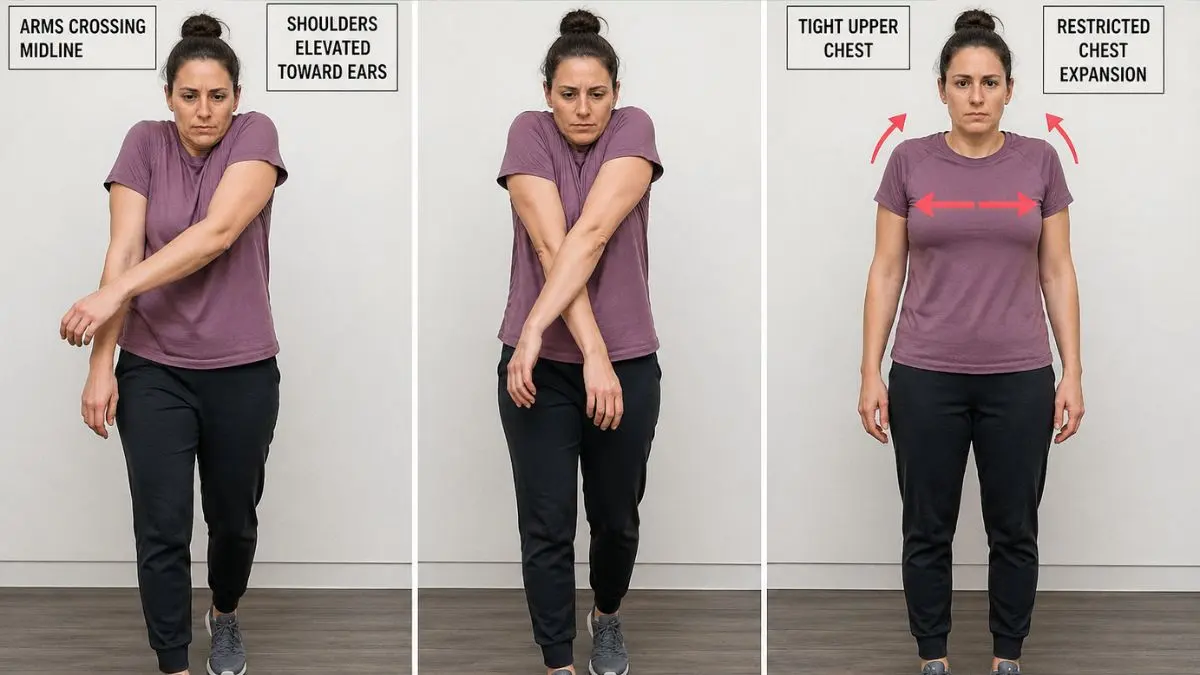
Your arms should swing forward and back, not across your body. When they swing inward and cross the midline, your torso twists with each step. That twisting disrupts your breathing rhythm because your core and chest are never stable long enough to complete a full breath cycle.
Tense, raised shoulders make this worse. When your shoulders are up near your ears, your chest is locked in a semi-exhaled position. Every breath starts from a deficit. You get less air in, more effort out.
Mistake 4: Taking Steps That Are Too Long

Overstriding means your foot lands far out in front of you. This forces your body to lean back slightly to compensate, which throws off your core stability and breaks your natural breathing rhythm.
The American Lung Association notes that rhythmic breathing, where you inhale and exhale in sync with your stride, is key to walking and running efficiency.
When your stride length is inconsistent, that rhythm falls apart. You end up breathing reactively instead of in a steady pattern, which feels exactly like running out of air.
How to Fix Your Walking Form — Step by Step
You do not need new shoes, a trainer, or a gym. You need to make six small adjustments. Try one or two on your first walk. Add more as they become habit.
Step 1: Stand Tall
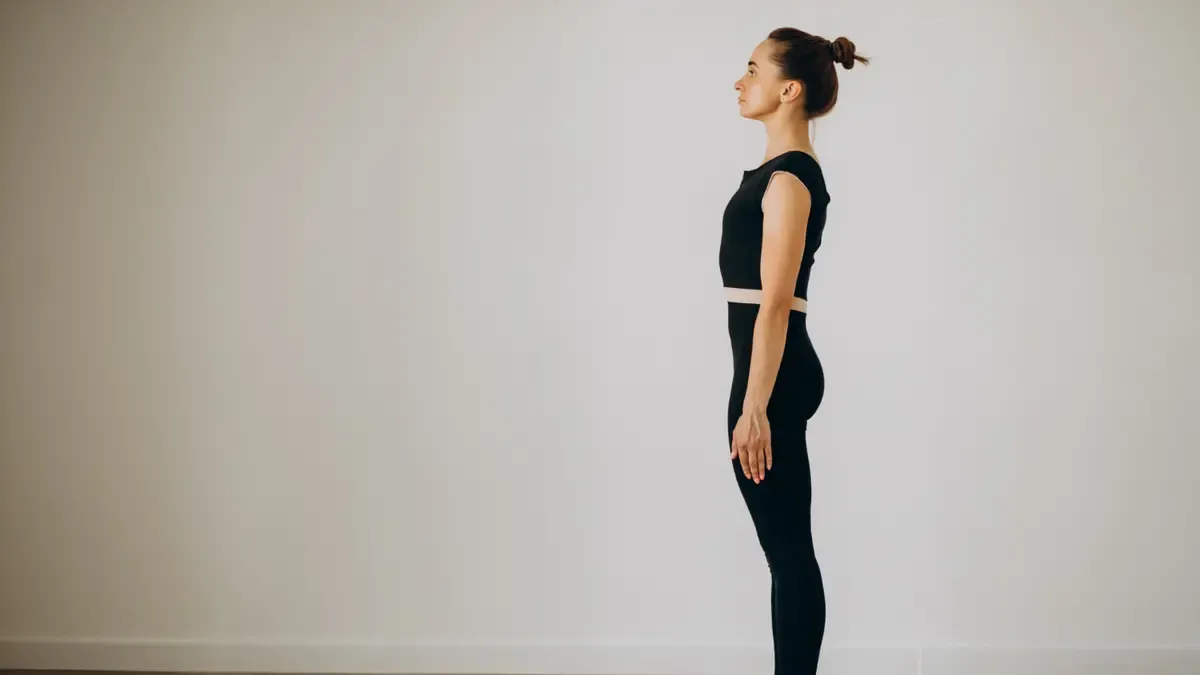
Imagine a string attached to the crown of your head, pulling gently upward. Let your spine lengthen. Your head should sit directly over your shoulders, not in front of them.
You are not pulling your back into a stiff arch. You are just stopping the forward collapse. This one change immediately creates more vertical space for your lungs.
Step 2: Roll Your Shoulders Back and Down
Before you take your first step, roll both shoulders up toward your ears, back, then let them drop. Hold them there, open chest, shoulder blades gently together. Take a breath right now while you are sitting hunched.
Then roll your shoulders back and take another breath. You will notice the difference immediately. That is extra lung space you are giving yourself just by changing your shoulder position.
Step 3: Gently Engage Your Core
Draw your belly button lightly in toward your spine. About 20% effort, not a hard brace. This stabilizes your torso and keeps your posture from collapsing as you walk. Do not suck your stomach in tightly.
That compresses your abdomen and restricts the diaphragm from below. Light engagement is enough. Johns Hopkins Medicine specifically notes that the core position is foundational to diaphragmatic function.
Step 4: Lift Your Gaze
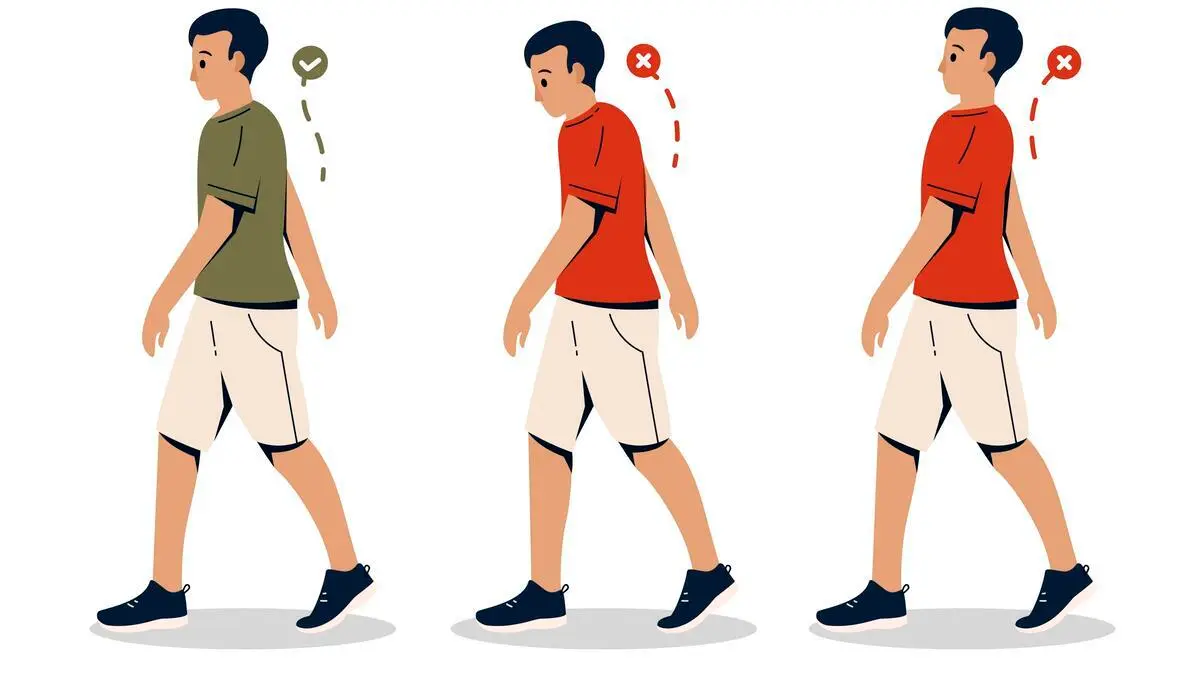
Keep your chin roughly parallel to the ground. Look about 10 to 20 feet ahead of you. Not at your feet. Not at your phone. This single step prevents forward head posture, keeps the phrenic nerve free, and, as.
Peloton instructor Jermaine Johnson puts it, you’ll automatically feel stronger and more confident when you stop looking down. If you need to check your phone, stop walking. Then check it. Do not try to do both at once.
Step 5: Relax Your Hands
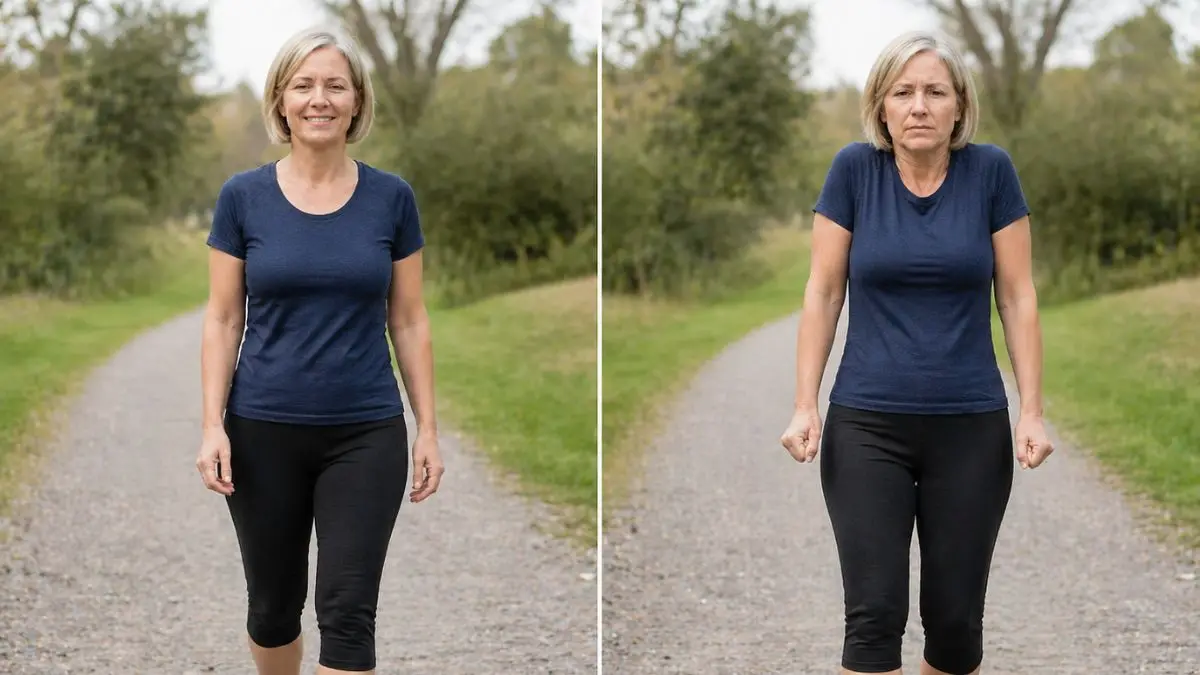
Lightly curl your fingers as if you are holding a crisp. Not a clenched fist, not flat open palms. Tension in your hands travels up your arms and locks your shoulders, which then compresses your chest. It sounds small. It adds up across a 20 minute walk.
Step 6: Shorten Your Stride
Aim to land your foot closer to directly under your hip, not far out in front of you. This keeps your core stable and your breathing rhythm steady. You will cover the same distance just with more steps at a consistent pace rather than fewer, uneven ones.
If you have a smartwatch or fitness tracker, a cadence of around 100 steps per minute is a good walking target for most people.
Add This Breathing Technique — And Watch Your Stamina Change
Good posture opens the door. But many people have breathed shallowly from the chest for so long that the habit follows them even after their posture improves. Retraining your breathing takes a few weeks of deliberate practice.
The goal is diaphragmatic breathing, sometimes called belly breathing. It simply means breathing from your diaphragm rather than your chest.
When you do it right, your belly rises on the inhale and falls on the exhale. Your chest barely moves.
Patrick McKeown, author of The Oxygen Advantage and an international breathing expert, recommends nasal breathing during walks. Breathing through your nose recruits the diaphragm more effectively than mouth breathing. It also adds stability to the spine.

Let your nose set the pace for the degree of breathlessness, he told CNN Health. Start at a pace where nasal breathing feels manageable. Once you are walking, try matching your breath to your steps:
- Inhale for 2 steps
- Exhale for 2 steps
As you get more comfortable, extend this. Budd Coates, former running coach and author of Running on Air, recommends inhaling for 3 steps and exhaling for 2. This slightly longer inhale gives the lungs more fill time, which is exactly what low-stamina walkers need.
When Breathlessness Is a Warning Sign — Not Just a Form Problem
Fixing your posture will help most people who get winded on short walks. But breathlessness also has medical causes. And those will not improve with posture work alone.
See a doctor if you notice any of these:

- Breathlessness that is getting worse over several weeks, not better
- Chest tightness, pressure, or pain alongside breathlessness
- Feeling lightheaded, faint, or your heart is racing
- Breathlessness while sitting still or lying down, not just during movement
- Swollen ankles combined with breathlessness
These symptoms can point to conditions like asthma, COPD, heart problems, or anemia, none of which posture correction will address. Excess abdominal weight can also reduce how far the diaphragm can move, making breathing harder even with good form.
Anxiety causes rapid, shallow breathing at 18 to 25 breaths per minute, well above the resting norm of 12 to 16, and that pattern can feel just like physical breathlessness. This is not meant to alarm you. Most people who make the posture fixes in this will feel the difference quickly.
But breathlessness that is worsening or happening at rest deserves a proper checkup. A short conversation with your GP rules out the serious causes and gives you full confidence to focus on the form work.
Conclusion
Most people who get winded on short walks are not failing. They are walking with a posture that is physically limiting their lungs. The science is clear: slouching, forward head posture, poor arm mechanics, and overstriding all restrict the diaphragm, force the body onto weak backup muscles, and break the rhythm that makes walking sustainable.
Roll your shoulders back and let them drop. Lift your gaze to 10 feet ahead. Take three slow belly breaths before you start. That is your starting point. Fixing shortness of breath while walking can be as simple as changing how you hold your body, and that is something you can start today.
⚠️MEDICAL DISCLAIMER
“This article is for informational purposes only. It does not replace medical advice, diagnosis, or treatment. The information covers breathing mechanics, diaphragm function, posture, walking form, lung capacity, core engagement, nasal breathing, rhythmic breathing, and signs to seek medical attention.
Individual results vary based on age, health status, and fitness level. Before changing your exercise routine, diet, or supplement use, talk to your doctor or a qualified health professional first. If you experience chest pain, dizziness, severe joint pain, or any sudden symptom during or after exercise, stop immediately and seek medical care.