

You haven’t even looked at your phone yet, and already your heart is pounding. No alarm thought. No bad dream. No reason. Just dread. You’re not becoming an anxious person. And it’s almost certainly not depression. There’s a measurable biological event happening in your body every single morning.
After 50, it can go haywire. And most doctors never mention it. Why does it get worse after 50, especially for women, and six simple things you can start doing tomorrow morning to feel calmer when you wake up.
What Is the Cortisol Awakening Response — And Why Does It Feel Like Dread?
Every morning, whether you feel it or not, your body runs a hormonal boot sequence. It’s called the Cortisol Awakening Response, or CAR. And it happens to everyone. 30 to 45 minutes after waking up, your cortisol levels spike by 50 to 60%. This is documented, measurable, and completely normal.
According to ZRT Laboratory, this spike is triggered by two things: your body’s internal clock, the HPA axis, and your brain’s response to daylight. It’s designed to give you energy, sharpen your focus, and get you ready to face the day.
Think of it like a car alarm. In most people, it goes off gently, a soft buzz that says, time to get up. But for some people, especially after 50, that same alarm goes off at full volume. Same alarm. Completely different experience.
Why It Hits Harder After 50 — The Hormonal Connection?
Before 50, estrogen quietly acted as a built-in stress buffer. Estrogen helps regulate a protein called corticosteroid-binding globulin. This protein grabs free cortisol out of your bloodstream before it can flood your brain. Estrogen essentially keeps the volume knob on your stress response turned down.
Then perimenopause starts. Perimenopause is the transition leading up to menopause. It typically hits women in their late 40s to early 50s and lasts anywhere from 2 to 8 years, with 4 years being the average. During this time, estrogen levels drop, and so does your natural cortisol buffer.
As HerKare explains, when estrogen declines, cortisol levels can rise and trigger stronger stress responses. Add that to all the other hormonal shifts happening at the same time, and mornings can start to feel unbearable.
3 Hidden Factors That Make Morning Dread Worse
Cortisol doesn’t work alone. For people over 50, several factors can stack on top of each other and turn a manageable cortisol spike into something overwhelming.
Low blood sugar from the overnight fast

You’ve gone 8 to 10 hours without eating. Your blood sugar is low. Your body releases extra cortisol and adrenaline to compensate. The physical results, such as shakiness, light-headedness, and a hollow feeling in your stomach, can be misread by your brain as anxiety. If you skip breakfast, this gets worse.
Poor sleep quality

Bad sleep and high morning cortisol feed each other. As Winona Health notes, higher cortisol levels are directly linked to sleep disruption, increased anxiety, and difficulty concentrating. If you sleep poorly, your cortisol spike the next morning tends to be sharper and harder to recover from. Then you sleep poorly again. The cycle continues.
Late-night screen use

Blue light from phones and screens late at night suppresses melatonin. You sleep less deeply. The next morning, your cortisol spike arrives on a system that never fully recovered. You don’t need to be doom-scrolling for this to happen. Even casual evening screen time matters.
How to Break the Cycle — A Simple Morning Protocol for 50?
You can’t eliminate the cortisol spike. And you wouldn’t want to, it’s what gets you out of bed. But you can change how your body experiences it. None of these requires a prescription. None requires a major overhaul. They require about 20 minutes and some consistency.
1: Wait Before You Have Coffee

This one is contested, so here’s the honest version. When you drink coffee during your peak cortisol window, roughly the first 30 to 45 minutes after waking, you can push cortisol even higher. If you’re already anxious, that added spike can mean jitters, a racing heart, and more dread.
As Oura Ring’s health team explains, for people prone to anxiety or stress, caffeine during peak cortisol may genuinely make mornings harder. Reported in Healthline, found that delaying coffee doesn’t fully prevent a cortisol rise from caffeine; your body will still respond.
But the response is smaller in people who drink coffee regularly, and smaller still when cortisol has already begun to naturally decline. Try pushing your first coffee to 60, 90 minutes after waking. Drink water first.
2: Eat a Small Protein Snack Within 30 Minutes of Waking

You don’t need a big breakfast. You need to stop your blood sugar from bottoming out. A hard-boiled egg, a few tablespoons of Greek yogurt, a small handful of nuts, or a protein shake, any of these will do. The goal is to give your body a signal that the overnight fast is over and no emergency is happening. This removes one of the key physical drivers of morning panic.
3: Get Outside Into Morning Light

Within 20 to 30 minutes of waking, get natural light into your eyes. You don’t need to stare at the sun. Just step outside. Even on a cloudy day, outdoor light is dramatically brighter than indoor lighting. This signal helps your brain set its internal clock, which regulates your entire cortisol curve for the rest of the day.
The morning light exposure piece is well-supported in neuroscience research through Huberman Lab’s published work on circadian biology. It takes under 10 minutes. It’s free. And it works better than most supplements people buy for morning anxiety.
4: Do a Grounding Exercise Before Checking Your Phone
Before you pick up your phone, do this: Name 5 things you can see. Then, 4 you can feel. Then, 3 you can hear. Then 2 you can smell. Then 1 you can taste. This is the 5-4-3-2-1 grounding method. It sounds simple. It works because it forces your nervous system to anchor in the present moment, rather than letting cortisol-fueled catastrophizing take hold.
The phone can wait five minutes. Social media, news, and email introduce stress before your brain is ready to handle it. This timing matters more than most people realize.
5: Move Your Body — Gently
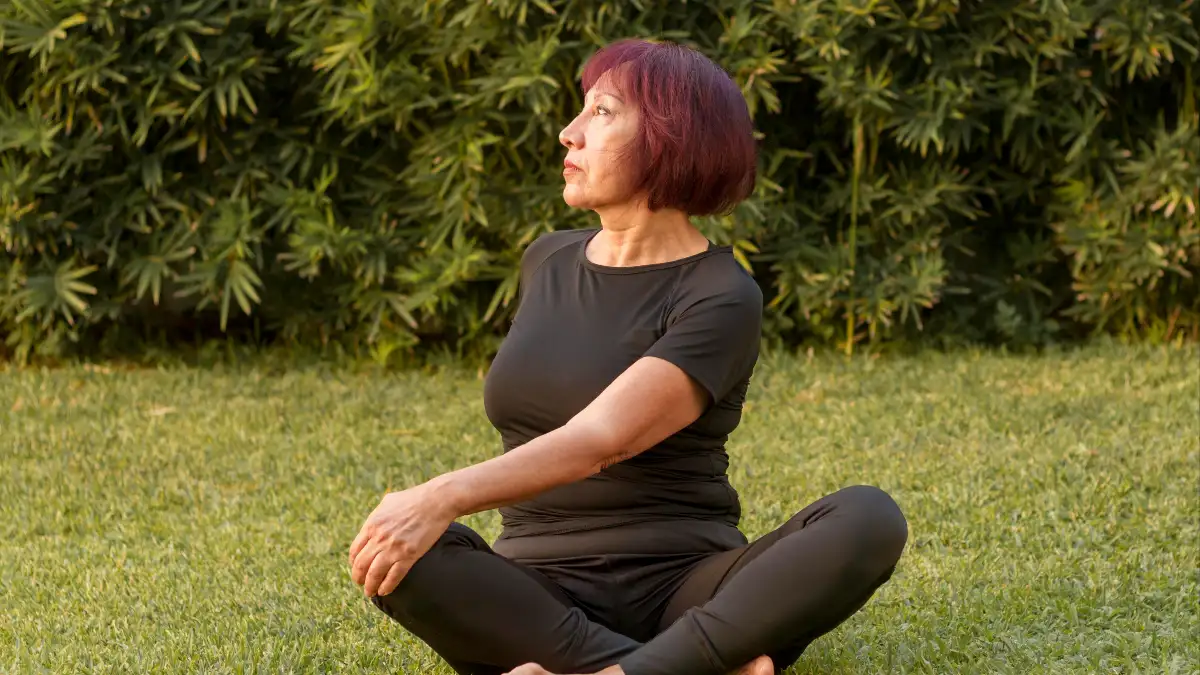
A 5 to 10-minute walk or some light stretching helps your body metabolize the circulating stress hormones rather than just sitting with them. Keep it gentle. Intense exercise early in the morning can actually spike cortisol further, which is the opposite of what you want. A slow walk outside gives you movement and light exposure at the same time, two benefits in one.
6: Fix Your Evening to Fix Your Morning

Your morning anxiety is often set up the night before. Limiting screen time to 60 to 90 minutes before bed improves sleep quality. Going to bed and waking at consistent times, even on weekends, stabilizes your CAR baseline over time. You can’t out-routine a chronically disrupted sleep schedule. The evenings matter.
When to Talk to a Doctor?

These strategies help most people. But they’re not a substitute for medical care if things are serious. If you wake up anxious every single day and it’s affecting your work, relationships, or ability to function, that’s worth a conversation with your doctor. Not next month. Soon.
Ask specifically about:
- A salivary cortisol panel measures cortisol at multiple points across the day.
- A full hormonal panel estrogen, progesterone, testosterone, and thyroid.
- Whether HRT might be appropriate for you.
Research from HerKare shows that women on estrogen replacement therapy tend to have measurably lower cortisol and better stress test performance than those not on it. That’s not a pitch for HRT, it’s information worth having in a conversation with your doctor. It’s not right for everyone, but it deserves to be on the table.
Conclusion
Morning dread after 50 is not weakness. It’s not hypochondria. It’s not just getting older. It has a measurable biological cause, an exaggerated Cortisol Awakening Response, made worse by declining estrogen, poor sleep, and low morning blood sugar. When you know what’s driving it, it loses some of its power.
Pick one strategy from this article. Just one. Try it tomorrow morning. Track how you feel over the next week. Small changes to a morning routine can stack up into noticeably calmer mornings without a prescription, without a supplement, and without turning your life upside down.
⚠️MEDICAL DISCLAIMER
This article is for informational purposes only. It does not replace medical advice, diagnosis, or treatment. The information covers [Cortisol Awakening Response (CAR), HPA axis, estrogen and cortisol regulation, perimenopause and menopause, blood sugar management, sleep quality, blue light and melatonin, caffeine timing, protein intake, morning light exposure, grounding exercises, morning movement/stretching, salivary cortisol panels, hormone replacement therapy (HRT)].
Individual results vary based on age, health status, and fitness level. Before changing your exercise routine, diet, or supplement use, talk to your doctor or a qualified health professional first. If you experience chest pain, dizziness, severe joint pain, or any sudden symptom during or after exercise, stop immediately and seek medical care