

You’ve been taking probiotics for weeks, maybe months, and your gut still feels the same. Before you blame the brand, consider that the real problem might be what you’re not taking. Millions of people buy probiotic supplements every year. The global market hit over $90 billion in Mordor Intelligence. Yet huge numbers of users say they feel little to no difference.
The probiotic is not always the problem. What’s usually missing is the fuel those bacteria desperately need to survive: prebiotics. Which prebiotic foods to eat, how to combine them with probiotics the right way, and what signs to look for when your gut is finally healing.
What Are Probiotics and Prebiotics (and Why You Need Both)?
Probiotics are live bacteria that benefit your health when you eat enough of them. That definition comes from the World Health Organization and hasn’t changed. You find them in yogurt, kefir, kimchi, and supplements. Prebiotics are plant fibers your body can’t digest. They travel to your colon, where your gut bacteria eat them. Think of garlic, oats, bananas, and onions.
Your body ignores these fibers. Your gut bacteria love them. Probiotics are seeds. Prebiotics are the soil. You can drop seeds on dry concrete. Nothing grows. But give those seeds good soil and the right conditions, and they thrive. Your gut holds roughly 2,000 different bacterial species.
Five bacterial families make up most of what’s in there: Firmicutes 79.4%, Bacteroidetes 16.9%, Actinobacteria 2.5%, Proteobacteria 1%, and Verrucomicrobia 0.1%. It’s a massive, living ecosystem. And like any ecosystem, it needs the right inputs to stay healthy.
4 Reasons Your Probiotics Stop Working Without Prebiotics
Most people who feel let down by probiotics are missing this piece. Here are four science-backed reasons why probiotics fail when there’s no prebiotic support.
1: The Bacteria Starve
Probiotics are alive. Like any living thing, they need food. When you swallow a probiotic capsule, those bacteria land in your gut and immediately start looking for something to eat. Prebiotic fiber is their primary food source. Without it, they can’t get energy. They can’t multiply. They simply die off.
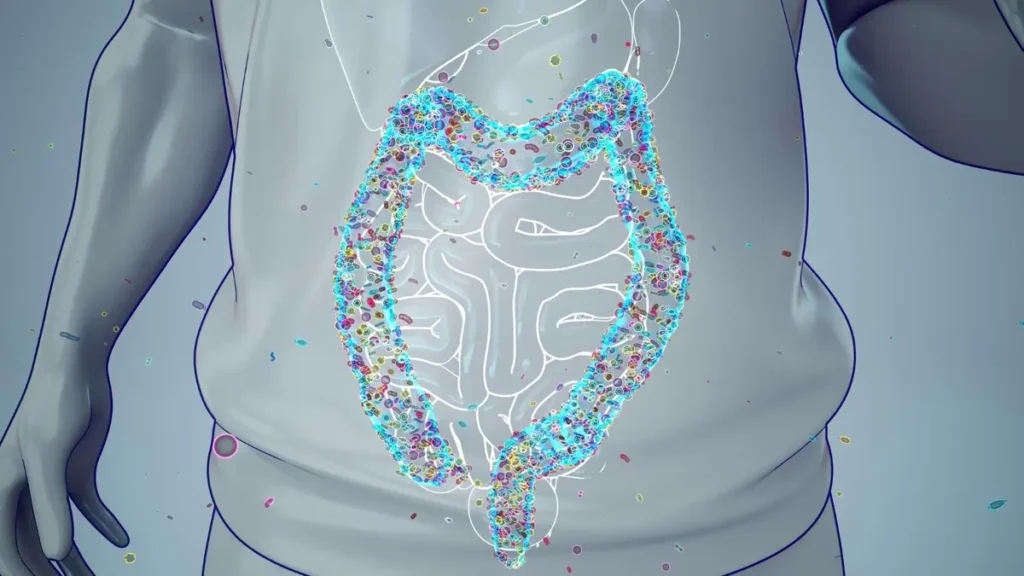
Brown Health, the University of Florida, and nutrition researchers at Layer Origin Nutrition all confirm the same thing: no fiber means no fuel, and no fuel means no colonization. It’s like sending a work crew to a construction site with no tools and no materials. They show up. But nothing gets built.
2: They Can’t Compete for Space
Your gut is already full. Millions of bacteria already live there. They have claimed their territory. When new probiotic bacteria arrive, they must fight for space against those existing residents.
Prebiotics give the good bacteria a fighting chance. When prebiotics ferment in the colon, they lower the gut’s pH to between 1.5 and 3.5, a more acidic environment.
Harmful bacteria struggle in that environment. Beneficial bacteria thrive in it. Without prebiotics, that pH shift doesn’t happen. The new probiotic bacteria lose the competition. They get crowded out by whatever was already there.
3: Most Probiotics Die Before They Reach Your Colon
This one surprises people. Many probiotic bacteria die in the packaging during shipping. Others are killed by stomach acid before they even reach the colon, which is where they actually do their work. Some research suggests only a fraction of the bacteria on the label survive long enough to matter.
Prebiotic fiber can actually help here. It acts as a protective layer, a shield that helps more probiotic bacteria survive the stomach’s acid environment and arrive in the colon alive. Without that shield, you may be paying for bacteria that never make it to their destination.
4: No Real Benefit Is Produced
This is the biggest one. The whole point of a healthy gut is not just to have good bacteria living there. It’s to have those bacteria doing something useful. The most important thing they produce is a group of molecules called short-chain fatty acids SCFAs specifically butyrate, propionate, and acetate.
Probiotic bacteria ferment prebiotic fiber. That’s the chemical reaction. No fiber, no fermentation. No fermentation, no SCFAs. And without SCFAs:
- The cells lining your colon are starved of their main energy source
- Your gut wall weakens (this is sometimes called leaky gut
- Inflammation increases
- Your immune system is harder to regulate
A randomized, double-blind, placebo-controlled study of 120 participants showed exactly this. Two weeks of combining a probiotic with inulin, a prebiotic fiber, significantly increased all three SCFAs: butyrate, propionate, and acetate.
What Are Synbiotics — and Why Scientists Are Excited About Them
Scientists noticed the probiotic-only gap a long time ago. That’s why synbiotics were developed. A synbiotic is simply a product or approach that combines probiotics and prebiotics. There are two types. In a complementary synbiotic, the probiotic and prebiotic work independently but together.
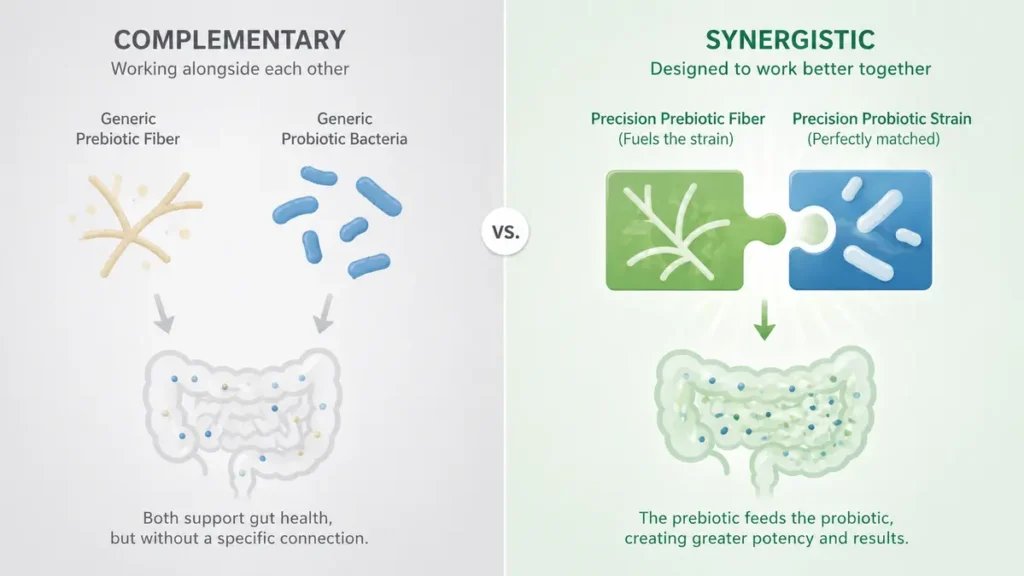
In a synergistic synbiotic, the prebiotic is specifically chosen to feed the exact probiotic strain it’s paired with. The synergistic version is more targeted and more powerful. The Global Prebiotic Association’s October roundup reviewed multiple synbiotic trials.
They found improvements in gut microbiome balance, better constipation outcomes, allergy symptom relief, and stronger gut barrier function, all in groups using synbiotics compared to controls.
One trial gave 32 healthy adults a combination of a 53.6 billion AFU multi-species probiotic and a polyphenol-based prebiotic.
The Best Prebiotic Foods to Eat Every Day
Before you buy any supplement, look at your plate. Real food is still the best source of prebiotic fiber. It’s cheaper, safer, and provides a wider variety of fiber types than most supplements. Different fiber types feed different bacterial species, which is exactly what a diverse, healthy gut needs.
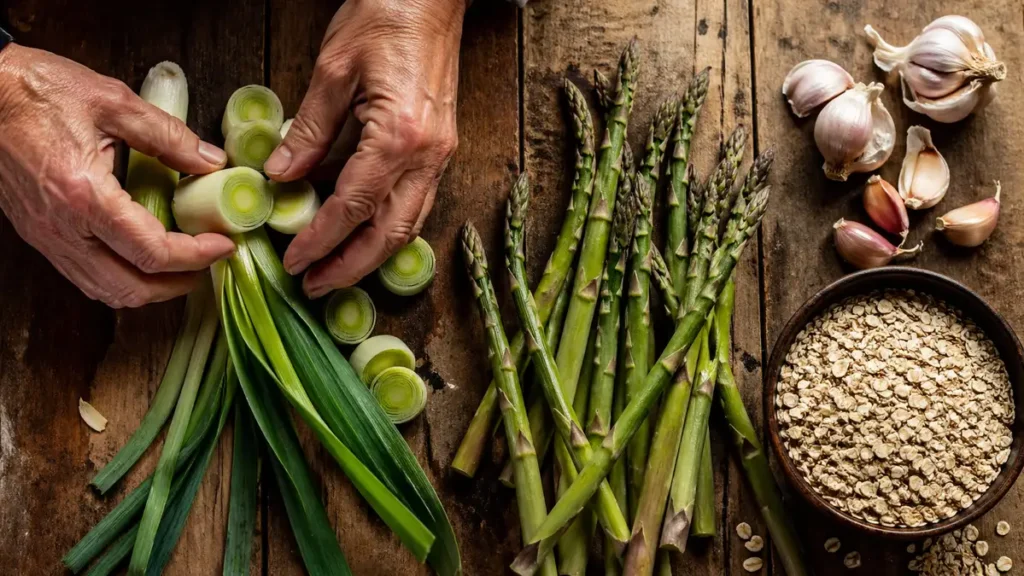
Here are the top prebiotic foods, along with the fiber type each one provides:
| Food | Fiber Type | Notes |
|---|---|---|
| Garlic | Inulin, FOS | Even small amounts make a difference |
| Onions & leeks | Inulin, FOS | Cooking reduces fiber slightly; raw is better |
| Asparagus | Inulin | Works well raw or lightly cooked |
| Slightly green bananas | Ground flax absorbs better than whole flax | Riper bananas have less resistant starch |
| Oats | Beta-glucan | Quick oats still count |
| Flaxseeds | Mixed fiber | Ground flax absorbs better than whole |
| Chicory root | Inulin | Richest source per gram — often found in supplements |
| Jerusalem artichoke | Inulin | Powerful, but start small to avoid gas |
Why does fiber type matter? A pooled analysis of 14 fiber intervention studies found that inulin-type fructans ITF and resistant starch RS specifically increased butyrate production potential, the SCFA most linked to colon health and immune regulation, Nature npj Biofilms and Microbiomes.
How to Build a Probiotic + Prebiotic Routine That Actually Works?
You don’t need a complicated plan. You need a consistent one. Here are six steps to follow.
1: Fix the Fiber Gap First
Before you add any supplement, increase your prebiotic fiber from food. Start with just 1,2 servings of the foods listed above each day. Go slow. Too much prebiotic fiber too fast causes gas and bloating. Your gut bacteria produce gas as they ferment normal fiber. But adding too much at once overwhelms the system. Increase gradually over 2,3 weeks.
2: Choose a Quality Probiotic
Not all probiotics are equal. When choosing one, look for:
- At least 1,10 billion CFU per serving
- Multiple strains, especially from the Lactobacillus and Bifidobacterium families
- Shelf-stable or properly refrigerated storage, check the expiry date
- Third-party testing for quality and label accuracy
3: Take Your Probiotic With Food — Specifically Prebiotic Food

Timing matters more than most people realize. Taking your probiotic with or right after a prebiotic-rich meal does two things.
First: The food buffers stomach acid, so more bacteria survive. Second: The fiber provides an immediate food source when the bacteria arrive in the colon.
A simple example: take your probiotic capsule with a bowl of oats topped with a slightly green banana. That meal is already a synbiotic. No extra product required.
4: Consider a Synbiotic Supplement
If you want convenience, synbiotic supplements combine both in one formula. Some to look at in 2026:
- Nature Made Probiotic + Prebiotic Fiber Gummies: Mainstream, widely available.
- Bioma Probiotics: Combines prebiotics, probiotics, and postbiotics.
- Bimuno GOS + Probi Defendum: Pairing galacto-oligosaccharide prebiotic with a studied probiotic strain.
These are not endorsements; they’re real products launched that reflect the direction the research is pointing. Always check strains, CFU counts, and storage requirements before buying.
5: Stay Consistent for 4–8 Weeks Minimum
Most clinical trials on probiotics run between 3 and 12 weeks. Digestive improvements often appear within 2,4 weeks. Deeper benefits include immune support, mood, and energy, which may take 8,12 weeks. The number one reason people give up on probiotics is expecting results in days.
That’s not how your gut works. Microbial ecosystems take time to shift. Daily consistency during the first 30 days is the most critical factor in whether probiotics actually colonize.
6: Cut the Habits That Kill Your Gut Bacteria

No probiotic can overcome a consistently bad environment. These things actively deplete your gut bacteria:
- Antibiotics: necessary sometimes, but damaging to gut diversity. Always follow up with a synbiotic protocol
- Ultra-processed: foods are high in emulsifiers and
- artificial sweeteners
- Chronic stress: raises cortisol, which disrupts the gut lining
- Excess alcohol
- Low fiber intake: the prebiotic deficit mentioned above
Conclusion
Probiotics are genuinely useful. But on their own, they are only half the equation. Without prebiotic fiber to feed them, beneficial bacteria can’t survive the stomach, can’t compete for space in the colon, and can’t produce the short-chain fatty acids your gut actually needs to function.
The most important benefits a stronger gut lining, reduced inflammation, better immune regulation, and improved mood, all of which depend on that fermentation process. And fermentation requires fiber. The fix is not a more expensive probiotic. It’s more fiber on your plate, combined consistently with a quality probiotic, for at least 4,8 weeks.
⚠️MEDICAL DISCLAIMER
This article is for informational purposes only. It does not replace medical advice, diagnosis, or treatment. The information covers probiotics, prebiotics, gut microbiome, fiber intake, synbiotics, short-chain fatty acids (SCFAs), digestive wellness, supplement quality, and dietary habits.
Individual results vary based on age, health status, and fitness level. Before changing your exercise routine, diet, or supplement use, talk to your doctor or a qualified health professional first. If you experience chest pain, dizziness, severe joint pain, or any sudden symptom during or after exercise, stop immediately and seek medical care.