If your shoes feel tighter at 6 PM than they did at 8 AM, you’re not imagining it, and you’re not alone. Nearly 1 in 5 U.S. adults over age 51 deal with persistent ankle swelling by evening.¹
Most seniors are told to just elevate their feet and wait it out. That advice isn’t wrong, it’s incomplete: elevating your feet on the couch and inverting your legs against a wall are not the same thing, and the difference is why one gives real relief and the other only helps a little.
No equipment needed. No yoga experience required. Just a wall and 10 minutes.
Why Read This
- A specific claim about this pose that gets repeated everywhere online, and what a Cleveland Clinic physician actually says about it.
- The body system quietly doing most of the work in this pose, and it isn’t the one most articles talk about.
- The single sentence that tells you whether to try this tonight or call your doctor first.
Why Do Senior Ankles Swell by the End of the Day?
Think of your leg veins like a one-way escalator. In younger bodies, the escalator runs smoothly.
With age, the motor weakens. Your veins have tiny valves inside them. These valves keep blood moving in one direction: up, toward the heart.
Over time, those valves lose strength. Blood pools in the lower legs. Fluid leaks into the surrounding tissue.
This is called chronic venous insufficiency, weak vein valves, and it shows up in more than half of adults between 70 and 93.⁶
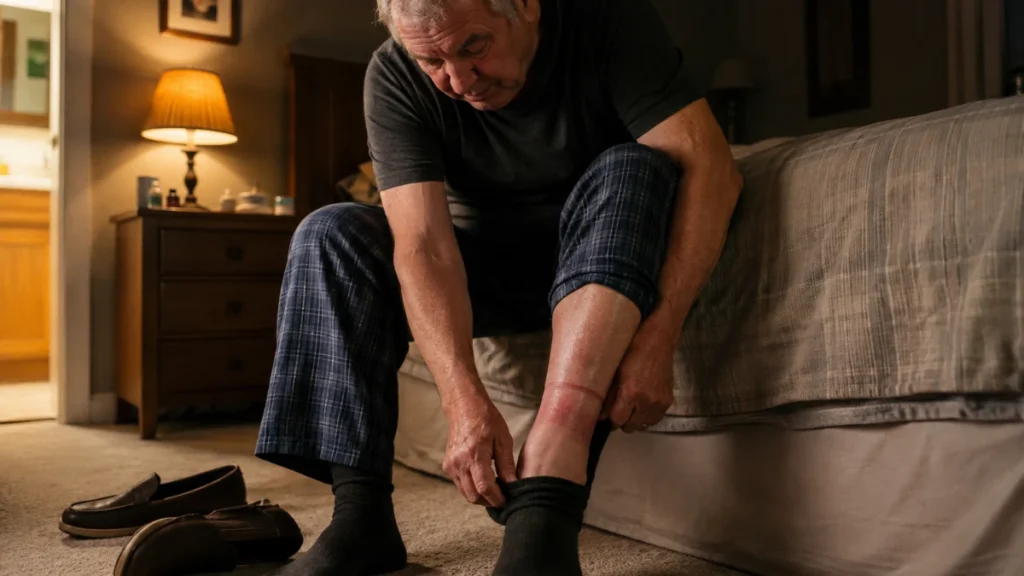
It builds slowly. At 10 AM, your legs feel fine. By 2 PM, there’s a faint heaviness. By 5 PM, your socks leave deep rings, and your shoes feel like they shrank.
Several things make it worse:
- Age: vein valves naturally weaken over time
- Inactivity: sitting or standing still for long periods
- Medications: blood pressure drugs, steroids, some diabetes medications
- Conditions: diabetes, obesity, and hypertension all raise the risk
One warning: if swelling only appears on one side of your body, call your doctor immediately. It could be a blood clot. That needs medical care, not home remedies.
What Is Legs Up the Wall, and What Does It Do to Your Body?
Your ankles have been working against gravity all day. Every hour you sit or stand, fluid sinks lower. Now it’s evening and your ankles hurt. Here is what fixes it.
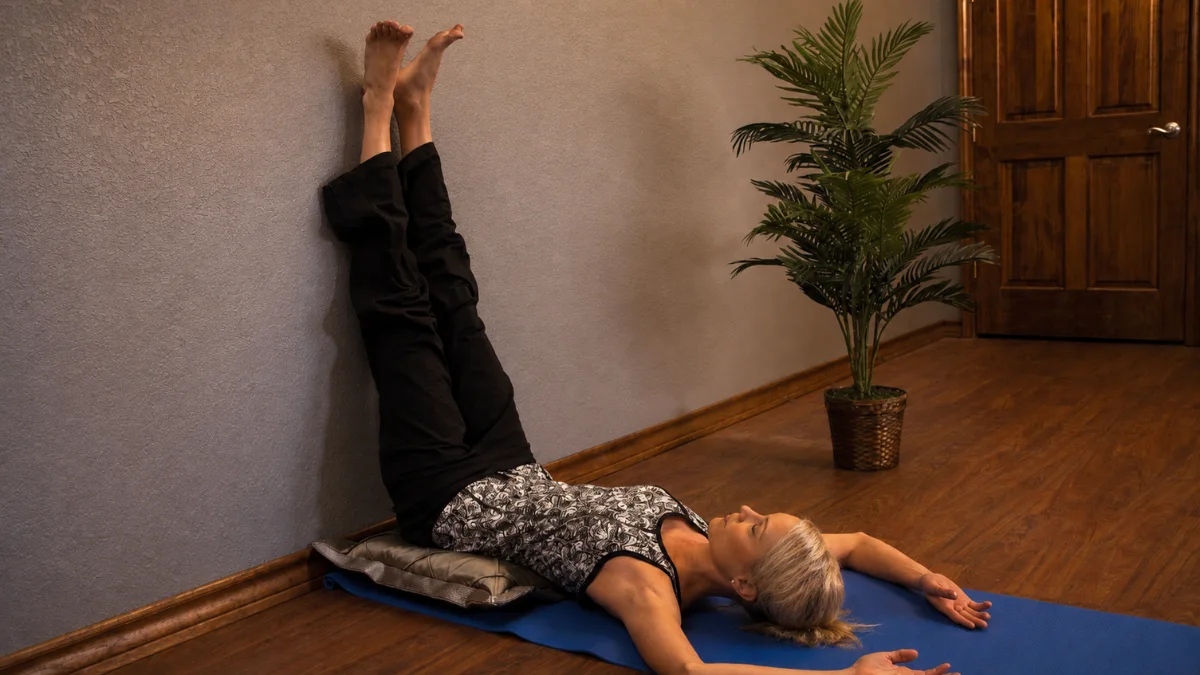
Legs Up the Wall, called Viparita Karani in yoga, reverses that effect. You lie on your back and put your legs straight up against the wall. Gravity, which spent all day pulling fluid down, now pulls it back toward your heart.
In one short session, this pose can:
- Drain fluid from swollen ankles and lower legs
- Ease pressure inside tired, overworked veins
- Support your lymphatic system (your body’s waste-filter network) to clear fluid from tissues
- Calm your nervous system and lower stress hormones
- Help your body shift into rest-and-recovery mode before bed
Dr. Robert Saper, MD, Chair of Wellness and Preventive Medicine at Cleveland Clinic, explains it simply: The main benefit is that it puts back into circulation the bodily fluids stored in your legs. It allows the return of blood flow and the reduction of lower-leg swelling.²
What Happens to Your Lymph System?
Your lymphatic system is a network of fluid and vessels that filter waste from your body. Unlike your blood, lymph has no central pump like your heart. Instead, your lymph vessels squeeze fluid along with their own small, built-in contractions, and that squeezing works harder when gravity is pulling against it.⁷ When you raise your legs, you take gravity off that job, and lymphatic fluid drains more easily from the ankles and calves toward the filtering nodes higher in the body.
The groin, stomach, armpits, and neck. This supports your immune system and reduces the fluid buildup that causes swollen ankles in elderly adults.
The Stress-Relief Bonus
Here’s something most people don’t expect. This pose doesn’t just help your legs.
It calms your entire nervous system. Lying with your legs up triggers what’s called the parasympathetic state, your body’s rest and digest mode.
Stress hormones drop. Your heart rate slows. Tension drains from your muscles. Many people describe it as a reset button after a long day.
It’s worth being clear about what this pose does not do.
Dr. Saper is direct that claims linking it to lower blood pressure or fewer headaches have no evidence behind them.² What it reliably delivers instead is that parasympathetic shift, and for many people that alone is enough to feel like a reset.
How to Do Legs Up the Wall: Step-by-Step for Seniors?
In 10 minutes from now, your ankles can feel lighter. Here is exactly how to do it.
| Time | Milestone | Why it’s important for seniors |
| 01:15 | The Setup | Shows how to place a pillow or blanket for lower back support. |
| 01:31 | The Entry | Crucial: Demonstrates the sideways “butt-to-wall” sit before rotating. |
| 01:41 | The Swing-Up | Visualizes the hardest part: how to pivot the legs up while lying back. |
| 02:30 | Knee Modification | Shows that keeping knees bent is okay if hamstrings are tight. |
| 05:15 | Safe Exit | Demonstrates how to safely roll to the side to get back up. |
What you need:
- A wall or closed door
- A yoga mat, folded blanket, or carpet
- Optional: a small folded towel for under your lower back
Steps:
- Sit sideways on the floor with one hip touching the wall, knees bent.
- Slowly lower your back to the floor as you swing your legs up the wall.
- Scoot your tailbone a few inches away from the wall. This wider angle lets blood flow back toward your heart more easily.
- Arms at your sides, palms facing up. Shoulders relaxed.
- Close your eyes. Breathe slowly, in through the nose, out through the mouth.
- Stay here for 5 to 20 minutes.
How Long Should You Hold It?
Start with 5 minutes. Even two minutes creates a shift. Work up to 10 to 15 minutes over a few weeks. Most people find 5 to 20 minutes to be the sweet spot where the nervous and lymphatic systems really respond. Once or twice a day is safe, according to the Cleveland Clinic.²
The best time for most seniors is early evening, 5 to 7 PM, right when end-of-day ankle swelling is at its worst. You’ve spent all day loading fluid into your lower legs. This is the moment to unload it. Make it a habit: shoes off, feet up, 10 minutes before dinner.
Pro Tip: Slide a folded towel under your lower back if the floor feels hard.
Who Should NOT Do This Pose
This pose is safe for most seniors. But most is not all. Talk to your doctor before trying Legs Up the Wall if you have any of the following:

- Glaucoma or increased eye pressure: inversion can raise pressure further³
- Uncontrolled high blood pressure: inversion can raise pressure further, so get your doctor’s OK first
- Recent surgery: hip, spine, knee, or abdominal surgery needs medical clearance
- Active blood clots or DVT: do not elevate the leg if a clot is suspected
- Heart conditions: This pose increases pressure around the heart, so get approval first
- Herniated discs or severe sciatica: lying flat may aggravate these
What to Combine It With for Even Better Results
Legs Up the Wall works on its own. But a few simple daily habits make it work even better. You don’t need to do all of these at once. Pick two and start there.
1. Wear Compression Socks During the Day
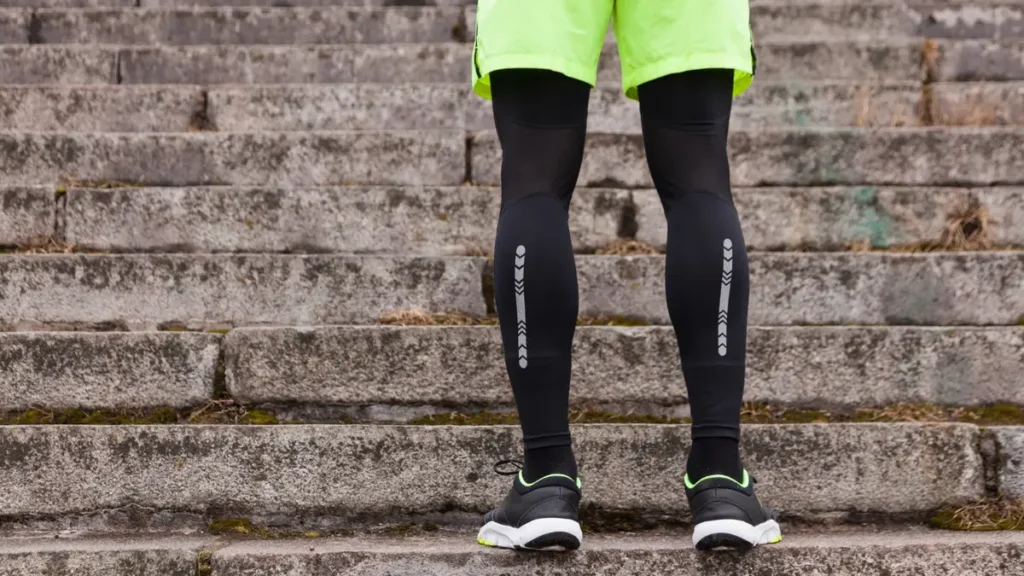
Compression socks apply gentle pressure to the lower leg, which helps veins push blood upward. Medical guidance recommends them specifically for people with chronic venous insufficiency, the same condition behind most senior ankle swelling.⁴ Wear them during the day, then do your Legs Up the Wall pose in the evening. They work together.
2. Drink More Water (Yes, Really)

This surprises most people. If you’re dehydrated, your body holds onto fluid more tightly. It’s a survival response. Drinking enough water, usually 6 to 8 glasses a day for most seniors, tells your body it’s safe to release retained fluid. Talk to your doctor about the right amount for your health conditions.
3. Adjust What You Eat

Salt makes your body hold onto more water, which can make swelling worse. Processed foods, canned soups, and restaurant meals are high in hidden sodium. At the same time, magnesium is part of how your body handles fluid and electrolyte balance, and nuts, seeds, legumes, leafy greens, and whole grains are good sources.
4. Move Your Ankles During the Day: Before the Damage is Done
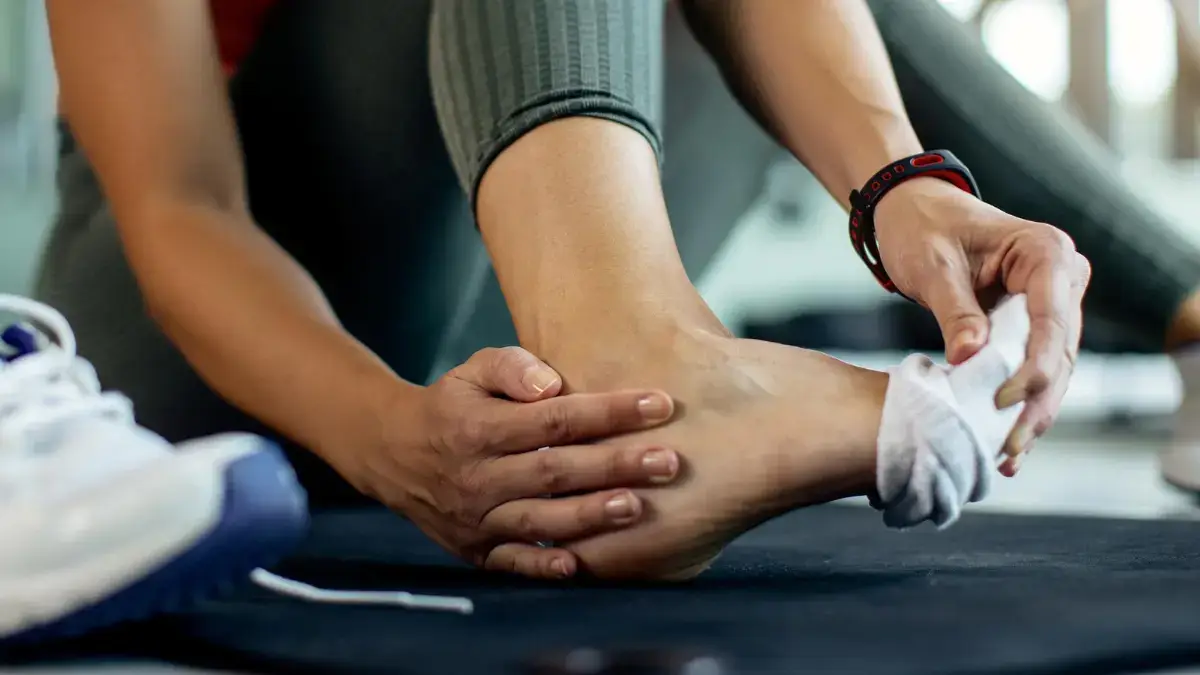
By 4 PM, most of the end-of-day fluid buildup has already happened. The best time to slow it down is earlier. While sitting in your chair, flex and point your feet 10 times every hour. Draw circles with your ankles. These tiny movements pump the calf muscles and push fluid upward before it has a chance to pool.⁵
Think of your calf as a second heart. It helps blood move back up the leg when it contracts. A few minutes of ankle movement at 2 PM means less work for the wall pose at 6 PM.
5. Buy Shoes at the End of the Day
Your foot is smallest in the morning and largest in the evening. If you buy shoes in the morning, they may feel tight by afternoon. And tight shoes make swelling worse. Shop for footwear in the late afternoon or evening, when your feet are at their largest size. Start small. Add one habit this week. Add another next week. Small, consistent changes add up to real results.
Ten Minutes Before Dinner
The fastest fix for evening ankle swelling costs nothing and takes ten minutes: legs against a wall, done before dinner instead of after.
Aging veins lose their fight against gravity a little more each hour, and this pose works because it reverses that direction for as long as you’re in it.
Tonight, roll out a blanket and put your legs up for ten minutes. It won’t undo decades of vein wear on its own, but it gives your body ten minutes it doesn’t otherwise get.
⚠️DISCLAIMER
This article is for informational purposes only and is not a substitute for professional medical advice, diagnosis, or treatment. Always consult your doctor or qualified healthcare provider before starting any new health practice, especially if you have an existing medical condition or take prescription medications.
References
- Besharat S, Grol-Prokopczyk H, Gao S, Feng C, Akwaa F, Gewandter JS. Peripheral edema: A common and persistent health problem for older Americans. PLoS One. 2021. https://pmc.ncbi.nlm.nih.gov/articles/PMC8675752/
- Cleveland Clinic. The Yoga Pose You Need: The Health Benefits of Legs Up the Wall. Cleveland Clinic Health Essentials. 2021. https://health.clevelandclinic.org/benefits-of-legs-up-the-wall
- Jasien JV, Jonas JB, de Moraes CG, Ritch R. Intraocular Pressure Rise in Subjects with and without Glaucoma during Four Common Yoga Positions. PLoS One. 2015. https://pmc.ncbi.nlm.nih.gov/articles/PMC4689525/
- Dahm KT, Myrhaug HT, Strømme H, Fure B, Brurberg KG. Effects of preventive use of compression stockings for elderly with chronic venous insufficiency and swollen legs: a systematic review and meta-analysis. BMC Geriatrics. 2019. https://pmc.ncbi.nlm.nih.gov/articles/PMC6407277/
- Orr L, et al. A Systematic Review and Meta-analysis of Exercise Intervention for the Treatment of Calf Muscle Pump Impairment in Individuals with Chronic Venous Insufficiency. Ostomy Wound Management. 2017. https://pubmed.ncbi.nlm.nih.gov/28873064/
- Sinikumpu SP, Keränen MH, Jokelainen J, Keinänen-Kiukaanniemi S, Huilaja L. The association between chronic venous disease and measures of physical performance in older people: a population-based study. BMC Geriatrics. 2021. https://pmc.ncbi.nlm.nih.gov/articles/PMC8518156/
- Holm-Weber T, Kristensen RE, Mohanakumar S, Hjortdal VE. Gravity and lymphodynamics. Physiological Reports. 2022. https://pmc.ncbi.nlm.nih.gov/articles/PMC9117968/