
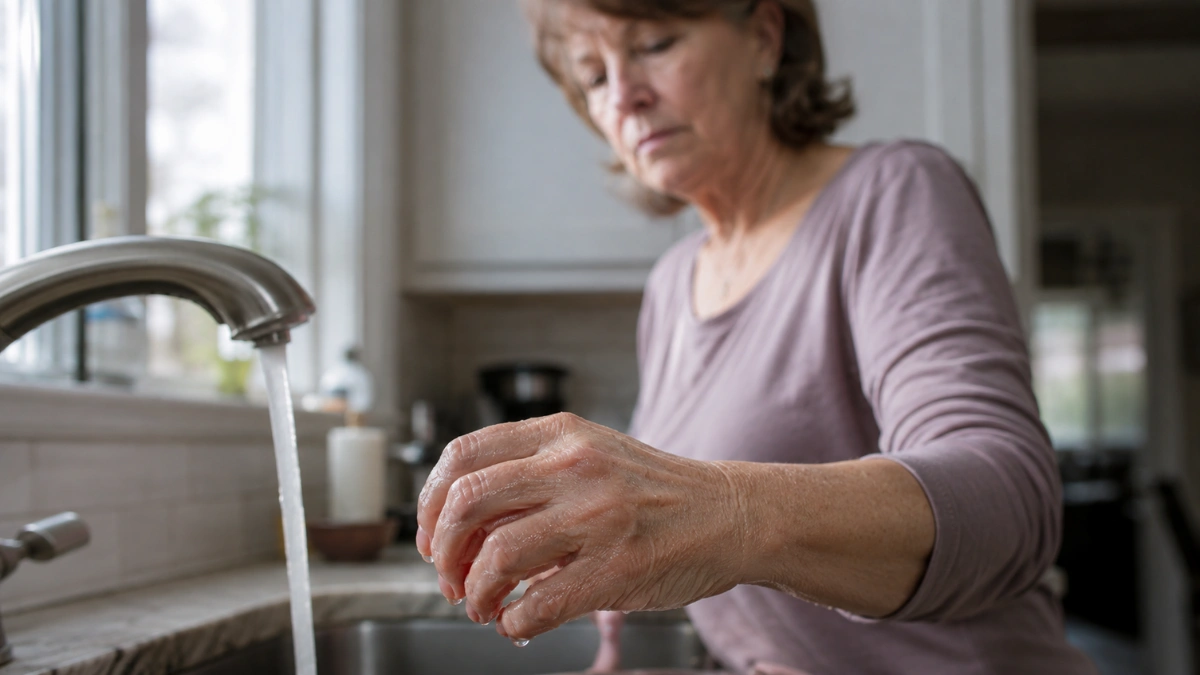
You noticed it while washing dishes: the skin on the back of your hand shifting when you moved your fingers, slower to settle than it used to be. Not painful. Not alarming. Just different.
That moment is worth paying attention to, because your hands are not aging the way your face is. They are aging faster, and they are doing it in ways that medicine now measures as genuine markers of biological age.
Adults over 50 noticing changes in their hands are not just watching normal wear. They are watching a biological process play out in real time, one that most people mistake for a cosmetic problem.
Why Read This
- Find out why the back of your hand ages faster than your face and what that reveals about your body
- Learn what your grip strength tells a doctor that your skin does not
- Discover why age spots are a record of something specific, not just a sign of getting older
- See what your nails reveal about cellular renewal speed
- Get the daily habit that slows both the visible and biological aging of your hands
This article is for informational purposes only and is not a substitute for professional medical advice, diagnosis, or treatment. The studies referenced describe population-level associations, not individual guarantees, and should not be used to self-diagnose any condition. Always consult a qualified healthcare provider before making changes based on grip strength, skin changes, or any other signal discussed here
Why the Hand Has Almost No Biological Defense Against Aging
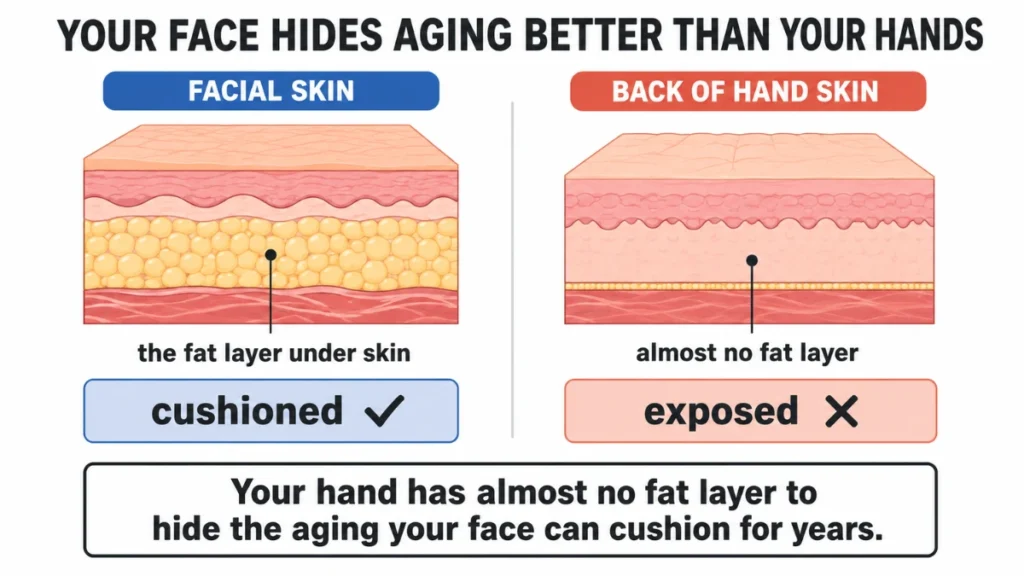
Covering your face with SPF, wearing a wide-brimmed hat, and staying out of the midday sun are all reasonable defenses against aging. But your hands are almost always exposed, and they lack the one structural feature that slows visible aging more than any cream or sunscreen: a meaningful layer of fat just beneath the skin.
Facial skin holds subcutaneous fat [fat stored just below the skin’s surface] in multiple compartments. That fat cushions the skin, keeps it from moving loosely over the structures beneath, and provides a buffer against the structural thinning that comes with age.
The back of the hand has almost none of it. The result is that changes in collagen, skin elasticity and tissue volume show up there earlier and more visibly than they do on a face with far more underlying support.
Skin elasticity matters more than it might seem. A 2025 study from the INSPIRE-T Project followed 441 community-dwelling adults aged 20 to 93 and found that reduced skin elasticity was associated with accelerated inflammatory aging.¹
The specific measure was iAge [a biological clock that scores how fast the immune system is aging], and the association held across three separate elasticity measurements.¹
Older men with a higher viscoelastic ratio [a measure of how much the skin deforms and recovers under pressure] showed a faster decline in overall functional capacity over a three-year follow-up period, the same study found.¹
That is the research signal most hand-aging articles miss: the visible changes on the skin surface are linked, in real physiological data, to the pace of aging inside the body. The skin is not just thinning. It is signaling.
It is worth being clear about what this evidence does and does not show. No single study has directly tested whether hands reveal biological age earlier than the face does.
That claim rests on a set of converging findings: the hand’s structural vulnerability, the skin-elasticity-to-aging-clock link, and several markers addressed in the sections below. The picture is assembled from pieces, not proven in one place.
Knowing that makes the signals worth tracking, not dismissing.
What Grip Strength Reveals About How Fast Your Body Is Aging
Pick up a jar and notice how hard you have to squeeze to break the seal. That effort tells you something your skin cannot: how efficiently your muscles, nerves and metabolic systems are working together right now.
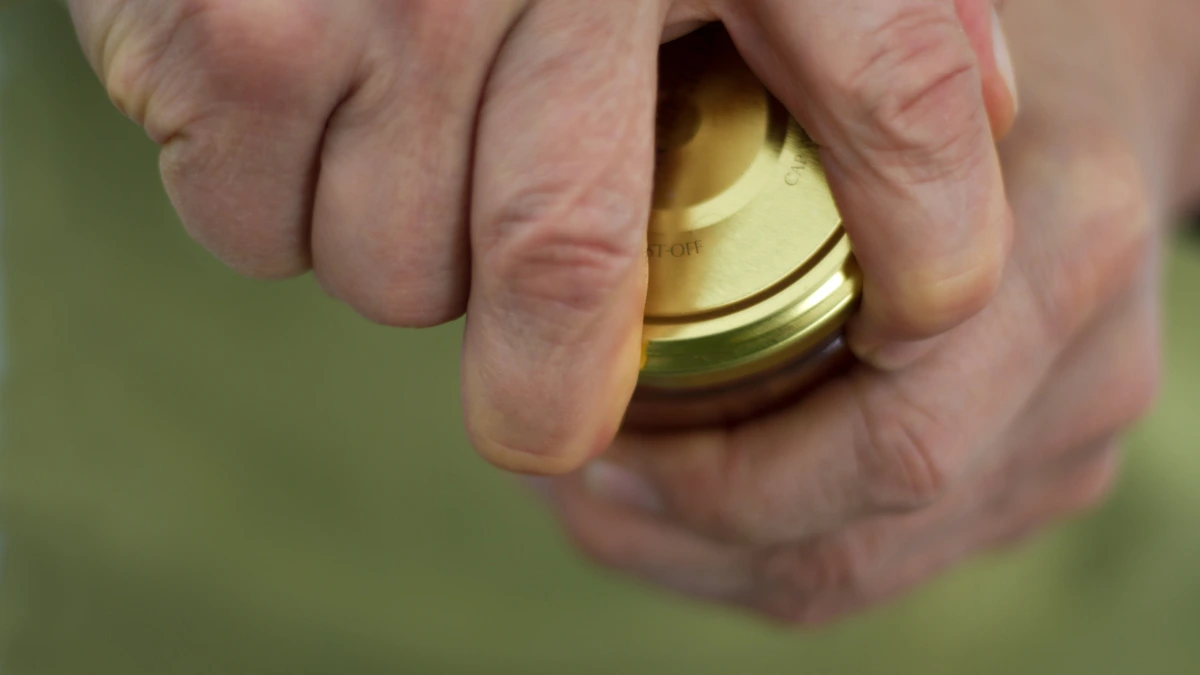
Grip strength is one of medicine’s most studied biological age markers. Researchers have followed tens of thousands of adults across decades to understand what it predicts, and the findings are consistent enough that many clinicians now include it in routine assessments of aging.
The back of your hand has almost no fat reserve, and that single fact is why it shows your biological age faster than your face ever could.
Numbers like these are hard to set aside.
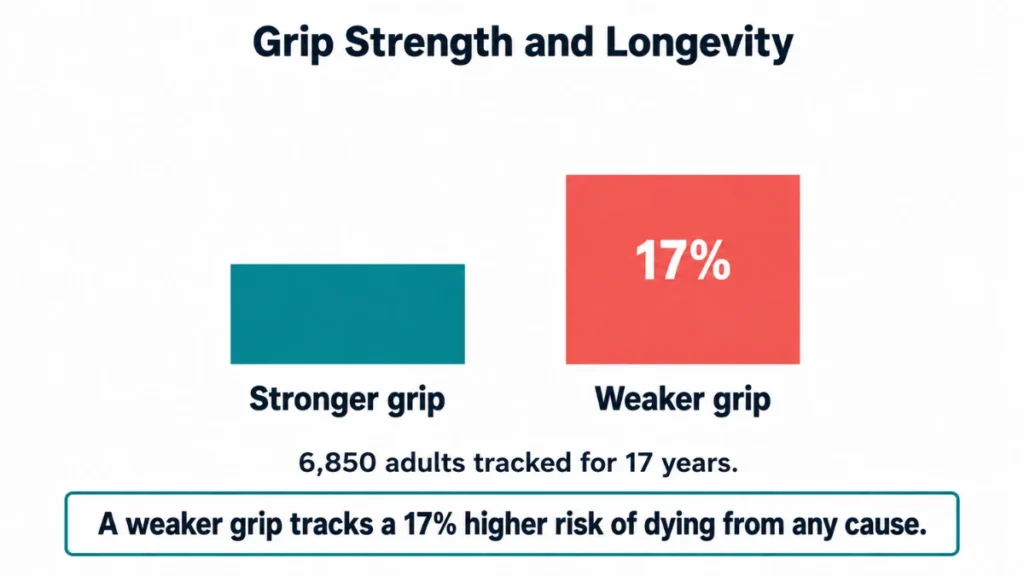
A population-based study tracked 6,850 Norwegians aged 50 to 80 for up to 17 years and recorded 2,338 deaths.²
Every one standard deviation drop in grip strength was associated with a 17 percent higher risk of dying from all causes, after accounting for age, sex, body size and other health factors.² The association held in men and women and across all age groups.
The authors concluded that grip strength may be a biomarker of aging across the lifespan.²
In practice, the strength of your squeeze is tracking something about your body that goes well beyond your hand.
Grip strength aging is trackable at home.
You do not need clinical equipment. Squeeze a tennis ball or a rolled towel as hard as you can for five seconds. Can you hold it? Does one hand feel noticeably weaker than the other?
Do the same test monthly and note any change. A consistent drop in either hand, or a growing difference between hands, is worth raising with your doctor, particularly if you are over 60.
Talk to your doctor before starting a new hand-strengthening routine if you are managing a joint condition, nerve damage, or recovering from a hand or wrist injury.
A ten-second measurement carries more information than most people expect. Grip strength does not just reflect muscle. It reflects the health of the whole system maintaining that muscle.
What Age Spots on Your Hands Are Actually Recording
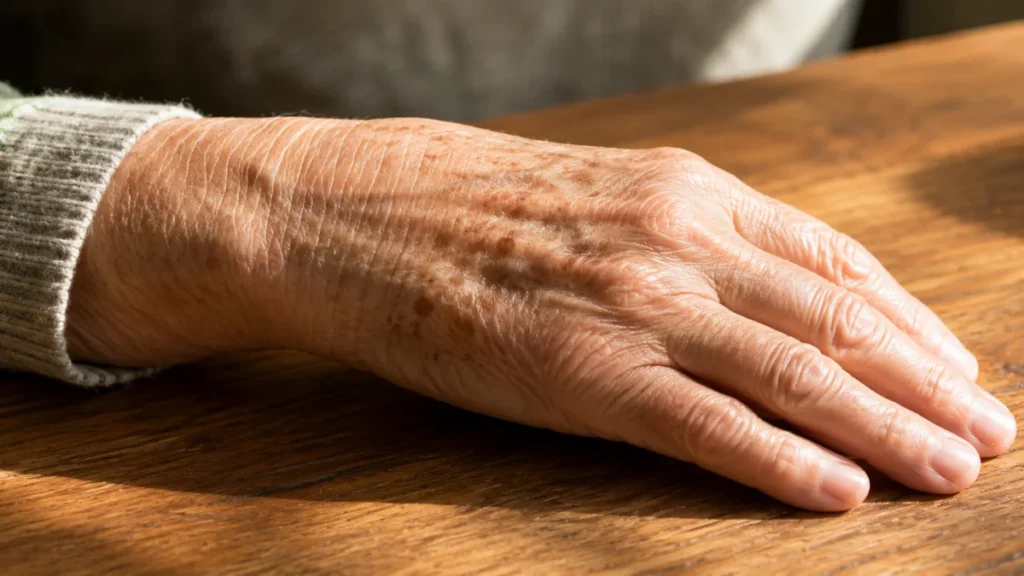
You have probably looked at the brown spots on the back of your hand and assumed they are just part of getting older. That is partly right. But each one is also a precise record of ultraviolet exposure accumulated over decades, and understanding what they are made of changes how you read them.
Age spots are not random. They form where melanocytes [pigment-producing cells in the skin] have been repeatedly triggered to overproduce melanin [the pigment that gives skin its color]. The trigger is UV radiation, and the response intensifies with age.
What changes with age is the inflammatory environment inside the skin.
A 2025 cell culture study found that keratinocytes [the main cells in the skin’s outer layer] from older donors released approximately twice as much IL-6R [interleukin-6 receptor, a signaling protein involved in inflammation] compared to younger cells after the same UVB dose.³
That elevated IL-6R appears to stimulate melanocyte activity in a way that contributes to excessive melanin buildup in age spots.³
This research was conducted in cell cultures and in five small specimens of human skin tissue, not in living patients. The authors themselves note that the full role of IL-6R in keratinocytes and melanocytes has not been fully established, and that further investigation is ongoing.³
These findings point toward a plausible mechanism, not a confirmed one.
Age spots represent cumulative UV damage, accumulating faster on skin that has been repeatedly exposed without protection. The hand, which is exposed every day regardless of weather or season, logs that damage across a lifetime.
Most people treat age spots as a cosmetic concern, something to lighten or conceal. They are also a signal that the skin’s pigment-regulation system has been chronically stressed by UV, which is the same environmental force behind the deeper structural changes addressed in the next section.
Why Your Veins and Tendons Become Visible and What That Tells You
At some point, the veins on the back of your hand went from barely visible to something you notice in photographs. You may have wondered whether that is a vascular problem, something wrong with circulation, or a sign that your blood pressure is affecting your hands.
It is not.
What you are seeing is a structural change in the surrounding tissue, not the vein itself.
A review of the literature on hand aging found that dermal atrophy, bulging reticular veins, and prominent bones and tendons are characteristic features of the aging hand.⁴ The vein has not grown. The tissue around it has thinned and pulled back.
Hand aging signs like this one follow a predictable sequence.
Collagen [the structural protein that gives skin its firmness and resilience] production slows with age. The dermis [the layer of skin beneath the outer surface that provides structure and support] thins as a result.⁴
Subcutaneous fat in the hand, already minimal, decreases further. With less padding between the skin and the structures beneath it, veins, tendons and bony prominences become easier to see.
The skin moves differently over them too: less resistance, less rebound.
This is the same fat-and-collagen decline at work in age spot formation, but expressing itself structurally rather than pigment-wise. The hand’s limited fat reserve, noted in the first section, is what makes these structural features appear sooner and more prominently there than they do on other parts of the body.
Prominent veins are one of the most commented-on hand aging signs, partly because they are so visible.
But they are worth understanding correctly: they are a consequence of volume loss, not a signal of vascular disease. If you are concerned about your circulation, check for symptoms that go beyond appearance, including swelling, pain, skin discoloration, or temperature differences between your hands.
What Your Nails Reveal About Cellular Aging
Hold your hand flat and look at your thumbnails. The white half-moon near the base, called the lunula [the visible crescent of the nail matrix, the tissue that produces new nail], may be smaller than it was in your twenties, or absent entirely.
And if you have noticed your nails growing more slowly over the years, that observation is probably correct.
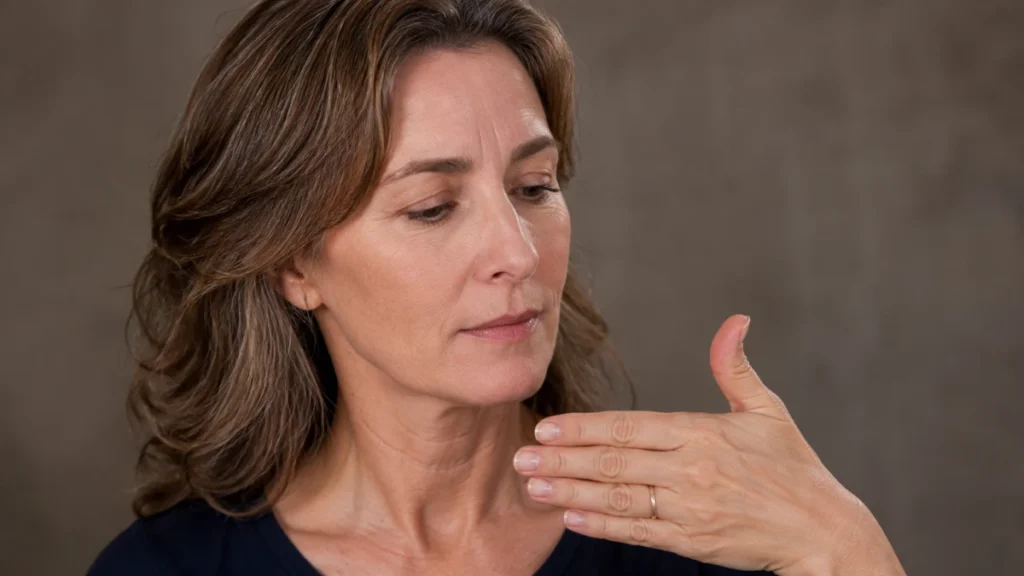
Nail growth rate is one of the most stable and measurable biological aging signals available without any equipment.
In a study of 271 human participants that also included a controlled beagle population (used in aging research because dogs age at a predictable and accelerated rate compared to humans), researchers found that the rate of linear nail growth declines by approximately 50 percent over a human lifespan.⁵
The authors described it as “both age-related and age-caused” and concluded that nail growth rate is a simple, noninvasive technique for measuring aging.⁵
A measurement available at home, simply by tracking how long a thumbnail takes to grow from base to tip, reflects the same biological deceleration that laboratory aging assessments attempt to capture at much greater cost and complexity.
Slower nail growth reflects a broader slowdown in cellular renewal. The cells that build the nail plate are produced continuously by the nail matrix, and their production rate is sensitive to metabolic function, circulation and nutritional status.
Each of those factors can shift depending on your overall health, medications you take, and conditions like thyroid disease or iron deficiency. If your nails have changed in texture, color or growth rate noticeably and recently, that is worth discussing with a doctor rather than attributing to age alone.
What You Can Do Today to Slow Visible and Biological Hand Aging
All of these changes are real, measurable and well-documented. They are also, in meaningful ways, modifiable. You cannot stop the intrinsic aging process, but extrinsic factors, particularly UV exposure, are within your control.
Both intrinsic and extrinsic processes drive the structural loss described in this article.
A narrative review of skin aging found that loss of structural stability proceeds unavoidably from both, and that falling estrogen [the hormone that helps maintain skin thickness and collagen production] levels in midlife may contribute to premature visible aging in women.⁶ Extrinsic damage, unlike hormonal change, can be meaningfully reduced.
Start with these:
- Daily SPF on the back of your hands. UV exposure drives age spot formation and collagen loss on the hand dorsum, which is exposed every day regardless of season. Applying SPF 30 or higher to the backs of your hands every morning is the highest-leverage single habit available. Most people apply sunscreen to their face and forget their hands.
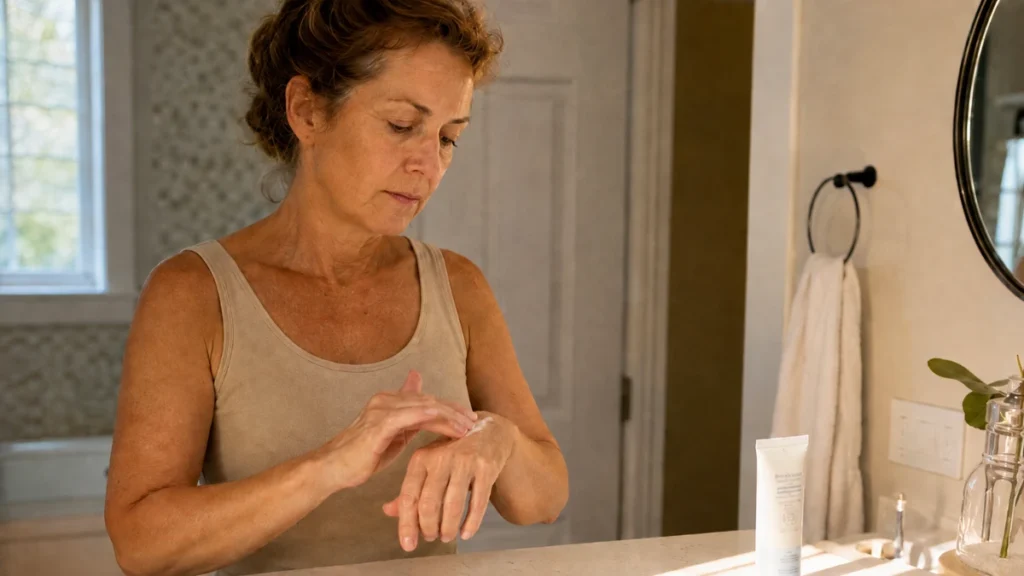
- Moisturize consistently. Thin, dry hand skin loses water easily because the oil glands on the hand dorsum are fewer than on the face. A fragrance-free moisturizer containing ceramide [a lipid that helps maintain the skin’s protective barrier] applied after washing reduces surface dryness that makes structural changes look more pronounced. This does not reverse structural aging.
- Grip strength training. Resistance exercises using a hand gripper, resistance putty, or a rolled towel maintain the muscle mass and neural coordination that grip strength reflects. Results vary depending on your starting point, frequency and any underlying joint conditions.
SPF is the only step here directly targeting the mechanism behind age spot formation. The others support function and surface health, both of which matter as the underlying biology continues.
Your hand’s biology is running whether you attend to it or not. The signals are already there.
Your Hands Have Been Talking
Your hands have been accumulating biological data your whole life: grip strength, skin elasticity, nail growth rate, UV damage. None of it was collected for you. Now you have a way to read it.
Check your grip strength monthly with a simple squeeze test, and protect your hand skin from UV every day.
The research is still being assembled. No single measurement tells the whole story, and some mechanisms remain unconfirmed in living people. But your hands have been measuring you your whole life, whether you asked them to or not.
References
- Lu W-H, Guyonnet S, Raffin J, et al. Associations of Skin Biomechanical Properties With Biological Aging Clocks and Longitudinal Changes in Intrinsic Capacity in Adults Aged 20-93: The INSPIRE-T Project. Aging Cell. 2025. https://pmc.ncbi.nlm.nih.gov/articles/PMC12507415/
- Strand BH, Cooper R, Bergland A, Jorgensen L, Schirmer H, Skirbekk V, Emaus N. The association of grip strength from midlife onwards with all-cause and cause-specific mortality over 17 years of follow-up in the Tromso Study. J Epidemiol Community Health. 2016. https://doi.org/10.1136/jech-2015-206776
- Inoue D, Ohba K, Shibata T. UVB-/Age-Dependent Upregulation of Inflammatory Factor Interleukin-6 Receptor (IL-6R) in Keratinocytes Stimulates Melanocyte Dendricity. Int J Mol Sci. 2025. https://pmc.ncbi.nlm.nih.gov/articles/PMC12652391/
- Hoang D, Orgel MI, Kulber DA. Hand Rejuvenation: A Comprehensive Review of Fat Grafting. J Hand Surg Am. 2016. https://pubmed.ncbi.nlm.nih.gov/27113709/
- Orentreich N, Markofsky J, Vogelman JH. The effect of aging on the rate of linear nail growth. J Invest Dermatol. 1979. https://www.jidonline.org/article/S0022-202X(15)45557-5/fulltext
- Farage MA, Miller KW, Elsner P, Maibach HI. Characteristics of the Aging Skin. Adv Wound Care (New Rochelle). 2013. https://pubmed.ncbi.nlm.nih.gov/24527317/