Every 11 seconds, an older adult lands in the emergency room because of a fall. That’s not a small problem. That’s a crisis quietly happening in living rooms, driveways, and grocery stores across the country. If you’re over 50, you may have already noticed it. A small wobble getting out of the car. A moment of uncertainty on the stairs.
That split-second feeling that your body didn’t quite keep up. The good news? Balance is trainable. Two practices, Tai Chi and Yoga, have real research behind them. Both help. But they work differently. And one has stronger evidence for preventing falls specifically.
Breaks down exactly what each practice does, what the science says, and which one makes more sense for your situation. No hype. Just clear facts you can act on this week.
Why Balance Gets Worse After 50 (And Why You Should Care Now)?
Here’s something most people don’t know. Balance problems aren’t caused by clumsiness. They’re caused by something called proprioception, your body’s internal GPS that tells you where your feet are, how you’re leaning, and when to correct. After 50, that system quietly weakens. At the same time, you lose 3,8% of muscle mass per decade.
Less muscle means slower reaction time. Slower reaction time means a stumble becomes a fall. The CDC reports that falls cause over 36 million injuries per year in U.S. adults over 65. Falls are the leading cause of injury-related death in that age group. And here’s what makes it worse: many people who fall start moving less out of fear. Moving less makes their balance even worse.
It’s a cycle that’s hard to break. But the research is detailed on one thing. Balance responds to training at any age. You don’t need to accept decline as permanent. The right movement practice can measurably reverse it often within 8 weeks.
What Is Tai Chi — And Why Does It Work So Well for Balance?
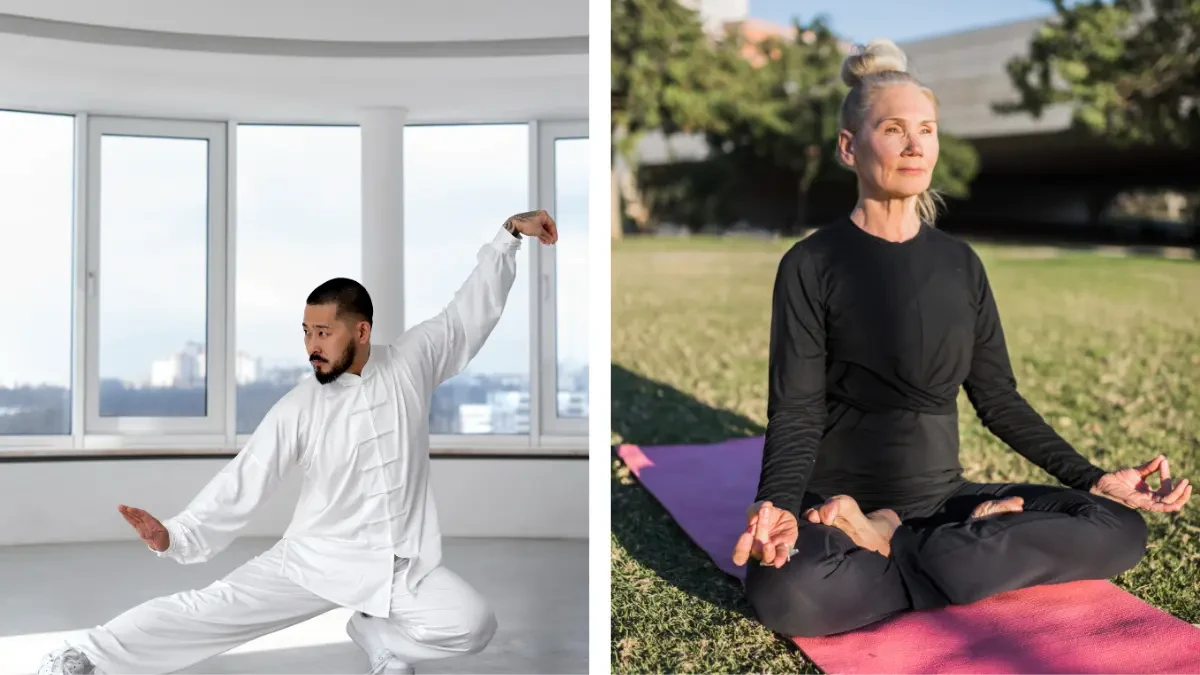
Tai Chi is often called meditation in motion. That’s a good description. It uses slow, flowing movements done in sequence. You shift your weight from foot to foot. You move your arms in wide, controlled arcs. Nothing is rushed. Nothing is forced. That slowness is the secret. When you move slowly, your nervous system has time to learn.
It figures out how to distribute weight correctly. It practices catching itself before a stumble turns into a fall. That’s exactly what proprioception training looks like. Multiple studies published in peer-reviewed journals show Tai Chi reduces fall risk by 20,45% in older adults.
A 2023 study in PMC/NIH found that Tai Chi significantly reduces both fall incidents and the fear of falling in adults living independently. It’s also low-impact. No jumping. No heavy equipment.
No risk of joint strain. The most beginner-friendly style is called Yang, slow, gentle, and widely taught. Most people see real balance improvement within 8,12 weeks of practicing two to three times per week.
What Is Yoga — And What Does It Actually Do for Your Balance?
Yoga is different from Tai Chi. Instead of flowing movement, Yoga focuses on holding specific poses called asanas. You might hold a standing pose for 20,30 seconds. You engage your leg muscles to stay stable. You breathe through the challenge. That builds something important: static balance and leg strength. Both protect you from falls. Strong legs catch you when you stumble.
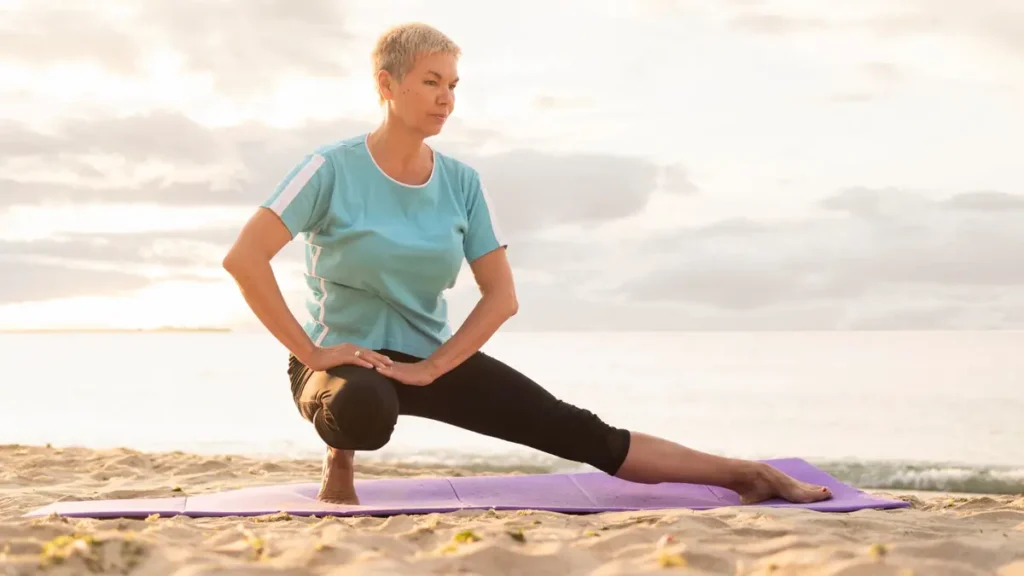
Good static balance keeps you steady when you stand still at a bus stop, in a checkout line, or in the shower.
Research published in open-access journals shows Yoga significantly improves bone density and stability in older adults. Other studies show it performs as well as traditional balance exercise programs in clinical trials.
Yoga also reduces pain. Arthritis, lower back stiffness, and tight hips. Yoga addresses all of these. That matters because pain is one of the biggest reasons people stop moving. When movement hurts less, people do more of it.
The most accessible styles for beginners over 50 are Hatha Yoga, Chair Yoga, and Iyengar Yoga, which uses props like blocks and straps to make poses safe.
Tai Chi vs. Yoga: A Clear Side-by-Side Comparison
Both practices work. But they don’t work the same way. Here’s how they stack up across the factors that matter most for fall prevention.
| What You’re Measuring | Tai Chi | Yoga |
|---|---|---|
| Dynamic balance (moving) | Excellent | Good |
| Static balance (standing still) | Very Good | Excellent |
| Fall prevention evidence | Very Strong | Strong |
| Leg strength | Good | Very Good |
| Flexibility | Moderate | Excellent |
| Fear of falling | Excellent | Moderate |
| Joint stress | Very Low | Low to Moderate |
| Beginner accessibility | Excellent | Very Good |
The key difference is this. Tai Chi trains dynamic balance while moving. Walking, turning, reaching. That’s when most falls happen. Yoga trains static balance and strength, staying stable when still.
Most falls don’t happen standing still. They happen mid-step. That’s why Tai Chi has a stronger evidence base specifically for fall prevention. But Yoga adds strength and flexibility that Tai Chi alone doesn’t fully cover.
Which One Should You Choose? Here’s How to Decide
This isn’t a one-size-fits-all answer. Your situation matters. Here’s a simple way to think about it.

Choose Tai Chi if:
- You’ve already had a fall or near-fall
- You feel nervous about moving in public or on uneven ground
- You want to improve your walking stability
- You prefer calm, meditative movement over active exercise
Choose Yoga if:
- You have significant joint stiffness or tight muscles
- You want to build leg strength alongside balance
- You have arthritis or lower back pain that limits movement
- You enjoy structure and like holding positions
Consider doing both if you can. Some research supports combining practices for broader benefits. Even one Tai Chi session and one Yoga session per week gives you coverage across both types of balance training.
If you’re not sure where to start, start with Tai Chi. The fall prevention evidence is simply stronger, and it’s easier on your body from day one.
Where to Find Beginner Classes Right Now (Free and Paid Options)
You don’t need a gym or an expensive program to start. Solid options exist at every budget level in 2026.
Free on YouTube:
- Search Tai Chi for seniors beginners. Dr. Paul Lam’s Tai Chi for Health Institute has medically backed beginner videos
- Search Chair yoga for seniors. Yoga with Adriene has senior-specific beginner sessions
- Both channels are free and updated regularly

In-person options:
- YMCA senior programs widely available and affordable
- Local senior centers often offer free Tai Chi and Yoga classes
- Community recreation centers check for dedicated 50+ fitness programs
Covered by insurance:
- Many Medicare Advantage plans cover SilverSneakers membership in 2026. SilverSneakers includes both Tai Chi and Yoga classes, in-person and online. Check your plan at silversneakers.com.
One trusted program: Dr. Paul Lam’s Tai Chi for Falls Prevention was designed specifically with medical input for older adults. It’s widely recommended by physical therapists.
What to Expect in Your First 8 Weeks?
Starting feels awkward. That’s normal and temporary. Here’s what a realistic first 8 weeks looks like.
Conclusion
Both Tai Chi and Yoga reduce fall risk after 50. Tai Chi has stronger evidence for dynamic balance and fall prevention. Yoga adds strength and flexibility. If you’re unsure, start with Tai Chi. Search for beginner Tai Chi for seniors on YouTube today. Two sessions a week are enough to start seeing results within 8 weeks.
⚠️MEDICAL DISCLAIMER
This article is for informational purposes only. It does not replace medical advice, diagnosis, or treatment. The information covers fall prevention, proprioception, muscle mass loss, Tai Chi, Yoga, dynamic balance, static balance, leg strength, bone density, flexibility, arthritis, joint stiffness, and physical therapy standards for balance testing. Individual results vary based on age, health status, and fitness level.
Before changing your exercise routine, diet, or supplement use, talk to your doctor or a qualified health professional first. If you experience chest pain, dizziness, severe joint pain, or any sudden symptom during or after exercise, stop immediately and seek medical care.