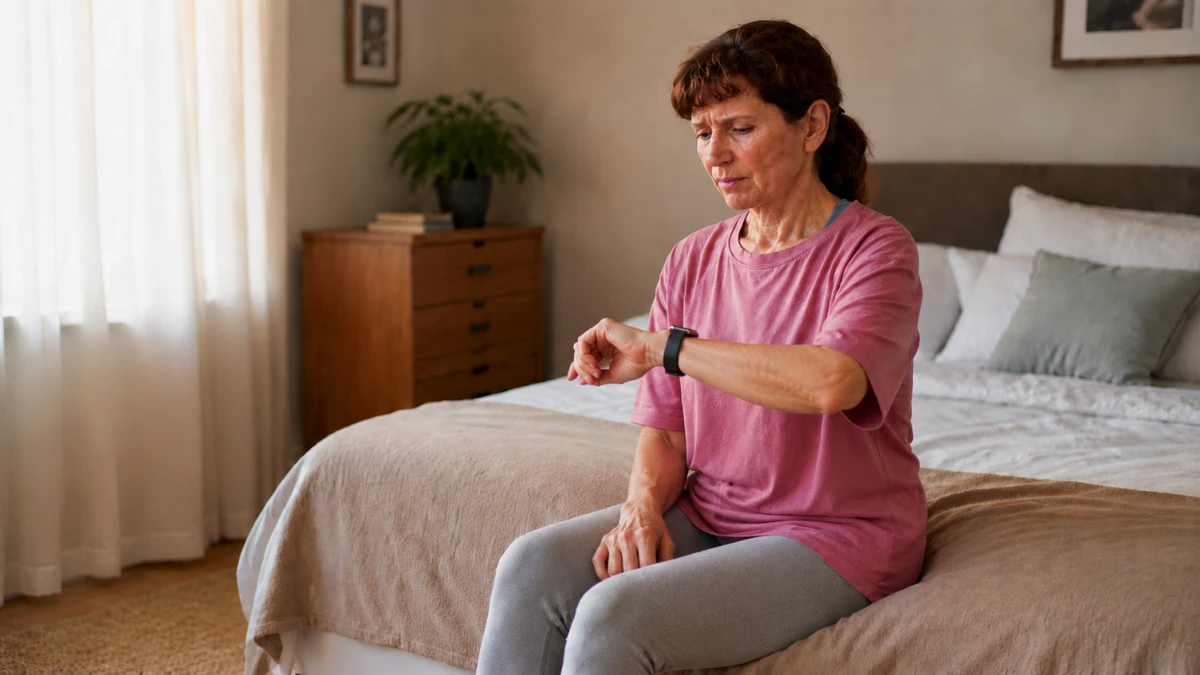
You wake up and reach for your phone before your feet hit the floor. The number is 71. Fair. But you feel fine: steady, clear, ready. So which one is right: the number or you?
This is the problem your sleep tracker cannot tell you about itself. The score on your screen was not built from your brain activity. It was built from your wrist movement and heart rate, then run through an algorithm that makes its best guess at what happened while you slept.
For adults over 50, understanding what sleep score accuracy actually means, and what it does not mean, changes how you read that number every morning.
Why this article matters:
- What your tracker physically reads (it is not your brain)
- Why even the highest-rated devices are essentially estimating
- Why the gap between score and reality is wider after 50
- What the number misses entirely
- What to track instead
What your tracker actually reads while you sleep
You probably assume your sleep score reflects what your brain was doing all night. It does not. Your tracker never touches your brain. It reads your wrist.
Every consumer sleep tracker on the market uses two primary inputs: movement and heart rate. A small accelerometer detects whether your arm is still or shifting.¹
A light sensor on the back of the device shines into your skin and measures how fast your blood is pulsing. From those two data streams, an algorithm estimates which sleep stage you were in at any given moment.¹
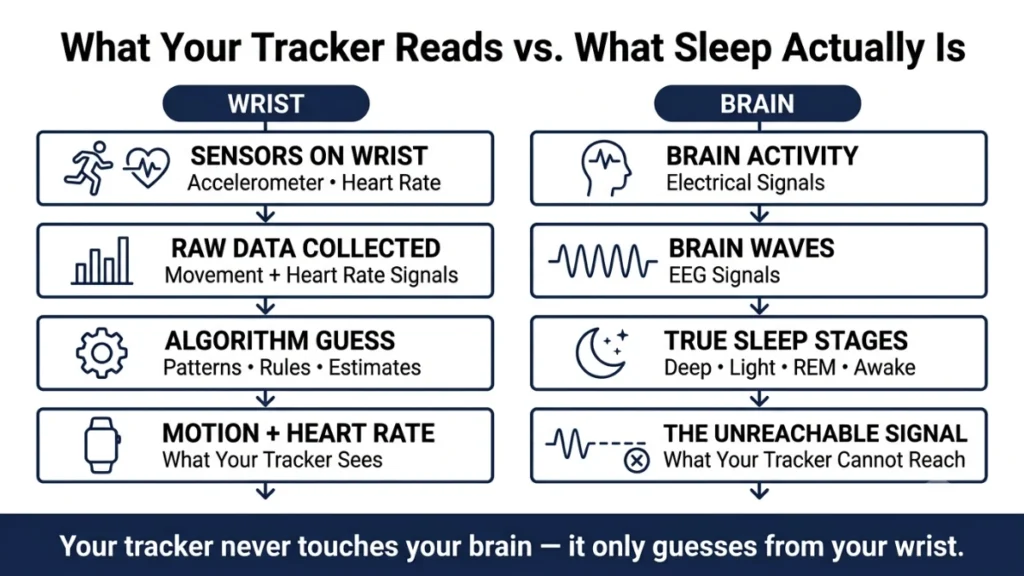
Movement and heart rate are indirect signals. A still wrist with a slow, regular heartbeat looks like deep sleep. A still wrist with a faster, more variable heartbeat looks like REM.¹
The same signals can appear for different reasons. Lying awake and calm produces readings that can resemble light sleep.
Sleep science defines sleep stages using brain waves. An EEG [a device that records the brain’s electrical patterns through sensors on the scalp] captures patterns that are distinct for each stage. Deep sleep shows slow, synchronized waves. REM shows rapid, low-amplitude activity similar to wakefulness.
Your tracker cannot read any of this. It can only infer what your brain was doing from what your wrist was doing, and that inference has a ceiling.
Sleep versus wake detection is where trackers perform best.
Across three major consumer devices tested against clinical-grade polysomnography, all showed sensitivity at or above 95% for identifying whether a person was asleep or awake.²
The gap opens up when the question becomes which kind of sleep.
Why a confident number can still be an educated guess
Checking your sleep score feels like reading a result. The number is specific. It has a label: “Good,” “Fair,” “Poor.” That specificity is designed to feel authoritative.
What it hides is that every number you see is the output of an algorithm making inferences from signals that only partially reflect what sleep actually is.
How sleep trackers work at the algorithm level matters here. These devices are trained on datasets where participants wore both a consumer device and clinical EEG sensors simultaneously.
From that training data, the algorithm learns what the wrist signal looks like when the clinical sensors show deep sleep, then applies that pattern-match to your nights at home.
The problem is those training datasets were built predominantly from young, healthy adults studied in controlled lab conditions for one night. That is not who most people over 50 are, and it is not how most people sleep.¹¹
No single study tests the full chain from wrist signal to sleep stage to health outcome. The case for tracker limitations is assembled from separate pieces of evidence, each measuring a different part of the picture.
Stage accuracy is where the gap becomes measurable. When researchers compared five consumer trackers against clinical polysomnography, accuracy for total sleep time was reasonable for most of the devices tested.³
Stage-level accuracy was a different picture. Distinguishing light sleep from deep sleep was especially difficult, and the bias in deep sleep estimates varied widely across individuals and devices.
A 2024 study found poor concordance between consumer devices and clinical measurements for both deep and REM sleep, with agreement scores in those stages ranging from 0.13 to 0.37 on a scale where 1.0 is perfect.² A score of 0.13 is essentially random agreement.
In that same study, Apple Watch underestimated deep sleep by an average of 43 minutes per night, and Fitbit underestimated it by 15 minutes.² Even the best-performing device showed only poor concordance for these two stages.
A 43-minute error is not a rounding difference. It is an entirely missing block of the night.
The number on your screen looks like a measurement. It is a model’s best estimate, and that model was not built for your age, your physiology, or your bedroom.
The accuracy gap gets wider after 50
Your sleep changes as you age, and so does the gap between what a tracker sees and what is actually happening in your brain. These two shifts are related, and understanding one explains the other.
After 50, sleep architecture changes in ways that matter to tracker accuracy. You move through sleep stages differently than you did at 35. Deep sleep shortens and becomes lighter.⁴
The transitions between stages happen more often and sometimes last only seconds. A device reading wrist movement and heart rate has a harder time classifying these brief, fragmented shifts.
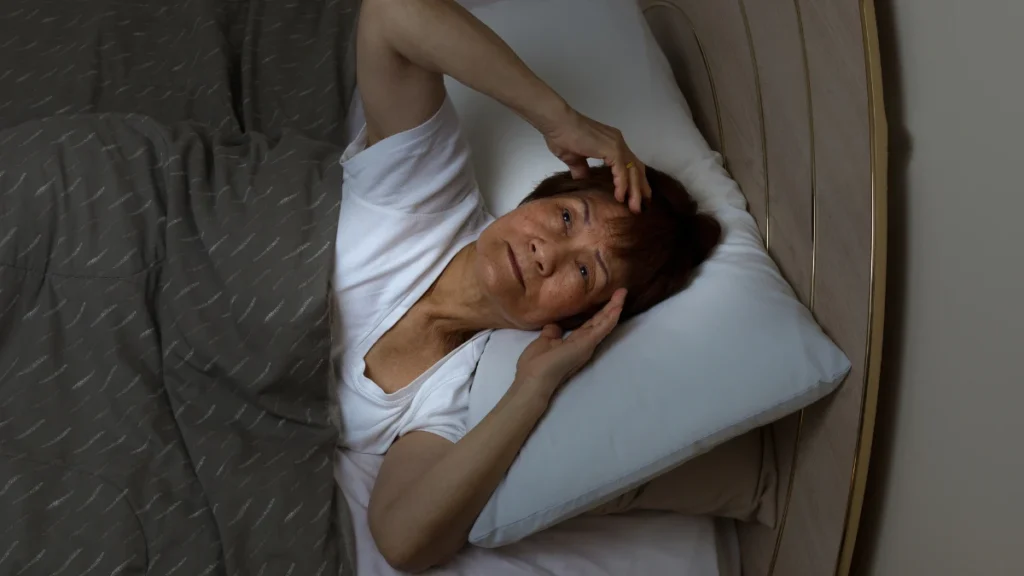
Sleep tracking accuracy in older adults is a field that has received far less research attention than it deserves, given how many people over 50 use these devices. The studies that do exist point consistently in the same direction.
A 2026 study in SLEEP Advances that tested consumer wearables in both healthy young and older adults found that in the older adult group, devices underestimated total sleep time by up to 75 minutes per night compared to clinical polysomnography.⁵
Limits of agreement (the statistical measure of how widely estimates could vary from the true value) were significantly wider in older adults than in younger ones. The accuracy problem does not just persist with age; it compounds.
The score is a confident-looking number built on an inference, and the gap between that inference and your brain’s actual overnight biology is widest in adults over 50, precisely when accurate sleep data would matter most.
A separate 2025 validation study that used six consumer wearables against clinical-grade sleep testing found that all devices could detect whether someone was asleep with accuracy above 90%, but stage classification produced only fair to moderate agreement at best.⁶
Deep sleep and light sleep were the most difficult to distinguish. The error was not random noise. It was systematic, meaning devices consistently misclassified in the same direction.
What no sleep score can see at all
Your tracker gives you a number. What it cannot give you is everything that actually determines whether you wake up rested.
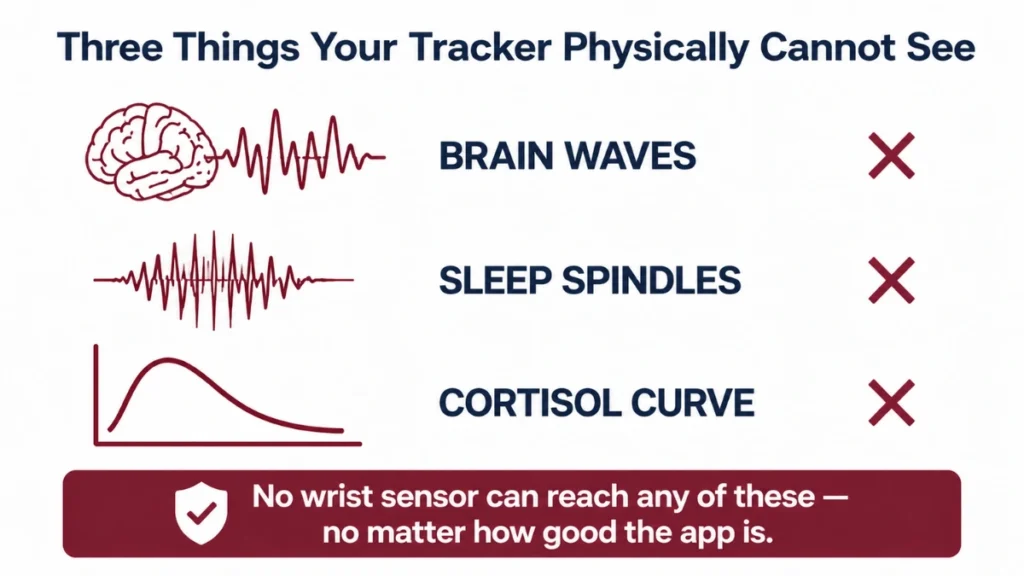
No consumer sleep tracker measures brain-wave patterns directly. That means no tracker can detect slow-wave activity [the deep electrical oscillations in the brain that signal genuine physical and neurological repair during sleep].
It cannot measure sleep spindles [brief bursts of brain activity during light sleep involved in memory consolidation]. It cannot detect whether your body’s natural cortisol curve tracked correctly through the night, which is one of the clearest markers of how well your sleep restored you.
These are not technical gaps waiting to be closed. They are physical limitations built into the method. A wrist sensor reading light and motion cannot capture electrical activity measured in microvolts happening inside your skull.
There is a second category of limitation that gets less attention: the algorithms themselves are proprietary. Neither Fitbit, nor Oura, nor Apple publicly discloses the full weighting system that converts raw sensor data into a score.⁷
That means you cannot independently verify what your number measures, and manufacturers can change their scoring formula without notice. If your score shifts from one month to the next, there is no way to know whether your sleep changed or the algorithm did.
Sleep score accuracy is not primarily a question of sensor quality. It is a question of what the number was ever designed to measure.
It was designed to engage you with an app. Whether it describes your brain’s overnight biology is a different question, and the answer is: incompletely, especially after 50.
Orthosomnia [an unhealthy preoccupation with achieving a perfect sleep score that itself disrupts sleep] is the most visible consequence of mistaking the score for the thing.
A 2017 paper in the Journal of Clinical Sleep Medicine first described patients who refused clinical reassurance because their tracker said otherwise.⁷
A 2024 cross-sectional study of 523 adults found that between 3% and 14% of regular tracker users showed signs of orthosomnia, depending on how strictly the criteria were applied.⁸
The signal your body sends that no algorithm captures
Before you looked at your score this morning, you already had data. Your body had been running its own assessment since the moment you woke up.
How do you feel right now? Not what the app says. Not what a number suggests. What is your actual energy like at 10 in the morning?
Can you hold a thought without it slipping? Does your body feel like it belongs to you, or does it feel borrowed and slow?
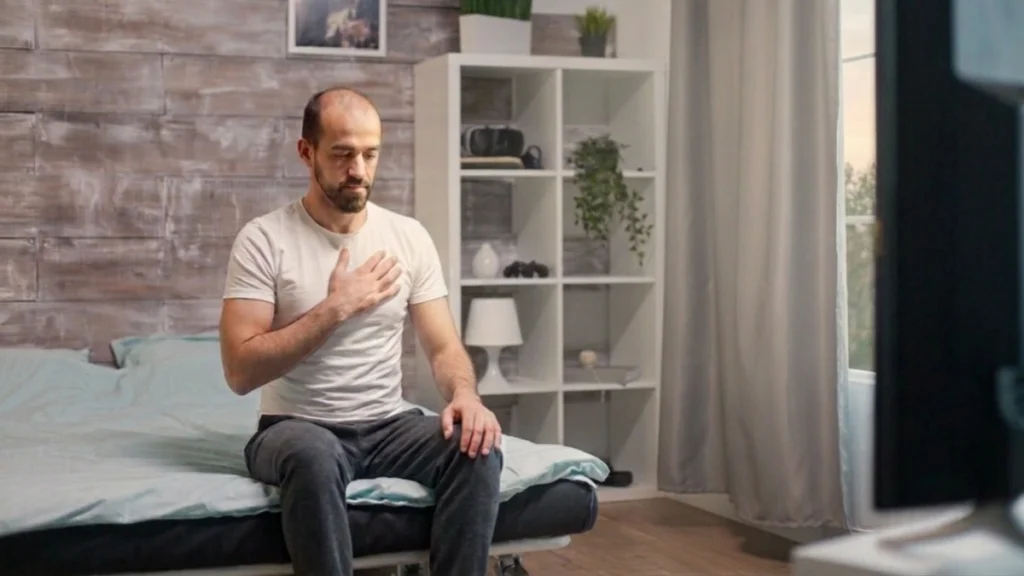
These questions are not soft substitutes for real data. In older adults, subjective sleep quality and daytime alertness are associated with global cognitive function, while objective sleep parameters showed links with episodic memory specifically.⁹
Subjective experience and objective measurement are not capturing the same thing. For overall brain function, how you feel turns out to be the more direct signal.⁹
The AASM identifies improving daytime function as one of the two primary outcomes of successful sleep care, alongside sleep quality itself.¹⁰ Daytime function is what sleep is actually for.
A number on a screen that does not correspond with how you function during the day is measuring something, just not the thing you care about most.
This is the article’s plain position: if you consistently feel alert, focused, and recovered after sleep, your sleep is doing its job, regardless of your score.
If you consistently feel foggy, heavy, and slow despite a high score, something in your sleep is not working and no tracker is telling you that accurately.
Here is a practical self-assessment to run alongside your tracker data. Use it every morning before you open your app:
Morning Self-Assessment
- Energy: do you feel ready for a normal day without needing extra caffeine in the first hour?
- Clarity: can you recall what you were thinking about when you fell asleep?
- Body: does anything feel unusually heavy or stiff?
- Mood baseline: is your default feeling neutral to calm, or irritable before anything has happened?
- Optional: rate how rested you feel, 1 to 10, and track it alongside your sleep score for two weeks.
After two weeks, compare your morning self-ratings against your sleep scores. Most people find their self-assessment predicts their actual day better than any number their tracker produced.
How to use your tracker data without letting it manage you
Your tracker is not the enemy. The problem is not that the data exists but what most people do with it: they let a single morning number set the emotional tone for the whole day.
Trends beat snapshots. One night’s score tells you almost nothing useful. A pattern across three to four weeks tells you something real: whether your sleep is shifting earlier or later, whether certain nights consistently produce lower scores.
Whether your restoration metric drops after alcohol or a late workout: that is the kind of information a tracker can reliably provide.
Track patterns, not points. Look at rolling weekly averages rather than today’s number. A score of 68 on a Tuesday means nothing by itself. A consistent drop from 79 to 68 across two weeks means something you should pay attention to.
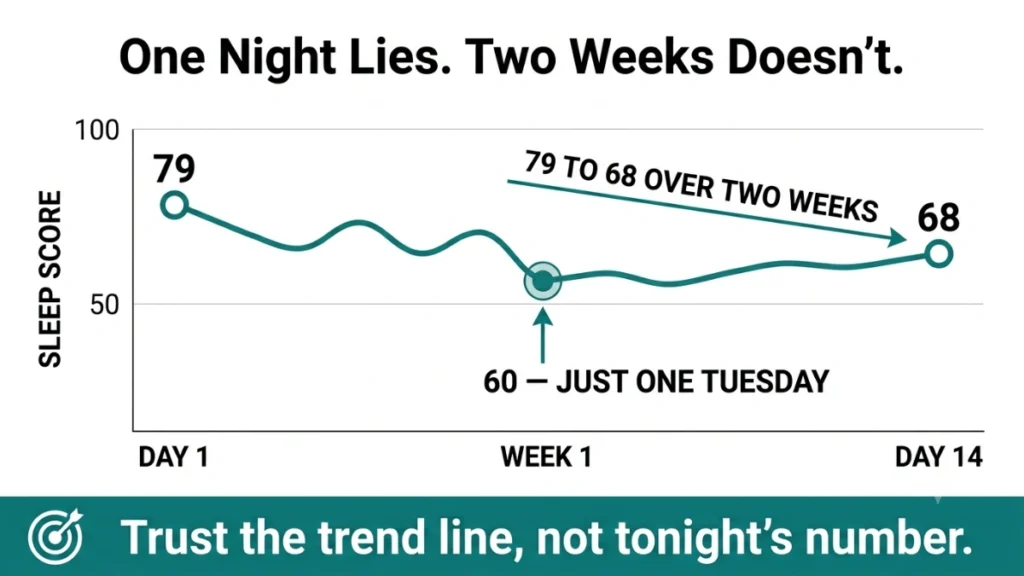
Use the score to notice correlations, not to grade yourself. If your score drops every time you exercise after 8 pm, that is actionable. If it drops and you cannot identify any behavioral cause, that is the tracker’s estimation error doing its work, not your sleep doing anything wrong.
Stop checking your score first thing in the morning. Your self-assessment comes before the app.
When you check the score first, you hand that number the authority to tell you how you feel before you have had a chance to find out yourself. That is the mechanism behind orthosomnia, and it is easy to reverse.
The AASM sleep diary (freely available at aasm.org) gives you a structured way to record your subjective sleep quality alongside your tracker data, at no cost and without an algorithm.
Running both in parallel for a month gives you something no single device can: a picture of how well the number reflects your actual experience.
A sleep tracker is a tool for noticing patterns over time. It is not a diagnosis, not a report card, and not more reliable than your own body’s signals. Use it accordingly.
What Your Score Cannot Replace
Your sleep score is a real measurement of indirect signals, not a direct reading of your brain. Understanding that gap does not make the number useless. It makes it useful in the right way.
This week, when you wake up, write down how rested you feel before you look at your score. Then compare the two for seven days straight.
What you find will vary. Some people discover close alignment. Others find the two tell entirely different stories. Either way, that gap is the most honest thing your tracker has ever shown you.
⚠️DISCLAIMER
This article is for informational purposes only and does not constitute medical advice. If you are experiencing persistent sleep problems, unusual fatigue, or symptoms that concern you, speak with your doctor or a board-certified sleep specialist. Consumer sleep trackers are not medical devices and are not designed to diagnose sleep disorders.
References
- Haghayegh S, Khoshnevis S, Smolensky MH, Diller KR, Castriotta RJ. Deep Neural Network Sleep Scoring Using Combined Motion and Heart Rate Variability Data. Sensors. 2021. https://www.ncbi.nlm.nih.gov/pmc/articles/PMC7793092/
- Robbins R, Weaver MD, Sullivan JP, Quan SF, Gilmore K, Shaw S, Benz A, Qadri S, Barger LK, Czeisler CA, Duffy JF. Accuracy of Three Commercial Wearable Devices for Sleep Tracking in Healthy Adults. Sensors. 2024. https://www.mdpi.com/1424-8220/24/20/6532
- Kainec KA, Caccavaro J, Barnes M, Mohapatra A, Carl J, Spencer RMC. Evaluating accuracy in five consumer sleep-tracking devices compared to polysomnography. Sensors. 2024. https://www.mdpi.com/1424-8220/24/2/635
- Mander BA, Winer JR, Walker MP. Sleep and human aging. Neuron. 2017. https://pubmed.ncbi.nlm.nih.gov/28384471/
- Searles ME, Licata A, Cucinotta M, Kainec K, Spencer RMC. Performance evaluation of consumer sleep-tracking wearables and nearables in healthy young and older adults. SLEEP Advances. 2026. https://academic.oup.com/sleepadvances/article/7/1/zpag006/8422777
- Schyvens AM, Peters B, Van Oost NC, Aerts JM, Masci F, Neven A, Dirix H, Wets G, Ross V, Verbraecken J. A performance validation of six commercial wrist-worn wearable sleep-tracking devices for sleep stage scoring compared to polysomnography. SLEEP Advances. 2025. https://academic.oup.com/sleepadvances/article/6/2/zpaf021/8090472
- Baron KG, Abbott S, Jao N, Manalo N, Mullen R. Orthosomnia: are some patients taking the quantified self too far? Journal of Clinical Sleep Medicine. 2017. https://pmc.ncbi.nlm.nih.gov/articles/PMC5263088/
- Jahrami H, Trabelsi K, Husain W, Ammar A, BaHammam AS, Pandi-Perumal SR, Saif Z, Vitiello MV. Prevalence of Orthosomnia in a General Population Sample: A Cross-Sectional Study. Brain Sciences. 2024. https://pmc.ncbi.nlm.nih.gov/articles/PMC11592250/
- Lin GJ, Xu JJ, Peng XR, Yu J. Subjective sleep more predictive of global cognitive function than objective sleep in older adults: A specification curve analysis. Sleep Medicine. 2024. https://pubmed.ncbi.nlm.nih.gov/38678759/
- Edinger JD, Buysse DJ, Deriy L, Germain A, Lewin DS, Ong JC, Morgenthaler TI. Quality measures for the care of patients with insomnia. Journal of Clinical Sleep Medicine. 2015. https://pmc.ncbi.nlm.nih.gov/articles/PMC4346653/
- Panesar D, Vichare A, Goncalves J, Stremler R. Comparison and validation of actigraphy algorithms using a large community dataset. JMIR Formative Research. 2025;9:e70778. https://preprints.jmir.org/preprint/70778/accepted