Your knees ache after dinner. Your fingers are stiff when you wake up. You have already cut back on sugar, you drink more water, and you swapped red meat for chicken months ago. The joint pain is still there.
Cooking method matters more than most people realize: how food is prepared changes its chemistry before it ever reaches the plate.
For adults over 50 dealing with joint inflammation, pain, or stiffness, the cooking method is a lever most people never think to pull.
This article examines five everyday cooking methods that may worsen joint inflammation, and what to use instead. The problem is not always what is on your plate. Often, it is what happened to it before it got there.
Why Read This
- Find out why broiling your dinner may produce nearly three times the inflammatory compounds as a different method using the same cut of meat.
- Discover which cooking method most people consider healthy that generates the same joint-damaging compounds as deep-frying.
- Learn what a simple marinade ingredient can do to reduce those compounds before heat touches your food.
- Find out which part of your cooking routine raises your joint-inflammation risk that no standard dietary advice addresses.
This article is for informational purposes only and does not constitute medical advice. The information presented is based on available research and is not intended to diagnose, treat, or replace guidance from a qualified healthcare professional. Always consult your doctor before making changes to your diet or cooking habits, especially if you are managing a medical condition.
Why Deep-Frying Does More to Your Joints Than the Calories Suggest
You already know fried food is not great for you. What most people do not know is the specific reason it may be making their joints worse.
It has nothing to do with the calories.
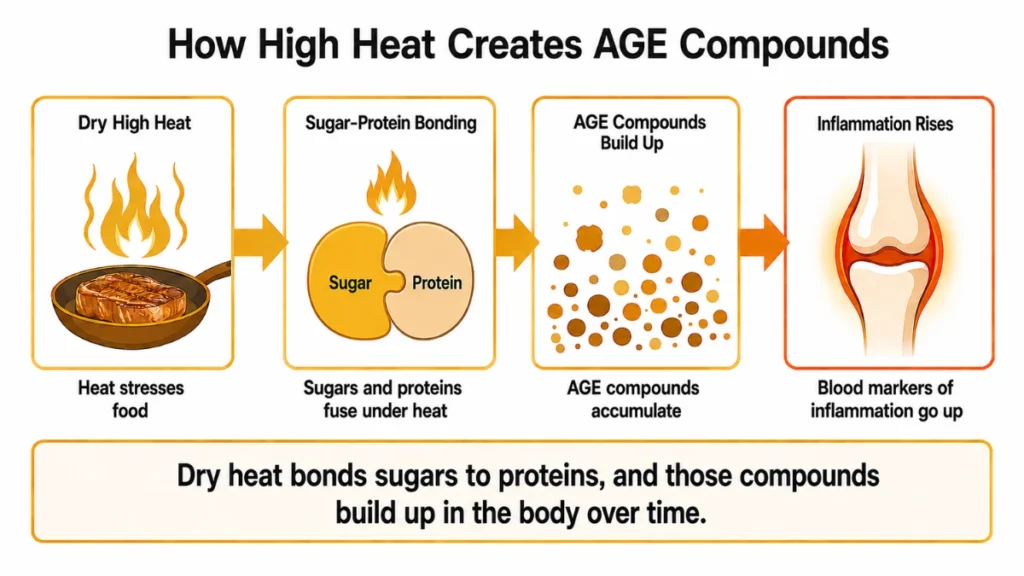
When food is cooked using dry high heat, a chemical reaction occurs between proteins, fats, and sugars in the food. That reaction produces advanced glycation end products [compounds that form when heat bonds sugars to proteins or fats, often abbreviated AGEs]. Research shows that dry heat promotes AGE formation in food by more than 10-fold to 100-fold above the uncooked state, across food categories.¹ Deep-frying combines high temperature, dry heat, and fat at once, which puts it firmly inside that range.
It is not just the food that determines how much inflammatory load you take in. It is the cooking method applied to that food.
A chicken breast poached in water is a different biological product from a chicken breast dropped into a fryer, even before you account for the oil itself. The cooking step transforms the food’s chemistry.
AGEs accumulate in the body over time. When that load grows high enough, it is associated with increased oxidative stress and inflammation.¹
For anyone over 50 managing stiffness or aching joints, that accumulation matters. The joints are already under pressure from age-related changes; adding a steady dietary source of compounds linked to inflammation is adding fuel to an existing fire.
One thing should be clear before you go further: no study cited here measured joint pain or stiffness. What they measured is how much of these compounds cooking creates, and how blood markers of general inflammation move with intake.
Whether that reaches your joints is the step the research has not taken.

You may have been told that switching to grilled or baked versions of your favorite fried foods solves the problem. That swap helps in some ways.
But for joint inflammation specifically, dry heat at high temperature is the common thread, and grilling and baking carry it too, as the following sections show.
If you are regularly deep-frying at home, or eating fried food several times a week, that habit is worth examining before focusing on which specific foods are on the plate.
Broiling Looks Safer Than Frying but the Numbers Tell a Different Story
Broiling feels like the responsible choice. You slide the rack under the heat, no oil pooling in a pan, no deep-fat smell filling the kitchen. It feels clean.
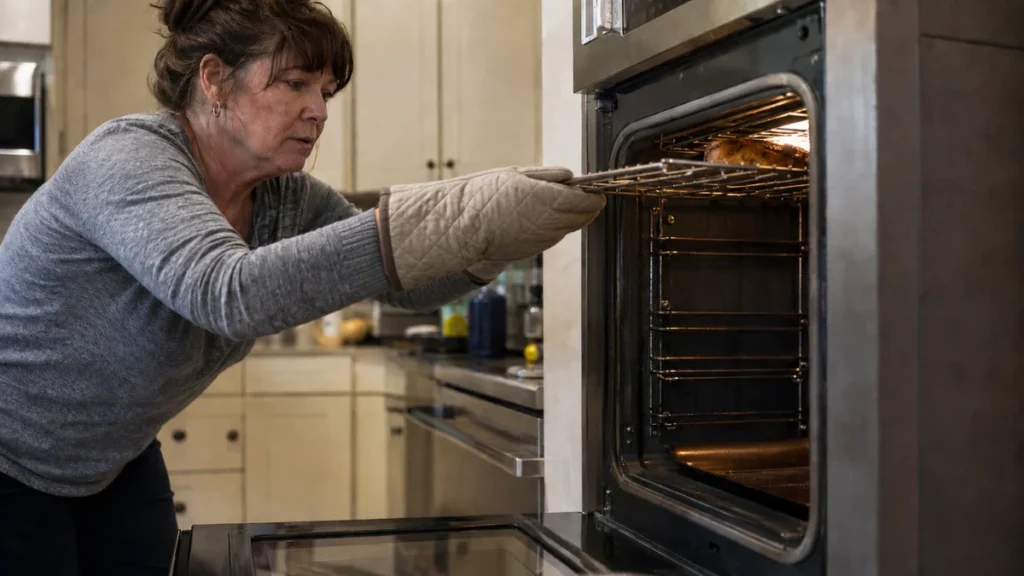
The same chicken breast becomes a different inflammatory load depending entirely on whether it met boiling water or a broiling rack.
Among all tested cooking methods, broiling ranks at the top of the AGE formation scale. A comprehensive review of experimental studies on how cooking methods affect AGE formation found that broiling at 225 degrees Celsius produced the highest levels of AGEs.²
Measured directly from beef steak, broiling produced 7,479 units of the AGE marker carboxymethyllysine [a specific type of AGE compound measured in food samples] per 100 grams.² The same steak cooked in a microwave for six minutes measured 2,687 units per 100 grams.²
That is broiling producing nearly three times the measurable AGE load compared to microwaving the same cut of meat.
Broiling is not safer than frying. It is simply a different version of the same problem.
These figures come from food analysis studies using semi-quantitative measurement methods, and the researchers themselves note that no single standardized way of measuring AGE content in food yet exists across laboratories.
That means the precise numbers may shift with different measurement approaches, while the directional finding holds: dry heat at high temperature consistently generates far more of these compounds than moist or lower-heat methods.²
Without water in the cooking environment, temperatures climb higher and stay there longer at the food surface. Moisture slows and moderates the reaction.
Take moisture out of the equation and the reaction accelerates sharply.
What broiling rarely gets called out for is how high the heat climbs before the food is declared done. Most home broilers operate at temperatures where this reaction runs aggressively.²
The browning on the surface, the slight char on the edges: that appearance is the AGE reaction made visible.² Whether there is a cooking method your joints would actually prefer is the question the next section answers.
Grilling and Charring Add Two More Harmful Compounds to the Problem
Grilling has never seemed like the problem. Food sits above the flame rather than submerged in oil, the smoke rises away, and the result looks like health-conscious cooking.
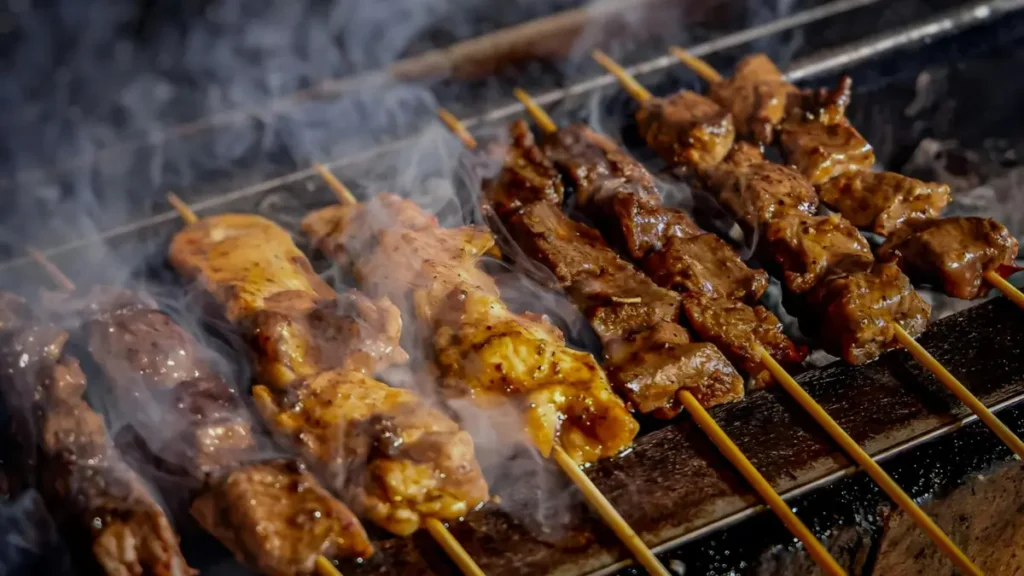
Grilling at high temperatures creates two additional categories of harmful compounds that deep-frying and broiling do not produce in the same way. When muscle meat is cooked over an open flame or a hot surface, the amino acids and creatine in the meat react at high temperatures to form heterocyclic amines [compounds created when amino acids react with heat in muscle meat].³ When fat and juices drip onto the flame or hot surface, smoke rises and deposits polycyclic aromatic hydrocarbons [compounds formed from the smoke produced when fat burns] onto the food surface.³
Both classes of compounds have been found to be mutagenic in laboratory experiments, according to the National Cancer Institute.³
One limit applies directly here: the laboratory studies establishing this mutagenicity used doses thousands of times higher than what a person would consume in a normal diet, and population studies have not established a definitive link between these compounds from cooked meats and cancer in humans.³
The finding from labs does not translate directly to kitchen quantities. What the evidence does show is that removing charred portions of meat and avoiding dripping fat can reduce exposure.³
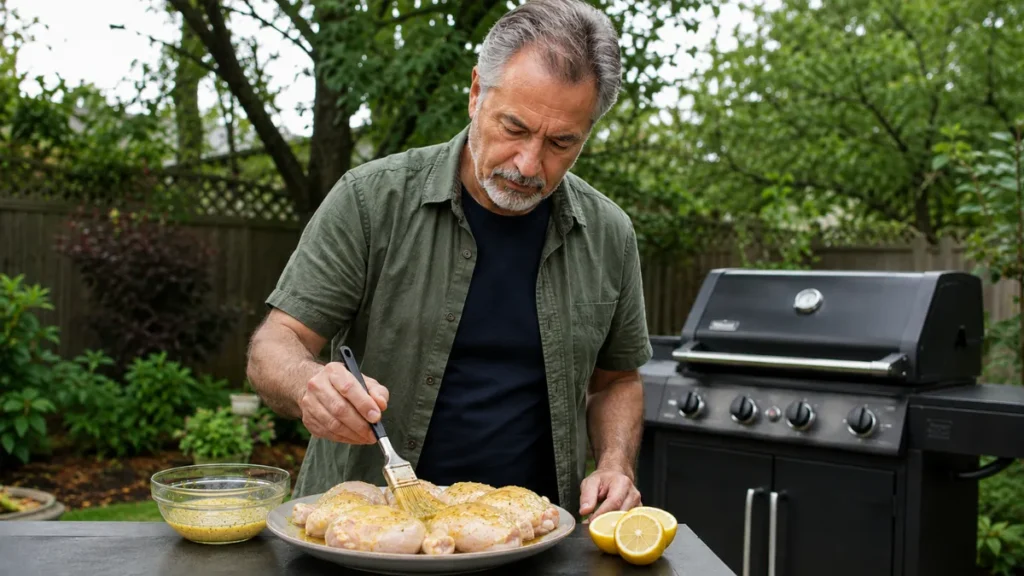
Charring is the most direct risk signal. The darker the surface, the higher the concentration of these compounds.³ A lightly grilled piece of fish or chicken is a different product from one with blackened edges.
If grilling is a regular part of how you cook, a few adjustments can meaningfully reduce what ends up on the plate.
Talk to your doctor before changing how you eat if you are managing an inflammatory condition or taking medications that affect your nutritional needs.
Before you grill
Marinate meat in lemon juice or vinegar before cooking. Research on dietary AGE reduction shows that acidic marinades reduce AGE formation in meat,¹ and marinating also reduces formation of heterocyclic amines.³
Keep the grill at moderate heat. Higher flame means more dripping fat and more deposited compounds.³
Trim visible fat before the meat goes on the grill, and remove any charred sections before eating.
None of these steps requires giving up the grill. What does the charred surface on your next piece of chicken actually tell you about the compounds you are about to eat?
High-Heat Baking Quietly Loads Your Food With the Same Joint-Damaging Compounds
Reaching for the oven as the safe exit from frying and grilling makes intuitive sense. Roast your vegetables instead of frying them.
Bake your chicken instead of grilling it. Most joint-health advice treats baking as the exit ramp from harmful cooking.
It is not.
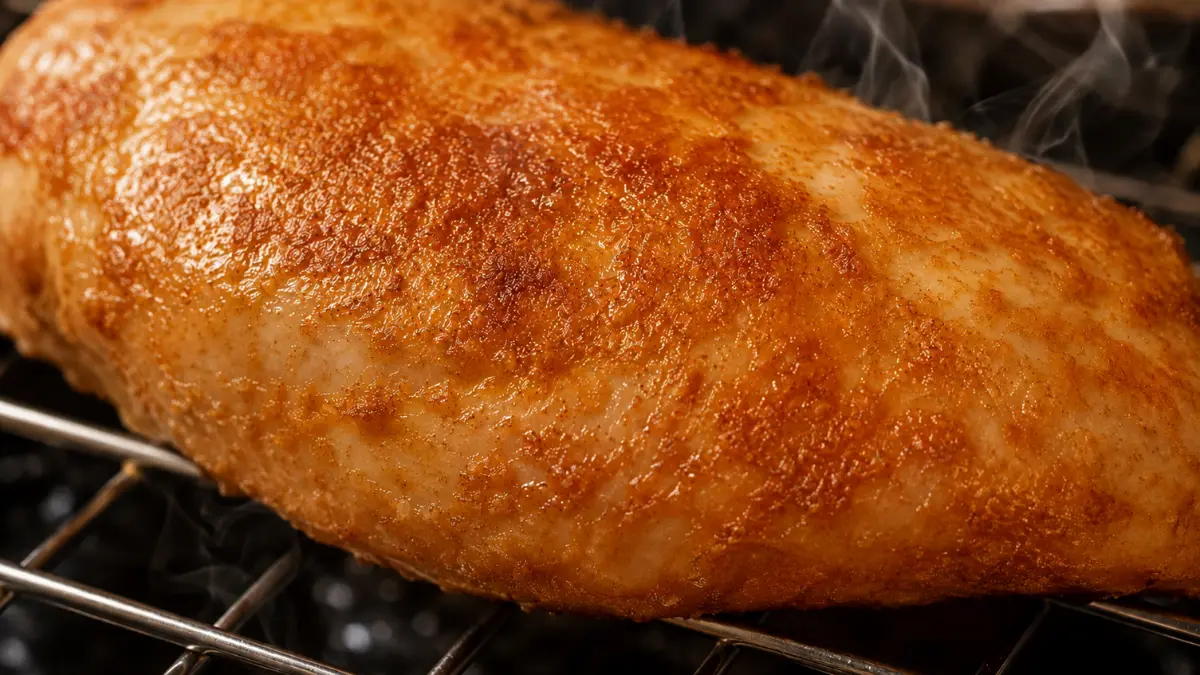
Baking is a dry-heat method. When food goes into a hot oven without moisture surrounding it, the same AGE-forming reaction that runs in a fryer runs in that oven.¹
The source of the heat is different. The chemistry is not.
In a laboratory food-science study baking beef patties at temperatures from 150 to 310 degrees Celsius, AGE accumulation rose continuously with temperature, while moisture content dropped from nearly 68 percent in raw beef to 43 percent at the highest temperature tested.⁴ The browning that signals a well-cooked result is the same process generating these compounds.²
The one human study that tested this directly did not find the link. Among 2,467 adults aged 65 and over, roasting showed no meaningful association with any of the inflammatory markers measured.⁸
The authors could not separate the effect of the cooking method from the effect of the food being cooked, so the result narrows the case rather than closing it. On roasting specifically, the human evidence is so far silent rather than reassuring.
Baking over frying has one clear advantage: no added frying oil and its associated compounds. On the AGE front, though, the gap between high-heat baking and frying is smaller than most people assume, and at very high oven temperatures it narrows further.¹
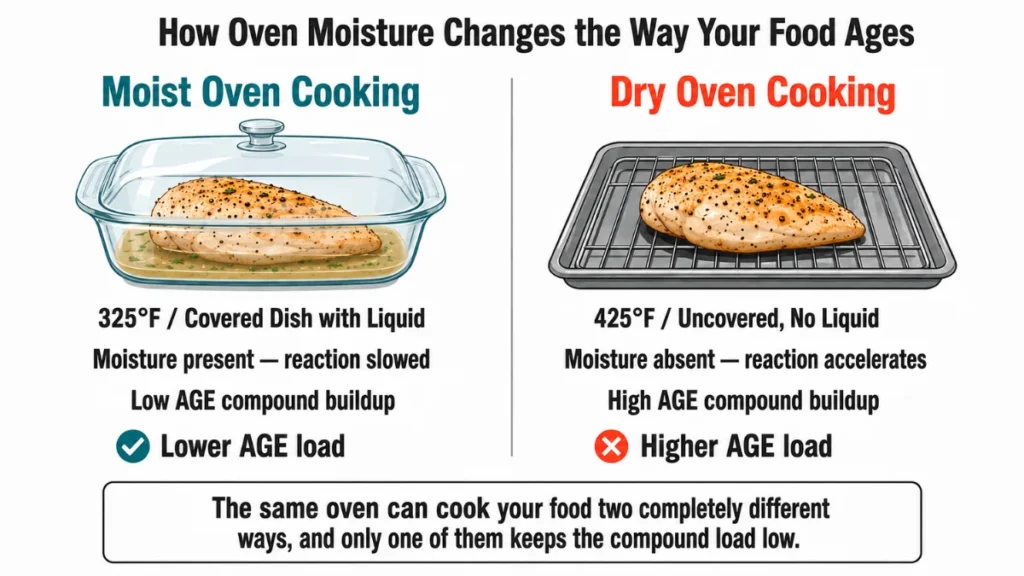
What changes the equation in baking is the addition of moisture. A dish cooked in liquid in the oven (a stew, a braise, a covered casserole) is a moist-heat method, not a dry one.
The AGE formation drops sharply when moisture is present, because water limits the temperature at the food surface and slows the reaction.¹ An oven-roasted chicken breast at 425 degrees is a different product from the same chicken breast cooked in a covered dish with broth at 325 degrees, even though both spent time in the same appliance.
Oven setting and cooking vessel matter as much as the method label.
“Baked” does not automatically mean lower AGE load. Whether the food is dry and exposed to direct heat, or moist and shielded from it, is the variable the AGE load hinges on.
Where oven cooking is a regular part of your routine, keeping temperatures moderate, using covered dishes with some liquid for protein-rich foods, and reserving high dry heat for occasional rather than daily use can shift the overall balance.
What the pan does to the oil when you do use high heat is a different problem, and it runs at the same time.
High-Heat Searing and Dry Sautéing Release Toxic Fats Your Joints Cannot Handle
Most people who sear regularly have been told it produces the best crust and the juiciest result. A screaming-hot pan, a brief contact with oil, a hard sear on each side.
It looks and smells like competent cooking.
Oil in that pan is undergoing its own destructive reaction at that temperature.
When polyunsaturated fatty acid-rich cooking oils are exposed to high-temperature frying and searing, a process called lipid peroxidation [the breakdown of fats in oil when exposed to high heat and oxygen] generates toxic compounds, including chemicals called aldehydes, which then penetrate into the food being cooked.⁵
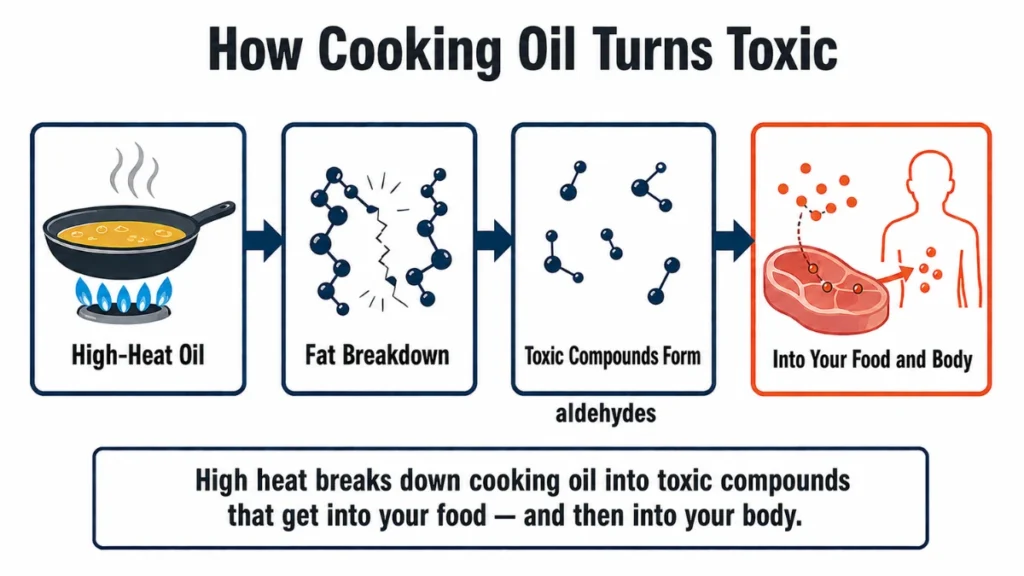
Once absorbed from the gut into the bloodstream, these compounds may contribute to the risk of chronic non-communicable diseases, according to research reviewing the health implications of dietary lipid oxidation products.⁵ That research calls these findings preliminary and emphasizes that controlled human feeding trials are still needed to establish direct causality in people.
Oils with the highest polyunsaturated fat content produce the highest concentrations of these compounds when heated aggressively.⁵ Common vegetable and seed oils such as sunflower, corn, and soybean oil fall in this category.
Olive oil and avocado oil are lower in polyunsaturated fat, which is the component driving that reaction.
Searing adds to the AGE problem. High-heat dry cooking of protein generates AGEs, and the oil degradation runs simultaneously.
A seared steak or a high-heat dry sauté is loading both at once.
Giving up browning entirely is not required. Searing at a lower temperature for longer, using a more heat-stable oil, and avoiding repeated use of the same oil are practical adjustments that address the conditions the research identifies as driving aldehyde formation.⁵
The question your joints would prefer you ask before turning the burner to maximum is whether the crust is worth what the oil becomes to get there.
What to Cook With Instead
Swapping out one high-heat dry method is easier than it sounds, because the alternatives are not exotic.
Poaching, steaming, braising, and slow cooking all use moisture and lower temperatures as their operating conditions. Because dry heat promotes AGE formation by 10-fold to 100-fold above the uncooked state, shifting to methods that keep the cooking environment moist moves the AGE load in the opposite direction.¹
In a randomized crossover trial in which healthy adults ate identical ingredients prepared by either low-AGE methods such as boiling and steaming, or high-AGE methods such as grilling and baking, switching to the low-AGE approach led to a drop of nearly 50 percent in circulating AGE levels.⁶
The participants in that study were younger than the WisdomPillar audience, and the trial was small, so the magnitude may differ in older adults. The direction of the effect is consistent with what the food-analysis evidence predicts.
For methods you are not ready to give up, acidic marinades work as a partial countermeasure. Lemon juice or vinegar applied to meat before it goes onto the grill or into the oven reduces AGE formation.
The acid environment interferes with the bonding reaction before heat even arrives.¹ This does not eliminate the effect, but it meaningfully reduces it without requiring a different cooking method.
Microwave cooking sits lower on the AGE scale than broiling or grilling, making it a practical option for proteins.² The same beef steak that measures nearly three times the AGE load when broiled measures far less when microwaved for a comparable cooking time.²
Not every dish translates, but reheating leftovers and cooking fish fillets are two places where the method switch is both easy and measurable.
One change at a time is enough to start. In a study of 337 adults aged 50 to 73, those with higher dietary AGE intake had higher C-reactive protein [a blood marker that rises when inflammation is present in the body] levels than those with lower intake.⁷
A single weekly swap from a dry-heat method to a moist one shifts the average AGE load in a direction your joints notice before your cooking routine does.
The Method Is the Problem
How food is cooked changes its chemistry in ways most people never account for. The same ingredients carry different inflammatory loads depending entirely on the heat applied to them.
This week, swap one high-heat dry cooking method for poaching, steaming, or slow cooking, and add a lemon or vinegar marinade when you do use the grill.
No trial has tested any of this against joint pain. Changing what you cook with is a smaller ask than changing what you eat, and it starts in the same kitchen.
References
- Uribarri J, Woodruff S, Goodman S, Cai W, Chen X, Pyzik R, Yong A, Striker GE, Vlassara H. Advanced glycation end products in foods and a practical guide to their reduction in the diet. J Am Diet Assoc. 2010. https://pubmed.ncbi.nlm.nih.gov/20497781/
- Inan-Eroglu E, Ayaz A, Buyuktuncer Z. Formation of advanced glycation endproducts in foods during cooking process and underlying mechanisms: a comprehensive review of experimental studies. Nutrition Research Reviews. 2019. https://www.cambridge.org/core/journals/nutrition-research-reviews/article/formation-of-advanced-glycation-endproducts-in-foods-during-cooking-process-and-underlying-mechanisms-a-comprehensive-review-of-experimental-studies/85036557AFBCC896D886B7872C092AA2
- National Cancer Institute. Chemicals in Meat Cooked at High Temperatures and Cancer Risk. National Cancer Institute. 2017. https://www.cancer.gov/about-cancer/causes-prevention/risk/diet/cooked-meats-fact-sheet
- Wen P, Zhang L, Kang Y, Xia C, Jiang J, Xu H, Cui G, Wang J. Effect of Baking Temperature and Time on Advanced Glycation End Products and Polycyclic Aromatic Hydrocarbons in Beef. Journal of Food Protection. 2022. https://www.sciencedirect.com/science/article/pii/S0362028X22110653
- Grootveld M, Percival BC, Leenders J, Wilson PB. Potential Adverse Public Health Effects Afforded by the Ingestion of Dietary Lipid Oxidation Product Toxins: Significance of Fried Food Sources. Nutrients. 2020. https://pmc.ncbi.nlm.nih.gov/articles/PMC7254282/
- Wellens J, Vissers E, Dumoulin A, Hoekx S, Vanderstappen J, Verbeke J, Vangoitsenhoven R, Derrien M, Verstockt B, Ferrante M, Matthys C, Raes J, Verbeke K, Vermeire S, Sabino J. Cooking methods affect advanced glycation end products and lipid profiles: A randomized cross-over study in healthy subjects. Cell Rep Med. 2025. https://doi.org/10.1016/j.xcrm.2025.102091
- Almajwal AM, Alam I, Abulmeaty M, Razak S, Pawelec G, Alam W. Intake of dietary advanced glycation end products influences inflammatory markers, immune phenotypes, and antiradical capacity of healthy elderly in a little-studied population. Food Sci Nutr. 2020. https://www.ncbi.nlm.nih.gov/pmc/articles/PMC7020308/
- Rodríguez-Ayala M, Banegas JR, Ortolá R, Gorostidi M, Donat-Vargas C, Rodríguez-Artalejo F, Guallar-Castillón P. Cooking methods are associated with inflammatory factors, renal function, and other hormones and nutritional biomarkers in older adults. Scientific Reports. 2022. https://pmc.ncbi.nlm.nih.gov/articles/PMC9526743/