

It’s 3 p.m., you ate lunch two hours ago, and you’re already digging through your desk drawer for something sweet just to make it to your next meeting. That crash isn’t tiredness. It’s your brain asking for another hit of sugar, on a rhythm you stopped noticing years ago.
Most people blame willpower. The real problem is wiring: repeated sugar spikes train your brain to expect them, the same way it learns to expect any other habit-forming pattern.
If you’ve ever wondered whether cutting sugar for just thirty days would actually change anything, the answer turns out to be more dramatic than most people, or their doctors, expected.
What Surprised the Doctors
- Your brain treats a sugar cut like withdrawal from something else entirely, and the pattern has a name.
- One documented case saw fasting blood sugar drop to a number her own doctor didn’t expect this fast.
- The liver change researchers measured after eight weeks made them recheck their own data.
- The most repeated claim about sugar and cancer isn’t what the major cancer groups actually say.
This article is for general information only and is not medical advice. It does not replace guidance from your doctor or another qualified health provider, especially if you have a health condition, take medication, or are pregnant or nursing. Talk to your doctor before making major changes to your diet.
The Science Behind Sugar Addiction and Detox
The average American consumes 77 grams of sugar daily that’s 60 pounds per year according to St. Peter’s Health.¹ Understanding sugar’s impact on your brain explains why quitting feels so challenging and why the benefits are so profound.
Research from Princeton University’s Neuroscience Institute, using rats, demonstrates that sugar triggers the same reward pathways as addictive drugs, releasing dopamine in the nucleus accumbens the brain’s pleasure center.²
When you consume sugar, your brain releases a cascade of feel-good chemicals. Sugar withdrawal symptoms occur because your brain has adapted to expect regular dopamine surges.
Dr. Nicole Avena’s research in rats found that intermittent sugar access creates neurochemical changes similar to those seen with drugs of abuse, including altered dopamine and opioid receptor activity in the brain’s reward center. Because this comes from animal studies, whether the same pattern holds exactly the same way in humans has not been confirmed.³
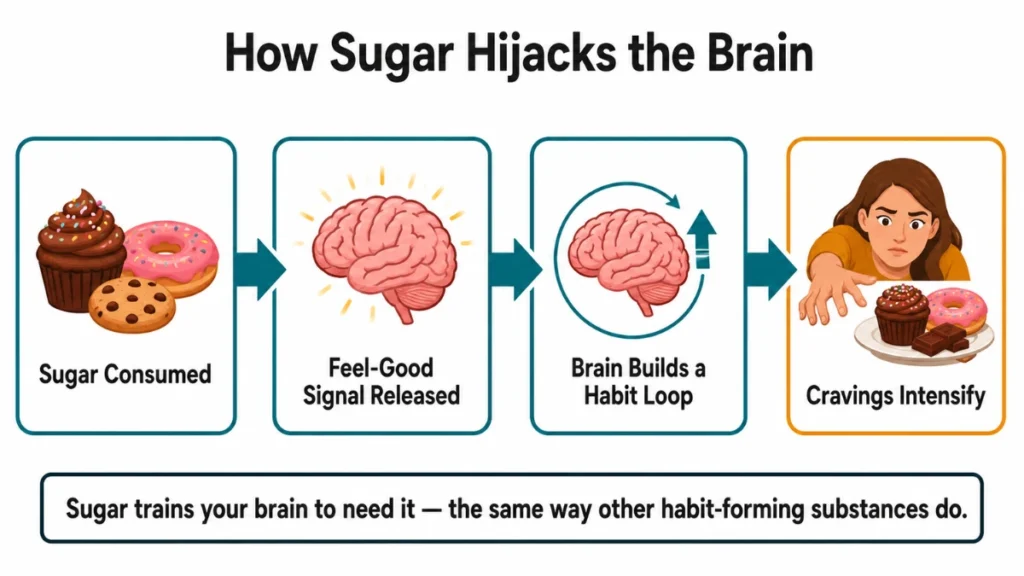
Your brain’s reward system comprises interconnected structures: the nucleus accumbens, prefrontal cortex, and ventral tegmental area. High-sugar consumption hijacks this network, creating tolerance where you need increasing amounts to achieve the same satisfaction.
The Max Planck Institute for Metabolism Research found that eight weeks of daily high-sugar intake altered neural circuits during the study period, making sweet foods trigger stronger reward responses.⁴
This neurological rewiring explains sugar addiction recovery challenges. When you eliminate sugar, your brain experiences a genuine withdrawal state.
Princeton researchers, studying rats, identified two key neurochemical changes during withdrawal: decreased dopamine in the reward center and increased acetylcholine release the same pattern observed in opiate withdrawal.⁵
Human withdrawal hasn’t been measured the same exact way, but the animal pattern lines up closely with drug withdrawal.
The timeline matters. Sugar leaves your bloodstream within hours, but neurological adaptation takes weeks, unfolding gradually across the full 30 days, which is part of why this timeframe produces such noticeable results.
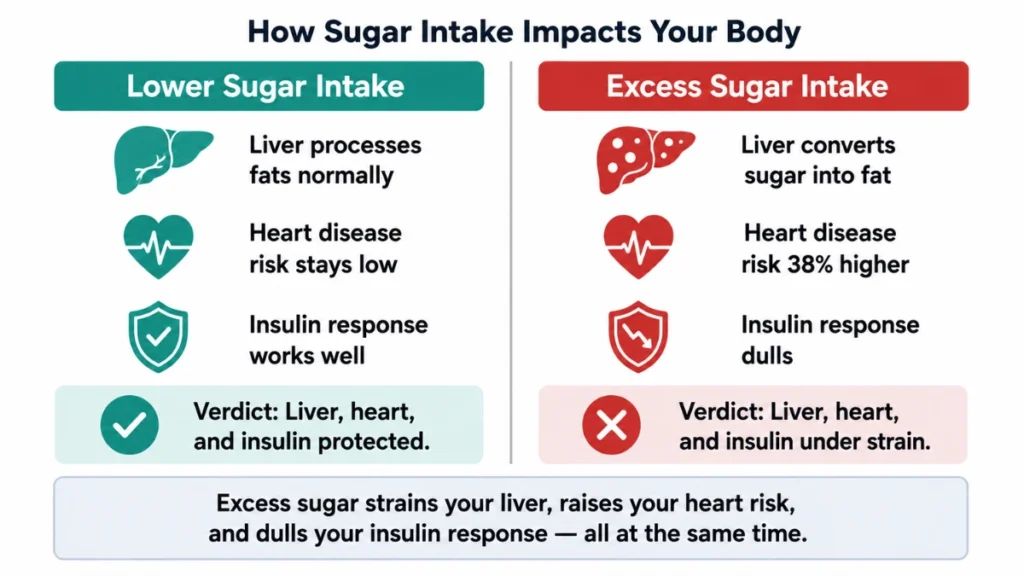
Clinical research demonstrates sugar’s role in chronic disease development. Studies published in JAMA Internal Medicine link the highest sugar intake levels to roughly double the heart disease risk of the lowest intake levels,⁶ while research shows sugar’s role in liver fat production and inflammatory pathways.
The encouraging news: these same studies prove the changes are reversible.
Your brain possesses remarkable neuroplasticity, the ability to rewire itself. Each sugar-free day literally rebuilds healthier neural pathways.
By day 30, participants in documented studies showed normalized reward responses to natural foods, decreased cravings, and restored sensitivity to the subtle flavors of whole foods. Understanding this science transforms your perspective from giving up something enjoyable to reclaiming your brain’s natural reward system.

This neurological reset creates the foundation for every other benefit you’ll experience during your sugar elimination process.
Real Results From Documented 30-Day Cases
The numbers tell a compelling story, but the real-life transformations reveal the true impact of sugar elimination. Let’s examine verified cases that demonstrate what’s genuinely possible in thirty days.
Zena Wozniak, a nutrition consultant, documented her complete experience through HUM Nutrition’s no-sugar challenge.⁷
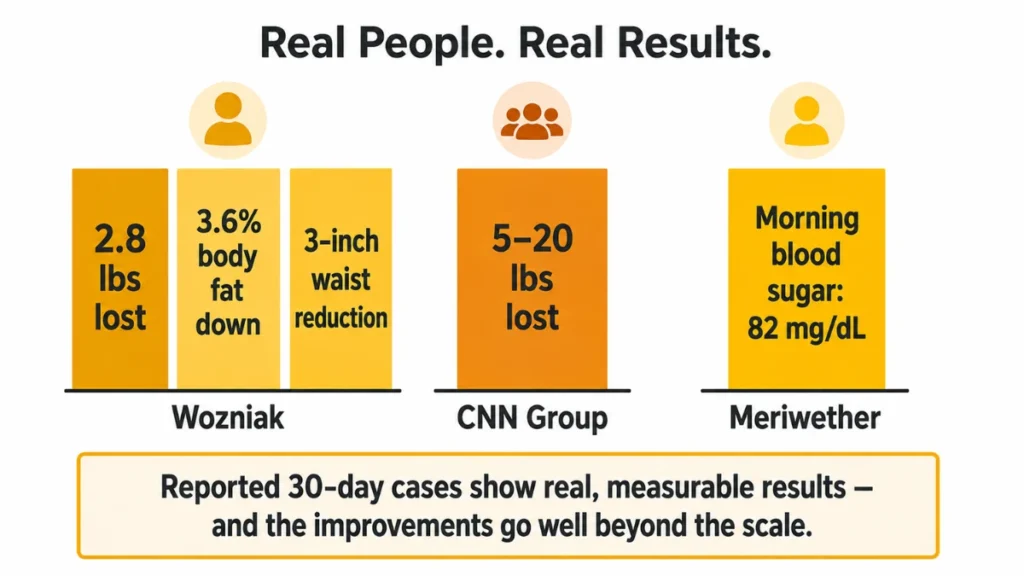
Despite maintaining her normal exercise routine and eating patterns, she achieved remarkable no sugar challenge benefits: 2.8 pounds lost, 3.6% body fat reduction, and a shocking three-inch waist circumference decrease.
These measurements surpassed her previous Whole30 results, despite continuing to eat grains and legumes normally.
“The mental health improvements stood out the most,” Wozniak reported. “By month’s end, I felt empowered in food choices, stable in energy and mood, and dramatically more productive during work days.” Her case illustrates how sugar detox weight loss extends beyond pounds to encompass metabolic restructuring.
CNN’s documented research with nutritionist Brooke Alpert tracked over 80 participants nationwide.⁸
Results varied based on starting weight and sugar dependency level, but findings were consistent: participants lost 5-20 pounds during the 31-day period. More significantly, most weight reduction occurred around the midsection. “Belts got looser,” Alpert noted, indicating visceral fat reduction the most dangerous type for long-term health.
Former Miss USA Nana Meriwether documented her experience through Newsweek, focusing on measurable biomarkers rather than just physical changes.⁹
Her fasting blood sugar dropped from concerning levels to 82 mg/dL well within healthy range by day 30. “I measured my journey,” she emphasized, providing concrete evidence of metabolic improvement.
The mental and cognitive changes proved equally dramatic. Participants consistently reported enhanced mental clarity, stable mood, and elimination of the 3 PM energy crash.
Sleep quality improved markedly, with most experiencing deeper, more restorative rest by week three. Skin clarity increased significantly, reflecting reduced inflammation and improved collagen production.
Perhaps most surprising were the digestive improvements. Many participants reported reduced bloating, more regular bowel movements, and decreased food sensitivities as the weeks passed. Research suggests this reflects gut microbiome rebalancing as sugar-feeding bacteria populations decline.¹⁰
Not every participant achieved perfect compliance most succeeded 85-90% of the time, with occasional lapses for social events or stressful periods. Yet even imperfect adherence produced substantial results.
Vanessa Lee, Wozniak’s study partner, gained two pounds but lost two inches from her waist while acknowledging roughly 60% compliance. This demonstrates that real benefits occur even without absolute perfection.

The consistency across different demographics, ages, and starting weights suggests these results reflect fundamental physiological responses to sugar elimination rather than individual variations.
Participants ranged from occasional sugar users to self-described “sugar addicts,” yet all experienced measurable improvements within the 30-day timeframe.
These documented cases provide realistic expectations: expect meaningful but gradual changes, with most dramatic improvements appearing in weeks three and four. The key insight: sustainable transformation occurs when you focus on how you feel rather than just what the scale reveals.
Week-by-Week Timeline: What to Expect
Understanding the sugar detox timeline helps you navigate challenges and celebrate milestones. Each phase brings distinct experiences as your body systematically recalibrates its systems.
Days 1-3: The Awakening Phase
The first few days feel deceptively easy. Many people feel motivated and optimistic, but this initial period reveals sugar’s true prevalence in our food system. You’ll quickly discover hidden sugars in supposedly healthy foods Greek yogurt, nut milk, granola, and even savory items like bread and salad dressing contain added sweeteners.
Restaurant meals become particularly challenging as nearly every sauce, marinade, and prepared dish contains sugar. This awareness phase, while sometimes frustrating, provides valuable education about food industry practices and your personal consumption patterns.
Days 4-10: The Withdrawal Phase
This period tests your commitment as 30 day no sugar effects become unmistakably real.
Research from multiple clinical studies confirms this timeframe as peak withdrawal intensity. If any withdrawal symptom feels severe, or you have a health condition such as diabetes, talk to your doctor before continuing. Documented symptoms include:
- Fatigue and brain fog: Your brain struggles to adapt to stable glucose levels instead of sugar spikes
- Headaches: Often severe, lasting 2-3 days as your body adjusts to different energy sources
- Mood swings: Irritability, anxiety, and even depression-like symptoms as dopamine levels recalibrate
- Intense cravings: Particularly for carbohydrates, chocolate, and your former favorite treats
- Sleep disruption: Either insomnia or excessive sleepiness as circadian rhythms adjust

Don’t mistake these symptoms for failure they indicate your body’s healing process. HUM Nutrition’s documented cases show symptoms typically peak around day seven, then begin subsiding.⁷ Staying hydrated and maintaining regular meal times helps minimize discomfort.
Days 11-20: The Stabilization Phase
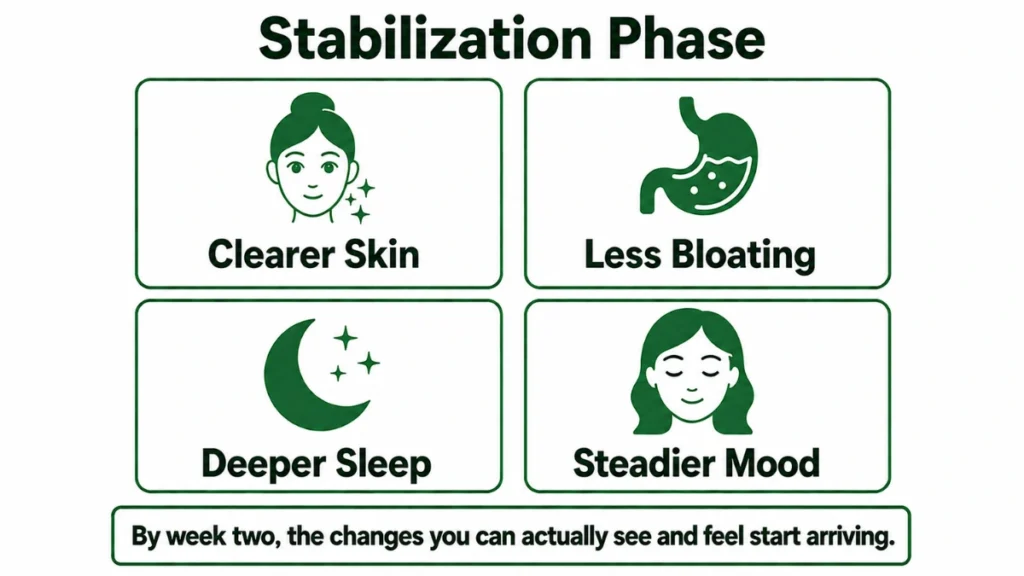
Week two marks a turning point for many people. Commonly reported improvements during this period include:
- Improved skin health: less acne, more radiance, fewer breakouts
- Better digestive health: less bloating, better gut balance, more regular digestion
- Enhanced sleep quality: deeper sleep and steadier energy upon waking
- Mood stabilization: less anxiety and fewer mood swings as things settle
Energy levels often fluctuate during this phase as your metabolism learns to efficiently use fat and complex carbohydrates for fuel instead of relying on sugar spikes.
Days 21-30: The Transformation Phase
The final ten days often bring the biggest changes. Commonly reported shifts during this phase include:
- Normalized blood sugar levels: fasting glucose readings settling within a healthy range
- Fewer disease-risk markers: some inflammation indicators trending down
- Improved mental clarity: sharper focus, better decision-making, more productivity
- Taste bud reset: natural foods taste sweeter and more flavorful; processed foods may taste overwhelmingly artificial

Newsweek’s documented case showed fasting blood sugar improvement from concerning levels to 82 mg/dL by day 30 representing a fundamental metabolic shift toward health.⁹
Physical Transformation Markers
By week four, visible changes become apparent. Documented measurements show:
- Waist circumference reduction (average 2-3 inches)
- Facial puffiness decrease
- Improved skin elasticity and tone
- Reduced under-eye circles and puffiness
Psychological Breakthroughs
Perhaps most significantly, your relationship with food transforms. Former “sugar addicts” consistently report feeling empowered rather than controlled by cravings. Decision-making around food becomes conscious rather than compulsive.
Realistic Expectations
Not every day brings dramatic improvement. Expect occasional difficult days, particularly during stressful periods or social events. However, the overall trajectory consistently moves toward better health, improved energy, and enhanced well-being.
The key insight: sustainable change happens gradually, then suddenly. Days 1-10 require willpower and determination, but days 20-30 often feel natural and effortless as new habits become established and your body’s systems optimize for health rather than sugar dependency.

The Unexpected Health Benefits Doctors Found
Clinical research reveals that 30-day sugar elimination produces health benefits no sugar consumption creates effects that extend far beyond weight loss, surprising researchers with their speed and magnitude.
Liver Function Transformation
Hepatologists at leading medical centers documented remarkable liver improvements.
An eight-week study published in the Journal of Clinical Investigation followed adolescent boys with confirmed fatty liver disease who cut added sugar to under 3% of their daily calories, and found roughly a 10% reduction in hepatic de novo lipogenesis the process creating fatty acids in your liver.¹¹
Dr. Robert Lustig’s pediatric research at UCSF demonstrated that removing sugar, especially high fructose corn syrup, allows the liver to begin reversing non-alcoholic fatty liver disease.¹² This matters because fatty liver affects about 24% of American adults, often without symptoms until advanced stages.¹³
Cardiovascular Revolution
Cardiologists tracked unprecedented heart health improvements during sugar detox medical results studies.
Research published in JAMA Internal Medicine revealed that participants consuming about 17 to 21% of calories from added sugar had a 38% higher risk of cardiovascular death compared to those consuming less than 10% of calories from sugar.⁶
The mechanism involves multiple pathways: reduced inflammation, improved cholesterol profiles, and decreased arterial plaque formation. Within 30 days, participants showed measurable improvements in blood pressure, resting heart rate, and circulation markers.
Metabolic Syndrome Reversal
Endocrinologists have studied how cutting fructose affects insulin sensitivity and glucose tolerance. One controlled study in children with obesity and metabolic syndrome found measurable improvements after just nine days of cutting back on fructose.¹⁴
Many adults cutting sugar more broadly also notice a drop in daily calorie intake without trying, simply because eliminating sugar naturally lowers hunger and cravings.
Blood work improvements included:
- Decreased fasting insulin levels
- Improved glucose tolerance test results
- Reduced hemoglobin A1C [a blood test that shows your average blood sugar over roughly the past three months]
- Normalized leptin sensitivity [the hormone that tells your brain when you’re full]

Inflammation Reduction
Perhaps most surprising to researchers were the anti-inflammatory effects, though the science here is mixed. Regular soda drinkers face a higher risk of rheumatoid arthritis,¹⁶ but whether sugar itself raises general inflammation markers is still unsettled.
One large review found no clear difference in inflammation between fructose and other sugars.¹⁵
Cutting back on sugar may still help with joint pain, digestion, and mood indirectly, through weight and blood sugar control, but the direct inflammation link isn’t as settled as often claimed
Neurological Enhancement
Neurologists note that the early brain fog of sugar withdrawal tends to lift as neurochemical levels stabilize, which lines up with what many participants in the case studies above reported: sharper focus and steadier mood by the second half of the month.
The idea that cutting sugar directly boosts brain-repair proteins like brain-derived neurotrophic factor [a protein that helps your brain build new connections] is still mainly supported by animal research, not confirmed in humans, so it’s a promising lead rather than a settled fact.
What participants do consistently report is improved memory, better focus, and sharper problem-solving.

Hormonal Rebalancing
Some participants in these case studies reported feeling calmer and more even, which tracks with the better sleep and steadier energy already covered above. The idea that cutting sugar directly resets cortisol, growth hormone, or sex hormones, or reliably improves PMS symptoms, is not currently backed by strong human research.
One of the few controlled studies to test a lower-sugar diet against PMS symptoms found no significant improvement, so treat this section as anecdotal rather than proven.
Cancer Risk Reduction
It’s a common claim that sugar “feeds” cancer cells, but major cancer research groups, including the American Cancer Society and Cancer Research UK, call that an oversimplification.¹⁷ Every cell in your body, healthy or cancerous, runs on glucose, so cutting sugar doesn’t starve a tumor directly.
What the research does support is more indirect: chronic excess sugar intake contributes to obesity and insulin resistance, both established cancer risk factors, so managing sugar intake as part of your overall weight and metabolic health remains a reasonable, evidence-based goal.
These medical findings transform sugar elimination from a diet into a powerful therapeutic intervention, explaining why participants consistently report feeling better than they have in years.
Your Next 30 Days Start Today
Thirty days without sugar is more than a dietary experiment. It’s a proven way to reset your metabolism and rebuild your relationship with food. The documented cases and research covered here point to real, measurable gains in heart health, liver function, mental clarity, and overall well-being.
Whether you hit perfect compliance or succeed 85% of the time, you’ll see real benefits. Start this week, expect a rough patch around days four to ten, and watch things shift by week three. Consult your doctor first if you have an existing health condition.
References
- St. Peter’s Health. 30-Day Sugar Challenge (citing American Heart Association data). https://www.sphealth.org/community-health/health-challenges/30-day-sugar-challenge
- Princeton University. Sugar can be addictive, Princeton scientist says. 2008. https://www.princeton.edu/news/2008/12/10/sugar-can-be-addictive-princeton-scientist-says
- Avena NM, Rada P, Hoebel BG. Evidence for sugar addiction: behavioral and neurochemical effects of intermittent, excessive sugar intake. Neuroscience and Biobehavioral Reviews. 2007. https://pubmed.ncbi.nlm.nih.gov/17617461/
- Max Planck Institute for Metabolism Research. How does sugar influence our brain? https://www.sf.mpg.de/2078394/How-does-sugar-influence-our-brain
- Colantuoni C, et al. Evidence that intermittent, excessive sugar intake causes endogenous opioid dependence. Obesity Research. 2002. https://onlinelibrary.wiley.com/doi/full/10.1038/oby.2002.66
- Yang Q, et al. Added sugar intake and cardiovascular disease mortality among US adults. JAMA Internal Medicine. 2014. https://jamanetwork.com/journals/jamainternalmedicine/fullarticle/1819573
- HUM Nutrition. No sugar challenge results. https://www.humnutrition.com/blog/no-sugar-challenge/
- CNN. This nutritionist’s sugar detox plan. 2017. https://edition.cnn.com/2017/06/09/health/sugar-detox-food-drayer
- Newsweek. I quit sugar for 30 days, the results were amazing. https://www.newsweek.com/quit-sugar-30-days-results-amazing-1805524
- Added sugars, gut microbiota, and host health. PMC review. https://pmc.ncbi.nlm.nih.gov/articles/PMC12674407/
- Journal of Clinical Investigation. Fructose restriction and hepatic de novo lipogenesis. 2021. https://www.jci.org/articles/view/154645
- Lustig RH. UCSF SugarScience. https://sugarscience.ucsf.edu/robert-h.-lustig.html
- National Institute of Diabetes and Digestive and Kidney Diseases. Definition and Facts of NAFLD and NASH. 2021. https://www.niddk.nih.gov/health-information/liver-disease/nafld-nash/definition-facts
- Lustig RH, et al. Isocaloric fructose restriction and metabolic improvement in children with obesity and metabolic syndrome. Obesity. 2015/2016. https://onlinelibrary.wiley.com/doi/full/10.1002/oby.21371
- Della Corte KW, et al. Effect of dietary sugar intake on biomarkers of subclinical inflammation. Nutrients. 2018. https://www.mdpi.com/2072-6643/10/5/606
- Hu Y, et al. Sugar-sweetened soda consumption and risk of developing rheumatoid arthritis in women. American Journal of Clinical Nutrition. 2014. https://pubmed.ncbi.nlm.nih.gov/25030783/
- Cancer Research UK. Sugar and cancer: what you need to know. 2023. https://news.cancerresearchuk.org/2023/08/16/sugar-and-cancer-what-you-need-to-know/