You feel the familiar thud of your sneakers on the pavement. It is a habit you’ve kept for years to stay healthy. But lately, the “good job” you give yourself feels hollow. You have seen the scan results. The numbers for your hips and spine aren’t budging. Your legs are moving, but your skeleton feels like it’s being left behind.
You have put in the steps. You have kept the habit. And still, the numbers on your scan keep drifting in the wrong direction. Not because you are doing something wrong. Because your bones need a different kind of conversation entirely.
If you think your body is too fragile to carry extra weight, this approach changes the narrative. Most people assume “rest” and “light movement” protect aging joints. This is not your fault. You have been told to “be careful” for decades. In reality, your bones require a specific type of stress to trigger repair. Without a challenge, the body decides those bone minerals are better used elsewhere. This leads to the thinning you see on a DEXA scan.
The primary cause of bone loss in active adults isn’t a lack of movement. It is a lack of intensity. Traditional walking is excellent for your heart. However, it eventually becomes “background noise” to your skeleton. You need a way to turn that stroll into a bone-building powerhouse without the complexity of a gym.
Weighted walking provides the mechanical “squeeze” your cells need to stay dense. Your bones are essentially “batteries” that charge only when squeezed.
Vera recently noticed her hiking group was pulling ahead. She worried her sturdy days were behind her as she struggled to keep pace on familiar trails.
Every situation responds differently. Use this as a starting point, not a prescription.
Why Your Daily Walk Isn’t Saving Your Bones
Walking 10,000 steps is a fantastic victory for your cardiovascular health. However, your bones operate on a “use it or lose it” signaling system. This system often ignores steady-state cardio. Once your body adapts to your body weight, the mechanical stimulus stops being enough to trigger new growth.
You might feel like you are doing everything right while your bone density numbers continue to slip. Standard fitness advice for people over 50 focuses on “safety” by removing all resistance. This accidentally starves the skeleton of the pressure it needs. It is like trying to build muscle by lifting a feather.
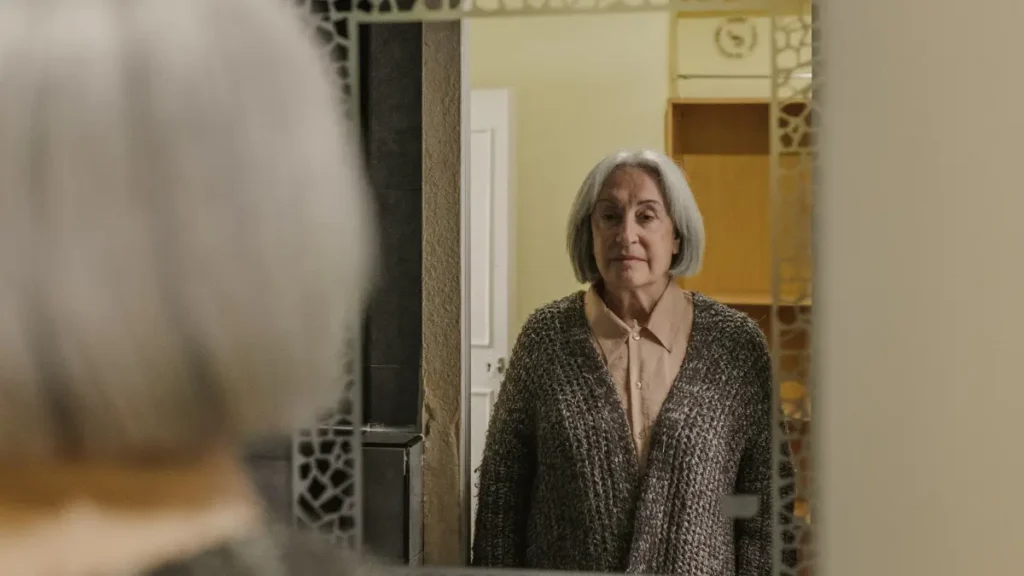
Vera realized her daily steps weren’t stopping the thinning feeling in her posture. Even though she never missed a morning walk, her frame felt less reliable during her weekly errands. She noticed her shirts fitting differently. A subtle slouch appeared in her reflection.
Bones are living tissue. They respond to “mechanical loading,” which is the physical force of weight pressing through the skeleton. When you walk without extra weight, the impact is predictable and light. Your brain signals the “construction crew” in your bones that the current structure is “good enough.” No new reinforcements are sent.
The shift from “walking for steps” to “walking for density” requires a change in resistance. You do not necessarily need to change your distance. Adding even a small amount of external weight forces the hips and spine to brace and rebuild.
The Science of Loading: How Weighted Walking Rebuilds the Skeleton
Your bones only build density when they are physically squeezed. This process relies on the Piezoelectric Effect. This is the generation of a tiny electrical charge in bone tissue under pressure.
When you step with added weight, the mechanical strain creates a signal. This signal tells your body to reinforce that specific area.
What this means for you: Every step with a weighted vest creates a tiny electrical signal that tells your body “reinforce here.”
Think of your bone remodeling like a construction crew. This crew only shows up when the building starts to creak under a heavy load. If the building stays light and empty, the crew stays home.
Weighted walking provides the “creak” that calls the crew to work on your hips and spine.
This follows Wolff’s Law. This law describes the systemic adaptation of bone to increased mechanical stress.
When the load increases, your body activates Osteoblasts. These are tiny biological 3D printers that lay down new bone minerals. These cells respond specifically to the compression felt during each footfall.
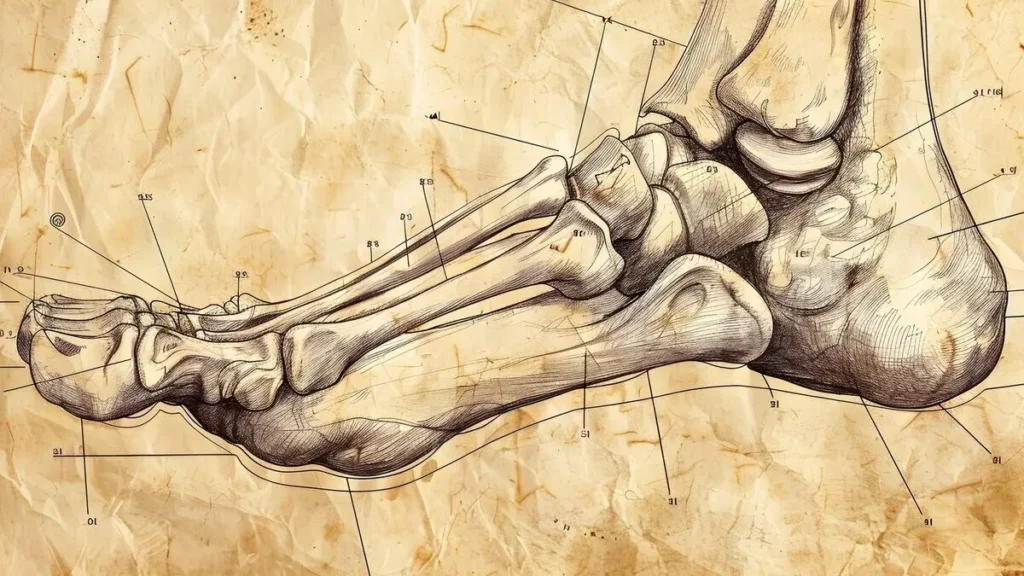
What this means for you: Your bones adapt to whatever you regularly ask them to carry. Ask for more weight, get more density.
Walking faster burns more calories, but walking heavier builds more “years” into your frame. The consistent thud of a weighted vest sends a message to your skeleton. It needs to be stronger to survive the day. This creates a dense, resilient structure that simple aerobic walking cannot match.
While the heart benefits from the movement, the skeleton benefits from the burden. Shifting the focus from distance to resistance triggers a deep cellular response. This is how you turn a simple stroll into a medical-grade intervention for your bone health.
How to Start: Your Step-by-Step Weighted Walking Protocol
To start a weighted walking protocol, you must adopt a “load-first” mindset. This prioritizes your spine and hips. You do not need a gym membership or heavy iron plates to begin. The goal is to introduce a controlled, vertical load. This mimics the natural weight of your body, just a bit heavier.
Owen started with just two cans of soup in an old backpack. He worried about his lower back. Eventually, he found that adding this small amount of weight made his movement feel more demanding. His energy returned during morning tasks. He no longer sighed when standing up from a chair.
Every situation responds differently. Use this as a starting point, not a prescription.
Tier 0: The Household Entry
Grab two 15-ounce cans of beans or soup from your kitchen. Place them in a small backpack, the kind that sits high on your shoulders and doesn’t sag toward your waist. You want the weight close to your spine, not pulling you backward.
Head out for 10 minutes on a flat, paved surface like a sidewalk or quiet street. Skip the hills for now. As you walk, check your “Talk Test.” You should be able to speak in full sentences, but you’ll notice your heart rate rising above a casual stroll.
Keep your chin level and shoulders back. Imagine a string pulling the top of your head toward the sky. If you feel yourself hunching forward, the pack is too loose. Stop walking and tighten the straps.
Tier 1: The Focused Vest
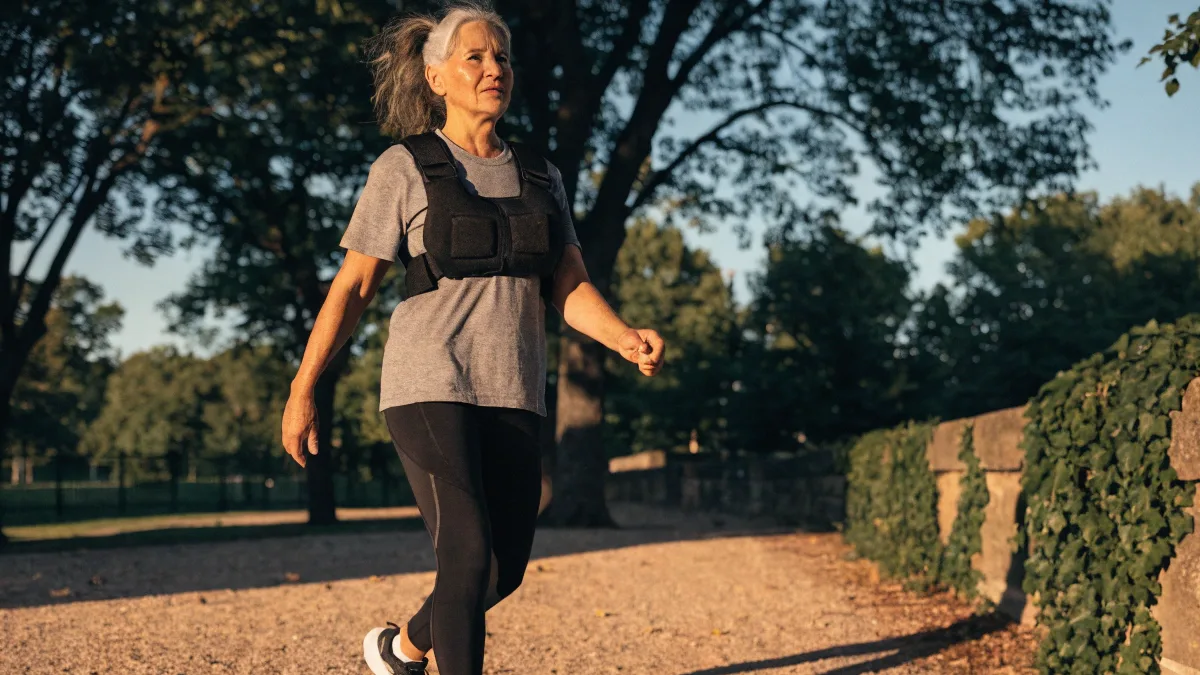
Once your 10-minute walks with the backpack feel completely comfortable, switch to a fixed 5lb weighted vest. You’ll notice the difference immediately. Vests distribute weight evenly across your front and back. Unlike a backpack, they don’t pull on your shoulders.
Complete a 20-minute walk three times per week. Don’t just count minutes. Pay attention to how your hips feel during each step. You’re looking for a subtle sense of engagement, not pain. That awareness tells you the load is working.
Tier 2: The Bone-Builder Progression
When the 5lb vest starts feeling like your old t-shirt, graduate to an adjustable weighted vest. This lets you increase load gradually as your skeleton adapts.
Aim for roughly 10% of your body weight. If you weigh 150 pounds, that means carrying about 15 pounds. Don’t rush to hit this number. Take weeks or months to build up.
Once you’re comfortable with the weight, introduce slight inclines. Find a gentle hill in your neighborhood or set your treadmill to a 2% grade. This small angle change forces your hips to work harder. You’ll feel the difference in your femur, the long bone in your thigh, as it handles increased mechanical strain with every step..
3 Common Mistakes That Risk Your Spine
The “safest” thing you can do for a fragile spine is, counterintuitively, to put a controlled load on it. However, loading your skeleton incorrectly can lead to strain rather than strength. This is the part most guides skip. Avoiding these three pitfalls ensures your walking remains a bone-builder rather than a back-breaker.
1. The Hunchback Sag
Many beginners use a loose backpack that hangs low against the small of the back. This creates a “lever” effect. It pulls your shoulders forward and compresses the lumbar discs. If you feel your chin jutting out or your lower back arching, the weight is poorly positioned. Always cinch your straps so the load stays high and tight against your shoulder blades.
2. The “Too Much, Too Soon” Trap
Your muscles adapt to weight in days. Your bones take months to remodel. Adding 20lbs to your frame on the first day might feel fine for your heart. However, it can overwhelm the micro-architecture of a thinning hip. Stick to the 5% body weight rule for your first month. Gradually noticing improvements in how you carry yourself is better than a sudden injury.
3. Using Ankle Weights for Distance
Avoid using heavy ankle weights for long-distance bone building. They are fine for leg lifts. However, wearing them while walking creates a “pendulum” effect. This puts shear stress on the delicate ligaments of your knees and hips. To build density in the spine and femoral neck, the weight must come from above the waist.
Advanced Tips & The 3-Tier Action Plan
Once you have mastered the basics, you can refine your protocol. The goal is to keep the stimulus “surprising” to your skeleton. This ensures the osteoblasts never stop their construction work. You are the primary investigator of your own body.
Owen eventually moved to a proper vest. He noticed that adding a slight incline to his path made his hips feel more planted. His frame had quietly decided to hold its ground. Movement felt more demanding but also more stable. He eventually found that adding a slight incline to his path made his hips feel even more resilient.
The Rest-Density Connection
Walking “more” doesn’t help bones, walking “heavier” does. Rest days are actually when the bone “knits” stronger. Your skeleton needs 48 hours between weighted sessions. This allows it to lay down the mineral matrix triggered by the walk. On off days, stick to unweighted movement or stretching. This keeps the joints lubricated.
Fueling the Remodeling
Your body cannot build bone out of thin air. To support new density, prioritize “Bone-First” grocery items:
- Canned Sardines or Salmon (1 tin): These provide calcium and Vitamin D to fuel the 3D-printing osteoblasts.
- Greek Yogurt (1 cup): A high-protein source to support the muscle that holds your bones in place. Aim for 30g of protein per meal.
- Dark Leafy Greens (2 cups): Rich in Vitamin K2. This acts like a traffic cop, directing calcium out of your arteries and into your skeleton.

Your Questions Answered
Does walking increase bone density in the spine?
Not really. At least not the way you’re doing it.
Traditional walking is great for your heart. But your spine barely notices it. The impact is too predictable, too light. Your skeleton tunes it out like background noise.
Add a weighted vest or a backpack with cans. Now your spine sits up and pays attention. That’s when density happens.
When is it too late to build bone density?
Never. Full stop.
Your bones are alive. They remodel at 70, 80, even 90. The idea that you missed your chance is a myth.
Women in their 80s gain density every day. With the right loading. You’re not too old. You’ve just been using the wrong tools.
Your body doesn’t clock out at a certain age. It responds to what you give it. Give it load, it builds. Simple as that.
How long does it take to build bone density?
Longer than you want. Shorter than you think.
Muscles grow in weeks. Bones take months. Most studies show measurable changes between 6 and 12 months.
But you’ll feel it sooner. That stable feeling when you stand up. The confidence walking on uneven ground. Those wins come fast. The density follows.
What exercises increase bone density in the spine?
Anything that loads your spine vertically.
Weighted walking is the safest place to start. Squats work. Lunges work. Deadlifts work too—but save those for later.
Your spine needs compression. Not twisting. Not bending. Straight up-and-down pressure that tells those osteoblasts to get to work.
How to increase bone density after 60?
Start lighter than you think you need.
Two percent of your body weight. Maybe five. A few cans in a backpack. That’s plenty.
Perfect posture matters more than pounds. Walk tall. Shoulders back. Let the weight settle into your skeleton, not your joints.
And check with your doctor first. One conversation. Then go walk.
Weight bearing exercises for osteoporosis at home?
Weighted walking is the ultimate home exercise. No gym. No membership. Just a backpack and 10 minutes. Body weight squats help. Calf raises help. But nothing beats loading your frame while doing what you already do every day. Walking. Your kitchen cupboard is now a bone clinic. Use it.
Conclusion
Your bones are not static. They are a dynamic system waiting for a reason to be strong. Adding a small, controlled load transitions you from maintaining health to actively rebuilding your frame. Weighted walking is the bridge between a fragile future and a resilient one. You have the tools to be the architect of your own strength.
Like Vera, you can stop worrying about keeping up and start leading the way. The weight on your shoulders becomes a shield, not a burden.
Start your 10-minute weighted walk tomorrow with just two cans of soup in a pack. This simple shift in resistance signals your body that you aren’t done growing yet.
Your Weighted Walking Protocol:
1) Secure 2-5 lbs of weight high on your torso.
2) Walk for 10 minutes with a tall, proud posture.
3) Rest 48 hours before your next weighted session.
You’re not just a walker anymore. You’re the primary investigator of your own skeleton. You now have the protocol to prove it.
⚠️MEDICAL DISCLAIMER :
This content is for informational and educational purposes only and does not constitute medical advice, diagnosis, or treatment. If you have been diagnosed with advanced osteoporosis or have a history of spinal fractures, consult your physician before adding external weight to your exercise routine. Before making changes to your diet, exercise routine, or supplement regimen, consult a qualified healthcare provider. If you experience sharp spinal pain, numbness in your limbs, or severe joint swelling, seek emergency medical care immediately.