
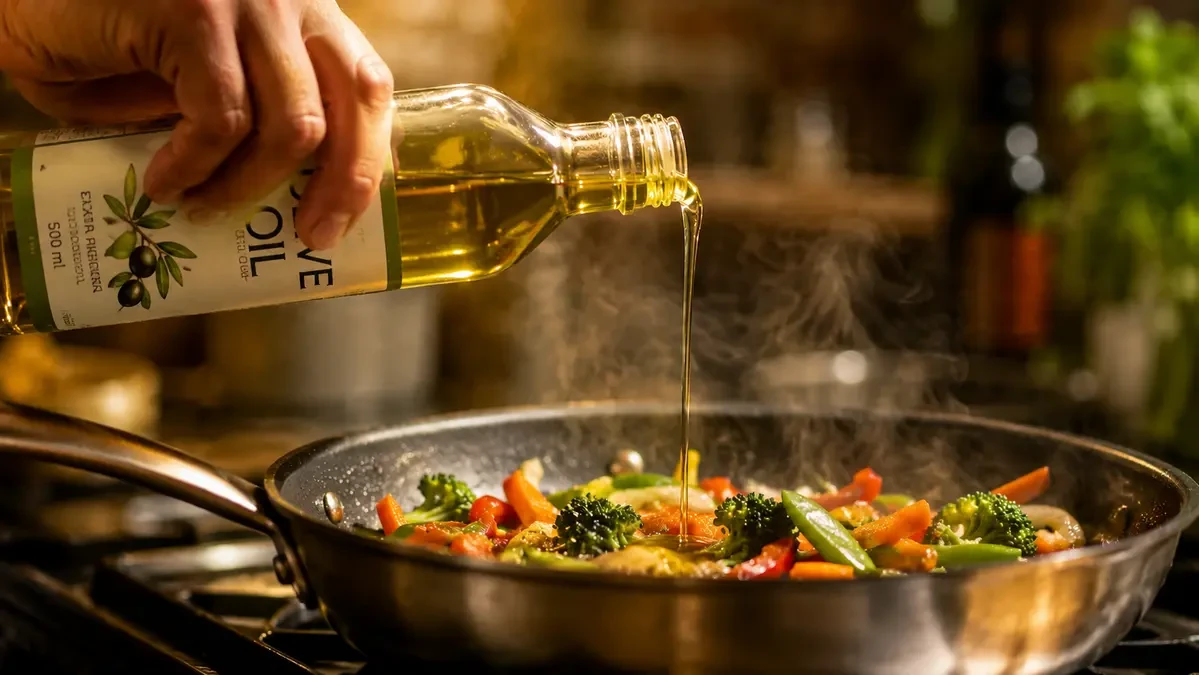
You’ve probably been told to stop cooking with olive oil the moment the pan gets hot. Maybe a friend warned you. Maybe you read it online. And now you’re second-guessing every meal. That warning is based on a measurement scientists now call unreliable.
After 50, what you cook with matters more than ever. Your body’s natural defenses against inflammation weaken. Every meal is a small choice. And choosing the wrong oil or avoiding a good one based on bad advice adds up over time.
The real science on olive oil and heat. Then it gives you a simple 3-part protocol: which oil to use for everyday cooking, which to use at high heat, and which to use raw. No confusion. Just clear steps you can use tonight.
The Smoke Point Rule Was Never a Safety Test
Most people think this: if an oil smokes, it’s dangerous. Higher smoke point, safer oil. It sounds logical. But it was never based on that. Smoke point is just the temperature at which an oil starts to visibly smoke. That’s it. It was originally a visual test, with different observers, different lighting, and different results from the same oil.
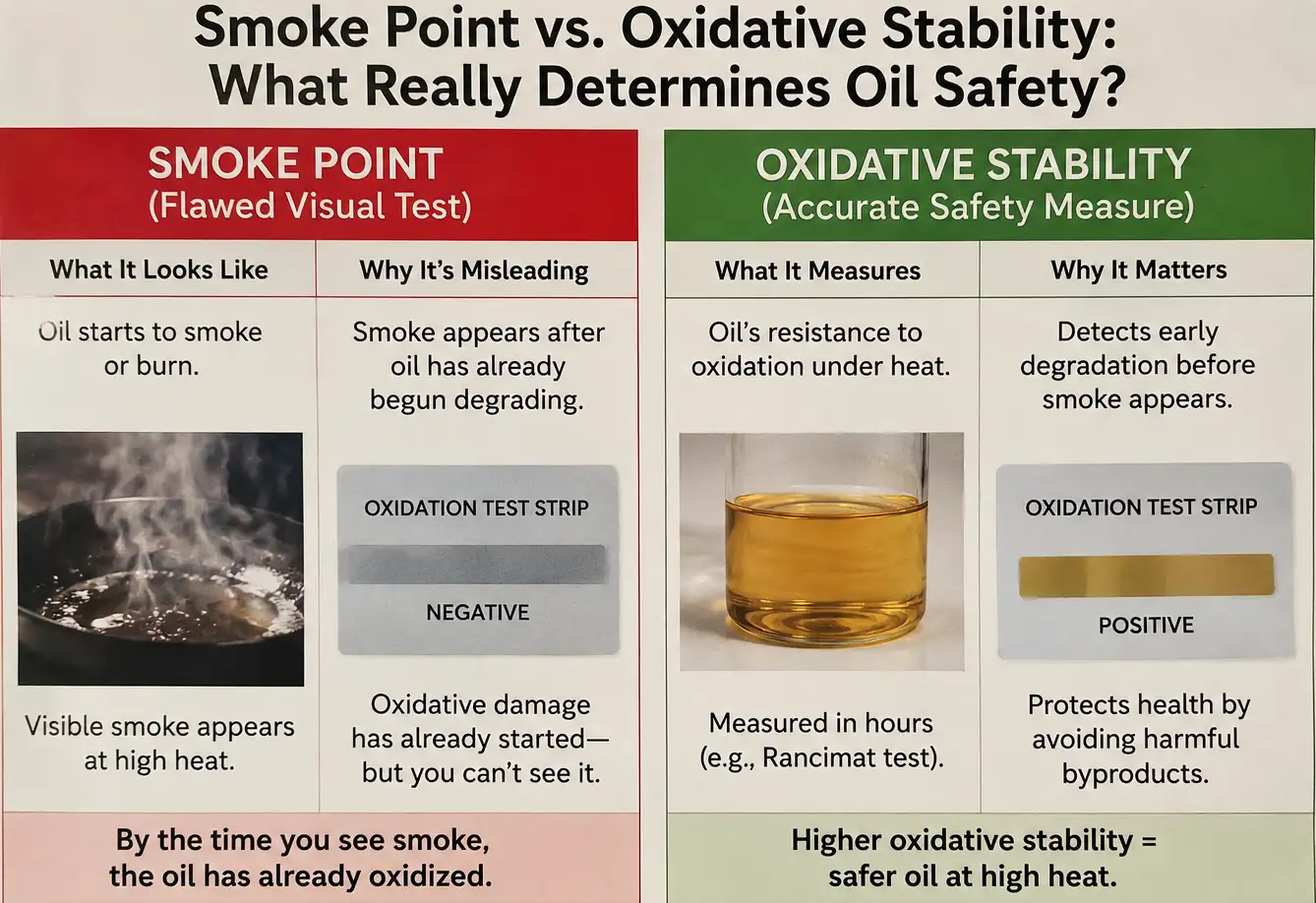
A peer-reviewed study published in the Foods journal in November 2025 confirmed this directly: smoke point relies on subjective visual assessment and is an unreliable criterion for selecting frying oils. The number also tells you nothing about what’s happening chemically inside the oil.
A refined oil can have a high smoke point and still form harmful compounds quickly because refining strips out its protective antioxidants. Selina Wang, research director at the UC Davis Olive Center, put it plainly: Smoke point isn’t linked to when oil begins to degrade.
The real measure is oxidative stability how well an oil resists breaking down and forming harmful compounds under heat. And by that standard, the story changes completely.
Extra Virgin Olive Oil Is More Stable Than You Think
A 2019 study in Food & Function tested extra virgin olive oil (EVOO) against canola and peanut oil in a deep-fryer. EVOO lasted more than 28 hours before reaching unsafe levels of harmful compounds. Canola and peanut oil hit that point at 18,20 hours.
In another test by an ISO 17025 accredited lab (Modern Olives Laboratory Services), EVOO produced only 10.5% polar compounds after 6 hours at 356°F.
Seed oils hit 20% or more under the same conditions. Polar compounds are what form when oil breaks down fewer means safer. Why does EVOO hold up so well? Two reasons. First, it’s low in polyunsaturated fats (PUFAs), the fats that oxidize fastest under heat. EVOO has 8,14% PUFA content. Canola has 28%. Grapeseed oil has 70%.
Second, EVOO is rich in polyphenols, natural antioxidants that protect the oil from breaking down. No other common cooking oil has both advantages at once.
There is one honest caveat. Cooking does reduce those polyphenols by 40,75%, depending on temperature. So you still get some benefit cooking with EVOO, but you get the most benefit from using it raw. More on that in the protocol below.
Why Your Oil Choice Matters More After 50?
After 50, your body produces fewer antioxidants on its own. Chronic inflammation becomes more common. And the foods you eat, including the oils you cook with, play a bigger role in managing that inflammation.
EVOO contains three specific polyphenols that researchers have studied closely: hydroxytyrosol, oleuropein, and oleocanthal.
A 2025 narrative review in PMC (covering research from late 2024 through early 2025) found that these compounds directly protect mitochondrial function, the energy centers in your cells, and reduce oxidative stress. Both of these processes decline with age.
The PREDIMED study, one of the largest diet trials ever conducted, found that a Mediterranean diet rich in EVOO reduced mortality risk by 26%. That’s not a supplement trial. That’s real food, eaten daily, over time. And here’s the important context on seed oils.
A June 2025 analysis from the Johns Hopkins Bloomberg School of Public Health made this clear: much of the harm attributed to seed oils comes from their use in ultra-processed packaged foods, not from home cooking with moderate amounts of canola or sunflower oil. The oil in a bag of chips is a different situation than a tablespoon in your pan.
The 3-Part Oil Swap Protocol
You don’t need a dozen oils. You need three. Each one has a specific job.
Part 1 — Daily Cooking: Use Extra Virgin Olive Oil

Use EVOO for sautéing vegetables, cooking eggs, making sauces, and roasting at temperatures under 375°F. This covers most of what you cook on a typical day.
EVOO handles everyday cooking temperatures well. Sautéing happens around 248,356°F. EVOO’s safe range starts at 350°F and goes up to 410°F, depending on quality. You have a real margin there.
What to buy: Look for extra virgin on the label, not just olive oil. Check for a harvest date, not just a best-by date. Fresh oil has more polyphenols. Buy it in a dark glass bottle. Single-origin EVOO from a named producer is usually higher quality than generic blends.
Practical tip: If your oil is smoking in the pan, your heat is too high, or your oil is old. Turn it down or replace the bottle.
Part 2 — High Heat: Use Avocado Oil
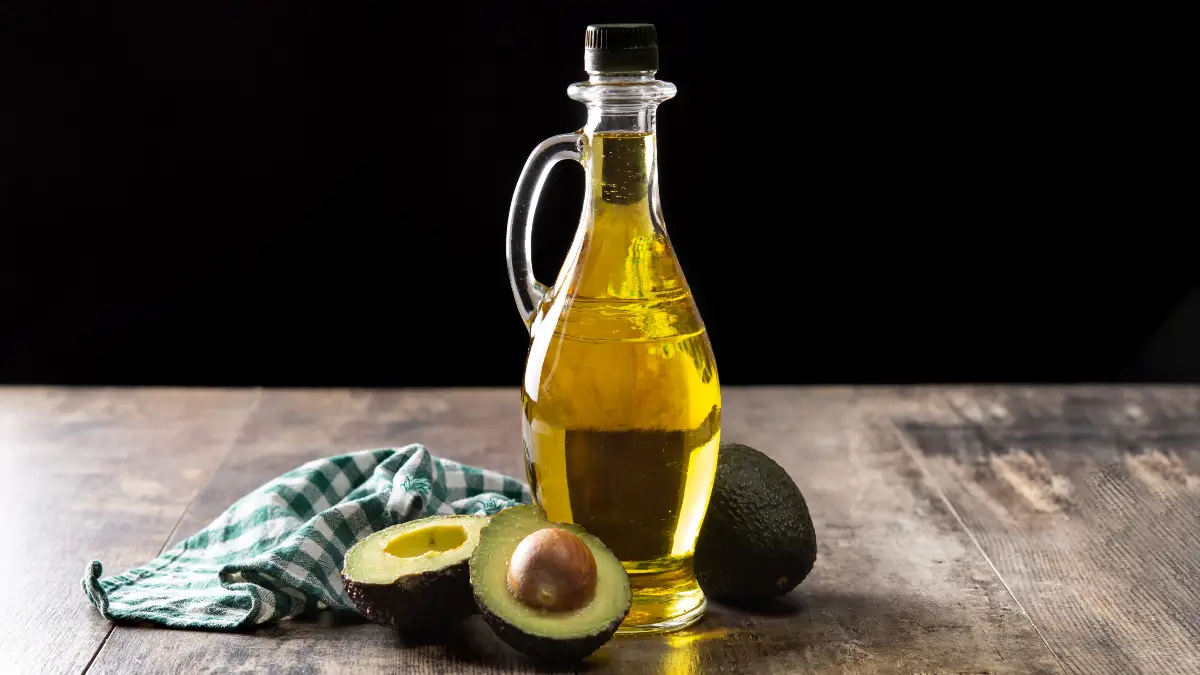
When you’re searing meat, stir-frying, grilling, or roasting above 400°F, that’s when you switch to refined avocado oil. Its smoke point is around 500,520°F. It’s stable at temperatures EVOO isn’t designed for.
Avocado oil is over 50% monounsaturated fat (the same category as olive oil), contains Vitamin E, and holds up well under prolonged high heat. The Cleveland Clinic notes it as a healthy high-heat option for daily use.
Be honest about one thing: most avocado oil in stores is refined. It doesn’t have the deep polyphenol content that EVOO has. It’s a practical tool, not a nutritional upgrade. Use it when the heat demands it, not for everything.
What to buy: Look for a single-ingredient label: 100% avocado oil. ConsumerLab.com found that Chosen Foods is a reliable, independently tested option for purity.
Part 3 — Finishing and Dressings: Use Cold-Pressed Oils Raw
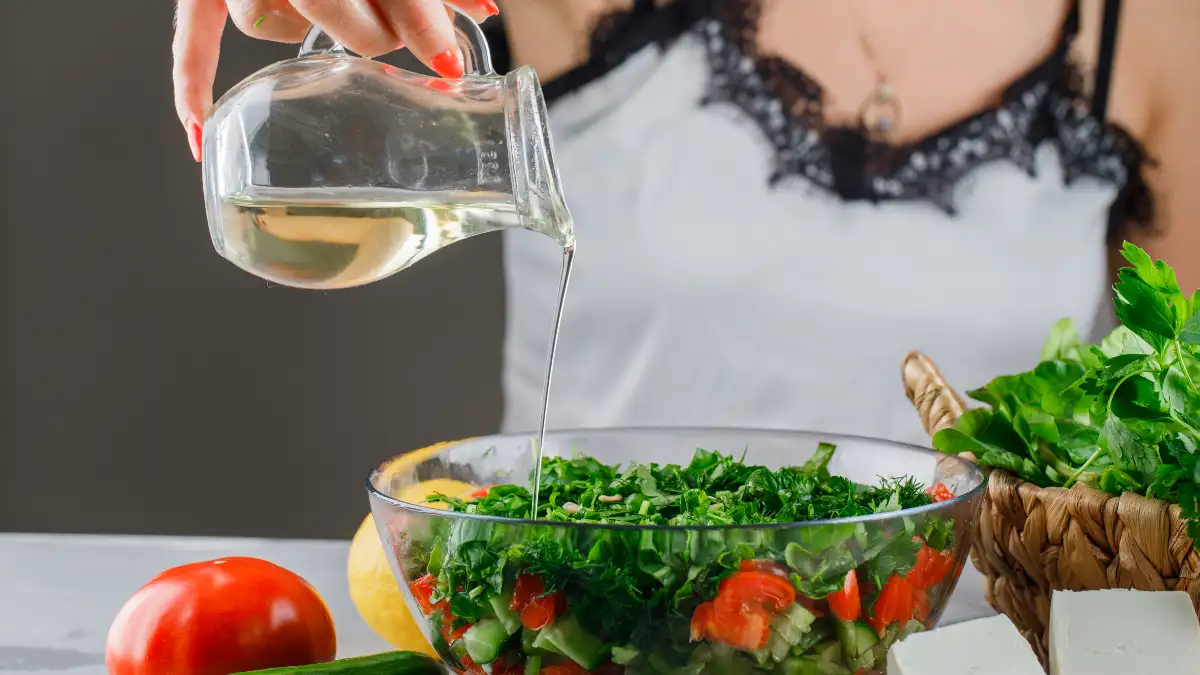
This is where you get the most health benefit per tablespoon. When EVOO isn’t heated, none of its polyphenols are destroyed. Drizzle it over finished dishes, use it in salad dressings, dip bread in it, or mix it into hummus.
One to two tablespoons of raw, high-quality EVOO daily is the usage pattern most consistent with the Mediterranean diet research. This is also where cold-pressed flaxseed oil or walnut oil can add omega-3 value; both are fragile under heat but excellent raw.
Practical tip: Keep two bottles, one for cooking (can be mid-range EVOO), one for finishing (the best bottle you can afford). The finishing oil is where quality pays off most.
Which Oils to Use Less Often
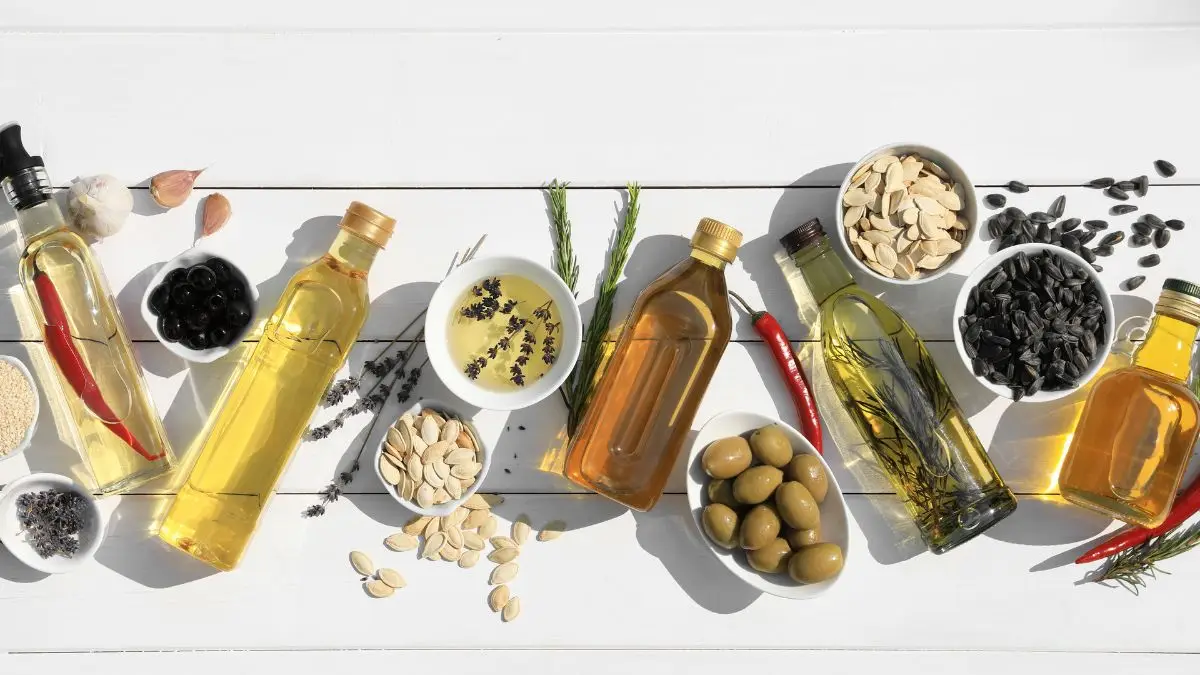
This isn’t about fear. It’s about priorities. Grapeseed, corn, and soybean oils have PUFA content up to 70%. That makes them oxidize faster under high heat. They’re not ideal for your everyday high-temperature cooking. That said, the science doesn’t condemn moderate home use.
The real problem with these oils is their presence in ultra-processed foods, not a tablespoon in your stir-fry once a week.
A 2025 review in Nutrition Reviews titled Are Seed Oils the Culprit in Cardiometabolic and Chronic Diseases? found the evidence mixed. No single oil is uniquely toxic. The pattern of your whole diet matters more than any single ingredient.
The practical takeaway: if you’re using EVOO for daily cooking, avocado oil for high heat, and quality oils raw, you’ve already made the shift that matters. You don’t need to audit every drop of oil in every dish.
Conclusion
The smoke point rule is outdated. EVOO is stable at everyday cooking temperatures and backed by decades of real research. After 50, the right oil protocol EVOO daily, avocado oil for high heat, cold-pressed oils raw is one of the simplest, most evidence-backed habits you can build. Start tonight. Check the harvest date on your olive oil bottle.
⚠️MEDICAL DISCLAIMER
This article is for informational purposes only. It does not replace medical advice, diagnosis, or treatment. The information covers smoke point, oxidative stability, extra virgin olive oil (EVOO), seed oils, polyphenols, inflammation, mitochondrial function, oxidative stress, avocado oil, cold-pressed oils, omega-3, and dietary patterns for ages 50+.
Individual results vary based on age, health status, and fitness level. Before changing your exercise routine, diet, or supplement use, talk to your doctor or a qualified health professional first. If you experience chest pain, dizziness, severe joint pain, or any sudden symptom during or after exercise, stop immediately and seek medical care.