You passed your last check-up. Numbers looked fine. Doctor nodded. And yet here you are, reading an article about heart damage after 60: because somewhere underneath that “all clear,” something doesn’t feel settled.
That instinct deserves respect.
For adults over 60 who exercise, watch their diet, and stay on top of annual screenings, the standard medical playbook offers a false ceiling of safety. The real risk isn’t what your bloodwork catches. It’s what it doesn’t, the daily habits so ordinary they never trigger alarm until the damage is already done.
This article names seven of them. By the end, you’ll know exactly which habits to question in your own routine and what to ask your doctor instead of waiting to be told.
| # | What’s Coming | Open Question |
|---|---|---|
| 1 | The exercise that still fails you | Why isn’t your workout protecting your heart? |
| 2 | Your body’s 3 AM problem | What’s happening to your arteries while you sleep? |
| 3 | The label your grocery store trusts | Why is “heart-healthy” packaging working against you? |
| 4 | Your dentist knows something | What does your mouth have to do with your heart valves? |
| 5 | Loneliness with a body count | How does being alone damage you the same way smoking does? |
| 6 | The number your doctor calls normal | What’s quietly tearing your artery walls right now? |
| 7 | The test you think protects you | What is your clean EKG actually missing? |
The “Active Sedentary” Trap: Sitting Too Long
You might hit the gym or take a morning walk, but if you spend the rest of your day in a chair, you are falling into the “active sedentary” trap. A landmark Mass General 2025 study published in the Journal of the American College of Cardiology identified a dangerous “inflection point” for heart health.2

The research found that sitting for more than 10.6 hours a day a common threshold for those who enjoy reading or television in retirement increases the risk of heart failure by 40%. Alarmingly, this risk remains elevated even for those who meet the recommended 150 minutes of weekly exercise.2 Dr. Shaan Khurshid, the study’s lead, emphasizes that sedentary behavior is an independent risk factor that exercise alone cannot fully “cancel out.” 2
Actionable Tip: Follow the “30:2 Rule.” For every 30 minutes of sitting, stand and move for 2 minutes to reset your vascular flow.
Ignoring the “3:00 AM” Vascular Warning (Sleep Apnea)
For years, snoring was seen as a nuisance; surgeons view it as a vascular emergency. New research from Oregon Health & Science University (OHSU) has uncovered a specific circadian link between sleep apnea and nocturnal heart attacks. Unlike the general population, those with untreated apnea experience a “vascular storm” during the night when the body should be recovering.3
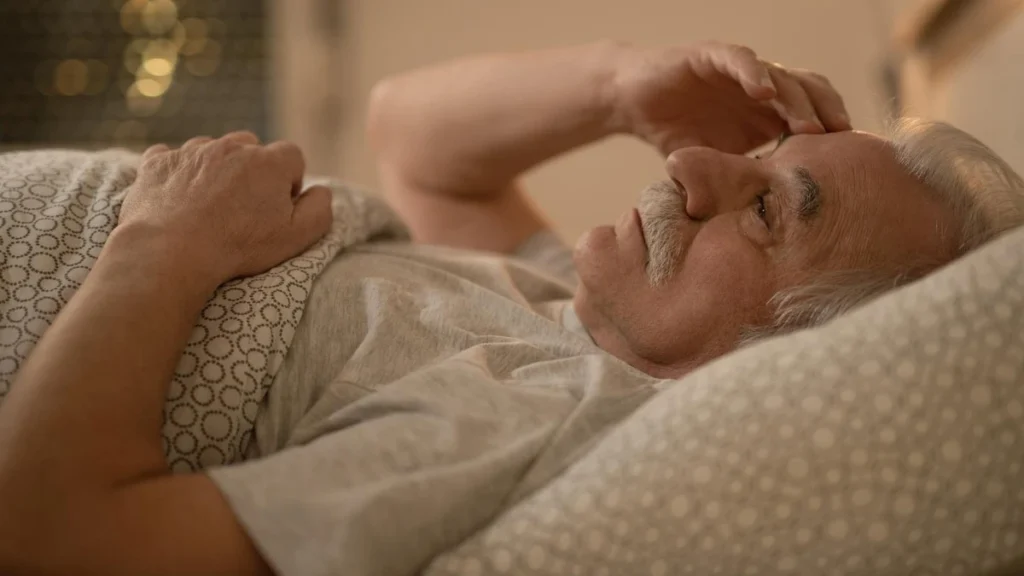
A massive 2026 meta-analysis in The Lancet Respiratory Medicine, involving over 1 million patients, proved that consistent CPAP therapy reduces the risk of heart-related death by a staggering 55% in seniors.4 Dr. Atul Malhotra of UC San Diego notes that every additional hour of treatment acts as a “dose-response” for your heart, physically repairing the lining of your blood vessels while you sleep.4
Actionable Tip: If you wake up with a dry mouth or morning headache, request a “home sleep study” immediately.
The “Healthy” Ultra-Processed Food Illusion
Many seniors reach for “low-fat” yogurt, “heart-healthy” cereals, or packaged whole-grain crackers. However, research published in peer-reviewed literature reveals these ultra-processed foods (UPFs) are damaging your arteries regardless of their “healthy” labels.5

Research warns that UPFs trigger systemic inflammation and oxidative stress. The data is precise: every 100 grams of ultra-processed food consumed daily roughly the weight of a single granola bar and a serving of flavored yogurt increases your hypertension risk by 14.5%. These foods contain “cosmetic additives” that disrupt gut microbiota, which in turn spikes blood pressure.5
Actionable Tip: Check the ingredient list. If it contains more than five ingredients or items you wouldn’t find in a home kitchen, it’s a UPF.
The “Silent” Oral-Heart Connection
It may seem unrelated, but your dentist might be your heart’s best friend. Chronic gum disease allows specialized bacteria to enter your bloodstream, where they can attach to weakened areas of the heart. This creates a significant risk for endocarditis and permanent heart valve damage, especially in seniors with previous cardiac history.

Surgeons are increasingly finding oral bacteria embedded in arterial plaque.6 Maintaining oral health isn’t just about your smile; it’s about preventing a constant low-grade infection from taxing your immune system and inflaming your cardiovascular walls.
Actionable Tip: Implement the “2-Minute Flossing Rule” every night. Flossing removes the specific bio-films that brushing alone misses.
Social Isolation as a Physical Toxin

Loneliness is no longer just a mental health concern; it is a physiological one. A 2025 Michigan Medicine poll found that 1 in 3 older adults are still experiencing significant social isolation, which triggers a chronic “fight or flight” response in the body.7
This persistent state keeps cortisol levels high, leading to stress-induced heart damage and stiffening of the arteries. According to the U.S. Surgeon General, the physical toll of social isolation is equivalent to smoking 15 cigarettes a day. For those over 60, a lack of regular, meaningful interaction is as much a cardiac risk as high cholesterol.8
Actionable Tip: Schedule one “in-person” social interaction per week that involves a shared activity, such as a local walking club or volunteering.
The “Normal” Blood Pressure Fallacy
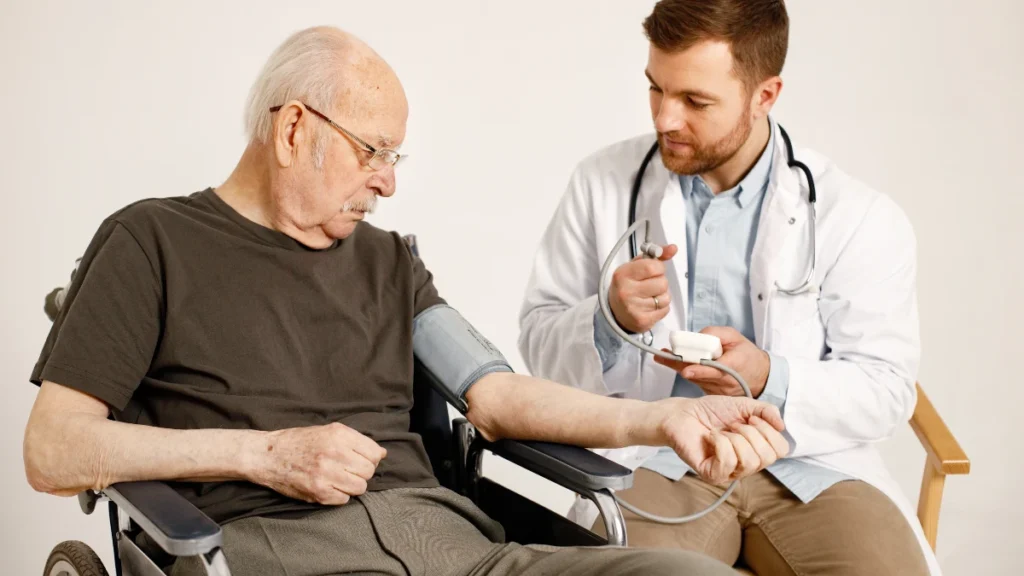
For decades, many doctors told seniors that a systolic pressure of 140 was “normal for your age.” In 2025, that consensus has shifted. New clinical guidelines favor much tighter blood pressure management, targeting a systolic range of 120-130 mmHg.9
Allowing “silent hypertension” to persist at 140/90 mmHg causes micro-tears in the arterial health, which then become “landing strips” for plaque. By the time symptoms appear, the damage to the heart muscle is often irreversible. Managing your pressure early prevents the “remodeling” of the heart that leads to diastolic heart failure.
Actionable Tip: Invest in a validated home BP monitor and keep a “Morning/Evening Log” for one week to show your doctor.
Over-Reliance on “Old” Screenings
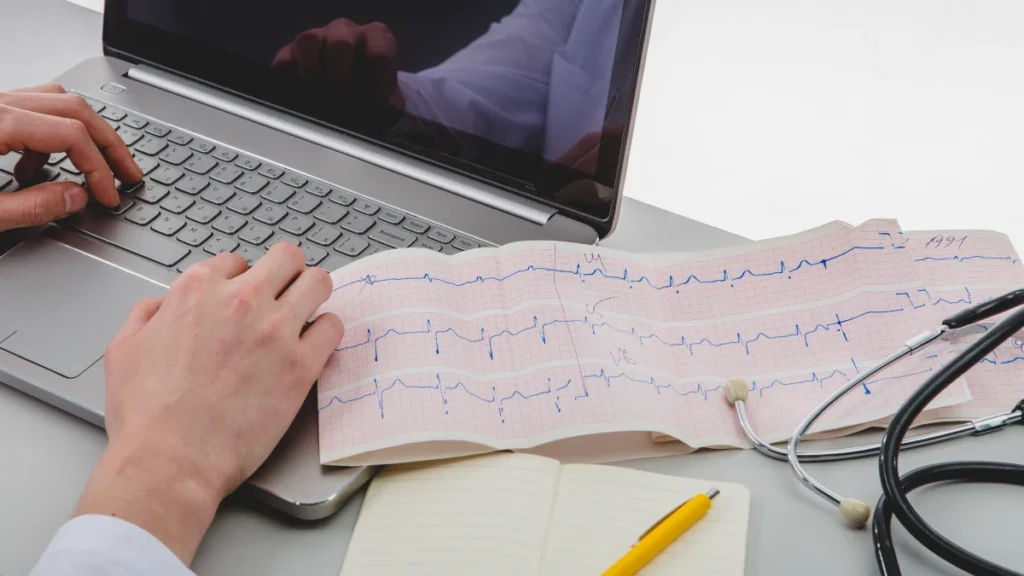
The most dangerous habit of all is assuming a clear EKG or a basic treadmill test means you are safe. As the Mount Sinai 2025 study showed, these tools miss nearly half of patients because they don’t see the “silent plaque” hidden in the vessel walls.1
Instead of relying on risk scores (like ASCVD), 2025 cardiology focuses on cardiac screening that actually visualizes the disease. A Calcium Score (CAC) or a CT Coronary Angiography can identify “soft plaque” before it has the chance to rupture and cause a heart attack.
Actionable Tip: Ask your cardiologist: “Based on the 2026 Mount Sinai data, am I a candidate for a Calcium Score to check for silent plaque?”
Your Heart Doesn’t Wait for Symptoms
Seven habits. None of them dramatic. That’s the whole problem.
The seniors facing the steepest heart damage after 60 aren’t ignoring their health, they’re managing it confidently, by the wrong measures. The gap between “I feel fine” and “irreversible damage” is filled with exactly the kind of ordinary, unremarkable daily behavior this article has walked you through.
You don’t need to overhaul your life. You need to close seven specific gaps: in how you sit, sleep, eat, brush your teeth, connect with people, read your blood pressure, and talk to your cardiologist.
Start with the one that landed hardest. That’s your first conversation.
⚠️DISCLAIMER:
This article is for informational purposes only and does not constitute medical advice, diagnosis, or treatment. The content addresses heart damage after 60 and is intended for general educational purposes only. Health conditions vary significantly between individuals, always consult a licensed physician or qualified healthcare provider before making any decisions about your health or medical care.
References
- Mueller AS, Leipsic J, Tomey M, Argulian E, Narula J, Ahmadi A. Limitations of Risk- and Symptom-Based Screening in Predicting First Myocardial Infarction. JACC: Advances. 2025;4(12):102361. https://www.mountsinai.org/about/newsroom/2025/current-heart-attack-screening-tools-are-not-optimal-and-fail-to-identify-half-the-people-who-are-at-risk
- Khurshid SS, et al. Sedentary Behavior and Incident Cardiovascular Disease. Journal of the American College of Cardiology. Published November 15, 2024. https://www.acc.org/about-acc/press-releases/2024/11/15/16/33/sitting-too-long-can-harm-heart-health-even-for-active-people
- Thosar SS, Bowles NP, Butler MP, et al. Endogenous Circadian System Attenuates Nighttime Vascular Endothelial Function in People With Untreated Obstructive Sleep Apnea. Journal of the American Heart Association. 2025;14(22):e043596. https://news.ohsu.edu/2025/11/17/study-bodys-circadian-rhythm-may-increase-overnight-cardiovascular-risk-in-people-with-sleep-apnea
- Benjafield AV, Pépin JL, Cistulli PA, et al. Positive airway pressure therapy and all-cause and cardiovascular mortality in people with obstructive sleep apnoea: a systematic review and meta-analysis. The Lancet Respiratory Medicine. Published March 19, 2025. https://www.thelancet.com/journals/lanres/article/PIIS2213-2600(25)00002-5/abstract
- Li M, Shi Z. Ultra-Processed Food Consumption Associated with Incident Hypertension among Chinese Adults. Nutrients. 2022;14(22):4783. https://www.ncbi.nlm.nih.gov/pmc/articles/PMC9692874/
- Tran AH, et al. Periodontal Disease and Atherosclerotic Cardiovascular Disease: A Scientific Statement From the American Heart Association. Circulation. Published December 16, 2025. https://newsroom.heart.org/news/gum-disease-may-be-linked-to-plaque-buildup-in-arteries-higher-risk-of-major-cvd-events
- Malani PN, Solway E, Kirch M, Singer DC, Roberts JS, Kullgren JT. Loneliness and Social Isolation Among US Older Adults. JAMA. 2025;333(3):254–257. https://www.michiganmedicine.org/health-lab/1-3-older-adults-still-experience-loneliness-and-isolation
- U.S. Surgeon General’s Advisory: Our Epidemic of Loneliness and Isolation. U.S. Department of Health and Human Services, 2023. https://www.hhs.gov/sites/default/files/surgeon-general-social-connection-advisory.pdf
- Jones DW, Ferdinand KC, Taler SJ, et al. 2025 AHA/ACC Guideline for the Prevention, Detection, Evaluation and Management of High Blood Pressure in Adults. Hypertension. 2025;82:e212–e316. https://www.acc.org/latest-in-cardiology/articles/2025/10/01/01/new-in-clinical-guidance-hbp