

If your hands and feet stay cold even when the rest of the room is warm, pay attention. Most people brush this off. They blame bad circulation. They put on thicker socks and move on. But here’s what most people and even most doctors never mention: cold hands and feet after 50 are often a direct sign that your body is running low on a molecule called nitric oxide.
This isn’t a rare condition. It isn’t complicated. And it is not something you just have to live with. Exactly what nitric oxide is, why your body makes less of it as you age, and most importantly, what you can do about it starting this week. No prescriptions. No expensive treatments. Just clear steps backed by real research.
What Is Nitric Oxide and Why Do Your Hands and Feet Need It?
Think of your blood vessels like garden hoses. When a hose is wide open, water flows easily. When it’s squeezed tight, pressure builds, and less gets through. Nitric oxide, often called NO, is the signal that tells your blood vessels to open up wide. It relaxes the muscle walls inside your arteries and veins. That process is called vasodilation.
When NO does its job well, warm, oxygen-rich blood flows freely all the way to your fingertips and toes. When NO drops, those vessels stay tighter than they should. Blood flow slows. Your core keeps the warmth. Your hands and feet get left out in the cold, even in a warm room.
Nitric oxide is not a vitamin or a mineral. It is a gas molecule made right inside the walls of your blood vessels. The inner lining of your blood vessels, called the endothelium, is the factory. It makes no sense on-demand, or it is supposed to. There are two ways your body produces it. The first is through an enzyme called eNOS, which converts the amino acid L-arginine into NO.
The second is through food, you eat nitrate-rich vegetables, oral bacteria convert those nitrates to nitrite, and your body turns that into NO. This second pathway is a backup system. As you will see, that backup becomes very important after 50. Here is one more important fact: NO only lasts a few seconds in your body. Your system has to keep making it constantly.
Why Your Body Makes Less Nitric Oxide After 50?
Here is where this gets personal.
By age 40, your body’s NO production is already declining. By 65, studies suggest it may have dropped to just 15–25% of what it was in your younger years. That is a massive fall.
Four things drive this drop.
1. Your blood vessel walls are aging. The endothelium that inner lining that makes NO, loses roughly 10–12% of its function every decade. Less healthy lining means less NO output, full stop.
2. Your NO-making enzyme is slowing down. The eNOS enzyme is responsible for converting L-arginine into NO. As you age, this enzyme becomes less active. Even if you have enough raw material, the machine is running more slowly.
3. A compound called ADMA is getting in the way. ADMA asymmetric dimethylarginine) It is a natural byproduct that your body produces more of as you age. It directly blocks L-arginine from being used by eNOS. Think of it as someone standing in the factory doorway, blocking supplies from getting in.
4. Free radicals are destroying NO before it works. Aging increases oxidative stress, which means more free radicals floating around your body. These molecules attack and destroy NO the moment it is made. Less of it survives long enough to reach your blood vessels.
A December 2025 peer-reviewed study from Temple University’s Aging + Cardiovascular Discovery Center confirmed that this drop in NO directly leads to stiffer blood vessels, worse heart function, and endothelial breakdown, all of which they called hallmarks of cardiovascular aging.
The same research confirmed that depleted BH4 levels and other age-related changes push the eNOS enzyme to stop working correctly altogether. Cold hands and feet are not just an annoyance. They are your body’s early warning light.
It’s Not Just Cold Hands — 5 Other Signs Your Nitric Oxide Is Low
Cold extremities are the most visible sign. But low NO rarely shows up alone. According to Dr. Ron Goedeke’s April 2026 clinical review, the most common signs of NO deficiency include:

- Brain fog Especially an afternoon slump in focus and memory. When blood vessels serving your brain are slightly constricted, your brain gets less oxygen. Clear thinking takes more effort.
- Creeping blood pressure: NO is what your cardiovascular system uses around the clock to keep vessels relaxed. When it drops, your heart has to push harder. Blood pressure creeps up.
- Slow recovery after exercise: Muscles that don’t get enough blood flow take longer to heal. You feel sore longer than you should.
- Unexplained fatigue: Your whole cardiovascular system is working harder than it needs to. That takes energy.
- Erectile dysfunction in men aged 45,65: This one surprises people. But the blood vessels involved are tiny. They show up vascular problems early. It is often the first measurable sign that circulation is suffering systemwide.
Dr. Goedeke pointed out that it is worth repeating: nitric oxide does not show up on a standard blood test. Most people are told their symptoms are just stress, just aging, or nothing to worry about, long before anyone considers vascular function as the cause. If three or more of these symptoms sound like you, treat this as a system-wide circulation issue.
5 Ways to Restore Nitric Oxide After 50 (Backed by Research)
The good news is real. Unlike many things that decline with age, NO production responds quickly to the right inputs. Your body wants to make more of it. You just have to give it the right conditions.
1. Eat Nitrate-Rich Vegetables Every Day
This is the single most direct thing you can do. Arugula has the highest dietary nitrate content of any common food. Beets, spinach, kale, and celery are also excellent. When you eat these, oral bacteria convert the nitrates to nitrite. Your body then converts nitrite into NO through a backup pathway that operates independently of your aging eNOS enzyme.
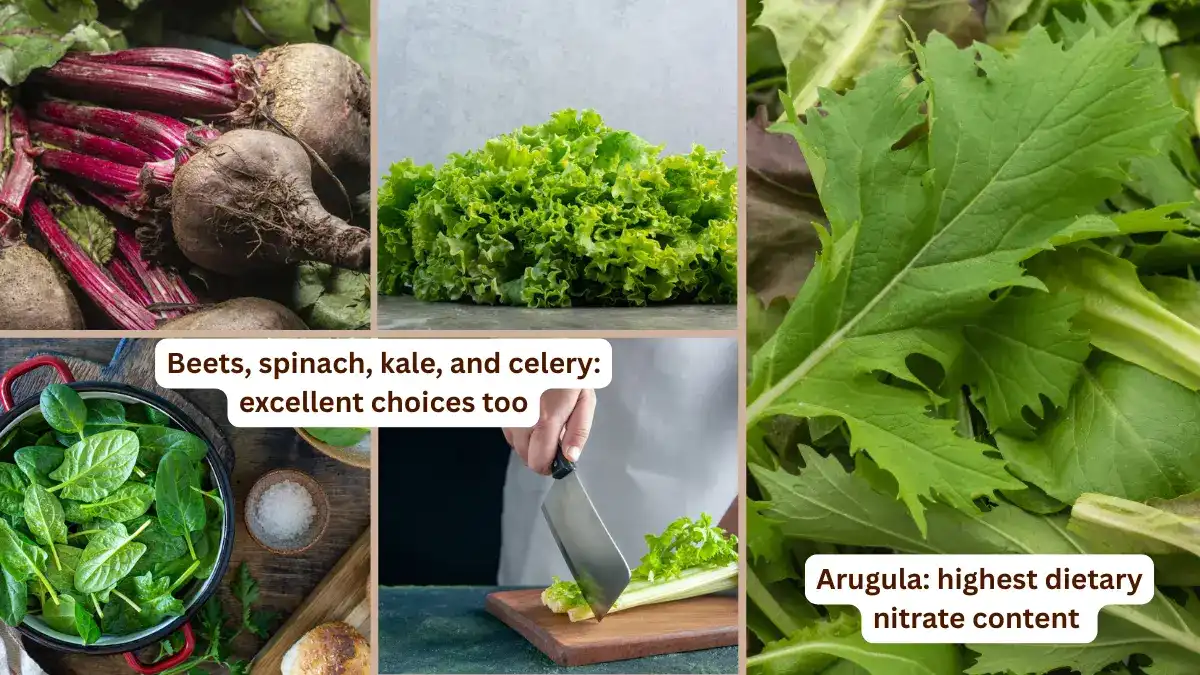
This pathway bypasses the age-related decline almost entirely, starting point: one cup of arugula, or half a medium-sized beet, every single day. You can add arugula to eggs, a salad, or a smoothie. Roasted beets work just as well as raw ones. Clinical trials studying beetroot juice supplementation for Raynaud’s phenomenon.
A condition where hands and feet turn white or blue from cold-triggered vasospasm, dietary nitrate is a low-cost, practical way to improve blood flow directly to the extremities. The mechanism is the same one at work in age-related NO decline.
2. Stop Destroying Your NO Production Every Morning
This is the part most people never hear about. And it may be the most actionable change on this list. Your mouth contains bacteria that are essential to the dietary nitrate pathway. These bacteria convert nitrates from your food into nitrite, the first step before your body can make NO from what you eat.
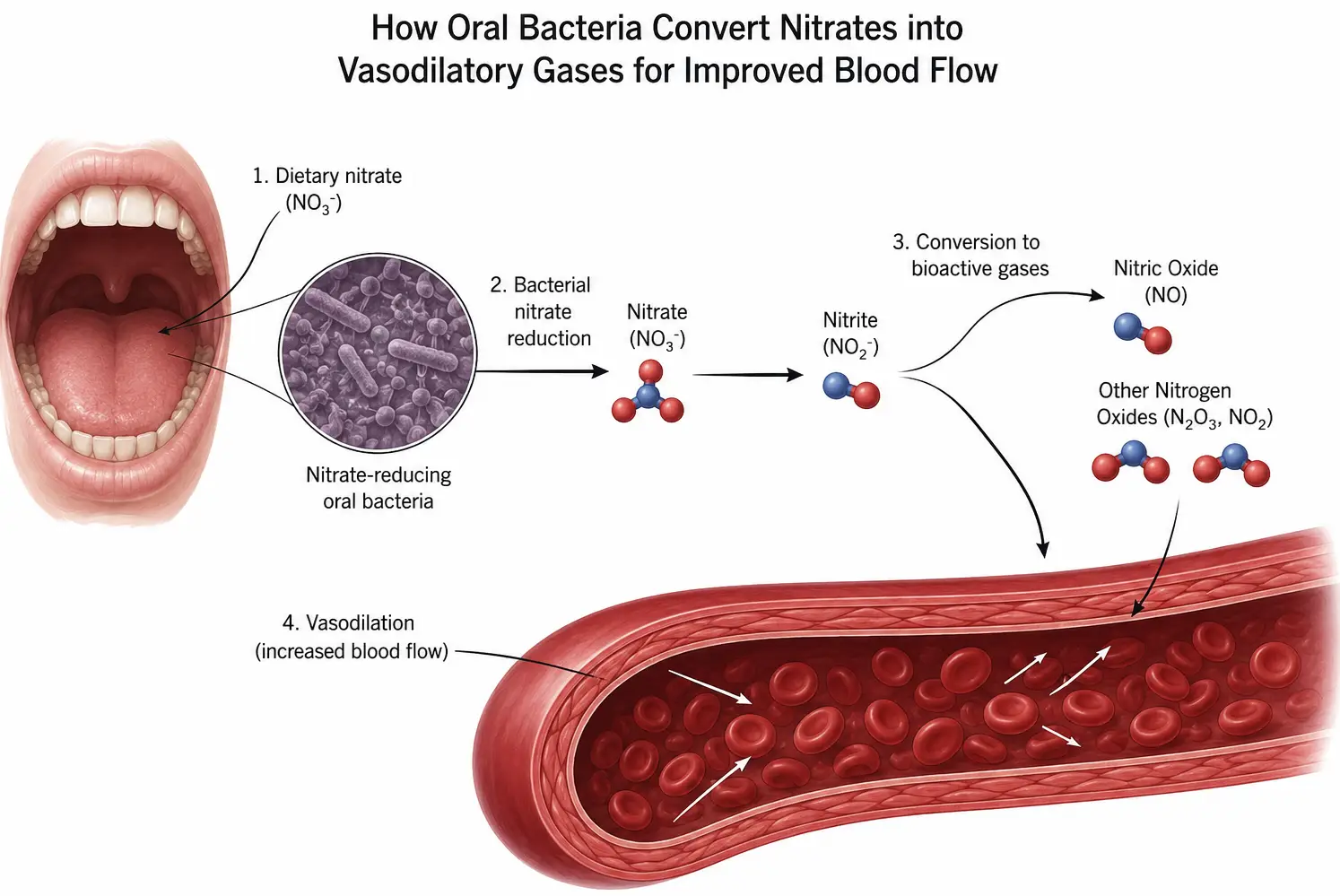
Antiseptic mouthwash wipes them out. Research published by Perio Implant Advisory confirmed that antiseptic mouthwashes eradicate oral bacterial flora, abolish the entire nitrate-nitrite-NO pathway, and create NO-deficient conditions linked to higher blood pressure. A 2025 study specifically confirmed that CPC-based mouthwash inhibits nitrate synthesis in the mouth.
You may be eating arugula and beets every day. But if you rinse with Listerine right after, you just blocked the bacteria needed to use them. Replace your daily antiseptic mouthwash with a saline rinse, salt water, or plain water. Use antibacterial mouthwash only when your dentist specifically recommends it for a clinical reason, not as a daily habit.
3. Move Your Body — Especially in Short Bursts
Exercise is one of the most powerful tools for raising NO. When blood flows faster through your vessels during exercise, it creates friction against the vessel walls. That friction is a direct trigger for eNOS to produce NO. Your body essentially reads the physical stress as a demand signal and responds by opening up blood vessels.
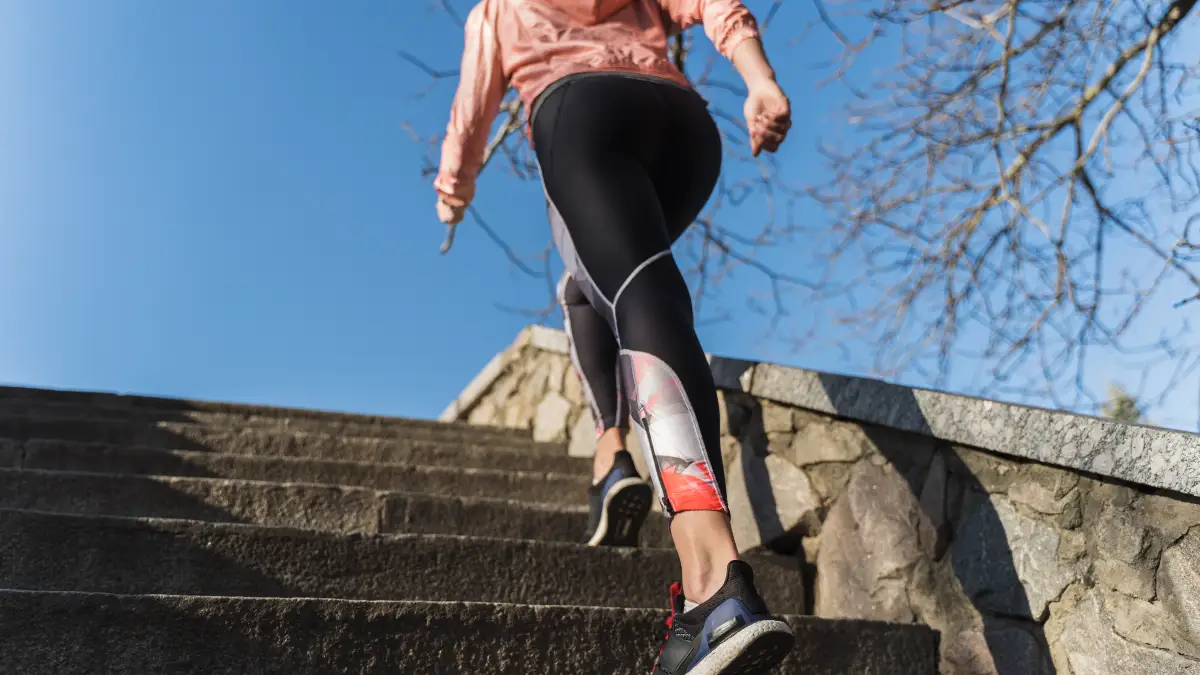
Both moderate steady exercise, like a 20-minute walk, and short, high-effort bursts like sprinting up a flight of stairs stimulate this effect. HIIT-style bursts appear especially effective because they create strong, rapid spikes in blood flow that give your vessel walls a more intense signal.
Walk briskly for 20–30 minutes, five days a week. Add two sessions per week of 30-second high-effort bursts, fast cycling, stair climbing, or anything that makes you breathe hard for half a minute. You do not need a gym. You need movement.
4. Protect the NO You Make With Antioxidants
Making more NO is only half the battle. Free radicals destroy it before it can work. Antioxidants, especially vitamin C, vitamin E, and plant polyphenols, neutralize those free radicals and protect NO long enough for it to do its job. They extend the working life of every molecule your body produces.
Pomegranate is particularly well-studied here. Research by Trexler et al. 2014 found that pomegranate extract improved blood flow and exercise performance specifically because its polyphenols reduce oxidative stress in the endothelium.
Add berries, citrus, bell peppers, green tea, or 100- 150ml of pure pomegranate juice to your daily diet. These are not supplements. They are just food. And they directly protect the NO your body is working to make.

5. Look Into L-Citrulline (With Your Doctor)
L-arginine is the raw material your eNOS enzyme needs to make NO. But taking L-arginine as a supplement does not work well. Your gut breaks most of it down before it reaches your blood. L-citrulline is different. It converts to L-arginine in your kidneys with much higher bioavailability.
Research shows that L-citrulline at doses of 3,6 grams per day produces modest but measurable improvements in endothelial function and mild to moderate erectile dysfunction.
If you take prescription nitrates for chest pain or heart conditions, do not add any NO-boosting supplements without talking to your doctor first. The combination can cause a dangerous drop in blood pressure.
Your Simple Starting Protocol This Week
You do not need to do everything at once. Here is a realistic starting point.
| Time | Action | Why It Helps |
|---|---|---|
| Morning | Add arugula or beets to breakfast | Directly feeds the dietary NO pathway |
| Morning | Skip antiseptic mouthwash; use saline or plain water | Preserves the bacteria that convert nitrates to NO |
| Mid-day | 20-minute brisk walk | Creates shear stress that triggers eNOS |
| With meals | Add berries, citrus, or pomegranate juice | Antioxidants protect the NO you produce |
| 2–3x per week | Include roasted beets or beet powder | Sustained dietary nitrate support |
Start with one change if you want. The research points to the mouthwash swap and daily arugula as the most overlooked, easiest, and most impactful first steps for most people.
Conclusion
Cold hands and feet after 50 are not inevitable. They are a signal. They tell you that nitric oxide, the molecule your blood vessels use to stay relaxed and open, has declined. Three things are driving that decline: aging vessel walls, slower enzyme activity, and free radicals destroying what little NO gets made.
None of the fixes requires a prescription. They require food, movement, and one surprising habit swap most people have never heard of. Eat the arugula. Drop the antiseptic mouthwash. Walk every day. Add antioxidants with meals. Then track your hands and feet for 30 days. Science says you will feel the difference.
⚠️MEDICAL DISCLAIMER
This article is for informational purposes only. It does not replace medical advice, diagnosis, or treatment. The information covers nitric oxide, vasodilation, L-arginine, nitrate-rich vegetables, eNOS enzyme, aging and circulation, cold extremities, brain fog, blood pressure, exercise recovery, erectile dysfunction, dietary nitrates (arugula, beets), oral bacteria and mouthwash, HIIT and moderate exercise, antioxidants, and L-citrulline.
Individual results vary based on age, health status, and fitness level. Before changing your exercise routine, diet, or supplement use, talk to your doctor or a qualified health professional first. If you experience chest pain, dizziness, severe joint pain, or any sudden symptom during or after exercise, stop immediately and seek medical care.