

You got through it. You kept moving, kept showing up, kept telling people you were fine. Maybe you had to. Maybe that was the only way forward.
But grief you never fully expressed does not dissolve on its own: research now shows it can alter the biology of your immune system in ways that make you physically sick.
This is not a metaphor. Scientists studying the grief and immune system connection have found measurable changes in inflammation, immune cell behavior, and the body’s response to infection, and how you handle loss appears to matter as much as the loss itself.
Why keep reading:
- Learn what your immune cells do differently when you suppress grief versus when you let it move
- Discover why “staying strong” after loss carries a biological cost most doctors never mention
- Find out which specific factor, more than time, predicts whether your immune function recovers after bereavement
- Learn a research-backed 20-minute practice that has shown measurable effects on immune function in bereaved adults
Your Body Does Not Wait for You to Feel Ready to Grieve
You might not feel the weight of a loss right away. Life keeps pulling at you, and grief often gets postponed to a quieter moment that never quite comes. But your body does not postpone anything.
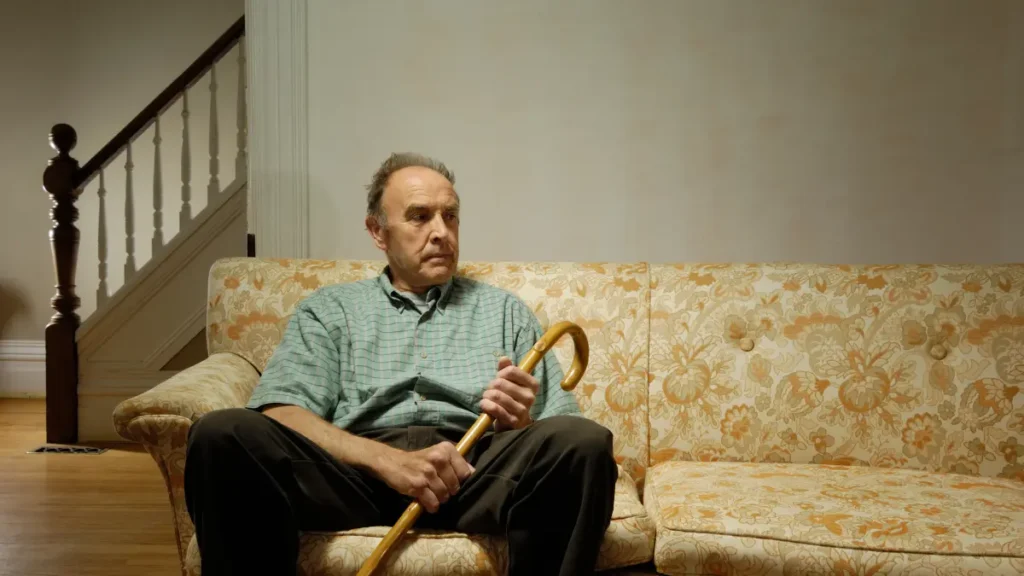
Bereavement is among the most physically disruptive events a person can experience, and the grief and immune system connection has been studied since 1977.¹
A systematic review published in Psychosomatic Medicine examined 41 years of research across 33 studies and found that bereaved people show higher levels of systemic inflammation, changes in immune cell gene expression, and a weaker antibody response to vaccines than their non-bereaved peers.¹
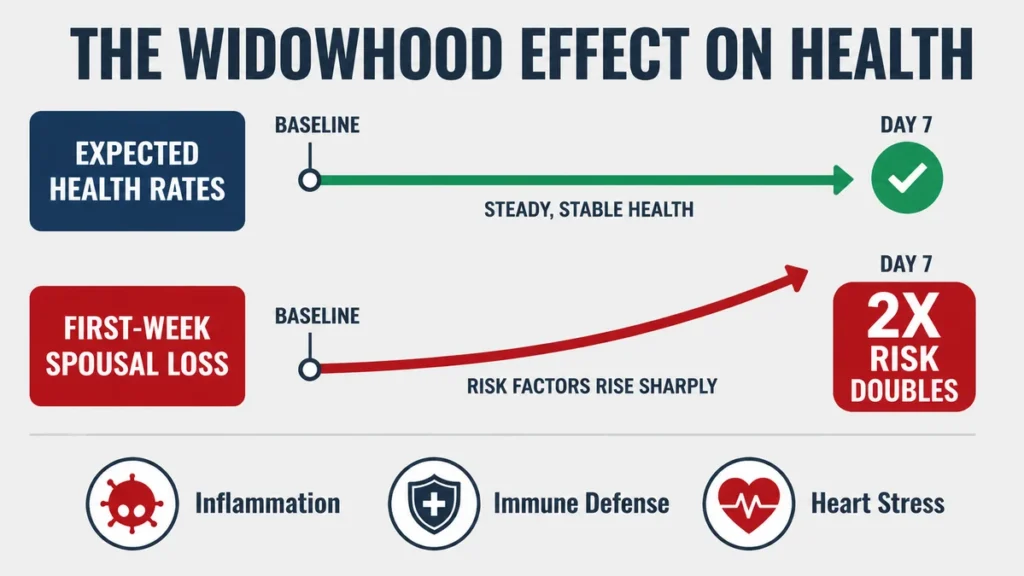
The widowhood effect [the measurably higher death rate among people who lose a spouse] is real and documented.²
In one large prospective study, the relative mortality risk in the first week after losing a spouse was more than double compared to expected rates.² This is not grief as a feeling. This is grief as a biological event.
Most health articles treat this risk as a sad footnote. It is not a footnote. It is the reason the rest of this article matters.
Direct challenge: “Time heals all wounds” is one of the most repeated phrases about grief. The evidence suggests that time alone may not be enough. What you do with grief during that time may actually determine the outcome for your immune system.
What Suppressed Grief Does to Your Immune Cells
Most people assume that once grief fades from the surface, the body is done with it. The science says otherwise.
In a 2020 study of 99 recently bereaved spouses, researchers measured the levels of pro-inflammatory cytokines [proteins that signal inflammation throughout the body] in participants’ blood and compared those levels to how often each person used emotional suppression: the practice of actively holding in their grief rather than letting it out.
Bereaved spouses who most frequently suppressed their emotions showed a significantly higher inflammatory response, including elevated levels of interleukin-6, tumor necrosis factor-alpha, and interferon-gamma.³
These are the same inflammatory markers that, when chronically elevated, are associated with heart disease, diabetes, and accelerated biological aging.
The immune cells that protect you from infection appear to read the emotional strategy you use to carry grief, and they respond differently when you suppress than when you express.
Grief inflammation is not a figure of speech. It is a measurable alteration in the chemicals your immune system uses to communicate. This alteration can persist well beyond the period when grief is visible on the outside.
That’s the real finding: the physical cost of suppression is not smaller than the cost of loss itself.
This is not evidence that expressing grief is always comfortable or always possible. Many bereaved adults over 50 who have quietly carried their losses live in families and cultures where expressing grief is understood as weakness or burden.
The study did not measure the social cost of suppression, only the biological one. No single study has tested the full chain from unexpressed grief to immune suppression: this picture is built from separate research threads, each testing a different piece.
But the biological signal is broadly consistent across studies reviewed spanning four decades of research, despite some heterogeneity in methods and findings.¹
The Cortisol Trap: Why Staying Strong After Loss Quietly Inflames Your Body
You have probably heard someone say, after a loss, that they just need to keep busy. Keep moving. Be strong for the kids, the grandkids, the family. It sounds like resilience. Biologically, it is often the opposite.
When grief is not processed, the body’s stress response stays switched on. The brain reads unresolved emotional pain as an ongoing threat and signals the adrenal glands to release cortisol [a hormone your body uses to manage stress, produced in the adrenal glands above the kidneys].
Cortisol in short bursts is useful. In long, uninterrupted release, it becomes a problem.
A review of five studies on people with prolonged grief disorder [a clinical condition where intense grief persists beyond six months and significantly disrupts daily life] found that affected individuals tend to show lower morning cortisol levels, suggesting the body’s stress-regulation system may become dysregulated over time.⁴
Cortisol and immune suppression are linked in a well-established chain. When cortisol stays elevated for weeks, it may reduce the production of white blood cells that detect and kill pathogens.
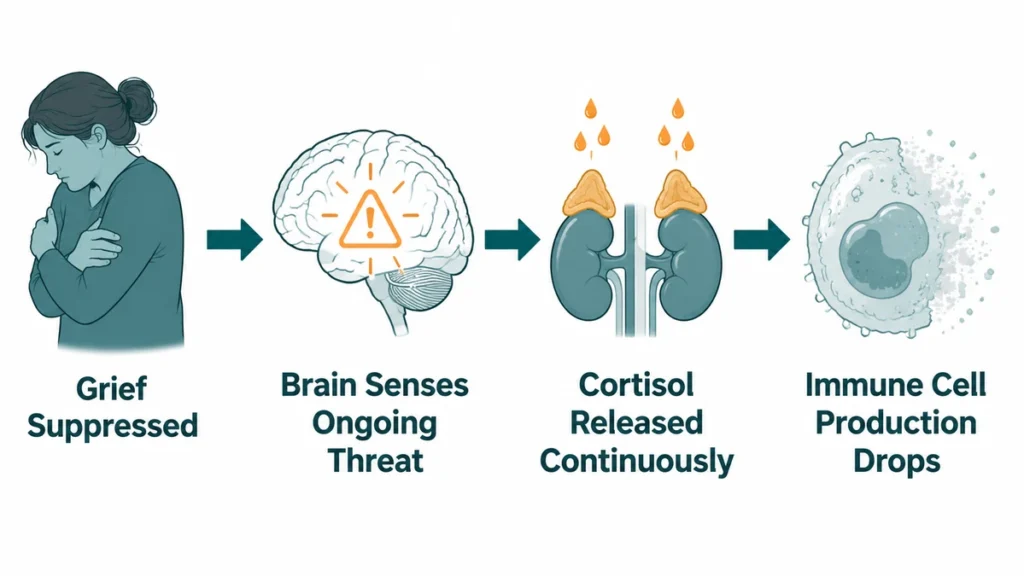
When the stress-hormone loop eventually burns out, as it does in prolonged grief, the result is not relief. The regulation system collapses and responds poorly to threats.
Staying strong, in this biological sense, asks your body to maintain a stress response indefinitely. The body cannot do that without cost. It borrows from the immune system to pay it.
Social Connection Is Not Just Comfort: It Changes Your Immune Trajectory
When people tell a grieving person to “stay connected,” they usually mean it kindly. What the research on bereavement immune recovery shows is that social connection is something more specific than kindness: it appears to change the path your immune system follows after a loss.
A longitudinal study tracking bereaved dementia caregivers found that socially isolated caregivers showed marked and continuing declines in lymphocyte function both before and after the death, while those with stronger social networks had shallower immune declines and, after the loss, showed a pattern of recovery.⁵

Lymphocyte function [the ability of white blood cells to respond and multiply when the body encounters an infection] was what differed between groups. This was not a soft finding about mood. It was a measurable difference in immune cell performance tied directly to how connected or isolated the bereaved person was.
Bereaved older adults who were socially isolated showed steeper declines in immune cell function than those with robust social networks, and the socially connected group recovered while the isolated group did not.
This gap is rarely discussed in articles about grief support, but it may be the most clinically significant finding in this field.
Evidence limitation: the research in this area, including the bereavement immune studies reviewed, is heterogeneous in design. Most studies are observational, and controlling for all variables that differ between socially isolated and connected bereaved adults is difficult.
The direction of the finding is consistent across studies. The size of the effect varies. Causal conclusions (that social connection directly repairs immune function) cannot be drawn from the available evidence.
One honest reading of the data: social isolation after loss is associated with worse immune outcomes in bereaved older adults; social connection is associated with better ones. That association is consistent enough to act on.
Four Ways to Move Grief Through the Body Before It Settles In
You cannot will yourself to stop grieving. But you can choose how you carry it. The biology of the grief and immune system link suggests that the method of carrying matters.
Here are four approaches that have research support in the context of bereavement and immune or stress recovery:
Talk to your doctor before making changes to your health routine if you are managing a chronic condition, are on medication, or are experiencing symptoms you have not discussed with a provider.

- Expressive writing. Writing privately about a trauma for 15 to 20 minutes, four consecutive days, is an approach some people find helpful for processing difficult emotions, although the research evidence for specific physical health benefits is mixed.⁶ Do not edit. Do not read it back. Name what happened, what you felt, and what you still feel.
- Named social contact. The bereavement immune recovery research credits specific connection with people who know about the loss and are not asking you to be strong.⁵ Identify one or two such people. Contact once a week is different, biologically, from general busy-ness.
- Physical movement. Moderate exercise is associated with lower circulating levels of pro-inflammatory cytokines. A 20-minute walk three times per week is the threshold most consistently cited in the evidence.⁷ The mechanism is not distraction: it is direct. Movement is associated with reduced inflammation signaling.
- Naming grief to a professional. Effective treatments for prolonged grief disorder exist. Complicated grief therapy showed a 51% response rate compared to 28% for standard interpersonal therapy.⁸ If grief has lasted more than six months and is disrupting sleep or daily function, this is a clinical concern.
When Your Grief Needs More Than Time
Some grief is heavy enough that personal strategies are not enough. Knowing that is not a failure. It is an accurate reading of the situation.
Prolonged grief disorder has been in the DSM-5-TR since 2022. It is now a formally recognized clinical condition that your doctor can identify and refer for treatment.⁴
It affects an estimated 4 to 15% of bereaved adults and is more common in older adults, particularly after the loss of a spouse or child.⁹
If your grief has been ongoing for more than six months and is affecting your daily functioning, your sleep, your immune health, or your sense of who you are without this person, ask your doctor about it by name.

Practical resource: The Eldercare Locator connects adults over 60 and their caregivers with local grief support services, bereavement groups, and Area Agency on Aging resources, all through a single free phone call. Call 1-800-677-1116. No internet or app required.
Many hospices also offer free community bereavement services to anyone who has experienced a loss, including people who were not hospice patients.
For peer-supported online communities, the AARP Grief and Loss Forum at community.aarp.org allows anyone to post and respond at their own pace, free of charge.
If you are reading this and recognizing yourself in it, that recognition is already something.
The Biological Cost of Carrying Grief Alone
Grief that goes unexpressed does not disappear. It stays in the body as inflammation, as immune suppression, as a stress response that never fully winds down. The grief and immune system connection is real, measurable, and shaped by how you carry loss, not just the fact of losing.
This week, set aside 20 minutes and write, unfiltered, privately, without anyone reading it, about one loss you have never fully put into words.
There is no clean resolution here. Science can tell you what suppression costs. It cannot tell you how to grieve. That part remains yours.
⚠️DISCLAIMER
This article is for informational purposes only and does not constitute medical advice, diagnosis, or treatment. The content addresses the health effects of unexpressed grief on immune function and is intended for general educational purposes only. Health conditions vary significantly between individuals, always consult a licensed physician or qualified healthcare provider before making any decisions about your health or medical care.
References
- Knowles LM, Ruiz JM, O’Connor MF. A systematic review of the association between bereavement and biomarkers of immune function. Psychosomatic Medicine. 2019 https://experts.arizona.edu/en/publications/a-systematic-review-of-the-association-between-bereavement-and-bi/
- Kaprio J, Koskenvuo M, Rita H. Mortality after bereavement: a prospective study of 95,647 widowed persons. American Journal of Public Health. 1987. https://pmc.ncbi.nlm.nih.gov/articles/PMC1646890
- Lopez RB, Brown RL, Wu E-L, Murdock KW, Denny BT, Heijnen C, Fagundes C. Emotion regulation and immune functioning during grief: testing the role of expressive suppression and cognitive reappraisal in inflammation among recently bereaved spouses. Psychosomatic Medicine. 2020. https://pubmed.ncbi.nlm.nih.gov/31634318/
- Szuhany KL, Malgaroli M, Miron CD, Simon NM. Prolonged grief disorder: course, diagnosis, assessment, and treatment. Focus (American Psychiatric Association). 2021. https://pmc.ncbi.nlm.nih.gov/articles/PMC8475918/
- Wilson SJ, Padin AC, Bailey BE, Laskowski B, Andridge R, Malarkey WB, Kiecolt-Glaser JK. Spousal bereavement after dementia caregiving: A turning point for immune health. Psychoneuroendocrinology. 2020. https://pubmed.ncbi.nlm.nih.gov/32485342/
- Mogk C, Otte S, Reinhold-Hurley B, Kröner-Herwig B. Health effects of expressive writing on stressful or traumatic experiences – a meta-analysis. Psychosoc Med. 2006 https://pmc.ncbi.nlm.nih.gov/articles/PMC2736499/
- Tayebi SM, Poorhabibi H, Heidary D, Amini MA, Sadeghi A. Impact of aerobic exercise on chronic inflammation in older adults: a systematic review and meta-analysis. BMC Sports Sci Med Rehabil. 2025 https://link.springer.com/article/10.1186/s13102-025-01279-z
- Shear K, Frank E, Houck PR, Reynolds CF. Treatment of complicated grief: a randomized controlled trial. JAMA. 2005. https://pubmed.ncbi.nlm.nih.gov/15928281/
- American Psychiatric Association. Prolonged Grief Disorder. Psychiatry.org. 2024. https://www.psychiatry.org/patients-families/prolonged-grief-disorder