
You’ve been drinking bone broth every morning. You’ve heard it heals your gut, fixes bloating, and repairs your gut lining. But weeks go by, and your digestion still feels off. Your energy hasn’t improved. The bloating comes back. Bone broth is not a bad choice.
But after 50, your gut has changed in four specific ways that bone broth simply cannot fix on its own. This article explains what bone broth actually does, where it falls short, and what you need to add to get real results.
No extreme diets. No expensive supplements. Just a clear, honest look at what the research says and what you can do starting this week.
What Bone Broth Actually Does for Your Gut (And Why It’s Still Worth Drinking)?
Bone broth is not a myth. The science behind it is real. A 2025 study published in Digestive Diseases and Sciences confirmed that bone broth contains five amino acids: glutamine, glycine, proline, histidine, and arginine, which directly support your gut lining.
These amino acids help reduce inflammation and strengthen the tight junctions in your intestinal wall. Think of tight junctions like the seams in your gut lining. When they weaken, things leak through that shouldn’t. Bone broth helps keep those seams strong.
It’s also easy to digest. If your gut is inflamed and you can’t tolerate solid food, bone broth is a gentle option. It also provides minerals like calcium, magnesium, zinc, and potassium, which support enzyme activity throughout your digestive system.
So yes, bone broth does something real. Doctors at the Cleveland Clinic and MD Anderson both agree it has a place in gut support.
But here’s where things get complicated for people over 50 specifically. Supporting your gut lining is only one part of healing it. And bone broth alone leaves four critical gaps wide open.
Gap #1: Your Gut Bacteria Are Starving — And Bone Broth Has No Fiber
Bone broth contains virtually zero dietary fiber. That matters more than most people realize. Your gut bacteria live in your large intestine. They survive on fiber.
When they eat fiber, they produce short-chain fatty acids. SCFAs are the compounds that actually repair your gut lining, calm inflammation, and support your immune system.
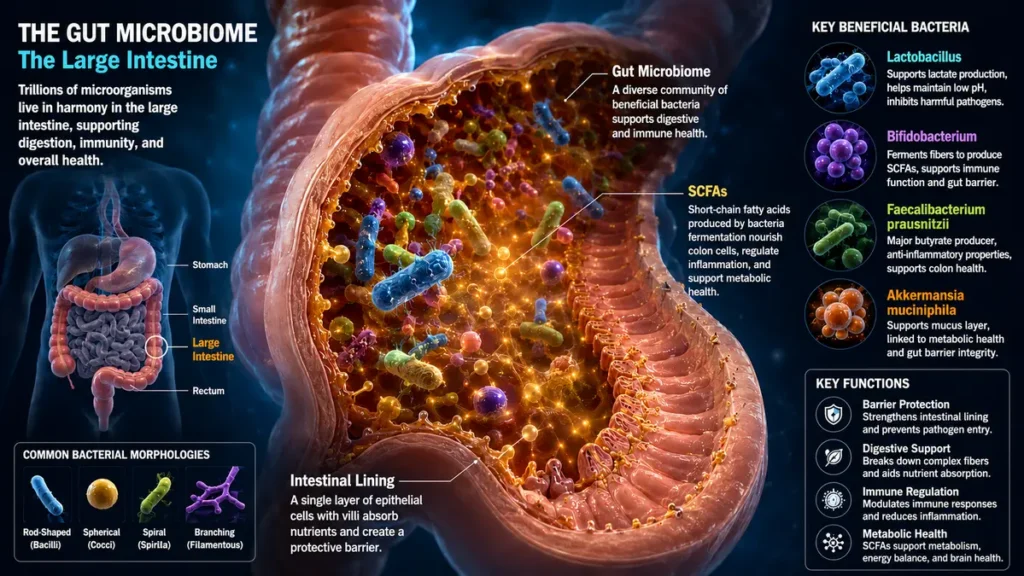
Without fiber, those bacteria have nothing to eat. And without SCFAs, your gut lining struggles to regenerate.
After 50, your gut microbiome already starts to lose diversity. Beneficial bacteria like Bifidobacterium and Faecalibacterium prausnitzii naturally decline with age.
Research published in 2025 shows that an aging microbiome also breaks down SCFAs faster, which means you’re producing less and losing more at the same time.
A 2025 study found that increasing dietary fiber was linked to a 37% greater likelihood of healthy aging in women. That’s a significant number.
Another study of adults aged 50 to 75 showed that 24 weeks of exercise and diet changes, including more fiber, restored healthier bacteria and raised SCFA levels in the blood. Bone broth won’t do this. It can’t. There is no fiber in it to feed your bacteria.
Easy fiber additions to pair with your bone broth:
- Cooked and cooled sweet potatoes (add resistant starch)
- 1–2 tablespoons of ground flaxseed in a smoothie
- Half a cup of lentils or chickpeas with your meal
- Sautéed leafy greens like spinach or kale
Aim for 25,38 grams of fiber per day from whole foods. This is the fuel your microbiome needs to do the work that bone broth cannot.
Gap #2: Bone Broth Is an Incomplete Protein — And Your Gut Needs More
Most people think bone broth is a solid protein source. It isn’t completely. Collagen is bone broth’s main protein. But collagen is what scientists call an incomplete protein.
It lacks tryptophan and is very low in branched-chain amino acids. These are amino acids your body needs to repair cells and maintain muscle tissue.
Without them, the full repair process can’t happen. Starting at age 50, adults lose 0.5 to 1 percent of their muscle mass every year. They also lose 1.5 to 5 percent of their muscle strength each year. Research published in 2025 in Critical Reviews in Food Science.
Nutrition confirmed that plasma levels of key amino acids, including branched-chain amino acids, arginine, glutamine, and glycine, are lower in older adults. This happens because older bodies absorb less protein and break down more of it before it gets used.
Your gut lining replaces itself every 3 to 5 days. That renewal process requires a full profile of amino acids. Bone broth gives you some, but not all.
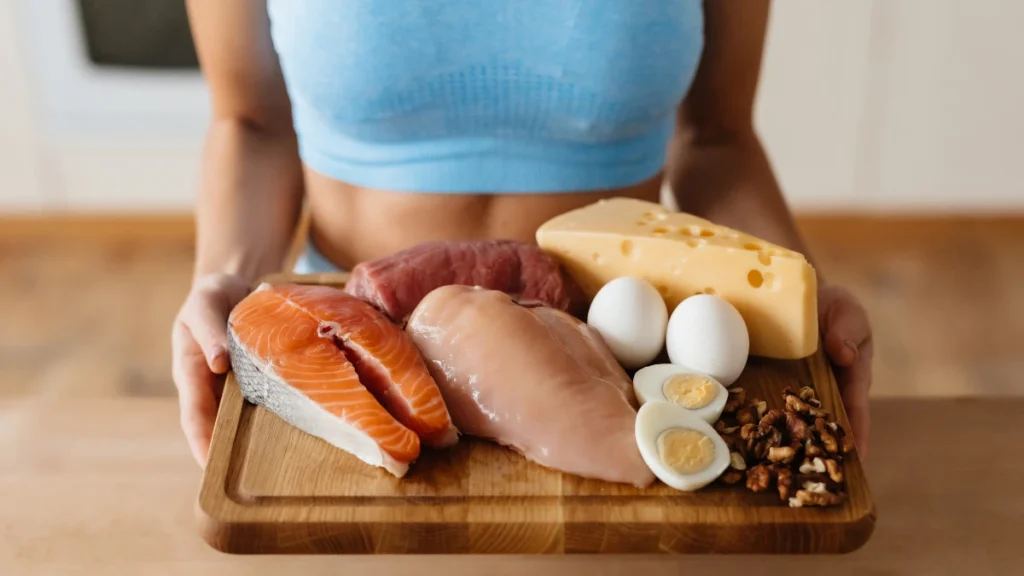
Pair your bone broth with a complete protein source at every meal. Salmon, chicken breast, boiled eggs, walnuts, and cheese all fill the gap.
Gap #3: Bone Broth Can’t Fix What’s Actually Causing Your Gut Problems
Gut dysfunction after 50 is rarely caused by just one thing. And bone broth can’t address any of the common root causes on its own.
Low stomach acid. Gastric acid output naturally declines after 50. Research shows that 10 to 30 percent of adults over 60 have significant hypochlorhydria, which is the medical term for low stomach acid.
When your stomach acid is low, you can’t properly break down proteins. You also absorb less vitamin B12, iron, calcium, magnesium, and zinc.
Here’s the irony: these are the exact nutrients bone broth is supposed to provide. If your stomach acid is low, you may not be getting them anyway.
Gut infections. H. pylori bacteria and small intestinal bacterial overgrowth (SIBO) become more common with age. Both disrupt gut function at a deep level. Bone broth soothes the surface. It cannot clear an infection. Hormonal changes.
After 50, shifts in estrogen, cortisol, and thyroid hormones directly affect gut motility, microbiome balance, and intestinal permeability. These changes require targeted support, not a dietary trend. Histamine intolerance. This one surprises people.
Gap #4: Your Body May Not Be Absorbing What You Think It Is
Here’s something that rarely gets discussed: absorption. You might be buying high-quality bone broth, drinking it every day, and still getting very little of what’s in it.
This is because nutrient absorption in the small intestine declines with age, even when your diet stays the same.

Digestive enzyme output also drops as you get older. Without enough protease, lipase, and amylase, your body struggles to break down food properly.
This applies to liquids, too. Bone broth consumed alone on an empty stomach, the way most people drink it, moves through your digestive system quickly.
The faster it moves, the less your body can absorb. Research from the NIH confirms that the small intestine becomes less efficient with age, leading to nutrient deficiencies even in people who eat well. Low stomach acid compounds this problem further.
As a 2025 review in PMC confirmed, reduced stomach acidity limits how much B12, iron, and calcium your body can pull from food and liquid sources.
The practical fix is straightforward. Drink bone broth with meals, not instead of them, as a companion to a nutrient-dense meal. Not as fast. Not as a standalone liquid protocol.
What Actually Works: How to Make Bone Broth Part of a Real Gut-Healing Plan
So what does real gut healing look like after 50? It looks like bone broth is doing its job as one part of a complete plan.
Here’s what the research supports in 2026:
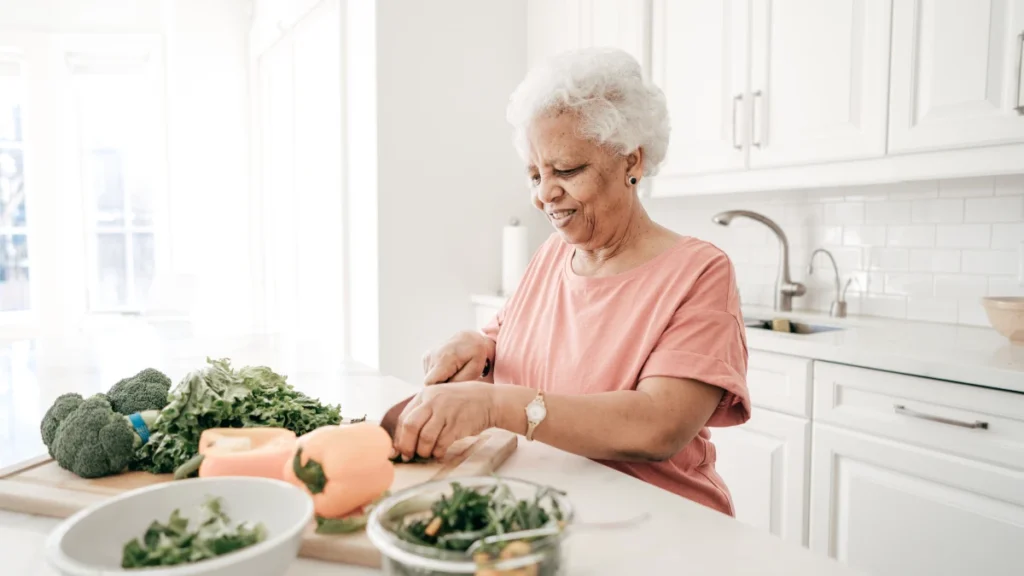
1. Keep drinking bone broth — but change how you use it. One to two cups daily is a smart addition. Use it as a cooking base, a warm drink alongside meals, or an ingredient in soups. Skip the liquid-only cleanses. They starve your microbiome and remove the protein variety your gut needs.
2. Add fiber every single day. Aim for 25–38 grams from real food sources. Cooked vegetables, oats, legumes, ground flaxseed, and fruit all count. Add them gradually to avoid gas. Your bacteria need time to adjust.
3. Eat complete protein at every meal. Eggs, fish, lean poultry, Greek yogurt, and legumes all provide the amino acid profile bone broth lacks. Shoot for 1.2 to 1.6 grams of protein per kilogram of body weight daily.
4. Get tested for root causes. Ask your doctor about an H. pylori breath test, thyroid function panel, B12 and iron levels, and a food sensitivity or elimination protocol. You cannot fix what you haven’t identified.
5. Support your stomach acid naturally. Bitter foods like arugula, dandelion greens, and apple cider vinegar before meals may help stimulate acid production. A functional medicine doctor or gastroenterologist can guide you on digestive enzyme support if needed.
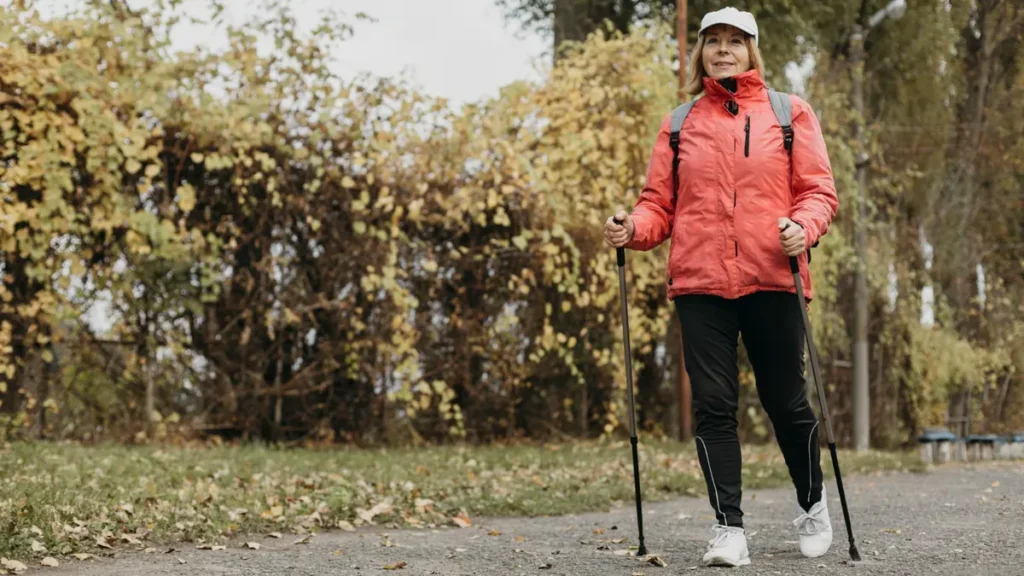
6. Move your body for your gut’s sake. The 2026 research is detailed: 24 weeks of moderate cardiovascular and resistance exercise restored microbiome diversity in adults aged 50 to 75. Bone broth cannot replicate the effects of regular movement on your gut bacteria.
Use Cronometer (free app) to track your daily fiber and protein intake. It removes the guesswork.
Conclusion
Bone broth is a useful tool. It is not a cure. After 50, your gut needs fiber, complete protein, root-cause treatment, and better support for absorption. Add those four things, and bone broth becomes part of a plan that actually works.
⚠️MEDICAL DISCLAIMER
This article is for informational purposes only. It does not replace medical advice, diagnosis, or treatment. The information covers bone broth, amino acids, gut lining, inflammation, digestive system, fiber, gut microbiome, short-chain fatty acids (SCFAs), healthy aging, complete protein, collagen, muscle mass, muscle strength, stomach acid, hypochlorhydria, gut infections, hormonal changes, nutrient absorption, digestive enzymes, physical exercise, cardiovascular, and resistance exercise.
Individual results vary based on age, health status, and fitness level. Before changing your exercise routine, diet, or supplement use, talk to your doctor or a qualified health professional first. If you experience chest pain, dizziness, severe joint pain, or any sudden symptom during or after exercise, stop immediately and seek medical care.