

You slept 8 hours. You went to bed on time. But you woke up exhausted again. That’s not laziness. It’s not a sleep hygiene problem. After 50, your body starts producing energy less efficiently at the cellular level. More sleep doesn’t fix a cellular problem.
There’s a simple, low-intensity exercise called Zone 2 training that targets exactly this. It won’t turn you into an athlete. But it can help your body burn fuel better, support your heart, and give you steadier energy throughout the day.
Why sleep stops working as well after 50, what Zone 2 training actually is, and how to start without a gym membership, fancy equipment, or killing yourself in the process.
Why You’re Still Tired — Even After 8 Hours of Sleep?
The problem isn’t how much you sleep. It’s what your cells do with the time. Inside almost every cell in your body are structures called mitochondria. They take the food you eat and turn it into usable energy. After 50, research shows these structures become fewer and less efficient.
A 2021 study published in Experimental Gerontology found a direct link between age-related fatigue and reduced mitochondrial function in blood cells. Less mitochondrial output means less energy, even with full nights of rest.
Sleep quality also drops after 50. Hormonal shifts lower melatonin and growth hormone, which reduces the deep sleep your body uses for cellular repair.
A 2025 paper in Frontiers in Aging confirmed that poor sleep directly reduces mitochondrial function and raises cellular stress markers. So even if you’re in bed 8 hours, you may be getting far less restorative sleep than you think. On top of that, your metabolism becomes less flexible. A healthy body switches smoothly between burning carbs and fat.
After 50, many people lose that ability. They crash when blood sugar dips and can’t tap fat stores efficiently.
The result: energy that peaks and crashes instead of staying steady. And if you’re mostly sedentary? Low activity reduces the signal your body needs to maintain mitochondria. The less you move, the fewer mitochondria you build. It becomes a loop.
What Is Zone 2 Training — And What Does It Actually Do?
Zone 2 is low-intensity, steady-state aerobic exercise. Simple as that. You’re working at about 60,70% of your maximum heart rate. The practical test: you can speak in full sentences but would struggle to sing. It should feel like a brisk walk, easy bike ride, or a comfortable swim where you’re moving but not straining.
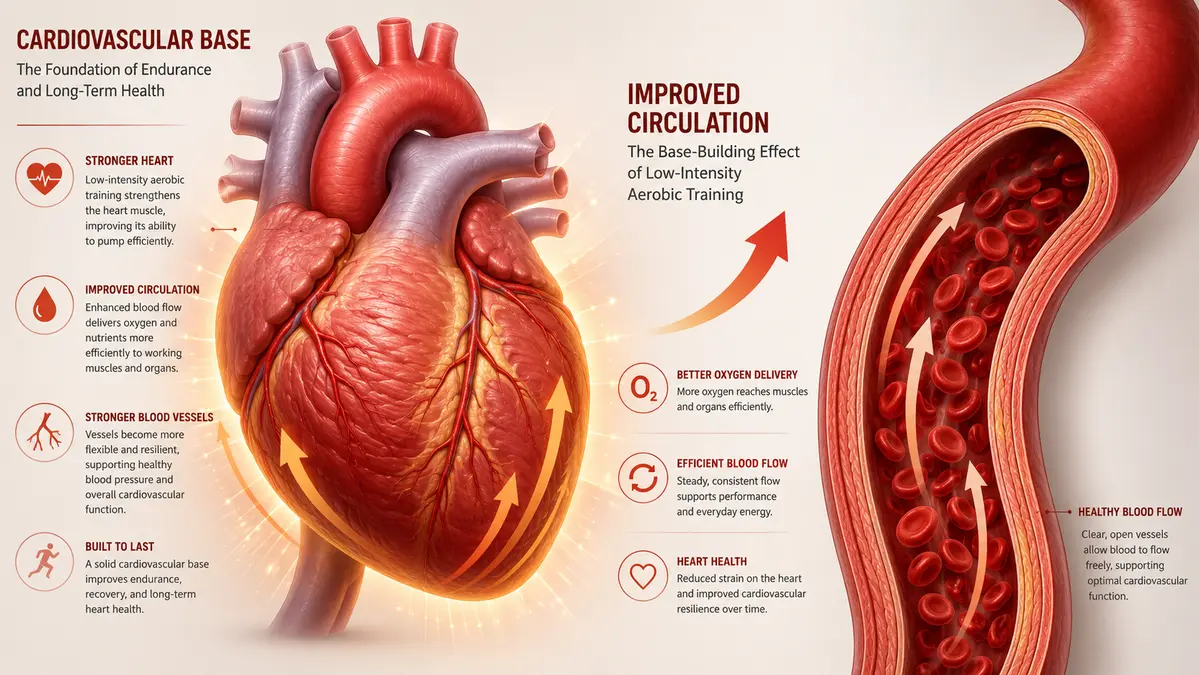
Here’s what Zone 2 genuinely does, based on real evidence: It improves metabolic flexibility. Training at this intensity teaches your body to use fat as its primary fuel. Over time, you become better at switching between fat and carbs, which smooths out energy crashes. It supports your heart.
A large study from the Cooper Centre Longitudinal Study, involving 122,000 participants, found that moving from low to moderate cardiorespiratory fitness reduces the risk of all-cause mortality by roughly 50%. Zone 2 builds that fitness in a way your joints can handle.
It improves insulin sensitivity. Regular low-intensity aerobic exercise helps your body manage blood sugar better.
That matters for steady energy throughout the day. A major 2025 narrative review published in Sports Medicine, by Storoschuk et al. at Queen’s University, found that Zone 2 is NOT the most efficient intensity for directly improving mitochondria. Higher-intensity exercise produces stronger signals per minute invested.
The podcast-fueled idea that Zone 2 is a mitochondria miracle has been overstated. But, and this matters, Zone 2 still builds real cardiovascular fitness, improves fat metabolism, and is sustainable.
For people over 50 who aren’t currently exercising, it’s the right place to start. You can’t run zone 4 workouts if you haven’t built the base. Zone 2 builds the base.
How to Find Your Zone 2 Without Any Lab Equipment?
You don’t need a sports science lab. Three methods work well. The Talk Test is the most practical. During your workout, try to speak a full sentence out loud. If you’re gasping, you’ve gone past Zone 2. If you could easily sing a full song, you’re below it. You want to be in the middle; talking is fine, singing is not.
A 2025 study in Translational Sports Medicine found that the talk test performs better for most people than generic heart rate formulas, which showed wide individual variation. The Heart Rate Method gives you a number to target. Subtract your age from 180. That’s roughly your upper Zone 2 heart rate. If you’re 58, aim to stay under about 122 bpm.
Use a chest strap monitor for accuracy; wrist-based monitors lag during movement. This is a starting estimate, not a hard rule.
Adjust based on how you feel. Rate of Perceived Exertion (RPE) works too. On a scale of 1,10, Zone 2 is about a 3,4. You feel the effort. Your breathing is noticeable. But you’re not straining, and you could keep going for a long time.
One warning: most people go too fast. Researchers and coaches consistently find that people who think they’re doing Zone 2 are actually in Zone 3, too hard to build an aerobic base efficiently, too easy to trigger high-intensity adaptations. Slowing down feels wrong at first. That’s expected. Slow is the method, not a failure.
A Practical Zone 2 Plan for People Over 50
Here’s what to actually do starting this week. Frequency and duration: Start with 3 sessions per week, 30,45 minutes each. Dr Inigo San Millan, a researcher at the University of Colorado School of Medicine who coaches professional cyclists, puts it plainly:
You can accomplish very important metabolic adaptations by exercising for one hour, 3,4 days per week. Two sessions per week may maintain fitness. Three or more drives for improvement.
Best activities for over 50:
- Brisk walking (flat or inclined: Most accessible, zero equipment needed
- Stationary or outdoor cycling: Lowest joint impact, intensity is easy to control
- Swimming: Full body, zero impact, ideal if you have joint pain
- Avoid starting with running if you’re not already a runner; it’s harder to stay in Zone 2 and adds joint stress
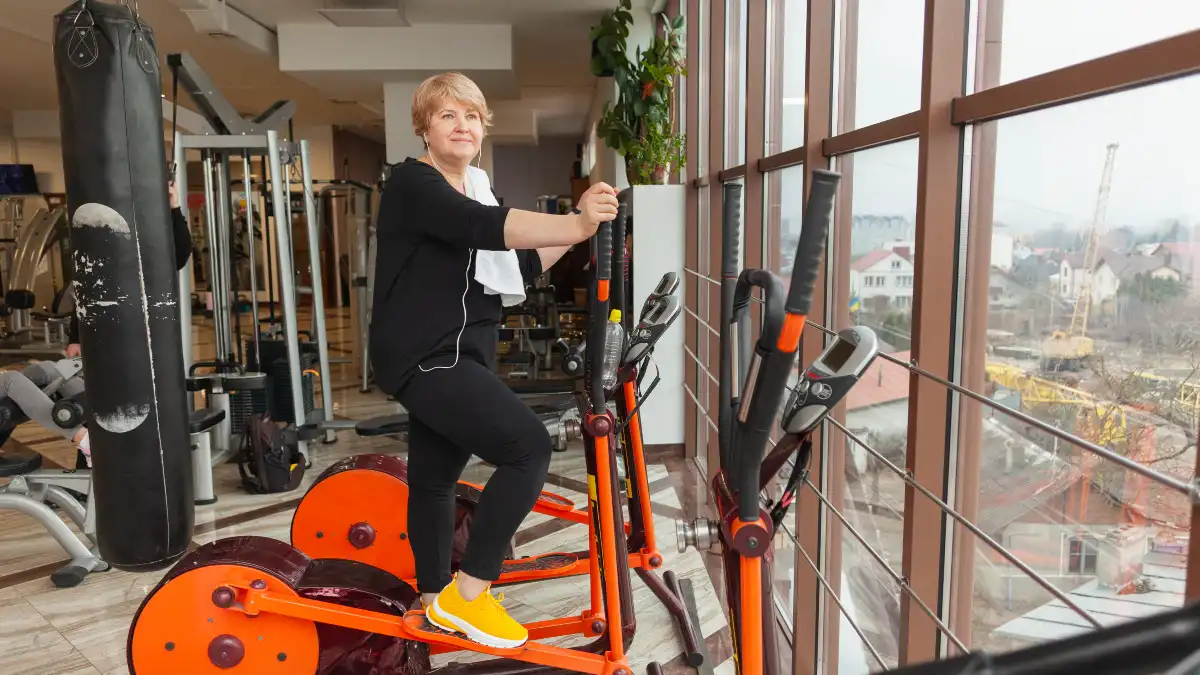
The 10-minute start: If 30,45 minutes feels like too much, start with three 10-minute walks per day. Research shows a brisk 10-minute walk can boost your energy for up to 2 hours. Three walks equal 30 minutes. That’s a real starting point.
Fueling tip: For sessions longer than 40 minutes, eat a small carb-containing snack beforehand. A banana or some oatmeal 30 minutes before helps prevent cortisol spikes from low blood sugar spikes that undermine the recovery effect you’re trying to create.
Timeline: Aerobic and metabolic adaptations take 8,12 weeks to become measurable. You may notice slightly better energy within 2,4 weeks. Don’t judge the method in week one. Consistency over months is what drives real change.
Zone 2 Is One Piece — Not the Whole Answer
Zone 2 training is useful. But it won’t fix everything on its own. Sleep quality matters as much as exercise.
Consistent sleep and wake times, a cool room, and limiting alcohol, which suppresses deep sleep, all protect the slow-wave sleep where cellular repair actually happens. If you suspect sleep apnea, get it checked. Exercise won’t compensate for chronically broken sleep.

Protein intake drops after 50, usually without people noticing. Muscle tissue houses mitochondria. If your muscle mass is declining, so is your cellular energy capacity. Most adults over 50 benefit from eating more protein, roughly 0.7,1 gram per pound of body weight per day is a commonly used target.
Zone 2 alone isn’t a complete program. The honest 2025 science says Zone 2 works best as one component of a broader plan.
Adding 1,2 resistance training sessions per week preserves muscle and supports metabolism in ways aerobic training can’t. As your fitness improves, adding some higher-intensity cardio Zone 4,5 drives adaptations that Zone 2 can’t fully reach.
What Zone 2 does well is this: it gives you a sustainable starting point. Most people don’t fail because they chose the wrong training zone. They fail because they can’t sustain what they started. Zone 2 is the exercise people actually keep doing.
Conclusion
Fatigue after 50 has a real, cellular cause and Zone 2 training addresses part of it honestly. Pick one activity. Set a timer for 30 minutes. Keep the pace conversational. Do it three times this week. That’s the start. Build from there. Your energy after 50 is not gone. It’s just waiting for the right signal.
Zone 2 training sends that signal consistently, gently, and without wrecking your body in the process. The science is clear: move more at a pace you can sustain, do it regularly, and your body adapts. Not overnight. But it adapts. That’s not a small thing. That’s how you get your energy back.
⚠️MEDICAL DISCLAIMER
This article is for informational purposes only. It does not replace medical advice, diagnosis, or treatment. The information covers Zone 2 training, mitochondrial function, sleep quality, metabolic flexibility, heart rate monitoring, insulin sensitivity, joint impact, protein intake, and resistance training.
Individual results vary based on age, health status, and fitness level. Before changing your exercise routine, diet, or supplement use, talk to your doctor or a qualified health professional first. If you experience chest pain, dizziness, severe joint pain, or any sudden symptom during or after exercise, stop immediately and seek medical care.