
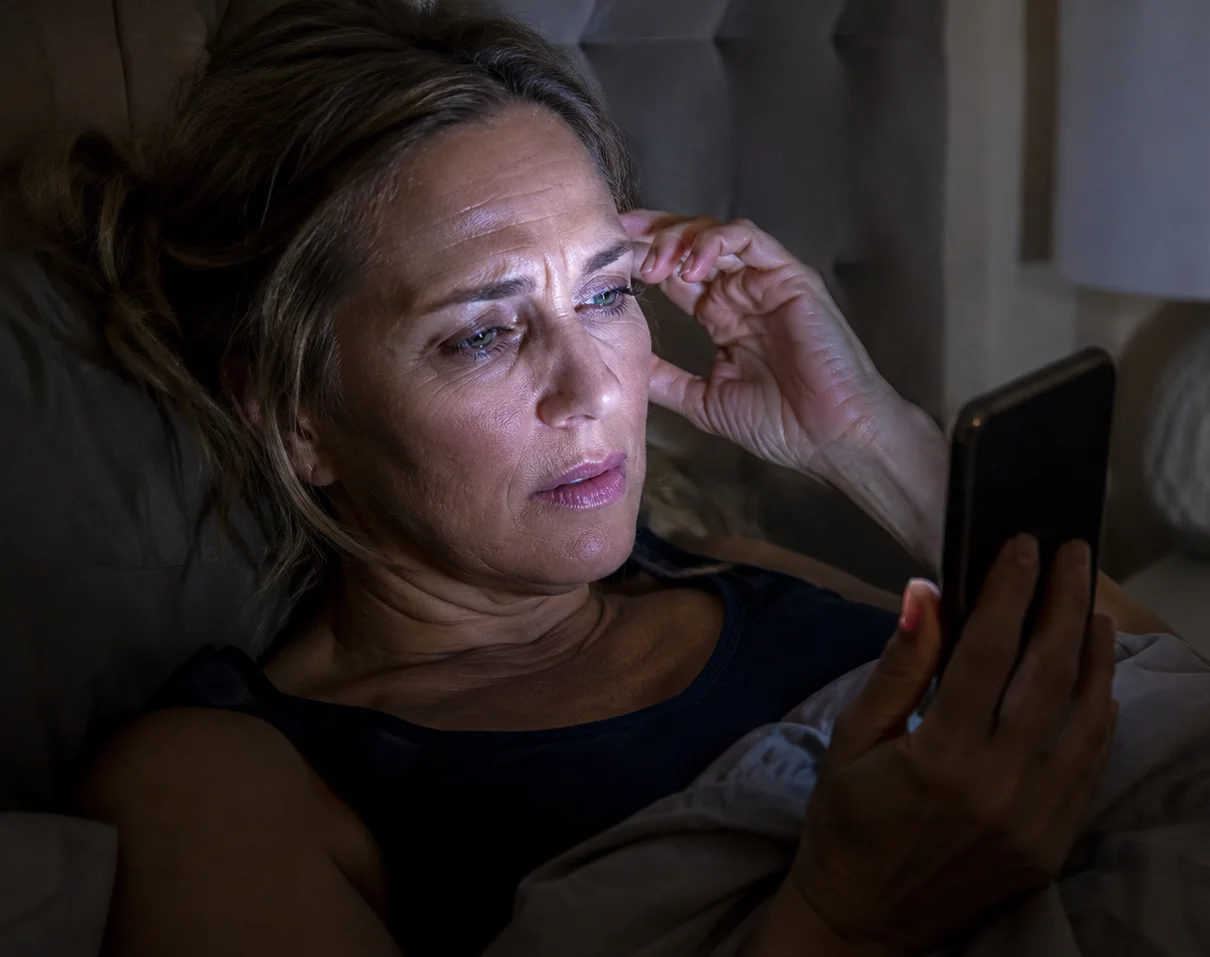
It is 10 PM. You are in bed. Your phone is six inches from your face. And your eyes feel like someone rubbed sand into them. This is not in your head. It has a name, digital eye strain, and a 2024 review of 103 studies found that 66% of regular screen users deal with it. That is two out of every three people who use a phone or computer regularly.
After age 50, your eyes change in ways that make this problem significantly worse. It is not just about blue light. It is about your tear glands slowing down, your retina becoming more sensitive, and your brain getting tricked into thinking it is still daytime.
This article explains exactly what is happening and gives you six real fixes you can use tonight.
66% of screen users have digital eye strain (Nature, 2024). 60%less blinking happens when you stare at a screen. 50%higher insomnia risk with 4+ hours of night screen use.
What Is Actually Happening When Your Eyes Burn?
Your eyes rely on blinking to stay moist. Every time you blink, a thin layer of tears coats the surface and protects it. Normally, you blink 15 to 20 times per minute.
But when you stare at a screen, that number drops by up to 60%. Your eyes stay wide open. The tear layer dries out. And the result is that burning, scratchy, gritty feeling that hits hardest at night.
There is also muscle strain. The small muscles inside your eye that control focus hold one position for a long time when you look at a phone. It is like gripping a rubber band tightly for an hour. Eventually, those muscles ache.
Add one more factor: using a bright phone in a dark room.
Your pupil opens wide in the dark, which lets in more light intensity. Your eyes keep adjusting between the bright screen and the dark room. That constant adjustment makes the strain worse, not better.
The burning is not caused by looking at a screen. It is caused by not blinking enough while you look at it. That distinction matters because it means the fix is simple.
Why It Gets Worse After 50 — The Aging Eye Factor?
Your tear glands naturally slow down as you get older. This process usually starts in your 40s and picks up speed in your 50s. The result is a thinner, less stable tear layer on your eye’s surface.
The Mayo Clinic states it plainly: Tear production tends to diminish as you get older. Dry eyes are more common in people over 50.

So when screen use cuts your blink rate in half, there are fewer tears to begin with. That doubles the problem. For women, menopause makes it worse. Around 61% of perimenopausal and menopausal women develop dry eye syndrome because of hormonal shifts.
The oil glands along your eyelids, called meibomian glands, also produce less oil as you age.
That oil normally slows down tear evaporation. Without it, moisture escapes faster. Refocus Eye Doctors put it simply: If you are over 50 and spend a lot of time on screens, you face a double challenge. Your baseline tear production is already lower, and screen use further reduces your blink rate.
Many people over 50 also take medications for blood pressure, diabetes, or arthritis. A significant number of those medications list dry eye as a side effect, which can add to screen-related irritation.
How Your Phone Steals Your Sleep Without You Knowing
Your brain uses light to set its internal clock. When the sun goes down, your body starts releasing melatonin, the hormone that makes you feel sleepy. It is a natural, automatic process.
Phone screens emit blue light in the 460,480 nm range. Special cells in your retina pick up this wavelength and send a signal to the brain’s master clock: It’s still daytime.
Stay awake. Melatonin stops. Sleep gets delayed. A 2025 meta-analysis published in Frontiers in Neurology confirmed this directly: even short periods of evening smartphone use significantly reduce melatonin and shift its onset, leading to later bedtimes and shorter sleep overall.
People who spend more than four hours on screens before bed have a 50% higher risk of insomnia. And night mode settings reduce blue light but do not remove the risk completely.
There is also a cycle that traps you. Poor sleep makes your eyes more sensitive the next day.
More sensitive eyes feel more pain from screens at night. Which disrupts sleep again. And around it goes. Breaking the cycle starts with one change: put the phone down earlier. More on that in the next section.
6 Things That Actually Relieve the Burning — Starting Tonight
These are not guesses. Each one is backed by eye care research and recommended by major ophthalmology organisations. Start with the first two; they cost nothing and take under a minute.
1. The 20-20-20 Rule

Every 20 minutes, look at something 20 feet away for 20 seconds. This relaxes your focusing muscles and gives your tear film a chance to reset. A 2024 large-scale study found consistent use reduces eye strain severity by 60,70%. Set a phone reminder if you need to. It works.
2. Blink on Purpose
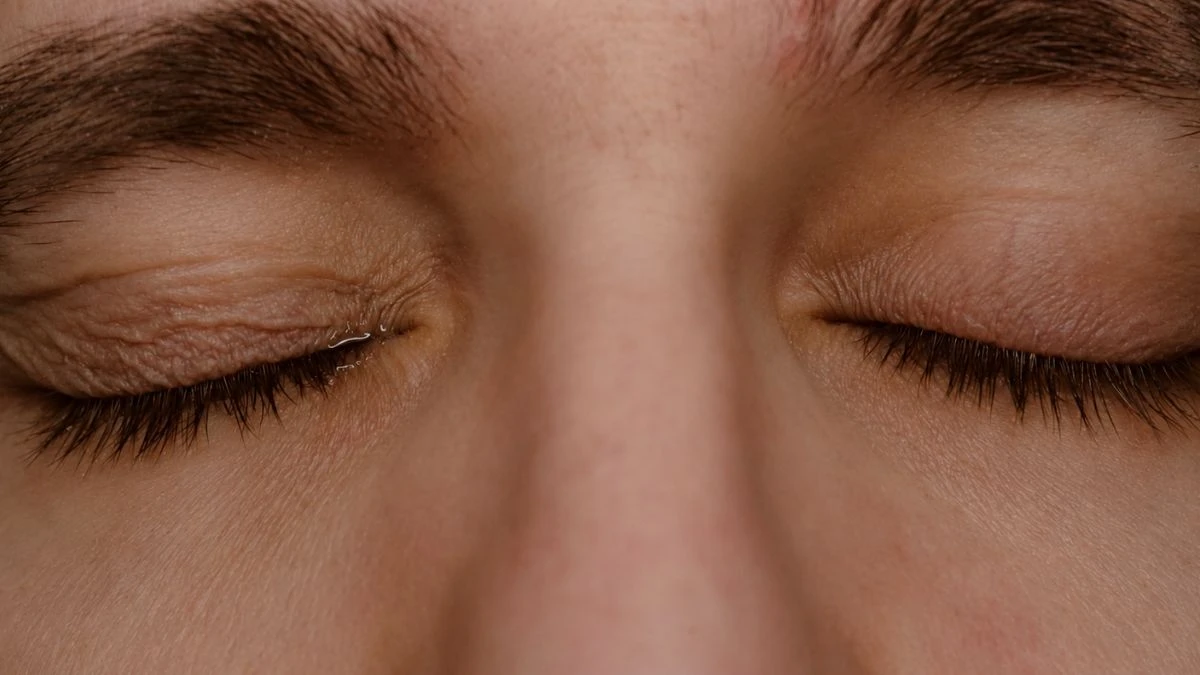
You blink less than half as often on screens. Fix it consciously. Every few minutes, close your eyes fully and open them slowly like a long, deliberate blink. This recoats your eye with moisture. It sounds too simple. But it is the fastest relief available and costs nothing.
3. Turn On Night Mode — and Schedule It
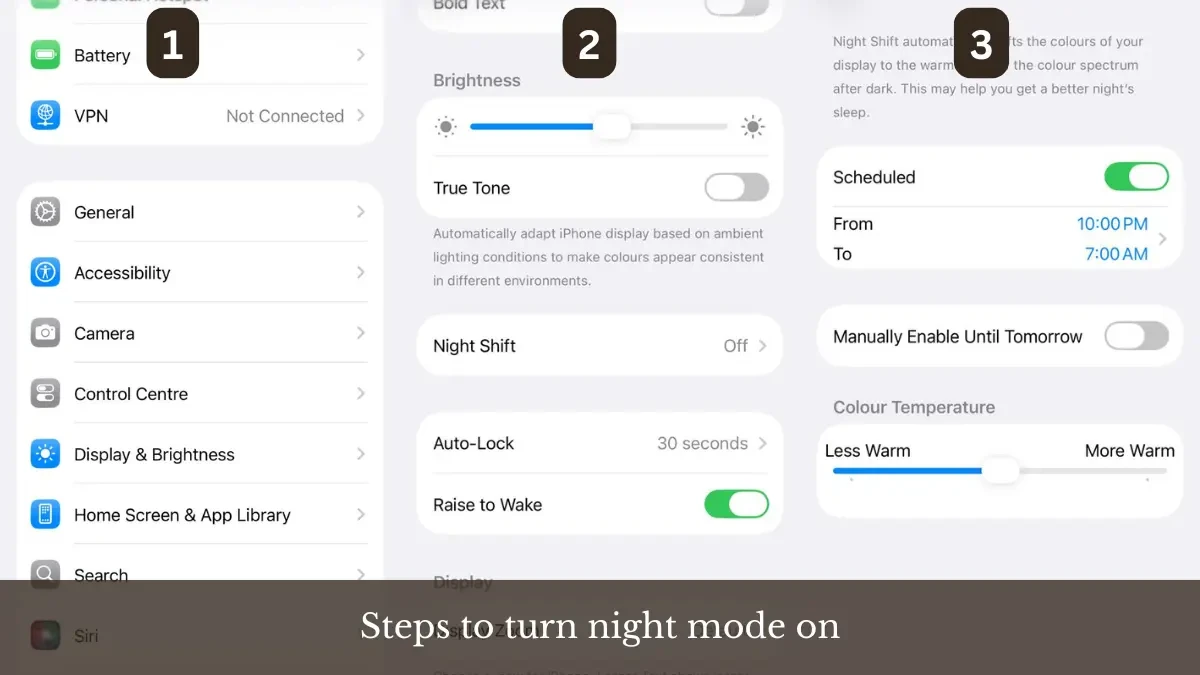
Both iPhones and Android phones have a built-in blue light filter. On iPhone: go to Settings → Display & Brightness → Night Shift. Schedule it to activate at sunset automatically. This reduces the blue light intensity your eyes and brain receive. It will not fix everything, but it is a meaningful first step.
4. Use Preservative-Free Artificial Tears

If your eyes are dry and burning regularly, over-the-counter lubricating drops help. Look for the words preservative-free on the label. Regular drops with preservatives can irritate the eyes if used more than 4 times a day. Studies show a 70% reduction in eye strain symptoms with proper use of artificial tears.
5. Stop Screens 1–2 Hours Before Bed

This is the most consistent recommendation across sleep medicine and eye care. Stopping screen use before bed lets melatonin rise naturally. Your eyes get rest. Your sleep improves. Your eyes feel less burned the next night. It is hard to do, but it is the change with the biggest payoff of anything on this list.
6. Hold Your Phone Further Away
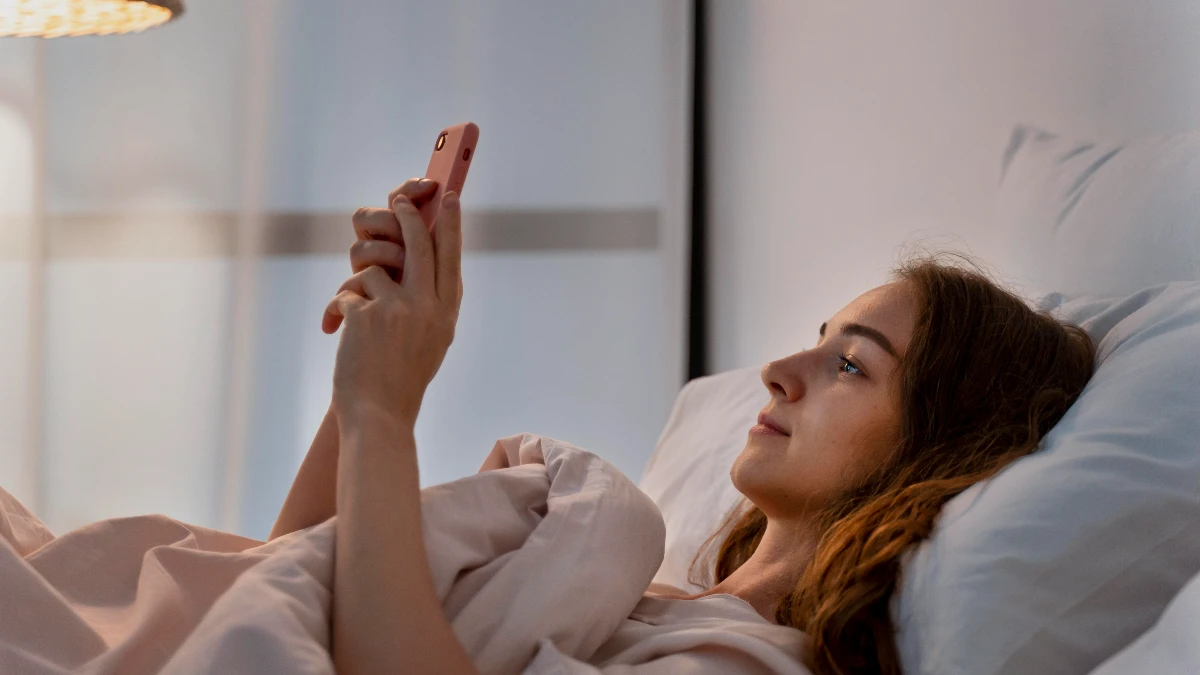
Most people hold their phone 8.10 inches from their face in bed. Eye doctors recommend at least 20 to 28 inches. Further away means less muscle strain, less blue light intensity, and less glare. You may need to increase your text size to read comfortably. That is fine. Do it.
Do Blue Light Glasses Actually Work? Here Is the Honest Answer
You have probably seen the ads. Blue light glasses promise to protect your eyes and improve sleep. The truth is more complicated and worth knowing before you spend money.
The American Academy of Ophthalmology is direct: there is no strong scientific evidence that blue light glasses reduce eye strain from screens.
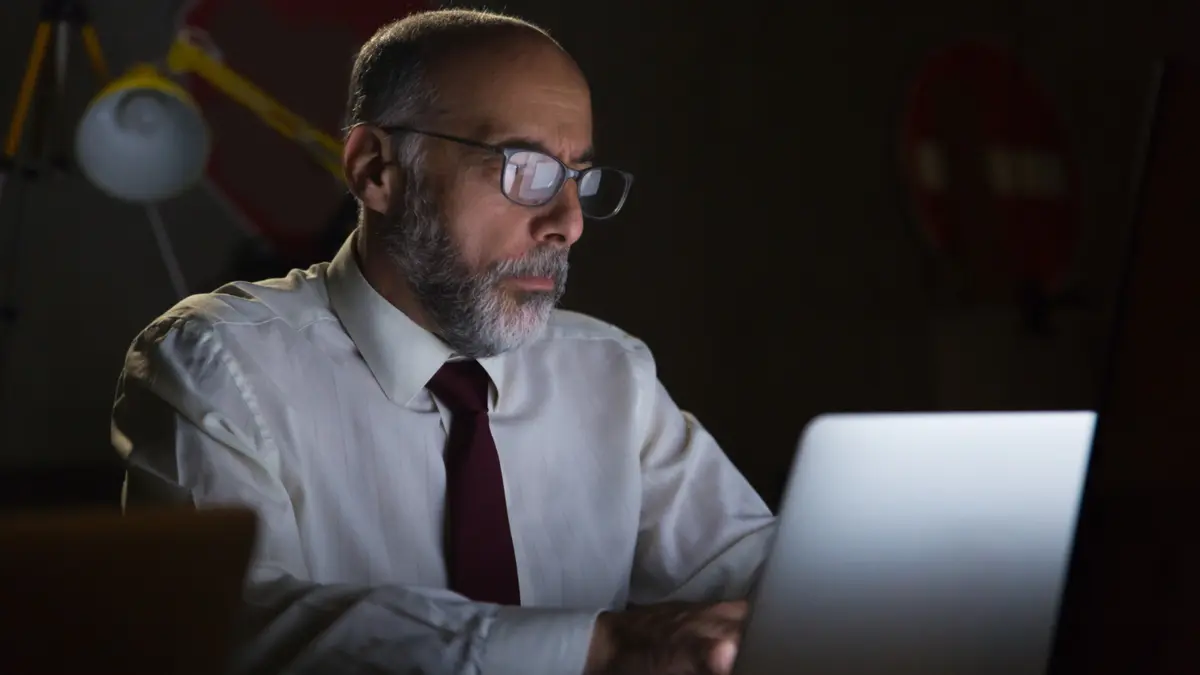
A 2024 Cochrane Database review came to the same conclusion. Blue light is not the main cause of the burning feeling. Reduced blinking is. So glasses that block blue light do not solve the core problem.
That said, a 2025 peer-reviewed study in Cureus involving 186 adults who wore blue-light filtering lenses for over 12 months found some improvement in symptoms, particularly when combined with 20-20-20 compliance and artificial tears. So they may help as part of a broader plan.
The stronger evidence is for sleep. A 2025 Frontiers in Neurology meta-analysis found that blue-light-blocking glasses worn in the evening can reduce sleep onset latency, meaning you fall asleep faster.
For sleep quality, they show more real promise. Bottom line: Blue light glasses will not hurt. They may help with sleep. But they are not a replacement for blinking habits, screen breaks, and putting your phone down before bed.
Conclusion
After 50, your eyes produce fewer tears, recover more slowly, and are more sensitive to light at night. Phone screens make every one of those problems worse. You now know why it happens and what to do. Start with the 20-20-20 rule and Night Mode tonight. If symptoms stay after two weeks, see your eye doctor.
⚠️MEDICAL DISCLAIMER
This article is for informational purposes only. It does not replace medical advice, diagnosis, or treatment. The information covers digital eye strain, blink rate suppression, dry eye syndrome, tear production and aging, meibomian gland dysfunction, melatonin suppression and sleep disruption, insomnia risk, the 20-20-20 rule, purposeful blinking, night mode settings, preservative-free artificial tears, pre-bedtime screen boundaries, phone viewing distance, and blue light glasses efficacy.
Individual results vary based on age, health status, and fitness level. Before changing your exercise routine, diet, or supplement use, talk to your doctor or a qualified health professional first. If you experience chest pain, dizziness, severe joint pain, or any sudden symptom during or after exercise, stop immediately and seek medical care.