

Think of insulin as a key and your cells as locks. When you eat fruit, sugar enters your blood. Insulin opens the cell doors to let that sugar in. After 50, those locks get stiff. They don’t open as easily. This is called insulin resistance.
Here’s what makes it worse. After 50, you naturally lose muscle mass.
Muscle is one of the main places your body stores blood sugar. Less muscle means less storage space. So glucose has nowhere to go, and it builds up.
A 2025 study published in the Journal of Clinical Medicine confirmed a clear link between muscle loss and reduced insulin sensitivity in adults aged 40,65.
And a Stanford Medicine study from June 2025 found that blood sugar responses to the same carbohydrate foods vary dramatically based on each person’s individual metabolic profile, even in people with no diabetes diagnosis. You don’t need a diabetes diagnosis to have a problem.
The 140 mg/dL line. A healthy post-meal blood sugar should stay under 140 mg/dL. Many adults over 50 unknowingly cross this threshold regularly just from eating fruit the wrong way.
Declining hormones add to this. Estrogen in women and testosterone in men both help maintain insulin sensitivity.
Which Fruits Are Most Likely to Spike Your Blood Sugar?
Not all fruit is equal. The key is the Glycemic Index, or GI. It tells you how fast a food raises your blood sugar. A GI under 55 is low. Over 70 is high, meaning it hits your bloodstream fast and hard.
Here’s a simple reference you can use right now:
Ripeness matters too. The riper the fruit, the higher the GI. An overripe banana with brown spots behaves more like candy than fruit in your body. A firm, slightly green banana is a much safer choice. Dried fruit is even worse.
Raisins, dates, dried mango, and dried figs have had their water removed, which concentrates the sugar dramatically. A small box of raisins carries as much sugar impact as eating far more fresh grapes.
The Juice Trap: Why “Fruit Juice” Is Just Sugar Water
Drinking orange juice at breakfast feels like a healthy habit. But here’s what’s actually happening: when you juice a fruit, you remove the fiber.
Fiber is the biological braking system that slows how fast sugar enters your blood. Without it, the glucose hits your bloodstream almost instantly.

Adding fruit to a bowl of starchy cereal is far more likely to cause a blood sugar spike than eating that same fruit alongside a handful of nuts. Nancy Oliveira, RD, Brigham and Women’s Hospital
Research compiled across multiple studies confirms that fruit juices have a consistently higher GI than the whole fruits they come from. The fruit juice label may say 100% natural, but your pancreas sees it the same way it sees a soft drink.
Smoothies aren’t much better. Blended fruit keeps the fiber, so it’s technically better than juice. But it’s still easy to drink the sugar equivalent of 3,4 whole fruits in one glass. Eating one apple is very different from blending three into a cup.
A simple rule: if it came from a bottle or carton with the word fruit on it, treat it like sugar water until you check what’s in it. Whole fruit, every time, is the safer default.
4 Smart Ways to Eat Fruit Without Spiking Your Blood Sugar
You don’t need to stop eating fruit. Fruit gives you vitamins, antioxidants, and fiber that your body genuinely needs. The goal is to eat it in a way that doesn’t overwhelm your blood sugar. These four strategies work, and they take less than 30 seconds of planning.
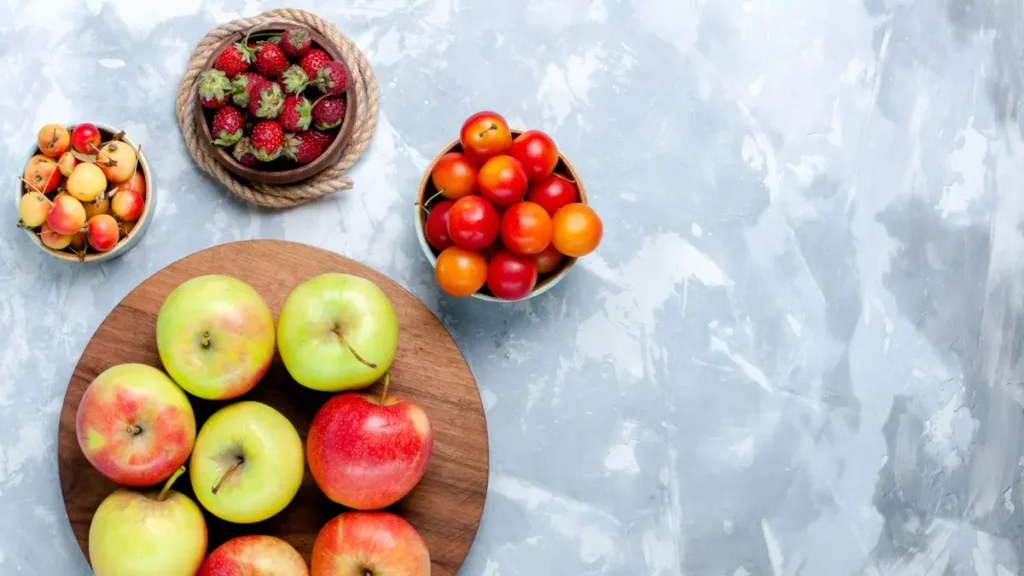
1. Always pair fruit with protein or fat.
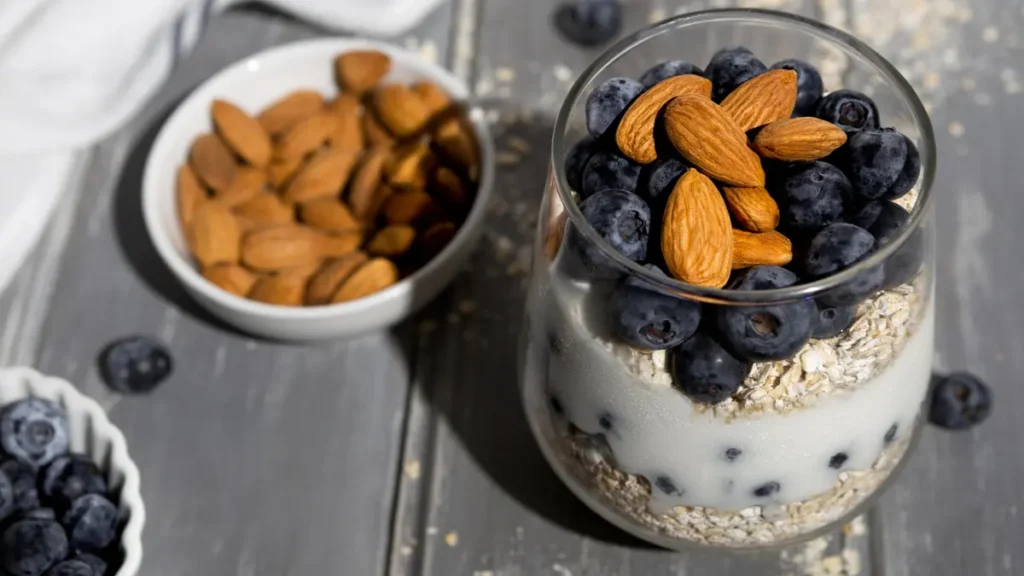
A handful of almonds with your mango. Greek yogurt with blueberries. A slice of cheese with grapes.
In one study, people who ate protein and fat before carbohydrates had 37% lower blood sugar one hour after eating. The protein and fat slow digestion and stop the glucose spike in its tracks.
2. Eat fruit after a meal, not before or alone.
Eating fruit on an empty stomach sends a concentrated sugar hit directly to your bloodstream with nothing to slow it down.
When you eat fruit as dessert after a protein-and-fiber meal, the spike is far smaller. This one change alone can make a meaningful difference.
3. Choose low-GI fruits most of the time.
A 2025 clinical study found that daily strawberry consumption improved prediabetes markers and cardiometabolic health in adults. Berries, cherries, firm apples, and pears are your best daily choices.
You can still enjoy mango or watermelon, just use smaller portions and pair them with something.
4. Watch your portion size.
A standard fruit serving should contain about 15 grams of carbohydrates. That’s roughly half a medium banana, one cup of whole strawberries, or three-quarters of a cup of blueberries.
Most people eat two to three times this amount without knowing it and then wonder why they feel tired after a healthy snack.
Quick Reference: Best and Worst Fruits After 50
Bookmark this. Use it when you’re at the grocery store or planning a snack.
Fruit Glycemic Index
A reference guide to choosing fruits that support stable blood sugar and healthy energy levels
Nothing here is forbidden. Smaller portions and smart pairing (add protein, fat, or fiber) make almost any fruit workable. Focus on habits, not bans.
One Tool Worth Trying: A Continuous Glucose Monitor
You can read every article about GI scores, but nothing compares to seeing your own blood sugar curve in real time. Consumer CGMs like Levels Health and Nutrisense are now available without a prescription in the US.
Nancy Oliveira, a registered dietitian at Brigham and Women’s Hospital.
Recommends that people use a CGM to watch how their body reacts to different fruits, specifically, because individual responses vary significantly. What spikes your blood sugar may not spike your neighbor’s.
You wear the small sensor on your arm for two weeks.
It shows you exactly which foods cause spikes. Many people are genuinely surprised. They find that the mango they eat every morning is their biggest glucose problem, while the potato they feared is actually fine for them. Two weeks of data can change how you eat for years.
Conclusion
After 50, your body is less forgiving of fruit sugar. High-GI fruits, dried fruit, and juice can all quietly push your blood sugar past safe levels even without a diabetes diagnosis. Choose lower-GI fruits most of the time. Eat fruit after meals. Pair it with protein or fat.
Keep portions to about 15 grams of carbs. Start tomorrow: swap your morning juice for a small bowl of berries with a handful of almonds. That single swap can meaningfully reduce your daily glucose load.
If you want a truly personalized plan, ask your doctor or a registered dietitian about a short CGM trial. Seeing your own glucose curve is one of the most powerful things you can do for your health after 50.
⚠️MEDICAL DISCLAIMER
This article is for informational purposes only. It does not replace medical advice, diagnosis, or treatment. The information covers insulin resistance, muscle loss, blood sugar responses, Glycemic Index, fruit consumption, food pairing, and continuous glucose monitors.
Individual results vary based on age, health status, and fitness level. Before changing your exercise routine, diet, or supplement use, talk to your doctor or a qualified health professional first. If you experience chest pain, dizziness, severe joint pain, or any sudden symptom during or after exercise, stop immediately and seek medical care.