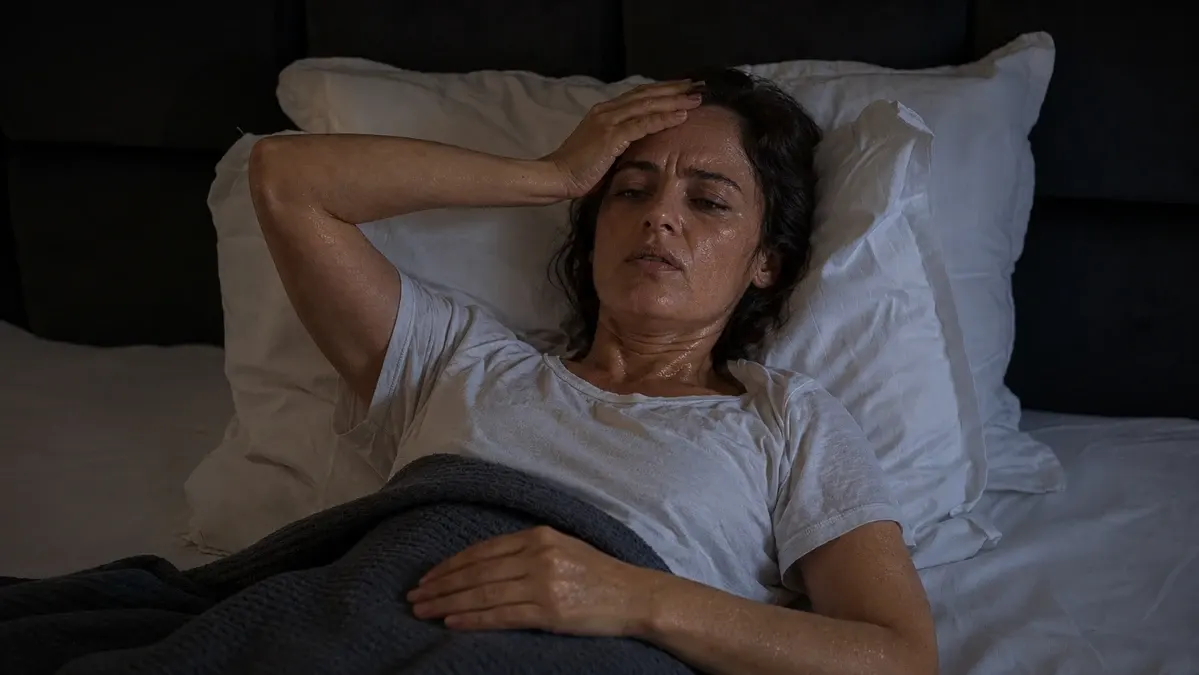
It’s 2 a.m. You’re wide awake. The covers are on the floor. You’re sweating, and you have no idea why. You’re not broken. Your body is going through real, measurable changes that make it harder to stay cool at night. And when your body can’t cool down, sleep doesn’t happen.
This guide explains exactly what changes after 50, what the science says about the right bedroom temperature for your age, and five things you can do tonight to sleep better. No complicated routines. No expensive gadgets required. Just clear, honest information and a few simple fixes that actually work.
Why Your Body Struggles to Cool Down After 50?
To fall asleep, your core body temperature needs to drop by 1 to 2 degrees Fahrenheit. That’s not optional. It’s how sleep starts. Your brain sends the signal. Blood moves toward the skin. Heat escapes. You cool down. You drift off. But after 50, this process slows down significantly.
The part of your brain that controls body temperature, the hypothalamus, loses some of its precision and speed. It doesn’t respond as quickly. It doesn’t cool you down as efficiently.
For women going through menopause, it gets harder. Dropping estrogen levels destabilize the hypothalamus even more.
Your thermoneutral zone, the small range of temperatures where your body feels comfortable, narrows. So a tiny temperature change can suddenly trigger sweating, flushing, or a full hot flash.
Melatonin, the hormone that helps trigger the nighttime temperature drop, also decreases with age. Less melatonin means a weaker cooling signal.
And a weaker signal means it takes longer to fall asleep or you don’t fall asleep at all. Think of it this way: when you were 30, your internal AC ran at full power. After 50, it’s running at half speed.
What Sleeping Hot Actually Does to Your Sleep
Here’s what the research shows, and it’s more serious than just feeling uncomfortable. A Harvard Medical School study tracked 50 older adults across 11,000 nights of real sleep data. When bedroom temperatures rose above 77°F, sleep efficiency dropped by 5 to 10 percent. That sounds small.
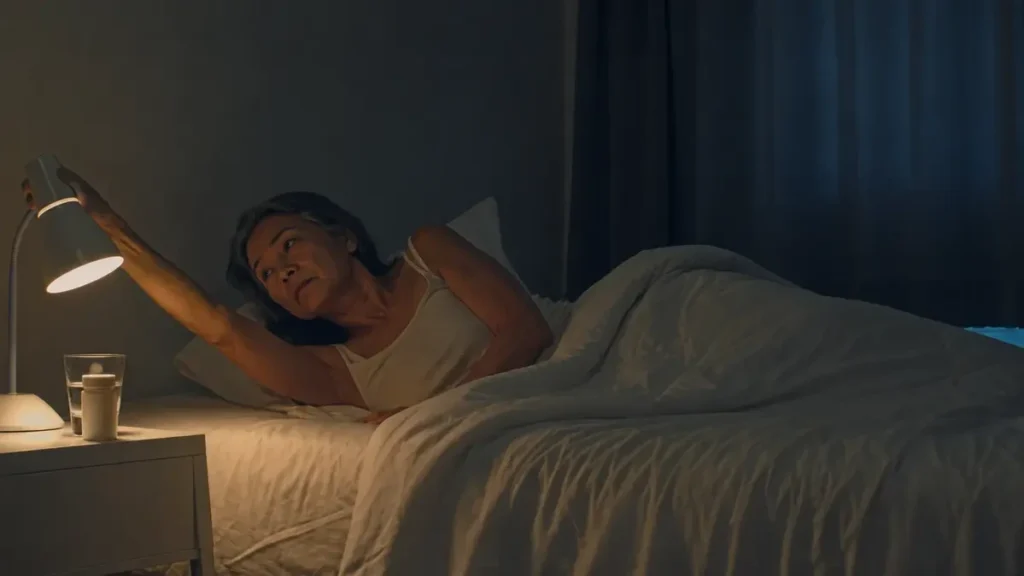
But it translates to roughly 25 to 48 extra minutes of lying awake every single night. The effects on older adults are more than twice as severe as on younger people. A warm room that barely affects a 30-year-old can seriously disrupt sleep in someone over 50.
And here’s a detail that surprises most people. A 2024 study from the Menopause Society found that 59% of nighttime hot flashes happen during the second half of the night, exactly when REM sleep is most active. REM is the deep, restorative sleep your brain and heart need most.
Disrupting it repeatedly raises your risk of cardiovascular disease and cognitive decline over time.
A 2024 survey from the American Academy of Sleep Medicine found that 50% of women aged 45 to 64 report sleep disruption due to menopause. Half. And most of them never connect the dots between the heat and the broken sleep.
What Is the Right Bedroom Temperature After 50?
The standard advice says 60 to 68°F (15.5 to 20°C). That’s the general guideline for adults. But here’s the thing: the advice wasn’t written with older adults in mind.
The same Harvard study that tracked 11,000 nights found that adults 65 and older slept best when their bedroom stayed between 68 and 77°F (20 to 25°C).
That’s warmer than the standard advice. And it reflects a real biological difference in how older bodies regulate heat. Your personal sweet spot may be different from someone else’s.
The best way to find it is simple: start at 70°F tonight. Adjust by one degree per night. After a week, you’ll know what works for your body.
One more thing people overlook: humidity. High humidity traps heat on your skin. A room at 72°F with 70% humidity can feel as hot as 78°F. If you live somewhere humid, a dehumidifier or air conditioner makes as much difference as adjusting the thermostat.
5 Things You Can Do Tonight to Sleep Cooler
You don’t need to overhaul your entire bedroom. Start with one of these. Then add another next week.
1. Take a warm shower 90 minutes before bed

Not cold, warm. A warm shower draws blood to the surface of your skin, which helps release core body heat. When you step out, your body temperature drops.
That drop signals your brain that it’s time to sleep. It’s one of the most well-supported sleep tips in the research, and it costs nothing.
2. Switch to breathable bedding
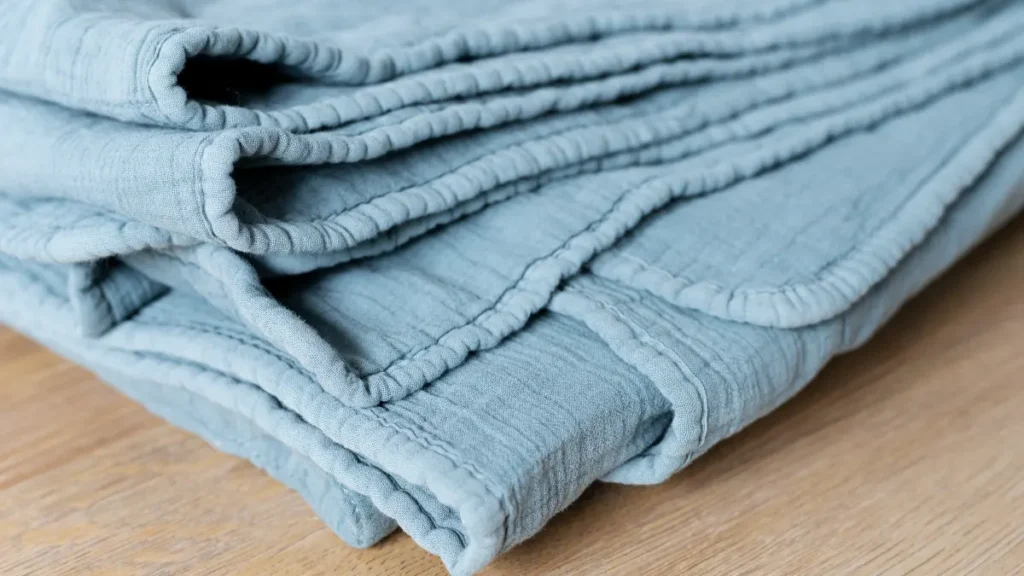
Synthetic fabrics trap heat. Cotton, bamboo, and linen let air move through.
If you like the feeling of a weighted blanket but overheat under one, cooling weighted blankets now exist. They use glass beads instead of dense poly fill and breathable fabric covers. They give you the calming weight without the heat buildup.
3. Stop intense exercise at least 3 to 4 hours before bed

Hard workouts raise your core temperature for hours. That’s the opposite of what you need at bedtime. A gentle evening walk is fine. A 7 p.m. HIIT class is not. If you exercise at night, shift it earlier by just one hour and see if it makes a difference.
4. Cool your sleep surface, not just the room
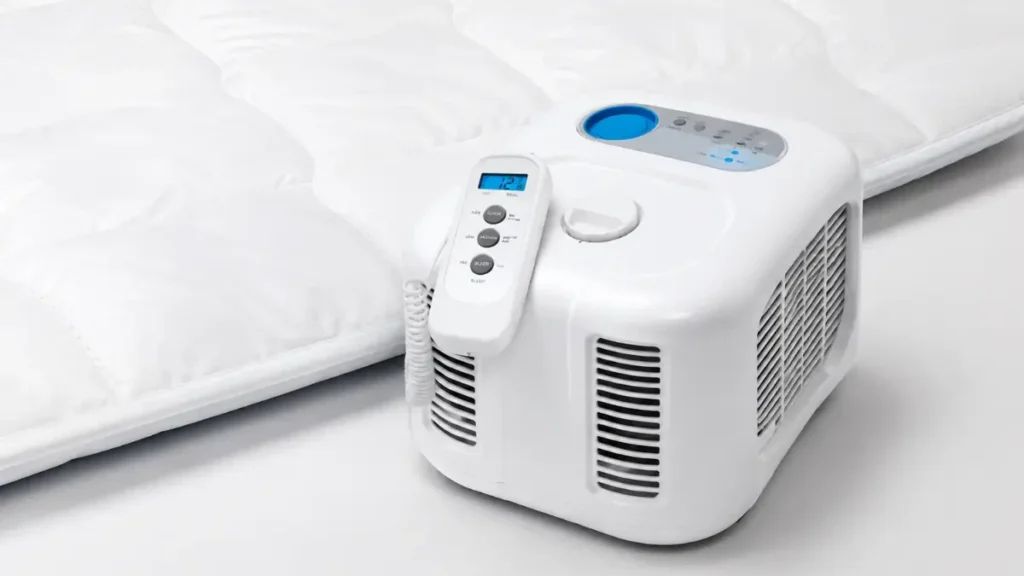
Cooling the whole house to 65°F is expensive and uncomfortable for anyone sharing the room. A cooling mattress pad targets your body directly much more efficiently.
Water-cooled systems like ChiliPad and air-flow systems like BedJet are the most popular options. They let you control your side of the bed independently without freezing your partner.
5. Keep a damp cloth or gel pack on your nightstand
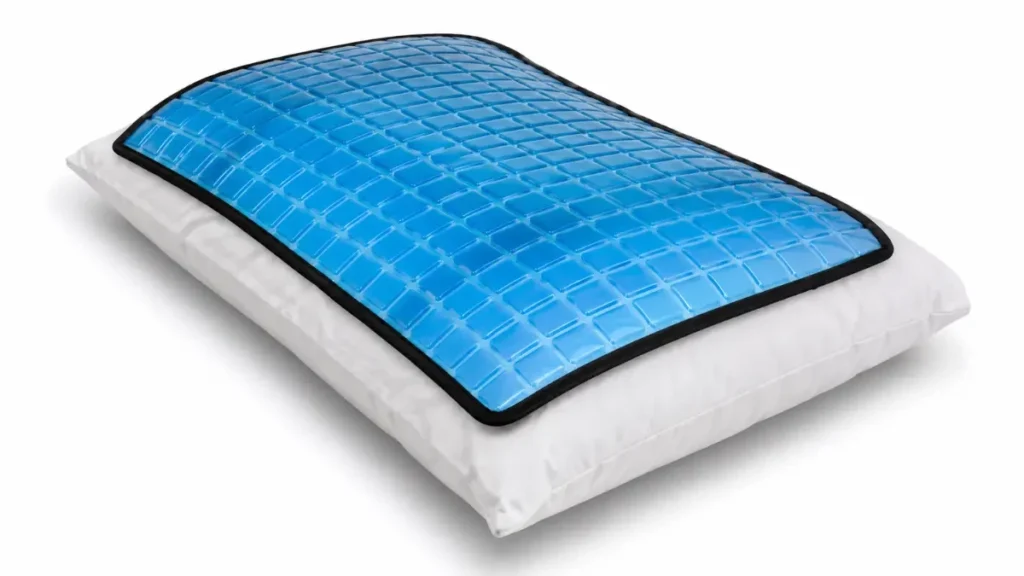
This is the lowest-cost, no-setup solution for spontaneous night sweats. A quick press to your wrists or the back of your neck cools surface blood vessels fast. It’s not glamorous. But it works, and it’s available at 3 a.m. when nothing else is.
When to Talk to a Doctor
Lifestyle changes help most people. But they don’t help everyone, and that’s not a failure. If you’ve tried cooling strategies for three to four weeks and night sweats are still waking you up regularly, that’s useful information. It tells you the problem may need medical support.

Hot flashes affect up to 80% of women during menopause and can last 7 to 10 years on average. For severe cases, hormone therapy (HT) remains the most effective medical option.
The Menopause Society’s 2022 position statement supports it as safe for most healthy women under 60.
If hormone therapy isn’t right for you, a non-hormone prescription option now exists. Fezolinetant (brand name Veozah) was FDA-approved in 2023 specifically for menopause-related hot flashes.
It works differently from hormones by targeting the brain’s temperature control pathways directly.
Your doctor can also rule out other causes of thyroid issues, certain medications, or infections, which can all trigger night sweats. Don’t assume it’s just menopause without checking.
Conclusion
Sleeping hot after 50 is biology, not weakness. Your body’s cooling system has changed. But the right bedroom temperature, breathable bedding, and a simple pre-bed routine can make a real difference. Start with one change tonight. Give it a week. Your sleep is worth it.
⚠️MEDICAL DISCLAIMER
This article is for informational purposes only. It does not replace medical advice, diagnosis, or treatment. The information covers core body temperature changes after 50, bedroom temperature guidelines for older adults, menopause and hot flashes, REM sleep disruption, humidity and sleep, pre-bed warm showers, breathable bedding, exercise timing, cooling mattress pads, and hormone therapy and prescription options for night sweats.
Individual results vary based on age, health status, and fitness level. Before changing your exercise routine, diet, or supplement use, talk to your doctor or a qualified health professional first. If you experience chest pain, dizziness, severe joint pain, or any sudden symptom during or after exercise, stop immediately and seek medical care.